

Economics & Money
Flash Boys
Michael Lewis
Michael Lewis tells the story of a small group of Wall Street guys who discover that the U.S. stock market has been rigged for the benefit of insiders. They band together to reform the financial markets by creating an exchange where high-frequency trading has no advantage.
Freakonomics
Steven D. Levitt
An unconventional exploration of the hidden side of everything. By applying economic principles to everyday riddles, this book challenges conventional wisdom and uncovers surprising truths about human behavior, incentives, and the world around us.
Manufacturing Consent
Edward S. Herman
Manufacturing Consent presents a critical analysis of the U.S. mass media, arguing that it functions as a propaganda system for powerful societal interests. Through a detailed examination of media structures, relationships, and practices, the book reveals how the media shapes public opinion and serves the agendas of those who control and finance it. This groundbreaking work challenges conventional understandings of media objectivity and independence, offering a compelling perspective on the political economy of information.
The Big Short
Michael Lewis
An inside look at the housing market crash of the 2000s, focusing on the eccentric collection of outsiders who saw the bubble inflating and devised ingenious ways to bet against it. A gripping narrative of financial brinkmanship and the personalities who profited from the collapse.

How Economics Explains the World
Andrew Leigh
Delve into the fascinating narrative of human history through the lens of economics. This book explores how fundamental economic principles like incentives, specialization, and trade have shaped societies, driven technological advancements, and influenced major global events from the agricultural revolution to modern challenges like climate change. Andrew Leigh makes complex economic ideas accessible, demonstrating how they provide profound insights into why the world is the way it is, without requiring any prior knowledge of the subject.

Longevity Hubs
Joseph F. Coughlin
Explore the emerging concept of 'longevity hubs' – geographic centers of innovation dedicated to addressing the profound challenges and opportunities presented by global population aging. This book delves into the economic, social, and technological shifts driven by an aging world, examining how regions are developing groundbreaking products, services, and policies to support older adults. Discover the immense economic power of the 'longevity economy' and the critical need for innovation in areas like healthcare, finance, caregiving, and urban design, while confronting the biases and market failures that often overlook this vital demographic.

Power and Progress
Daron Acemoglu
In this groundbreaking book, two renowned economists challenge the pervasive techno-optimism of our age, arguing that technological progress does not automatically lead to shared prosperity. Drawing on a thousand years of history, from the agricultural revolution to the rise of AI, Acemoglu and Johnson reveal how the benefits of innovation have often been captured by a narrow elite, leading to increased inequality and social disruption. They contend that whether technology serves the common good or exacerbates societal divides is a matter of deliberate economic, social, and political choices, urging readers to reclaim control over the direction of technological development to build a more equitable future.
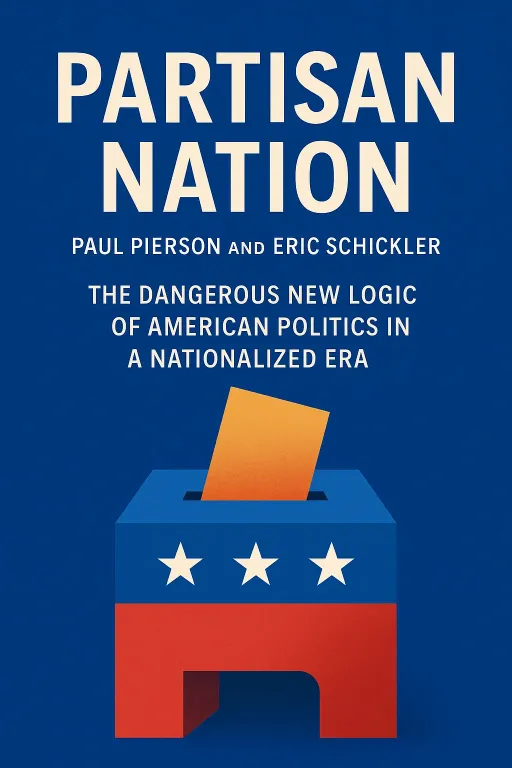
Partisan Nation
Paul Pierson
This book offers a profound analysis of the transformation of American politics, arguing that the traditional 'Madisonian' constitutional framework, once a bulwark against intense partisan divisions, now exacerbates them. Authors Paul Pierson and Eric Schickler trace the historical evolution of polarization, from early republics to the contemporary era, highlighting how racial realignment, federal government expansion, and the nationalization of mediating institutions (state parties, interest groups, and media) have created a self-reinforcing cycle of partisan conflict. They reveal how this new constitutional order leads to governmental dysfunction, weakened accountability, and poses significant threats to the stability of American democracy, particularly through the actions of a nationalized and increasingly authoritarian-leaning Republican Party.