

** The Debater's Edge: Mastering Persuasion in Leadership and Business
Golden Hook & Introduction
SECTION
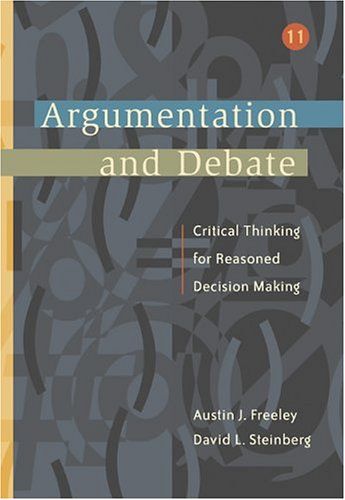
Nova: Imagine you are standing in a high-stakes boardroom. The room is quiet, the tension is thick, and millions of dollars are riding on your next move. You have to convince a room full of skeptical investors that your venture is the one to back. How do you construct an argument so solid, so unassailable, that they have no choice but to agree? Today, we are diving deep into Austin J. Freeley's classic masterpiece,, to unlock the secrets of world-class persuasion. And we are doing it through a very special lens. We'll explore how these powerful debate strategies apply directly to leadership, networking, and entrepreneurship. Today, we're going to tackle this book from three different angles. First, we'll explore how to build an unshakeable, self-sustaining argument from the ground up. Then, we'll discuss the art of refutation and how to master your stage presence when you're caught in the ultimate "for or against" clash. And finally, we'll focus on how to apply these debate dynamics to build trust and lead high-performing teams. Joining me today is Aboubacar Baldé, a brilliant entrepreneur managing a gold sales company and an alumnus of the Aspire Institute leaders program at Harvard University. Aboubacar, it is so wonderful to have you here with us!
Aboubacar Baldé: Thank you so much, Nova! It is an absolute pleasure to be here. You know, when I look at the world of entrepreneurship, and especially managing a gold sales company where trust, negotiation, and clear communication are everything, I realize that we are debating every single day. Whether we are negotiating a contract, pitching to partners, or aligning our team's vision, we are engaging in the art of structured argument. Freeley's book is a goldmine—pun intended—for anyone who wants to lead with clarity and impact. I'm really excited to dive into these concepts with you today and see how we can translate academic debate theory into actionable business leadership.
Nova: Oh, I love that! A goldmine indeed! And you are so right, Aboubacar. Debate isn't just about winning points on a scorecard; it's about finding truth, building consensus, and moving people to action. So, let's start at the very beginning. Freeley talks a lot about the foundation of any great debate, which is the "prima facie" case. In Latin, that means "at first sight." Essentially, it's an argument that is so complete and well-supported that it stands on its own merits unless it is actively refuted. How does that concept resonate with you when you think about launching a business or pitching a new idea?
Aboubacar Baldé: It resonates deeply, Nova. In entrepreneurship, if you don't present a prima facie case to your investors or clients, you lose before you even start. Think about it: when you pitch a new business venture, you can't just say, "Hey, I have a great idea, trust me." You have to anticipate every major question and objection before they are even uttered. You have to present a complete narrative that addresses the problem, the solution, the market viability, and the financial feasibility. If any of those pillars are missing, your case collapses at first sight. In my work with gold sales, when we establish partnerships, we must present an airtight case regarding compliance, sourcing, and value. It's about taking the burden of proof seriously and showing that your proposition is robust from the very first second.
Deep Dive into Core Topic 1
SECTION
Nova: That is such a powerful connection! Freeley actually outlines a brilliant tool for building this kind of airtight argument, and it's called the Toulmin Model, developed by philosopher Stephen Toulmin. We can think of it as the ultimate blueprint for any claim we want to make. The model breaks an argument down into three essential parts: the claim, the data, and the warrant. The claim is the conclusion we want our audience to accept. The data is the evidence or facts we use to support that claim. And the warrant—which is often the missing link in most everyday arguments—is the logical connection that explains the data actually proves the claim. Aboubacar, how do you see this structure playing out in your negotiations or leadership discussions?
Aboubacar Baldé: Hmm, the Toulmin Model is incredibly elegant, Nova. Let's break it down with a practical business example. Suppose my claim is: "Our company should invest in upgrading our digital supply chain tracking system." That's the claim. Now, to back that up, I need data. The data might be: "Our current manual tracking system has a five percent error rate, which cost us fifty thousand dollars in lost efficiency last quarter." Many people stop there, thinking the data speaks for itself. But a savvy investor or partner will ask, "So what?" That is where the warrant comes in. The warrant connects the data to the claim. I might say: "Because digital tracking systems reduce human data-entry errors to less than one percent, upgrading our system will directly eliminate those losses and increase our profit margins." The warrant bridges the gap. It shows the logical necessity of the solution. Without that warrant, your audience is left to make their own assumptions, and in business, you never want to leave your audience guessing.
Nova: Exactly! You are speaking my language! We often assume that because the facts are clear to us, they must be clear to everyone else. But the warrant is where the magic of persuasion actually happens. It's the "why" behind the "what." And Freeley emphasizes that a great debater doesn't just throw data at the wall; they carefully construct warrants that align with the audience's values and logic. Now, let's take this a step further. In a debate, we have the "burden of proof," which lies with the person proposing a change, and the "burden of rejoinder," which is the obligation of the opponent to respond. In business, when you are trying to innovate or disrupt a market, you always carry the burden of proof. You are arguing change. How do you manage that pressure, especially when you are networking or building relationships with established leaders who might be resistant to new ideas?
Aboubacar Baldé: That is a fantastic question, Nova. Carrying the burden of proof can feel heavy, but it is also an incredible opportunity. When you are the one proposing change, you have the power to set the agenda. You define the terms of the debate. During my time at the Aspire Institute at Harvard, we talked a lot about adaptive leadership. To lead change, you have to understand that people resist change not because they hate the idea, but because they fear loss. So, when I carry the burden of proof, I don't just focus on the logical data. I also focus on the psychological and emotional warrants. I have to show that the benefits of the new path far outweigh the comfort of the status quo. In networking, this means listening first. Before I try to prove my point, I need to understand the other person's baseline. What are their pain points? What are their goals? Once I know their baseline, I can tailor my data and warrants to align perfectly with their world. It turns a potential clash into a collaborative problem-solving session.
Nova: That is incredibly profound, Aboubacar! You are shifting the dynamic from "me versus you" to "us versus the problem." That is such an inclusive, leadership-driven way to look at debate. It's not about defeating your co-debaters; it's about inviting them on a journey to a better solution. But what happens when we do hit that inevitable moment of direct conflict? The "for or against" moment where the stage is set, the lines are drawn, and you are facing direct opposition. Let's pivot to that, because it's one of the most common challenges leaders face.
Deep Dive into Core Topic 2
SECTION
Nova: And that naturally leads us to our second key idea: managing the stage and the clash during refutation. Freeley writes that refutation is the mental effort of showing that an opponent's arguments are erroneous, irrelevant, or insufficient. But doing this on a public stage requires more than just sharp logic; it requires immense emotional control and stage presence. Aboubacar, you've traveled the world and interacted with diverse cultures and leadership styles. How do you manage your stage presence and keep your composure when someone is actively arguing against your ideas?
Aboubacar Baldé: You know, Nova, managing the stage during a moment of intense clash is ninety percent mental preparation and ten percent physical execution. When someone attacks your argument, the natural human reaction is to get defensive. Your heart rate goes up, your breathing gets shallow, and you want to fight back. But as a leader, that is the exact moment you must do the opposite. You have to lean back, take a deep breath, and listen with intense focus. In Freeley's book, he talks about the importance of identifying the "core of the controversy." You have to ask yourself: what is the actual point of disagreement here? Is it a disagreement over facts, over values, or over policy? If you can identify the core, you don't waste energy arguing about side issues. You can address the root cause of the disagreement calmly and directly.
Nova: That is so true! We've all seen debates where people just talk past each other, getting louder and louder but resolving nothing. It's like they are playing two different sports on the same field! Freeley suggests several specific strategies for refutation, such as "direct refutation," where you systematically disprove the opponent's evidence, or "turning the tables," where you take the opponent's own argument and show that it actually supports your position. Have you ever had a moment in business where you had to "turn the tables" during a negotiation?
Aboubacar Baldé: Oh, absolutely! It happens more often than you'd think, especially in competitive industries like gold sales. I remember a negotiation where a potential partner was highly skeptical about our pricing structure. They argued, "Your premium is too high compared to the standard market rate. We can get gold cheaper elsewhere, so we should go with a lower-cost provider." That was their argument. Now, instead of getting defensive or trying to lower my price immediately, I decided to turn the tables. I said, "You are absolutely right that our premium is higher. And that premium is the exact reason why you should partner with us. Because that premium funds our state-of-the-art, blockchain-verified tracking system, which guarantees that every ounce of gold you buy from us is ethically sourced and fully compliant with international regulations. If you go with a cheaper provider, you save a few dollars upfront, but you expose your brand to massive regulatory and reputational risks. So, our higher premium is actually your cheapest insurance policy." By doing that, their objection became my strongest selling point.
Nova: Wow! That was a masterclass in turning the tables! You took their data—the higher price—and you changed the warrant from "this is an unnecessary expense" to "this is a vital risk-mitigation strategy." That is brilliant, Aboubacar! And notice how you did it without being confrontational. You validated their observation first, which disarms the tension, and then you reframed the logic. That is how you manage the stage. You don't dominate it with volume; you dominate it with perspective.
Aboubacar Baldé: Exactly, Nova. It's about maintaining respect for your co-debaters. In any debate, whether formal or informal, the moment you lose respect for your opponent, you lose the audience. You have to treat the other side's arguments with dignity. If they raise a valid point, acknowledge it! Freeley calls this "concession." You concede a minor point to build credibility, and then you show why your main thesis still stands. It shows the audience that you are an analytical, fair-minded thinker who is interested in the truth, not just in winning an ego battle. That is what true leadership stage presence is all about.
Nova: It really is. And it builds so much trust. When people see that you aren't afraid of opposing views, and that you can handle them with grace and intellectual honesty, they want to follow you. They feel safe sharing their own ideas, which is the foundation of great teamwork and innovation.
Synthesis & Takeaways
SECTION
Nova: This has been such an incredibly rich conversation, Aboubacar. We've journeyed from the foundational architecture of an argument using the Toulmin Model, all the way to the high-stakes art of refutation and turning the tables in business negotiations. It's clear that the principles Austin J. Freeley laid out in are not just academic exercises—they are essential tools for modern leaders and entrepreneurs. As we wrap up today, let's synthesize our main takeaways. If you had to boil down our discussion into a single, actionable piece of advice for our listeners—especially aspiring entrepreneurs and leaders—what would it be?
Aboubacar Baldé: I would say this: treat every disagreement not as a battle to be won, but as a structured debate to be explored. When you encounter opposition, don't react with emotion. Instead, put on your analytical hat. Look for the claim, the data, and the warrant in their argument, and examine your own with the same rigor. Build your prima facie case with integrity, listen to your opponents with respect, and use the stage not to overpower others, but to elevate the conversation. Persuasion is not about force; it is about clarity, connection, and shared truth.
Nova: That is beautifully put, Aboubacar. A perfect note to end on. Thank you so much for sharing your incredible insights, your business wisdom, and your passion for leadership with us today. This has been an absolute joy!
Aboubacar Baldé: Thank you, Nova. The pleasure was all mine. Keep debating, keep learning, and keep leading, everyone!
Nova: And to our wonderful listeners, thank you for tuning in to this episode of The Debater's Edge. We hope you feel inspired to take these debate strategies out into your boardrooms, your networks, and your daily lives. Until next time, keep seeking the truth, keep building those bridges, and we'll see you in the next episode!