Deciphering the Rise and Fall of Human Societies
Golden Hook & Introduction
SECTION
Nova: Most of us are walking around with a mental operating system built on historical narratives that haven't been updated in centuries. We think we’re making decisions based on current data, but we’re actually running legacy code from a version of history that was written by the victors.
Atlas: That is a dangerous way to navigate the modern world. If our core assumptions about how power, society, and progress work are based on a filtered version of the past, then our professional strategies are likely compromised before we even start.
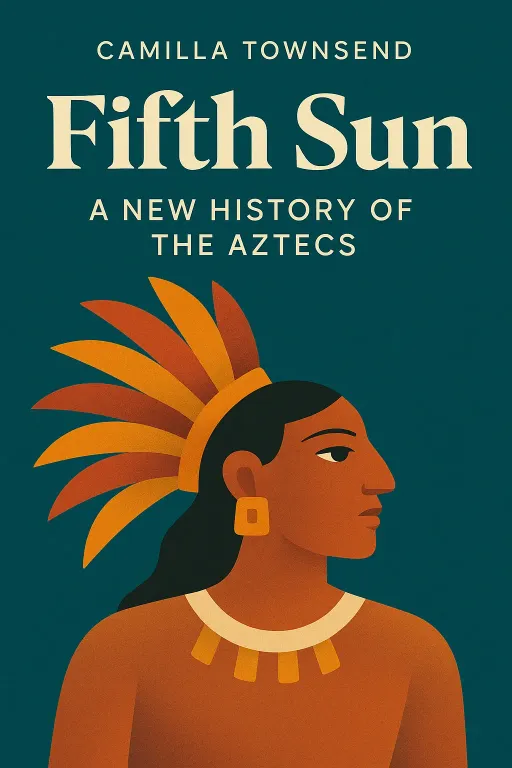
Nova: Exactly. Today, we’re looking at two books that act as a software patch for that outdated operating system. We are diving into Fifth Sun by Camilla Townsend, which forces us to look at the indigenous accounts of the Aztec empire, and Civilization by Niall Ferguson, which breaks down the six killer apps that drove Western dominance.
Atlas: Those two sound like they are pulling in opposite directions. One is about the resilience of a culture that was nearly erased, and the other is about the mechanics of the culture that did the erasing. I am curious to see how those two perspectives fit together.
Nova: That tension is exactly why this is so valuable. It’s not just about history; it’s about auditing your own worldview.
The Power of the Hidden Archive
SECTION
Atlas: Let’s start with Fifth Sun. I have to be honest, when I hear about Aztec history, I usually think of the standard textbook version. It’s the story of the fall, the tragedy, the end. What makes Camilla Townsend’s work different?
Nova: The standard history is essentially a narrative of inevitability. It paints the collapse of the Aztec empire as a foregone conclusion because of European superiority. But Townsend did something radical. She went back to the primary sources—the actual writings in the Nahuatl language, created by the indigenous people themselves, not the Spanish conquistadors.
Atlas: That changes the data set entirely. If you are reading the account of the person who won the war, you get a story of conquest. If you are reading the account of the person who survived the war, you get a story of social structure and continuity.
Nova: Precisely. The indigenous accounts show that they weren't just helpless victims waiting for the end. They had highly complex social structures, legal systems, and a deep sense of community that survived immense trauma. They kept writing, kept recording, and kept governing their own local affairs for generations after the initial collapse.
Atlas: That resonates with me. Think about any professional environment. If you only listen to the leadership’s narrative about a project’s failure or success, you are getting the conquistador’s version of the story. You are missing the, for lack of a better term, the Nahuatl perspective—the people on the ground who actually lived through the implementation.
Nova: That is a perfect analogy. We often ignore the "local" accounts in our organizations because they don't fit the dominant narrative of the "success story" or the "catastrophic failure." But if you want to solve complex problems, you have to find those hidden archives within your own company. You need to know how the people who actually did the work interpreted the events.
Atlas: It makes me wonder how many problems in my own work are just misdiagnosed because I am relying on the "official" version of events. If I want to be a more effective leader or strategist, I need to start actively seeking out the accounts that aren't being highlighted in the quarterly report.
Nova: And that is the lesson from Townsend. She shows that the complexity of the past wasn't erased; it was just ignored by those who didn't want to see it. When we ignore that complexity, we lose the ability to learn from the actual, gritty reality of how systems survive and adapt.
The Mechanics of Dominance
SECTION
Atlas: That leads us to the other side of this conversation. If Fifth Sun is about the reality of the survivors, Niall Ferguson’s Civilization is about the mechanics of the victors. He talks about these six "killer apps"—competition, science, property rights, medicine, consumerism, and the work ethic.
Nova: Ferguson’s argument is that these six things are the reasons why the West became so dominant globally. He isn't talking about inherent superiority; he is talking about specific institutional tools that created a massive feedback loop of development and power.
Atlas: I have heard these "killer apps" debated a lot. Some people argue that they are universal tools for success. But after what you just said about Fifth Sun, I am looking at these six apps with a bit more skepticism. Are these really universal, or are they just the rules of a game that was designed to favor one specific outcome?
Nova: That is the right question to ask. Ferguson frames them as the engines of progress, but when you layer that over the insights from Townsend, you start to see the cost of those apps. For instance, "property rights" sounds like an unalloyed good. But in the context of colonial history, property rights were often the mechanism used to dismantle communal systems of land ownership that had existed for centuries.
Atlas: So, the "killer apps" aren't just tools; they are a specific operating system. And like any operating system, they have bugs and they have exclusions. If you are running your life or your business exclusively on those six apps, you might be missing the blind spots.
Nova: Exactly. Think about "competition." It is a vital app for innovation. But if you run it at maximum capacity without any of the communal checks that we see in the indigenous structures Townsend describes, you end up with a hyper-individualistic culture that struggles to solve collective problems like climate change or social cohesion.
Atlas: I see where this is going. We need the "killer apps" to function in the modern economy—we need science, we need property rights, we need work ethic. But we also need the "local archive" perspective to understand the human cost and the systemic limitations of those apps.
Nova: The most successful people I have observed are those who can synthesize these two things. They use the tools of modern progress, but they maintain the awareness of the survivor's perspective. They don't just look at the high-level metrics of growth; they look at the health of the social structures beneath them.
Atlas: That is a tough balance to strike. It is much easier to just run the "killer apps" and ignore the rest. It is much easier to read the history book that makes me feel like the winner.
Nova: It is. But that is the comfort trap. The "Pragmatic Learner" isn't looking for comfort; they are looking for value. And the value lies in the discomfort of questioning your own foundational narratives.
Synthesis & Takeaways
SECTION
Atlas: Let’s bring this home for the listener. We’ve talked about rewriting history and questioning the tools of dominance. How does the listener take this and apply it tomorrow morning?
Nova: Start by auditing your professional worldview. When you walk into a meeting or look at a project, ask yourself: "Whose narrative am I accepting as the default here?" If you are only looking at the "official" version of why something is succeeding or failing, you are missing the most valuable data.
Atlas: I love that. It’s like being a detective in your own office. Stop looking for the headline and start looking for the evidence that contradicts it. Where is the "Nahuatl" perspective in your team? Who has the real story that isn't being reflected in the slide deck?
Nova: And then, look at the "killer apps" you are using. Are you applying them blindly? Are you using "competition" when you should be using "collaboration"? Are you prioritizing "property rights" or "output" at the expense of the long-term stability of your team’s "social structure"?
Atlas: That is the shift from being a follower of a narrative to being an architect of a new one. It’s about taking the best of the tools we have, but refusing to be blinded by the history that claims they are the only way to operate.
Nova: It is about recognizing that your current professional worldview is just one version of the story. You have the power to edit it, to update it, and to make it more inclusive of the realities that have been ignored.
Atlas: This has been a heavy, but incredibly necessary, conversation. It really makes me want to go back and look at my own assumptions about the way things "have" to be done.
Nova: That is the start of true growth. Keep questioning the narrative, keep looking for the hidden archives, and keep upgrading your operating system.
Atlas: And with that, we’ve covered a lot of ground today. Thank you for joining us in this exploration. This is Aibrary. Congratulations on your growth!