

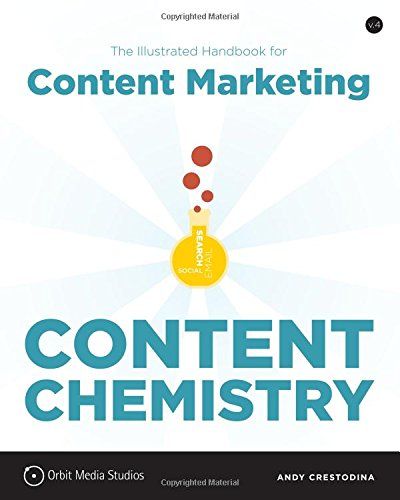
Content Chemistry
Introduction
Nova: Welcome to Aibrary, where we distill the world's most impactful books into conversations that stick. I'm Nova, your guide through the ideas shaping how we think, work, and create.
Nova: : And I'm here to ask the questions you're probably thinking. So Nova, today we're talking about a book with a title that sounds like it belongs in a science lab: Content Chemistry. What's the big idea?
Nova: Here's a stat that might stop you in your tracks: according to Orbit Media's own research, the average blog post takes about four hours to write. But here's the kicker: most of those posts will never earn a single backlink, never rank on page one, and never generate a meaningful conversion. Andy Crestodina wrote Content Chemistry to fix exactly that problem. He's the co-founder and CMO of Orbit Media Studios in Chicago, and he's been running one of the most respected content marketing blogs on the internet for over two decades.
Nova: : Two decades? That's practically ancient in internet years. What makes his book different from the thousands of other marketing books out there?
Nova: Two things. First, it's an illustrated handbook. Every single page has charts, graphs, screenshots, or diagrams. Crestodina is a visual thinker, and he believes that complex marketing concepts become crystal clear when you can see them. Second, it's relentlessly data-driven. He doesn't just tell you what works; he shows you the research, the surveys, and the numbers behind every recommendation. The book has gone through multiple editions, each one updated with fresh data from his annual blogger survey, which now draws thousands of respondents.
Nova: : So it's like a textbook that actually respects your time and intelligence?
Nova: Exactly. And the chemistry metaphor isn't just clever branding. Crestodina frames content marketing as a series of chemical reactions. You combine elements like blog posts, social media, email, and SEO, and when you get the formula right, you create a reaction: traffic, engagement, leads, and sales. Get the formula wrong, and nothing happens. The book is essentially the periodic table of content marketing, showing you which elements combine to create which results.
Nova: : I love that framing. Let's break down the formula.
Why Data and Design Make the Difference
The Content Chemistry Philosophy
Nova: Let's start with what makes Content Chemistry fundamentally different from every other marketing book. Crestodina opens with a philosophy that I think a lot of marketers need to hear: your content is not for you. It's not for your boss. It's not even for your brand. It's for your audience, and if you're not serving them, you're wasting your time.
Nova: : That sounds obvious, but I bet most people don't actually follow that rule.
Nova: They absolutely don't. Crestodina points out that most content marketing fails because it starts with what the company wants to say rather than what the audience wants to know. He calls this the fundamental content marketing mistake. The book's first major framework is what he calls the Content Marketing Funnel, and it's built entirely around audience intent. At the top, you have people who are just curious. In the middle, people who are researching solutions. At the bottom, people who are ready to buy. Your content needs to match each stage.
Nova: : So you can't just write one type of blog post and call it a day.
Nova: Right. And here's where the data comes in. Crestodina's annual blogger survey, which he's been running for years, reveals fascinating patterns. For instance, bloggers who spend more than six hours on a single post are dramatically more likely to report strong results. The survey also found that the average blog post length has been steadily increasing. Back in 2014, the average was around 800 words. By recent editions of the survey, it was well over 1,400 words. Longer, more comprehensive content consistently outperforms thin content.
Nova: : But wait, doesn't that contradict the whole short attention span argument? Everyone says nobody reads anymore.
Nova: That's one of Crestodina's favorite myths to bust. He argues that attention spans aren't shrinking; people just have higher standards. If your content is genuinely useful, people will read it. The data backs this up. Long-form content generates more backlinks, more social shares, and better search rankings. But Crestodina is careful to say that length alone isn't the answer. It's depth. It's answering the question so thoroughly that the reader doesn't need to go anywhere else.
Nova: : So the illustrated part of the book, the visuals, how does that tie into this philosophy?
Nova: Crestodina practices what he preaches. The book itself is a masterclass in content design. Every concept is paired with a visual. He uses flowcharts to explain content workflows, Venn diagrams to show the overlap between audience needs and business goals, and annotated screenshots to demonstrate exactly how to optimize a page. He argues that visuals aren't decoration; they're a communication tool that increases comprehension and retention. In fact, he cites research showing that people remember about 10 percent of what they hear after three days, but 65 percent of what they see and hear together.
Nova: : That's a massive gap. So the book is basically proof that its own advice works.
Nova: Exactly. And that's what gives it so much credibility. Crestodina isn't a theorist. He's a practitioner who runs a successful agency, publishes consistently on the Orbit Media blog, and tests everything he recommends. The book feels less like a guru telling you what to do and more like a generous colleague sharing their playbook.
Attract, Engage, Convert
The Content Marketing Funnel
Nova: Let's dig into the centerpiece of the book: the content marketing funnel. Crestodina breaks it into three stages: attract, engage, and convert. Each stage requires fundamentally different content types, different distribution strategies, and different metrics.
Nova: : Walk me through the attract stage first. How do you actually get people to find your content?
Nova: The attract stage is all about search engines and social media. Crestodina dedicates a huge portion of the book to SEO, and he approaches it with a refreshing clarity. He says most people overcomplicate SEO. At its core, it comes down to two things: relevance and authority. Relevance means your content matches what people are searching for. Authority means other reputable sites link to you. Everything else, the technical stuff, the meta tags, the site speed, those are just supporting actors.
Nova: : So how do you build authority? That seems like the hard part.
Nova: Crestodina's answer is deceptively simple: create content so good that people can't help but link to it. But he doesn't stop there. He provides a detailed framework for what he calls collaborative content. The idea is to create content that features other experts, because those experts will then share and link to the content they're featured in. He gives the example of expert roundup posts. You ask twenty experts the same question, compile their answers, and suddenly you have twenty influential people with a reason to promote your content.
Nova: : That's clever. It's like content marketing with built-in distribution.
Nova: Exactly. And he provides templates for outreach emails, subject lines that actually get opened, and follow-up strategies. He's incredibly tactical. Another attract-stage tactic he emphasizes is what he calls the skyscraper technique, which he adapted from Brian Dean. Find content that's already performing well, create something significantly better, and then reach out to everyone who linked to the original. It's competitive, but it works.
Nova: : What about the engage stage? Once people are on your site, how do you keep them there?
Nova: This is where Crestodina's web design background really shines. He talks about internal linking as one of the most underrated SEO and engagement tactics. Most blogs treat each post as an island. Crestodina argues you should be building bridges between your content. Every post should link to other relevant posts on your site. This keeps readers clicking, reduces bounce rate, and distributes page authority throughout your site. He even provides a diagram showing exactly how to structure your internal linking for maximum impact.
Nova: : And the convert stage? That's where the money is, right?
Nova: Right. Crestodina is very practical here. He says the biggest conversion mistake is asking for too much, too soon. Someone reading their first blog post on your site is not ready to schedule a sales call. But they might be ready to subscribe to your newsletter or download a checklist. He advocates for what he calls micro-conversions: small, low-commitment actions that build trust over time. He also emphasizes that your call to action should be contextually relevant. If someone just read a post about email marketing, offer them an email marketing template, not a generic newsletter signup.
Nova: : That makes so much sense. It's like dating. You don't propose on the first date.
Nova: That's actually a perfect analogy. And Crestodina would agree. He often uses relationship metaphors to explain the funnel. You're building a relationship with your audience, and relationships take time, trust, and relevance.
SEO Fundamentals and Social Media Strategy
The Science of Search and Social
Nova: One of the most valuable sections of Content Chemistry is Crestodina's deep dive into SEO. And what makes it special is that he explains SEO not as a technical discipline for developers, but as a content discipline for writers and marketers.
Nova: : I think a lot of people find SEO intimidating. Does he make it accessible?
Nova: Incredibly so. He starts with keyword research, and his approach is almost anthropological. He says you need to understand the language your audience uses, not the language your company uses. He gives a great example: a company that sells HR software might want to rank for human capital management solutions, but their audience is actually searching for how to track employee vacation days. The gap between company language and customer language is where most content strategies fail.
Nova: : So you have to think like your customer, not like a marketer.
Nova: Precisely. And Crestodina provides a framework for doing keyword research that starts with questions, not keywords. What questions is your audience asking? He recommends tools like Answer the Public and AlsoAsked. com, which visualize the questions people search for. Then he walks through how to structure a blog post to answer those questions comprehensively. He introduces the concept of topic clusters: a pillar page that covers a broad topic, surrounded by cluster pages that dive deep into specific subtopics, all interlinked.
Nova: : That sounds like a lot of work. Is it worth it?
Nova: Crestodina would point to the data. He cites studies showing that websites with a strong topic cluster strategy see significant improvements in search rankings. But he's also realistic. He says you don't need to do this for every topic. Start with your most important topics, the ones that actually drive business results. And he emphasizes that SEO is a long game. You won't see results in a week or even a month. But over six to twelve months, the compounding effect is powerful.
Nova: : What about social media? That feels like the opposite of SEO. Fast, ephemeral, constantly changing.
Nova: Crestodina's social media philosophy is interesting because he doesn't treat it as a separate channel. He sees social media as a distribution engine for your content, not a destination. The goal isn't to build a huge following on social media; the goal is to use social media to drive people to your website, where you can actually convert them. He's critical of brands that pour resources into social platforms they don't own, building audiences on rented land.
Nova: : Rented land. I've never heard it put that way.
Nova: It's a powerful framing. Your website is land you own. Your email list is land you own. Social media platforms are rented land, and the landlord can change the rules at any time. Crestodina recommends using social media strategically: share your content, engage with your community, but always with the goal of moving people to your owned channels. He also provides platform-specific advice. LinkedIn for B2B, Instagram for visual brands, Twitter for real-time engagement. But the underlying strategy is consistent: be helpful, be consistent, and always drive back to your owned properties.
Nova: : Does he talk about paid social or just organic?
Nova: The book is primarily focused on organic content marketing, but Crestodina does touch on paid promotion. His view is that paid can amplify what's already working organically. If a piece of content is getting strong engagement and conversions organically, putting some budget behind it can scale those results. But he warns against using paid to prop up content that isn't performing on its own. If people aren't engaging with it organically, paid won't fix the underlying problem.
Measuring What Matters and Iterating for Success
Email, Analytics, and the Art of Optimization
Nova: Let's talk about email marketing, because Crestodina has some strong opinions here. He calls email the most underrated channel in content marketing, and he backs it up with numbers. Email consistently delivers higher conversion rates than social media or search. The ROI on email marketing, according to data he cites, is around thirty-six dollars for every dollar spent.
Nova: : Thirty-six to one? That's insane. Why does email work so well?
Nova: Crestodina argues it's about attention and intent. When someone gives you their email address, they're giving you permission to enter their inbox, which is a much more personal space than a social media feed. And when they open your email, you have their full attention, at least for a moment. Compare that to social media, where you're competing with cat videos, news alerts, and friends' vacation photos. Email is a direct line.
Nova: : So how does he recommend using email in a content strategy?
Nova: He's a big advocate of the content newsletter. Not a promotional newsletter that just announces sales and new products, but a genuine content newsletter that delivers value in every edition. He recommends a simple format: one piece of original content, one curated link to something interesting, and one personal note or insight. Keep it short, keep it valuable, and be consistent. He also emphasizes the importance of the welcome email. When someone subscribes, that's the moment of highest engagement. Send them your best stuff immediately. Don't wait.
Nova: : What about subject lines? Everyone obsesses over subject lines.
Nova: Crestodina has data on this too. He's analyzed thousands of email subject lines and found some clear patterns. Curiosity-driven subject lines tend to outperform descriptive ones. Questions perform well. And surprisingly, longer subject lines, around sixty to seventy characters, often outperform shorter ones. But his biggest piece of advice is to write the subject line last, after you've written the email. That way, it actually reflects the content.
Nova: : That's such a simple tip, but I bet most people don't do it. Now, analytics. This is where a lot of content marketers glaze over. How does Crestodina make it interesting?
Nova: He makes it actionable. Crestodina's approach to analytics is to focus on the metrics that actually matter for your goals. He introduces what he calls the analytics hierarchy. At the top are business metrics: revenue, leads, customers. Below that are marketing metrics: conversions, email subscribers, demo requests. Below that are content metrics: traffic, time on page, social shares. And at the bottom are vanity metrics: page views, likes, followers. The key insight is that most content marketers spend all their time looking at the bottom of the hierarchy.
Nova: : Guilty as charged. Page views are so seductive.
Nova: They are. But Crestodina points out that a million page views that generate zero leads is a failure. A thousand page views that generate fifty qualified leads is a success. He walks through how to set up Google Analytics to track what matters, how to create custom dashboards, and how to use UTM parameters to track exactly which content is driving results. He even provides templates for monthly content performance reports.
Nova: : Does he talk about A/B testing and optimization?
Nova: Absolutely. He has a whole section on conversion rate optimization, and his philosophy is that small changes can yield big results. He gives examples like changing a button color, rewriting a headline, or moving a call to action higher on the page. But he emphasizes that you should only test one thing at a time, and you need enough traffic for the results to be statistically significant. He's very disciplined about the scientific method. No guessing, no gut feelings, just data.
From Idea to Publication, a Repeatable System
The Content Creation Workflow
Nova: One of the most practical sections of Content Chemistry is Crestodina's content creation workflow. He argues that most content teams are chaotic. They come up with ideas on the fly, write when they have time, and publish whenever something is ready. That's a recipe for inconsistency and burnout.
Nova: : That describes basically every content team I've ever seen.
Nova: Crestodina proposes a structured, repeatable process. It starts with an editorial calendar that's planned at least a month in advance. But here's the twist: the calendar isn't just a list of topics and dates. It includes the target keyword, the target audience, the funnel stage, the call to action, and the distribution plan for each piece of content. Every piece of content has a job to do, and that job is defined before a single word is written.
Nova: : That sounds like a lot of upfront work. Does it actually save time in the long run?
Nova: Crestodina would argue it's the only way to be efficient. He introduces the concept of content repurposing, which he calls the content atomization model. The idea is that every major piece of content, like a comprehensive blog post or a webinar, can be broken down into dozens of smaller pieces: social media posts, email snippets, infographics, short videos, podcast episodes. One piece of content becomes the raw material for an entire month's worth of marketing.
Nova: : So you're not constantly starting from scratch.
Nova: Exactly. And Crestodina provides a visual map showing exactly how one pillar piece of content can spawn twenty or thirty derivative pieces across different channels. He also emphasizes the importance of updating and republishing old content. He calls this historical optimization. Instead of always creating new content, go back to your best-performing posts from two or three years ago, update them with fresh data and insights, and republish them. Google loves fresh content, and your audience gets updated information.
Nova: : That's brilliant. It's like getting twice the value from the same work.
Nova: And the data supports it. Crestodina has shared case studies from Orbit Media where updating old posts led to significant traffic increases, sometimes doubling or tripling the traffic to those pages. He recommends doing a content audit at least once a year. Identify your top-performing posts by traffic and conversions, then prioritize updating those first. It's the highest-leverage activity in content marketing.
Nova: : What about the actual writing process? Does he give advice on how to write better?
Nova: He does, and it's refreshingly practical. He talks about the importance of headlines, and he shares a formula: number plus adjective plus keyword plus promise. Something like seven surprising email marketing strategies that will double your open rates. He also emphasizes the importance of the introduction. You have about three seconds to convince someone to keep reading. Start with a question, a surprising statistic, or a relatable problem. And he's a big believer in scannability: short paragraphs, subheadings, bullet points, bold text. Most people don't read online; they scan. Your formatting should accommodate that.
Nova: : So it's as much about design as it is about writing.
Nova: That's the Crestodina philosophy in a nutshell. Content and design are inseparable. Great writing with poor formatting will fail. Great design with poor writing will fail. You need both. And that's really the thesis of the entire book: content marketing is a multidisciplinary practice. You need to understand writing, design, SEO, social media, email, analytics, and psychology. Content Chemistry gives you the formula to combine all of those elements effectively.
Conclusion
Nova: So here we are at the end of our journey through Content Chemistry. Let's pull together the key insights that make this book a perennial favorite among content marketers.
Nova: : I'll start. The biggest takeaway for me is that content marketing isn't about being clever or creative for its own sake. It's about being useful. Every piece of content should answer a real question that a real person is asking.
Nova: That's the foundation. And building on that, Crestodina teaches us that data should drive every decision. From keyword research to subject lines to conversion optimization, your intuition is a starting point, but the numbers tell the real story. His annual blogger survey is a perfect example of practicing what you preach: gathering data, sharing it generously, and letting it guide your strategy.
Nova: : The funnel framework really clicked for me too. Attract, engage, convert. Different content for different stages. You can't just blast the same message everywhere and expect results.
Nova: Right. And the funnel isn't just a theoretical model. Crestodina gives you the specific tactics for each stage. At the attract stage: SEO-driven blog posts, collaborative content, and social media distribution. At the engage stage: internal linking, compelling design, and content upgrades. At the convert stage: contextual calls to action, micro-conversions, and email nurturing.
Nova: : And don't forget the workflow. The editorial calendar, the content atomization model, the historical optimization. These are the systems that make content marketing sustainable. Without them, you're just publishing randomly and hoping for the best.
Nova: Exactly. And that's really Crestodina's superpower. He doesn't just tell you what to do. He shows you how to do it, step by step, with templates, checklists, and visuals. The book is designed to be a handbook you return to, not a manifesto you read once and shelve.
Nova: : If someone is just starting out in content marketing, would you recommend this as their first book?
Nova: Without hesitation. It's comprehensive without being overwhelming, tactical without being shallow, and data-driven without being dry. Crestodina's voice is warm and generous. You get the sense that he genuinely wants you to succeed. And in an industry full of hype and empty promises, that authenticity is rare and valuable.
Nova: : What's the one thing from this book you think every content creator should implement tomorrow?
Nova: The content audit. Go into your analytics right now. Find your top ten posts by traffic. Look at them with fresh eyes. Are they still accurate? Could they be more comprehensive? Are the calls to action still relevant? Update the best ones and republish them. It's the fastest path to more traffic with the least amount of new work. Crestodina calls it the content marketing cheat code, and he's not wrong.
Nova: : That's actionable. I love it. Nova, this has been a fantastic deep dive. Content Chemistry might be the most practical marketing book we've covered on this show.
Nova: It's certainly one of the most dog-eared books on my shelf. Andy Crestodina built something special: a book that actually teaches you how to do the work, not just think about the work. And in a world where content is everywhere but great content is rare, that formula is more valuable than ever.
Nova: : This is Aibrary. Congratulations on your growth!