

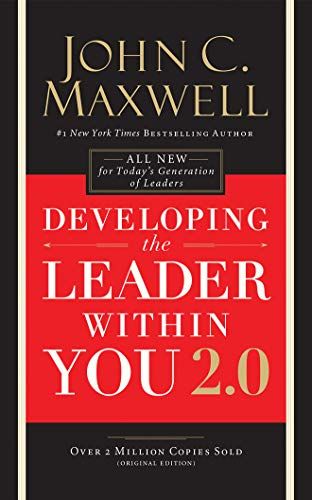
Developing the Leader Within You 2.0
Introduction: Beyond the Title
Introduction: Beyond the Title
Nova: Welcome back to the show! Today, we are diving deep into a book that has shaped millions of careers: John C. Maxwell's "Developing the Leader Within You 2.0." Now, if you think leadership is about a corner office, a fancy title, or having people report to you, I have a surprising fact for you right out of the gate: Maxwell insists that leadership is not a position, it is influence. That’s the entire premise.
Nova: : That’s a powerful distinction, Nova. I think most people, when they hear 'leader,' picture the person signing the checks or running the meeting. So, what makes this 2.0 version essential reading if the core message—leadership is influence—has been around for decades?
Nova: That’s the perfect entry point. The original book was foundational, but the world has changed dramatically since it was first published. The 2.0 edition isn't just a reprint; Maxwell transformed 89% of the lessons. He updated the principles to address today's fast-paced, often decentralized work environments. It’s about taking timeless truths and making them immediately applicable to the modern leader who might be leading a remote team or navigating rapid technological shifts.
Nova: : So, it’s less about the structure of a traditional hierarchy and more about the personal currency you build with people, regardless of where you sit in that structure. It sounds like the focus is intensely personal, hence the 'Within You' part of the title.
Nova: Exactly. It’s an internal audit before an external campaign. Before you can effectively lead others, you must master leading yourself. We’re going to break down the core pillars Maxwell lays out: Influence, Character, Service, and Vision. But first, let’s tackle the biggest myth Maxwell works to dismantle: the idea that leadership is something you are given, not something you earn.
Nova: : I’m ready to unpack that. If it’s not the title, what is the absolute first step to earning that influence? Is there a secret handshake or a magic phrase?
Nova: No magic, just hard work. The first step is understanding where you currently stand on his famous roadmap. Let's move into our first core insight: defining leadership by the currency of influence.
Key Insight 1: Influence Over Title
The Currency of Leadership: Moving Beyond Position
Nova: Maxwell’s entire framework hinges on his Five Levels of Leadership. Level 1 is Position. People follow you because they have to. They are obligated by the organizational chart. It’s the lowest form of leadership, but it’s where everyone starts.
Nova: : That makes sense. If I’m a new manager, I have the title, but I might not have the respect yet. I have compliance, not commitment. What’s the immediate next step up from that mandatory following?
Nova: That next step is Level 2: Permission. This is where true leadership begins. People follow you because they to. You’ve earned their trust, built rapport, and established a genuine connection. Maxwell emphasizes that you cannot skip Level 2 and expect Level 3 or 4 to stick. If you try to produce results without permission, you’re just a boss barking orders.
Nova: : So, how does one move from Level 1 to Level 2? It sounds like it requires a significant shift in focus from tasks to people. Are there specific actions he suggests to gain that permission?
Nova: Absolutely. The shift is moving from 'What can I get done?' to 'What can I do for them?' It’s about valuing people. In the 2.0 edition, he reinforces that this means listening actively, showing genuine care for their professional growth, and being consistent. If you are erratic or self-serving, permission is instantly revoked. Think of it like a social contract; you have to consistently honor your side of the deal.
Nova: : That’s a great analogy. It’s like borrowing trust. If you abuse it, the lender—your team—will stop extending credit. I recall reading that the higher you climb, the more your influence is based on what you’ve done for, not just for the organization. Is that the jump to Level 3?
Nova: Precisely. Level 3 is Production. People follow because of what you have for the organization. This level validates your leadership; you’re getting results. But here’s the trap: many leaders get stuck at Level 3. They become so focused on hitting targets that they forget the people who are hitting them. They confuse production with development.
Nova: : That’s where the real danger lies, isn't it? You’re effective, you’re hitting your KPIs, but your team is burning out or looking for the exit because they feel like cogs in a machine. What’s the key differentiator between a Level 3 leader and a Level 4 leader?
Nova: The differentiator is the focus of the effort. At Level 3, you are focused on the. At Level 4, People Development, you shift your focus to the who create the results. Level 4 is where you intentionally invest in developing the next layer of leaders. People follow you because of what you have done for personally and professionally. This is where multiplication happens.
Nova: : That’s the exponential factor. If I only focus on my own production, my influence dies with my tenure. If I develop five other leaders, my influence multiplies fivefold. It sounds like Level 4 is the engine room for sustainable growth.
Nova: It is. And Maxwell notes that moving from Level 3 to Level 4 often requires a leader to intentionally slow down their own production focus to spend time mentoring, coaching, and delegating developmental opportunities. It feels counterintuitive when deadlines loom, but it’s the only way to truly scale your impact beyond your own capacity. This brings us beautifully into the second major theme: the internal work required for this external influence.
Key Insight 2: Self-Leadership and Ethics
The Inner Game: Character as the Foundation of Trust
Nova: We’ve established that influence is the goal, and the 5 Levels are the path. But what builds the bedrock for that path? Maxwell hammers home the concept of Character. He states that good ethics and self-leadership are non-negotiable. You cannot lead others effectively if you haven't mastered leading yourself.
Nova: : I’ve seen this play out. A leader who preaches punctuality but is always late, or demands transparency while hiding information—that erodes trust instantly. But how does Maxwell define 'self-leadership' in a practical sense? Is it just about being disciplined?
Nova: It’s deeper than just discipline; it’s about intentionality in your habits and reactions. One key area he covers is self-control, especially under pressure. He suggests that when tasks pile up, a leader has a choice: agonize or organize. The leader who chooses to organize—who applies self-discipline to prioritize—is practicing self-leadership. The research notes mentioned looking at high importance/high urgency tasks first, then high importance/low urgency. That’s the practical application of self-control over immediate reaction.
Nova: : That prioritization exercise is gold. It stops you from constantly fighting fires and forces you to focus on what actually moves the needle. But what about the ethical component? In today's environment, where transparency is often demanded, how critical is integrity to maintaining influence?
Nova: It is the ultimate differentiator. Maxwell implies that integrity is the speed limit for your leadership growth. You can have high talent, but if your integrity is low, your leadership potential is capped—that’s the Law of the Lid in action, even if he doesn't use that exact phrase here. If people suspect you are cutting corners, withholding truth, or prioritizing personal gain over the team's well-being, Level 2 Permission evaporates instantly.
Nova: : So, if I’m a leader who is great at vision-casting and motivating people, but I’m known for taking credit for others' work, where do I land on the Levels chart?
Nova: You are stuck at Level 3, Production, and you’re probably teetering on the edge of falling back to Level 1. Why? Because taking credit destroys the trust needed for Level 4, People Development. If I know my hard work will be claimed by my boss, why would I invest extra effort to mentor the person below me? I’ll just focus on my own survival and production. Maxwell stresses that valuing people means giving them credit publicly and correcting them privately. It’s a service mindset.
Nova: : That’s a powerful contrast. It forces us to look inward and ask: Am I leading myself with the same rigor I expect from my team? Am I practicing the servant leadership that Level 4 demands, or am I still operating from a position of entitlement?
Nova: Exactly. The book is a mirror. It forces you to confront the gap between the leader you and the leader you to achieve sustainable influence. And that journey requires a clear destination, which brings us to the role of Vision.
Key Insight 3: Vision as the Magnet
The Destination: Vision and the Pinnacle of Leadership
Nova: We’ve covered the foundation and the mechanism. Now, let’s talk about the fuel that drives the whole engine: Vision. A leader without a vision is just a manager organizing tasks. A leader with a compelling vision attracts followers.
Nova: : I’ve heard the phrase that a leader’s job is to articulate the vision so clearly that people can see it, feel it, and want to be a part of it. How does Maxwell frame the relationship between Vision and the higher levels of leadership?
Nova: Vision is what propels you toward Level 5: Pinnacle. Level 5 leaders are those whose influence transcends their current organization. They have built a legacy. Their leadership is recognized far beyond their immediate sphere because their vision was so significant and they developed so many leaders who carried that vision forward.
Nova: : That sounds almost mythical, the Level 5 leader. Is it achievable for the average person listening right now who is maybe only managing a small team or even just leading their family?
Nova: Maxwell is clear: everyone can operate at Level 5 in area of their life. It’s not reserved for CEOs or presidents. It’s about reaching the pinnacle of influence in your chosen field or community. But to get there, the vision must be clear, compelling, and constantly communicated. It has to answer the 'Why?' for every task.
Nova: : So, if I’m at Level 2 or 3, how do I start developing that vision? Do I just sit down and write a mission statement?
Nova: It starts with understanding your unique value proposition—what unique contribution can make? Then, you connect that to the needs of the people you serve. The 2.0 version likely includes more modern guidance on articulating this vision digitally and concisely. A great vision acts as a magnet. It pulls in the right people, and it repels those who aren't aligned with the destination. It simplifies decision-making because every choice is measured against the vision.
Nova: : That’s fascinating. If the vision is strong enough, it actually makes the climb through Levels 2, 3, and 4 easier because people are self-selecting into the mission. They are following the, not just the person.
Nova: Precisely. And this is where the concept of Service ties back in. Level 4 leaders serve the people, and the people, in turn, serve the vision. It creates a virtuous cycle. If you are serving the people, they will help you achieve the vision. If you are only serving the vision, the people will eventually leave you.
Nova: : It seems like Maxwell is constantly pulling us back to balance: Vision for the future, Character for the present, and Service for the people who bridge the two. It’s a holistic system, not just a checklist of skills.
Key Insight 4: Updated Tools for Modern Leadership
The 2.0 Advantage: Practical Application in Today's World
Nova: We’ve covered the theory—Influence, the 5 Levels, Character, Vision. But let’s talk about the '2.0' advantage. Why should someone who read the original book twenty years ago pick this one up?
Nova: : I’m curious about the tangible updates. Are we talking about new case studies, or did he fundamentally change the architecture of the model?
Nova: It’s both. He reinforced the time-tested truths, but he also added new content and updated the existing lessons to reflect the realities of modern leadership challenges. For instance, the original might have focused on leading a stable, local team. The 2.0 version has to account for leading across time zones, dealing with information overload, and the constant need for adaptability.
Nova: : Adaptability was one of the points I saw mentioned in the search results—the ability to pivot when the environment changes. How does Maxwell integrate that into a framework that seems so structured around fixed levels?
Nova: He frames adaptability as a necessary component of self-leadership and growth. You can’t stay at Level 2 if the organization demands production. You must be willing to evolve your approach. The 2.0 edition seems to lean heavily into practical application, evidenced by the mention of the accompanying Workbook, which includes practical exercises and discussion questions.
Nova: : That’s where the rubber meets the road. A book summary is great, but exercises force internalization. Can you give us an example of the kind of actionable step a reader might take immediately after reading a chapter on Character?
Nova: A great exercise would be a 'Credit Audit.' After a major success, you write down every single person who contributed, no matter how small their role. Then, you publicly acknowledge them in a way that elevates their status. If you find yourself naturally wanting to keep that credit for yourself, that’s your character gap. The book encourages leaders to move from 'I did this' to 'We achieved this,' and then specifically highlight the 'we' members.
Nova: : That’s brilliant because it’s measurable. You can track how often you shift the pronoun. Another practical element mentioned was the 'Ten-Step Leadership Process.' While we don't have the full details, what does that imply about the book's overall approach?
Nova: It implies a systematic, step-by-step approach to developing people. It suggests leadership isn't a spontaneous act but a repeatable process of adding value. It moves leadership from an art form—something you’re born with—to a science—something you can learn, practice, and master. The 2.0 version is designed to be a curriculum for personal leadership development.
Nova: : So, for listeners who feel they are already good leaders, the 2.0 isn't just a refresher; it’s a diagnostic tool to see if their influence is built on the most current, robust foundation possible. It’s about ensuring your Level 3 production isn't accidentally undermining your Level 4 potential.
Nova: Precisely. It’s about moving from being a good leader to becoming a great, sustainable leader who leaves a legacy, which is the essence of reaching that Level 5 Pinnacle.
Conclusion: Your Next Level of Influence
Conclusion: Your Next Level of Influence
Nova: We’ve covered a massive amount of ground today, moving from the abstract idea of influence to the concrete steps of character development and the roadmap of the 5 Levels. If there is one overarching takeaway from "Developing the Leader Within You 2.0," it is this: Leadership is an inside job that yields outside results.
Nova: : I agree. The most resonant theme for me is the intentionality required to move up the levels. It’s not passive; it’s a conscious choice to stop relying on your title and start investing in relationships so you can focus on multiplying others.
Nova: And remember the practical application: start with self-leadership. Master your own priorities, practice self-control, and ensure your ethics are impeccable. That integrity is the currency that buys you permission to lead. If you are at Level 3, start looking for opportunities to mentor someone today, even if it means sacrificing a small piece of your immediate production goal.
Nova: : That’s the actionable takeaway: Audit your current level of influence. Are you leading by title, or by trust? And if you are leading by trust, are you actively developing the next generation of leaders to carry your vision forward?
Nova: It’s a lifelong journey, not a destination. Maxwell gives us the map for the next stage of that journey. Whether you are new to management or a seasoned executive, the principles in this book, especially the updated 2.0 insights, provide the necessary framework to maximize your impact.
Nova: : It certainly reframes the entire concept of professional success. It’s not about how high you climb, but how many people you lift with you on the way up.
Nova: A perfect summary. Thank you for joining us on this deep dive into John C. Maxwell's essential work. Keep developing that leader within you.
Nova: : This is Aibrary. Congratulations on your growth!