

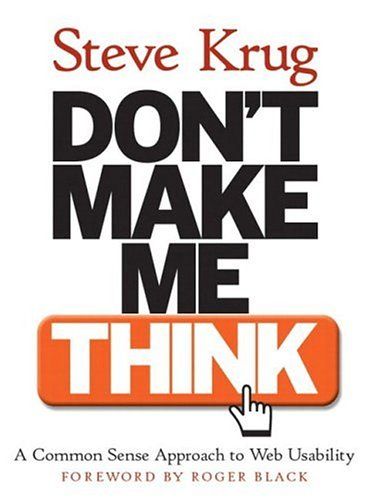
The Golden Rule of Frictionless Design
Golden Hook & Introduction
SECTION
Nova: There is a massive graveyard of products, software platforms, and even management strategies that were designed to be perfectly clean, minimal, and frictionless. And they failed. They failed because they operated under the assumption that removing every single barrier is the ultimate goal of design.
Atlas: That is a harsh reality check. Most people operate on the assumption that if you can just strip away every extra button, every extra step, and every extra word, you will have created the perfect user experience. You are telling me that is a fundamental misunderstanding of how people actually function?
Nova: Exactly. We are looking at the core thesis of The Golden Rule of Frictionless Design. It is a book that challenges the obsession with minimalism for the sake of minimalism. The author argues that true frictionless design is not about subtraction; it is about alignment. It is about aligning the system with how the human brain actually processes information and makes decisions.
Atlas: I like that distinction. Alignment versus subtraction. That shifts the focus from just making things look pretty to making them work with the grain of human psychology. And I imagine for anyone listening who is a builder or a strategist, that distinction is the difference between a tool that people love and a tool that people abandon.
Nova: Precisely. And that is why this book has gained so much traction among tech leaders and product managers. It does not just talk about UI or UX in the traditional sense. It treats design as a strategic lever for impact. It is about managing the cognitive load of everyone who interacts with your system, whether they are a customer or a team member.
Atlas: That is a great pivot. Let’s actually get into that. Because if we are talking about cognitive load, we are talking about a finite resource.
The Myth of Minimalism and the Reality of Cognitive Load
SECTION
Nova: We are. The first thing we have to dismantle is the idea that simplicity is the absence of features. The book introduces the concept of the Cognitive Tax. Every time you ask a user, or an employee, or a stakeholder to make a decision, you are charging them a tax. You are draining their battery.
Atlas: I have felt this. I think everyone has. You log into a new piece of software, and even if it looks clean, you are hit with a wall of, "What do I do first?" That is a tax, right? Even if there are no buttons, the lack of direction is a massive friction point.
Nova: That is the perfect example. You have a clean interface, but you have left the user in a vacuum. The book explains that the brain hates a vacuum. It wants a path. When you provide a path, you reduce the tax. When you provide an empty, minimal screen, you increase the tax because the user has to invent the path themselves.
Atlas: So, you are saying that sometimes adding a button, or a prompt, or a guide, actually reduces the overall friction?
Nova: Absolutely. Think about a GPS system. A truly frictionless design would be a map with no markings, just the terrain. That is simple, right? It is minimal. But it is useless. The frictionless design is the one that says, "Turn left in 500 feet." It gives you the information you need, exactly when you need it, and nothing else. It is not about having the fewest elements; it is about having the highest signal-to-noise ratio.
Atlas: That makes so much sense. I am thinking about this from the perspective of a team leader. If I am a strategist trying to build a high-performance team, I see this same dynamic. If I tell my team, "Just go innovate," and I give them no structure, no constraints, and no clear mission, I am essentially giving them a blank map. I think I am being "minimalist" and "hands-off," but I am actually just creating a massive cognitive tax. They spend all their energy trying to figure out what they are supposed to be doing, rather than actually doing it.
Nova: That is a brilliant parallel. You are effectively describing the difference between autonomy and abandonment. In the book, the author talks about the "Freedom-Efficiency Curve." If you provide zero structure, you have infinite freedom but zero efficiency. The cognitive load is maxed out. If you provide total structure, you have zero freedom but high efficiency, yet you lose the capacity for innovation. The "Golden Rule" is finding that sweet spot where you provide just enough structure to remove the cognitive tax, which then frees up the mental energy for the actual, high-level work.
Atlas: So, the goal is to optimize the structure so that the team’s mental energy is spent on the problem, not on navigating the process.
Nova: Exactly. And that applies to product design, company culture, and even personal productivity. The book emphasizes that we need to stop asking "How can we make this simpler?" and start asking "How can we make this more intuitive?" Intuition is not the absence of complexity. Intuition is the presence of clarity.
Atlas: That is a profound distinction. I want to dig into that a little more. Because when we talk about "clarity," that sounds like something that requires a lot of work to build. Minimalism feels like it is about taking things away, which is easy. Clarity feels like it is about organizing things, which is hard.
Friction as a Strategic Asset
SECTION
Nova: You hit the nail on the head. Clarity is an active, demanding process. It requires you to deeply understand what the user is trying to accomplish. The author uses a great case study about a high-stakes financial trading platform. They had an interface that was incredibly cluttered. It looked like a cockpit of a 747. The designers decided to "clean it up" and removed half the data points. They thought they were being helpful.
Atlas: I can see where this is going. The traders hated it.
Nova: They revolted. Because for those traders, that "clutter" was actually context. They were not seeing noise; they were seeing the market's pulse. The designers had removed the friction of the interface, but they had also removed the utility of the tool. They had failed to distinguish between "bad friction" and "necessary complexity."
Atlas: This is such a crucial point. How do we distinguish between the two? Because if I am a builder, I want to remove friction, but I don't want to break the utility.
Nova: The book proposes a litmus test. You look at every point of friction and you ask: "Does this friction serve the user's ultimate goal, or does it serve the system's requirements?" If the friction serves the user—like a confirmation step before a high-stakes trade, or a tutorial for a complex feature—that is good friction. It is a guardrail. If the friction serves the system—like an unnecessary login process, or a confusing menu structure—that is bad friction. That is a tax.
Atlas: That is a very practical framework. Good friction is a guardrail; bad friction is a tax. I think that applies to everything. If I am building a project management system for my team, and I require them to fill out ten fields that no one ever looks at, that is a tax. That is bad friction. If I require them to define the "Definition of Done" before they start a task, that is a guardrail. That is good friction.
Nova: Precisely. And the strategist who can identify the difference is the one who wins. Because the strategist who removes all friction ends up with a system that is fast but reckless. The strategist who keeps all the friction ends up with a system that is safe but stagnant. The leader who balances them? That is the one who builds something meaningful.
Atlas: I love the idea of the "Strategic Guardrail." It changes how I view my own operational systems. But I have to ask, what about the human element? We have talked about systems and software, but this feels like it applies to how we communicate with each other, too.
Human Friction and the Art of Communication
SECTION
Nova: It absolutely does. The book dedicates a significant section to "Social Friction." Think about how much cognitive energy we waste in organizations trying to decode vague emails, or trying to navigate the "who does what" of a project. That is all friction.
Atlas: Oh, the "vague email" tax. That is a huge one. Someone sends an email that says, "Can you take a look at this?" and you spend ten minutes trying to figure out what "this" is, and what "take a look" actually means.
Nova: Exactly. That is a failure of design in communication. The author suggests that applying the "Golden Rule" to communication means being radically explicit about intent and outcome. It is about designing your message so the recipient has the lowest possible cognitive load to understand what is needed.
Atlas: So, instead of "Can you take a look?", the frictionless approach is "I need your feedback on the budget section of the Q3 report by Thursday at 2 PM. Specifically, I need to know if the marketing spend aligns with the new goal."
Nova: That is the difference between a high-tax message and a frictionless one. You have done the work of clarifying the intent, so the recipient does not have to. You have removed the friction of interpretation. And the irony is, that takes more effort from the sender, but it creates a massive efficiency gain for the system.
Atlas: It is an investment. You are paying the tax upfront as the sender, so the receiver does not have to pay it later. It is a shift from "I want to be quick" to "I want to be effective."
Nova: That is the fundamental shift. Frictionless design is not about making things easier for the creator; it is about making things easier for the user, the team member, or the audience. It is an act of empathy.
Atlas: That is a beautiful way to put it. It is an act of empathy. It really reframes the whole concept of "design." It is not just about aesthetics; it is about how we treat people's time and energy.
Synthesis & Takeaways
SECTION
Nova: And that brings us to the core of why this matters so much. When you view friction as an emotional and cognitive tax, you stop seeing your work as just "building things" and start seeing it as "managing energy." Whether you are a strategist, a builder, or a visionary, your most precious resource—and the most precious resource of the people you lead—is focus.
Atlas: I think that is the takeaway that is going to stick with me. "Managing energy." If we can protect that focus by removing the bad friction—the unnecessary taxes—and by intentionally placing good friction—the guardrails—we are not just building better products. We are building better environments for people to do their best work.
Nova: That is exactly it. And the challenge for everyone listening is to go back to their own domain—whether that is a piece of code, a team meeting, or a strategic plan—and ask, "Where is the tax? Where am I forcing people to spend energy that does not actually help them achieve their goal?"
Atlas: It is a challenge to be honest about where our own systems are failing. But it is also an invitation to be more thoughtful. I am going to look at my own calendar and my own team's processes with this lens. I want to find those unnecessary taxes.
Nova: That is the path to high-impact work. It is not about doing more; it is about making it easier for yourself and others to do what matters.
Atlas: This has been such a shift in perspective. It makes me realize that "frictionless" isn't about being lazy; it's about being incredibly intentional. Thank you for walking through this with me.
Nova: It was a pleasure. Keep building, keep optimizing, and remember: protect that focus. This is Aibrary. Congratulations on your growth!