

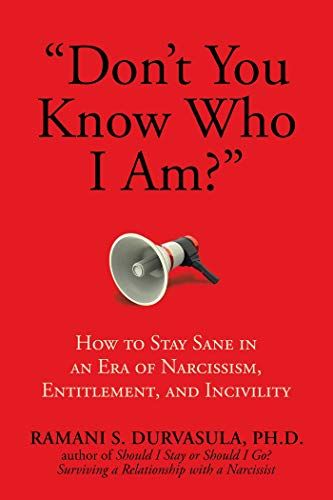
Decoding the Entitlement Epidemic: An Analytical Guide to Modern Narcissism
Golden Hook & Introduction
SECTION
Socrates: Picture this. You are standing in a crowded airport terminal. The flight is delayed, which is frustrating, sure, but then, someone at the front of the line starts screaming. They are red-faced, slamming their fist on the counter, and shouting those infamous words: "Do you have any idea who I am?!" Why does this scene feel so incredibly familiar today? Why does it feel like we are constantly wading through a rising tide of incivility and entitlement?
laiba: It is a fascinating, if exhausting, phenomenon, Socrates. When you look at that phrase—"Don't you know who I am?"—it is actually a fascinating psychological data point. It is not just bad manners. It is a desperate, aggressive attempt to force the world to validate a fragile ego. Dr. Ramani Durvasula's book,, is essentially a field guide to navigating this exact modern landscape of narcissism and entitlement. As someone who loves analyzing patterns, I find this book incredibly valuable because it treats these toxic behaviors not just as random acts of rudeness, but as highly predictable, systemic patterns.
Socrates: A systemic pattern. That is an intriguing way to frame it. So, how do we begin to map this system?
laiba: Well, today we are going to tackle this book from three distinct angles. First, we will map the actual psychological anatomy of the modern narcissist—breaking down the different types so we can recognize them instantly. Second, we will dissect the cognitive mechanics of gaslighting and daily incivility, looking at how they systematically drain our mental energy. And finally, we will build a practical defense system using Dr. Ramani's DEEP framework to protect our sanity and optimize our emotional bandwidth.
Socrates: Excellent. Let us begin with the anatomy. What is actually happening under the hood of a narcissist?
Deep Dive into Core Topic 1
SECTION
laiba: To understand the narcissist, we have to look past the popular, superficial definition. In common conversation, we use "narcissist" to describe anyone who takes too many selfies or talks about themselves too much. But clinically, and as Dr. Ramani outlines, it is a much deeper, more rigid personality pattern. It is characterized by a profound lack of empathy, a pervasive sense of grandiosity, an insatiable need for validation, and a belief that they are inherently entitled to special treatment.
Socrates: A lack of empathy combined with a need for constant validation. Is that not a deeply unstable combination?
laiba: Absolutely! It is incredibly unstable, and that instability is the key to understanding their behavior. Think of it as a structural flaw in their psychological architecture. Because they lack a stable, internal sense of self-worth, they have to constantly import validation from the outside world. Dr. Ramani describes this as "narcissistic supply." If that supply is threatened, or if they face even the slightest criticism, the fragile structure collapses, and they lash out with rage or defensive entitlement.
Socrates: Ah. So the grandiosity is actually a shield? A defense mechanism against their own perceived insignificance?
laiba: Exactly! You have hit the nail on the head. It is a massive, loud defense mechanism. And what makes this so complex is that narcissism is not a monolith. Dr. Ramani breaks it down into several distinct types, and understanding these variations is crucial for our analytical toolkit. First, you have the classic. This is the loud, flashy, arrogant individual who commands the room, boasts about their achievements, and expects everyone to bow down. They are easy to spot.
Socrates: Indeed, the classic archetype. But what about the ones who do not fit that loud mold? The quieter ones?
laiba: Those are the, and they are often much more insidious. Instead of grandiosity, their shield is victimhood. They believe they are uniquely misunderstood, underappreciated, and mistreated by the world. They might say things like, "I would have been a CEO if the system wasn't rigged against me." They still have that core entitlement and lack of empathy, but it is wrapped in a cloak of fragile sensitivity and constant grievance.
Socrates: Fascinating. So, in one, the entitlement says, "I am superior," and in the other, it says, "I am uniquely suffering, therefore you owe me."
laiba: Yes! That is a brilliant way to synthesize it, Socrates. And then there is a third type that Dr. Ramani highlights, which is particularly tricky: the. These individuals get their validation, their "supply," by being seen as the most helpful, charitable, or saintly person in the room. They might sponsor a charity event, but they will make sure their name is in the largest font on the banner. They lack genuine empathy for the individuals they are helping, but they crave the public adoration of being a savior.
Socrates: A savior complex driven by self-interest. It sounds like a profound contradiction. How does one navigate a relationship with someone like that without losing their bearings?
laiba: It is incredibly difficult because their public persona is so positive. If you complain about them, you look like the bad guy. This brings us to the fourth type, the. This is the most severe form, where narcissism blends with paranoia, sadism, and a complete disregard for rules or the rights of others. They do not just want to win; they want to destroy.
Socrates: A chilling spectrum. If we look at this analytically, it seems these different types all share a common operating system: they exploit others to regulate their own internal instability. How does this exploitation manifest in daily communication?
Deep Dive into Core Topic 2
SECTION
laiba: It manifests through highly manipulative communication tactics, the most destructive of which is gaslighting. Dr. Ramani spends a significant portion of the book analyzing this, and for an analytical thinker, gaslighting is particularly horrifying because it is a direct attack on your data-processing capabilities. It is a systematic attempt to make you doubt your own memory, perception, and sanity.
Socrates: To doubt one's own reality. How does a manipulator achieve such a profound distortion?
laiba: They do it slowly, through a series of micro-manipulations. Let us look at a concrete, real-world example. Imagine you are in a workplace setting. Your manager verbally promises you a promotion and a raise if you complete a high-stress project by the end of the quarter. You work eighty-hour weeks, sacrifice your personal life, and deliver the project flawlessly. When you ask about the promotion, your manager looks at you with genuine confusion and says, "I never promised you a promotion. I said we would your career path next year. You must have misunderstood. Are you feeling okay? You seem really stressed lately."
Socrates: A complete rewrite of history. And because it is delivered with such calm conviction, the victim begins to question their own memory?
laiba: Exactly. You start thinking, "Wait, did I mishear them? Did I write it down wrong? Am I being too demanding?" That is the cognitive hack. The gaslighter corrupts your internal database. They deny objective facts, twist your words, and project their own behaviors onto you. Over time, this constant erosion of truth causes what Dr. Ramani calls "cognitive fatigue." You become so exhausted from trying to verify your own reality that you simply surrender your agency to the manipulator.
Socrates: It sounds like a slow-drip poison. And this does not just happen in isolated relationships, does it? How does this connect to the broader "era of incivility" that Dr. Ramani writes about?
laiba: This is where the book connects the micro to the macro, which I find incredibly compelling. Dr. Ramani argues that our modern societal structures—especially social media and the attention economy—are actively rewarding and amplifying these narcissistic traits. Think about how social media algorithms work. They do not reward nuance, empathy, or quiet reflection. They reward outrage, grandiosity, and self-promotion. We have created a digital ecosystem where entitlement is monetized.
Socrates: So, the technology we use is acting as an accelerator for these behaviors?
laiba: Precisely. It is a feedback loop. The more entitled and outrageous your behavior, the more views, likes, and validation you receive. This digital incivility then bleeds back into the real world. It normalizes the idea that other people are merely obstacles or audiences, rather than individuals with their own rights and feelings. When everyone is chasing their own "supply," basic civility—which requires a shared agreement of mutual respect—simply breaks down.
Socrates: If the ecosystem itself is compromised, and we cannot simply reboot the system, how do we protect ourselves? How does an analytical mind maintain its sanity in an environment designed to disrupt it?
Deep Dive into Core Topic 3
SECTION
laiba: This is the most empowering part of Dr. Ramani's book. She provides us with a practical, systemic defense blueprint. And the very first step in this blueprint is a concept that might sound counterintuitive at first:.
Socrates: Radical acceptance. Does that mean surrendering to the toxic behavior?
laiba: No, not at all. In fact, it is the exact opposite of surrender. Radical acceptance means accepting the reality of who the person is, rather than holding onto the fantasy of who you they would be. It is about looking at the data. If a person has consistently shown a lack of empathy, a pattern of manipulation, and a need for grandiosity for years, the analytical conclusion is that they are highly unlikely to change. Radical acceptance means you stop expecting a cat to bark. You stop entering every interaction hoping that they will finally understand your perspective or apologize.
Socrates: Ah. You stop investing emotional capital into a system that offers zero return.
laiba: Exactly! You close the bad investment. Once you accept that they cannot and will not change, you can shift your energy from trying to "fix" them to protecting yourself. And the primary tool for this protection is what Dr. Ramani calls the framework. It is an acronym, and it is incredibly elegant in its simplicity.
Socrates: DEEP. Walk us through each letter of this framework.
laiba: Let us break it down. The first letter,, stands for. Narcissists thrive on conflict and drama; it is a prime source of "supply" for them. When they throw out bait—perhaps a passive-aggressive comment or an absurd accusation—your natural instinct is to bite, to defend yourself. But Dr. Ramani says: don't. Keep your responses brief, boring, and factual. If they send a long, angry email, you respond with, "Received, thank you." You deny them the emotional reaction they are fishing for.
Socrates: You starve the fire of oxygen. And the first?
laiba: The first is. When we are dealing with a reasonable person, and there is a misunderstanding, we explain our perspective, right? We say, "Here is why I did that." But a narcissist does not want to understand you; they want to win. If you explain yourself, you are handing them ammunition. They will twist your explanations, use them to gaslight you, or frame you as defensive. So, keep your statements short and declarative. No justifications.
Socrates: Fascinating. To explain is to invite debate, and in their arena, the rules of debate are rigged. What about the second?
laiba: The second is. This is perhaps the hardest part, but it is the most liberating. When someone treats you with contempt, insults you, or gaslights you, it feels intensely personal. But Dr. Ramani reminds us that their behavior is a projection of their own internal pathology. It is not about your worth, your competence, or your value. If you weren't there, they would be doing the exact same thing to someone else. Recognizing this allows you to view their behavior with a sense of clinical detachment. It is not a reflection of you; it is a symptom of them.
Socrates: A clinical detachment. You become an observer of their pattern, rather than a participant in their drama. And the final letter,?
laiba: The stands for. This is a trap that analytical thinkers often fall into. We want justice. We want to present a mountain of evidence, prove our point logically, and force them to admit they were wrong or apologize. But you cannot win a logical argument with an illogical person. Trying to "prosecute" them, to make them see the error of their ways, only prolongs the engagement and drains your energy. They will never offer you the closure you seek. You have to find that closure within yourself.
Socrates: So, to summarize the DEEP firewall: Don't Engage, Don't Explain, Don't Personalize, Don't Prosecute. It is a method of conserving one's own cognitive and emotional resources by refusing to play a game designed for you to lose.
laiba: Precisely. It is about optimizing your emotional bandwidth. You only have a finite amount of energy each day. Why waste it trying to debug a program that is fundamentally designed to crash?
Synthesis & Takeaways
SECTION
Socrates: We have covered a vast landscape today, laiba. From the fragile, validation-seeking architecture of the narcissist, to the cognitive hacking of gaslighting, and finally to the protective firewall of the DEEP framework. If you were to synthesize all of this for someone trying to navigate this era of incivility, what is the core truth we must hold onto?
laiba: I think the core truth is that our sanity is our own responsibility. We cannot control the rising tide of entitlement or incivility in the world. We cannot force a toxic boss, a difficult family member, or a stranger at an airport to develop empathy. But we control our boundaries. We can choose to view these behaviors analytically, recognize the patterns for what they are, and implement the DEEP framework to protect our peace. Boundary-setting is not about building walls to shut the world out; it is about designing a system that decides what is allowed to enter our mental space.
Socrates: A beautifully designed system for inner peace. To our listeners: the next time you encounter that screaming passenger, that manipulative colleague, or that entitled comment online, ask yourself: will you engage in their drama, or will you choose the path of radical acceptance and protect your sanity?
laiba: It is a choice we have to make every single day, Socrates. And with the right analytical tools, it is a choice we can make with confidence.
Socrates: Indeed. Thank you, laiba, for this deeply insightful exploration. And thank you to everyone for listening. Until next time, keep questioning, keep analyzing, and stay sane.