

The Science of Finishing: Why Perfectionism is Starving Your Progress
Golden Hook & Introduction
SECTION
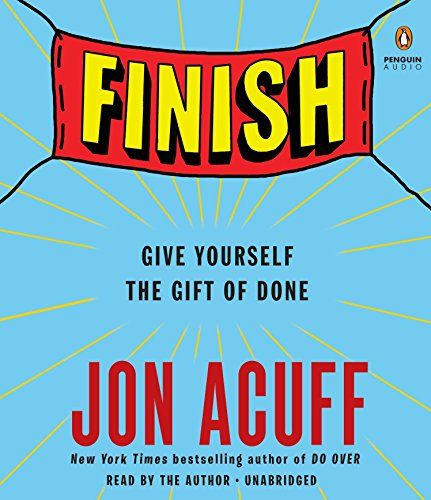
Dr. Warren Reed: Why do we abandon our goals the moment they stop feeling perfect? You start a new study plan or a demanding training program with massive enthusiasm. Day three is flawless. Day four, you miss a session. Suddenly, a voice whispers: you already messed up, might as well quit. That is the toxic voice of perfectionism. Today, we are breaking that cycle. Welcome to the show. I am Dr. Warren Reed, and with me is dietitian and analytical thinker Büşra Bayıroğlu. Today, we are dissecting Jon Acuff's masterpiece, Finish: Give Yourself the Gift of Done. We will tackle this from two distinct angles. First, why perfectionism is a liar that makes us quit, and second, how to use strategic bombing and destroy noble obstacles to actually cross the finish line of your biggest goals. Büşra, welcome.
Büşra Bayıroğlu: Thank you, Warren. It is wonderful to be here. As someone who looks at human behavior and physiology, this book hit incredibly close to home. In my field, we see people start diets with 100% enthusiasm on Monday and completely abandon them by Wednesday because they ate one cookie. I realized I was doing the exact same thing with my study plans for my government appointment exam and the various training programs I keep signing up for.
Dr. Warren Reed: Fact. Perfectionism is a progress killer. It is not a standard of excellence. It is a defense mechanism. Acuff points out that the market is flooded with books on how to start. Starting is easy. Starting is fun. Finishing is where the real work happens. Büşra, you mentioned your exam prep. How does perfectionism show up there?
Büşra Bayıroğlu: It shows up as an all-or-nothing mentality. I will design this beautiful, highly detailed study schedule. I tell myself I will study eight hours a day, exercise, eat perfectly, and complete an online course. Then, reality hits. Maybe I sleep in, or maybe I only study for three hours. Instead of celebrating those three hours, my brain says, well, you failed today's perfect schedule, so the whole day is a write-off. I might as well not study tomorrow either. It is a cognitive distortion.
Dr. Warren Reed: Exactly. Acuff calls this the day after perfect. The day after perfect is the most dangerous day of any goal. It is the day you realize you are not perfect. Most people quit here. But finishers do something different. They keep going. Let us break down how to beat this.
Deep Dive into Core Topic 1
SECTION
Dr. Warren Reed: Let us look at the data. Acuff partnered with a researcher, Dr. Mike Peasley, to study thousands of people completing goals. The single most effective strategy they found? Cut your goal in half. If you want to study six hours a day, make it three. If you want to lose ten pounds, aim for five. Büşra, as an analytical thinker, what is your reaction to that?
Büşra Bayıroğlu: Honestly, my initial reaction was resistance. It felt like cheating. It felt like I was lowering my standards. But when I analyzed it, it made perfect scientific sense. In nutrition, if you put someone on an extremely restrictive, 1000-calorie diet, their metabolism slows down, they get exhausted, and they eventually binge and quit. It is unsustainable. Cutting the goal in half is like setting a sustainable caloric deficit. It keeps you in the game.
Dr. Warren Reed: Spot on. Bottom line: a goal cut in half that you actually finish is infinitely better than a massive goal you abandon at 10%. Acuff explains that perfectionism tells you that cutting your goal in half is for weak people. That is a lie. It is for smart people who understand human psychology. When you cut your goal in half, you reduce the pressure. You build momentum. Momentum is the fuel of finishing.
Büşra Bayıroğlu: It really is about momentum. I noticed that when I tell myself I only have to study for two hours, I actually sit down and do it. And often, once I get started, I end up studying for three or four hours. The barrier to entry was just too high when the goal was eight hours. It is like activation energy in chemistry. You need a spark to start the reaction, but if the spark required is too big, the reaction never happens.
Dr. Warren Reed: Yes. Lower the activation energy. That is the strategy. Acuff also suggests that if you cannot cut the goal in half, double the time. If you are preparing for this government exam and you think you need three months, give yourself six months. Why do we rush? Because perfectionism demands immediate results. It wants the fairy tale.
Büşra Bayıroğlu: That is so true. We want the dramatic transformation montage. But real progress is slow, boring, and highly repetitive. For my exam, there is a massive amount of material to cover. I want to master it all instantly. When I don't, I feel like I am not good enough. But doubling the timeline gives my brain room to breathe. It allows for cognitive consolidation. You cannot cram deep understanding.
Dr. Warren Reed: You cannot. It is a biological constraint. Let us talk about another rule Acuff exposes. The secret rules. We all have them. These are the subconscious beliefs we hold about our goals. For example: if it is easy, it does not count. Or, if I am not suffering, I am not working hard enough. Büşra, do you have any secret rules?
Büşra Bayıroğlu: Oh, absolutely. One of my biggest secret rules is that if I enjoy the process too much, or if I make it fun, I am not being professional. I feel like studying for this exam has to be a miserable, grueling experience to be valid. If I am comfortable, or if I use colorful, engaging study methods, I feel guilty. It is ridiculous when you say it out loud, but it runs in the background of my mind.
Dr. Warren Reed: It is a trap. Acuff's research showed that goals that are fun are completed at a much higher rate. If you hate the process, you will find every excuse to quit. You must inject fun into your goals. If you are studying, do it at a coffee shop you love. Reward yourself. Make it a game. Do not let perfectionism convince you that misery equals progress.
Büşra Bayıroğlu: It is like trying to force someone to eat broccoli when they hate it. Eventually, they will rebel and eat fast food. If we can make the healthy habit, or the study habit, appealing and engaging, we bypass that internal resistance. I need to find ways to make my exam prep more engaging, perhaps by connecting the concepts to real-world health scenarios that I am passionate about.
Dr. Warren Reed: Do that. Connect the dry exam material to your passion for nutrition. That is a strategic win. It changes the game from obligation to curiosity.
Deep Dive into Core Topic 2
SECTION
Dr. Warren Reed: Now, let us pivot to the second major concept. Strategic bombing. This is my favorite. You cannot do everything. If you are focusing on a massive goal, like passing a highly competitive government exam, other areas of your life will suffer. You must choose what to bomb. You must choose what to fail at.
Büşra Bayıroğlu: This is incredibly difficult for a perfectionist. We want to be the perfect student, the perfect friend, have the perfect clean house, and stay in perfect shape. The idea of consciously choosing to fail at something feels terrifying.
Dr. Warren Reed: It is terrifying, but it is mandatory. Here is the truth: you are already bombing. You are just doing it accidentally and feeling guilty about it. Acuff says you should do it on purpose. Choose what you are going to neglect during this exam prep season. Maybe your house is a bit messy. Maybe you do not cook elaborate meals. Maybe you bomb your social media presence. Decide ahead of time.
Büşra Bayıroğlu: That is a powerful shift. If I decide beforehand that, for the next three months, I am going to bomb keeping a spotless apartment, then a dusty shelf is no longer a sign of personal failure. It is a strategic choice. It is a resource allocation decision. My mental energy is a finite resource. If I spend it all on dusting, I have nothing left for biochemistry or public health regulations.
Dr. Warren Reed: Exactly. It is basic economics. Scarcity of time and energy. If you do not choose what to bomb, perfectionism will choose for you, and it usually chooses your primary goal. You will spend all your energy on minor tasks and bomb the exam.
Büşra Bayıroğlu: This connects directly to my struggle with starting multiple demanding training programs at the same time. I realize now that this is what Acuff calls a noble obstacle.
Dr. Warren Reed: Yes. Let us define that. A noble obstacle is a good, productive thing you do to avoid doing the main thing. It feels like progress, but it is actually a hiding place. Tell me about your training programs.
Büşra Bayıroğlu: Well, I am currently unemployed, waiting for this exam. I feel a lot of pressure to prove I am being productive. So, I sign up for advanced nutrition courses, public speaking workshops, and language classes. They are all noble. They are all good things. But they take up so much time and mental energy that I end up too exhausted to study for the actual exam that will get me the job. It is a highly sophisticated way of procrastinating.
Dr. Warren Reed: It is. It is self-sabotage wrapped in a resume. You are hiding from the exam because the exam is high-stakes. If you fail the exam, it hurts. But if you fail to finish a random online course, who cares? The noble obstacle protects your ego from the real risk of failure.
Büşra Bayıroğlu: That is a profound realization, Warren. It is much easier to say, I did not pass the exam because I was too busy improving myself in five other areas, rather than admitting I gave it my all and still did not make the cut. The noble obstacle is a safety net for my self-esteem. But it is keeping me unemployed.
Dr. Warren Reed: Fact. It is a shield. You must drop the shield to win the battle. Acuff tells a story about a man who wanted to write a book. But instead of writing, he decided he first needed to build a custom writing shed in his backyard. He spent months researching wood, permits, and designs. That is a noble obstacle. He was not writing; he was carpentry-ing. Do not build a writing shed, Büşra. Study for the exam.
Büşra Bayıroğlu: I love that analogy. My training programs are my writing shed. I am building this elaborate intellectual shed instead of actually sitting down and doing the hard, focused work of exam preparation. I need to dismantle the shed.
Dr. Warren Reed: Dismantle it today. Cancel the extra courses. Pause the non-essential projects. Focus is not about saying yes to the main thing; it is about saying no to the fifty other good things that are in the way. You have one target right now: the government appointment. Everything else is a distraction, no matter how noble it looks.
Büşra Bayıroğlu: It requires a lot of courage to simplify. It feels like you are putting all your eggs in one basket. But realistically, if I spread my energy across five different baskets, none of them will have enough weight to succeed. I need to concentrate my force.
Dr. Warren Reed: That is military strategy 101. Concentration of force. You do not attack a fortress by scattering your troops. You focus them on one weak point. The exam is your target. Focus your force.
Synthesis & Takeaways
SECTION
Dr. Warren Reed: Let us wrap this up with actionable steps. We have covered a lot of ground. Büşra, how would you synthesize this for yourself and our listeners?
Büşra Bayıroğlu: I think the biggest takeaway for me is redefining what success looks like. Success is not a flawless, perfect journey. Success is a messy, imperfect finish. I need to apply the same principles I teach in nutrition to my personal goals. Just like a healthy lifestyle is built on consistency, not perfection, my exam prep must be built on showing up, even when it is imperfect. I am going to cut my daily study goals in half to build momentum, and I am going to consciously bomb my non-essential projects. No more noble obstacles.
Dr. Warren Reed: Excellent. Here is your three-point no-fluff checklist. First, cut your current goal in half today. If you plan to study four hours, make it two. Build the habit of finishing. Second, choose what to bomb. Write down three things you are going to neglect guilt-free this week. Third, identify your writing shed. What productive-looking distraction are you using to hide from your main goal? Eliminate it.
Büşra Bayıroğlu: This is incredibly liberating, Warren. It feels like a weight has been lifted off my shoulders. I don't have to be perfect to be successful. I just have to finish.
Dr. Warren Reed: Done is better than perfect. Every single time. Give yourself the gift of done, Büşra. You have the analytical tools, you have the strategy, now go execute.
Büşra Bayıroğlu: Thank you, Warren. I am ready to cross that finish line.
Dr. Warren Reed: To our listeners, what is your writing shed? What are you going to bomb today to finish what matters tomorrow? Stop starting, start finishing. We will see you next time.