Rethinking Financial Systems and Social Equity
Golden Hook & Introduction
SECTION
Nova: If you think the tax code is a punishment, you are looking at it upside down. It is actually a menu. Most people are ordering the most expensive item on the list because they do not realize the chef is literally paying them to order the specials.
Atlas: That is an aggressive way to start. But I see your point. We are conditioned to view taxes as a loss, a leak in the bucket, something to be minimized by just paying less. But you are suggesting we should view it as a strategy.
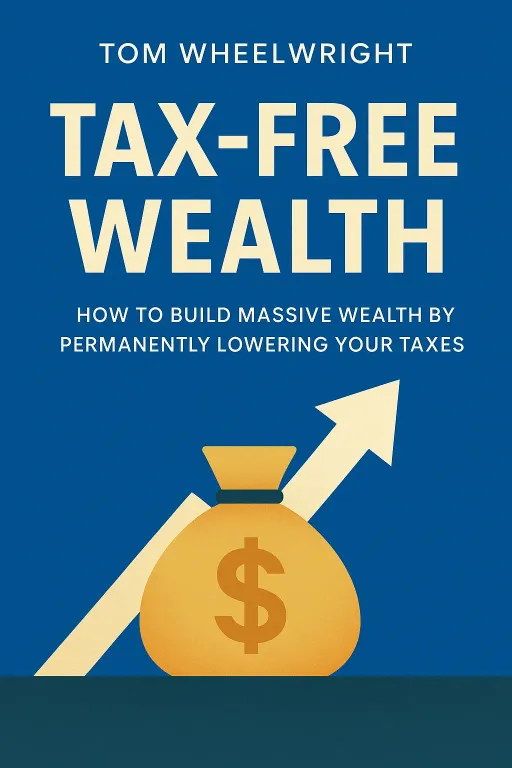
Nova: Exactly. We are diving into two fascinating books today that, when put together, create a completely different framework for how you view your professional life. We are looking at Tax-Free Wealth by Tom Wheelwright, and Free and Equal by Daniel Chandler.
Atlas: These seem like two very different worlds. Wheelwright is a CPA who advises some of the biggest names in business, known for his work with Robert Kiyosaki, and he is laser-focused on the mechanics of tax incentives. Then you have Chandler, who is drawing deeply from the philosophy of John Rawls to talk about justice and social equity. How do these two conversations even sit at the same table?
Nova: That is the best part. Wheelwright gives you the engine—the strategy for how to build wealth by aligning with government incentives. Chandler gives you the steering wheel—the moral framework for ensuring that the wealth you build actually contributes to a fair society. It is the difference between having the power to grow and having the wisdom to direct that growth.
Atlas: I like that. The Architect in me loves the idea of having both the engine and the steering wheel. Let’s start with the engine. Walk me through this idea from Wheelwright. If the tax code is a menu, why does it feel like a trap for most of us?
The Tax Code as Incentive Architecture
SECTION
Nova: It feels like a trap because we are taught to play a game we cannot win. We are taught to be employees, earn a salary, and pay taxes on that income. But the tax code was not written for employees. It was written for business owners and investors. Wheelwright’s central thesis is that tax laws are actually economic incentives. The government wants more housing, more energy, and more jobs. They do not have the resources to do it all themselves, so they write tax laws to encourage you to do it for them.
Atlas: Hold on. That sounds logical, but it also sounds like a loophole argument. Are you saying that if I want to pay less tax, I just need to start building housing or energy projects? That feels like a massive leap for the average professional.
Nova: It is a leap, but it is a structural one. Think about it. If the government wants to solve a housing shortage, they could either build the apartments, which is slow and bureaucratic, or they could offer a tax credit to anyone who builds an apartment complex. They choose the latter. When you build that complex, you are fulfilling a government policy. You are an agent of the government’s economic goals. The tax break is not a loophole; it is a payment for your service.
Atlas: That changes the psychology entirely. Instead of looking at a tax bill and feeling like I am being penalized for success, I should look at my business or investment portfolio and ask, what is the government trying to incentivize right now? And am I doing that?
Nova: Precisely. If you are just trying to minimize your tax bill by saving receipts, you are playing defense. You are always going to lose. If you are building businesses or investments that align with what the government wants to encourage, you are playing offense. You are essentially partnering with the system. Wheelwright’s point is that the wealthy are not just avoiding taxes; they are actively participating in the economy in a way that the government rewards.
Atlas: I can see how that appeals to a driven professional. It turns the tax code into a roadmap for where to put your energy. But here is the friction point. If everyone uses these incentives to build, say, massive real estate empires, we end up with a landscape that might be great for the investor but leaves a lot of people behind. That brings us to the second half of our conversation, right? How do we reconcile this drive for personal wealth with the broader need for a fair society?
Nova: That is the perfect pivot. Because you can follow the tax code to the letter and still end up in a society that feels fractured and unequal. That is where Daniel Chandler’s work in Free and Equal comes in. He takes the philosophy of John Rawls and applies it to our modern economic reality.
The Philosophical Framework of Justice
SECTION
Atlas: I have heard the name John Rawls thrown around in academic circles, but I have never really understood how his philosophy applies to a professional trying to build a career. What is the core takeaway for someone who is not a political theorist?
Nova: It is all about the "Veil of Ignorance." Imagine you are designing the rules of a society, but you do not know who you are going to be in that society. You do not know if you will be a billionaire, a teacher, a janitor, or a person with a disability. You do not know your race, your gender, or your intelligence. If you had to design the rules without knowing your own starting position, what kind of society would you build?
Atlas: That is a brutal mental exercise. If I don't know if I’m going to be the CEO or the person cleaning the office, I am going to build a system that is incredibly safe for the person at the bottom. I am going to ensure that even if I end up in the most vulnerable position, I still have a decent quality of life.
Nova: Exactly. That is the Rawlsian definition of justice. A fair society is one that you would be willing to be born into, without knowing your status. Chandler argues that our current economic system is drifting away from that. We have prioritized economic freedom—the ability to accumulate wealth—without balancing it against the need for a stable, equitable foundation.
Atlas: I am struggling to reconcile these two authors. Wheelwright is telling me to use the tax code to keep more of my money, to build my own empire. Chandler is telling me that we need to design a system that protects the vulnerable. Am I supposed to be a ruthless investor or a social reformer? Can I be both?
Nova: That is the million-dollar question. And the answer is not that you have to choose one or the other. It is about how you integrate them. Think about it this way: what if the way you build your "Tax-Free Wealth" becomes the very mechanism by which you contribute to the "Free and Equal" society?
Atlas: Explain that. Are you saying I should use my tax savings to fund social programs? That feels like a bit of a stretch.
Nova: Not necessarily. Let’s look at the incentives again. If you use tax incentives to build housing, you are providing a service the government needs. If you do it in a way that is sustainable and provides quality living, you are contributing to the social good. You are using the system’s own rules to build something that actually helps people. The problem arises when we use those incentives to extract value without creating it. That is where the injustice creeps in.
Atlas: I see the distinction. It is about the quality of the activity, not just the tax benefit. If I use an incentive to build a development that gentrifies a neighborhood and pushes people out, I am technically following the tax code, but I am violating the Rawlsian principle of fairness. If I use that same incentive to build affordable housing, I am aligning the two.
Nova: You hit the nail on the head. That is the synthesis. It is about aligning your professional impact with the broader ecosystem. Wheelwright’s strategies are tools. Chandler’s philosophy is the blueprint for how you use those tools.
Synthesis & Integrating Wealth and Equity
SECTION
Atlas: This is starting to feel less like a dry tax discussion and more like a strategy for leadership. If I am an Architect of my own life, I need to be aware of the "Veil of Ignorance" when I make business decisions. I need to ask, "If I were the person affected by this decision, would I think this is fair?" And then I need to use the tools Wheelwright provides to make that decision financially viable.
Nova: That is a powerful way to put it. Most people view ethics and profit as two separate silos. You do the profit-making during the day, and you do the ethics-building through charity at night. What if you collapsed those silos? What if your business model itself was the ethical contribution?
Atlas: I think that is the next level of high performance. It is not just about efficiency; it is about alignment. It is about ensuring that the systems you build—the business, the investment, the career—are robust enough to survive scrutiny under that "Veil of Ignorance."
Nova: And that brings us to the "Tiny Step" we talked about. It is not about changing the whole world overnight. It is about mapping out one legal tax incentive that aligns with your professional investments and reflecting on how that specific activity contributes to your community.
Atlas: Let’s make that concrete for our listeners. If I am a software developer or a consultant, maybe I cannot build an apartment complex. But I can look for incentives in R&D credits, or education credits, or even just hiring practices that are incentivized by the government.
Nova: Precisely. If you are in tech, look at how R&D tax credits can be used to fund projects that have a genuine social impact. If you are in professional services, look at how you can structure your business to offer training or mentorship that is incentivized by the government. You are not just saving money; you are using the government’s resources to amplify your positive impact.
Atlas: It is a shift from "How do I take less from the government?" to "How do I work with the government to build something that matters?" That is a much more empowered stance. It makes me feel like I am not just a subject of the tax code, but a participant in the economy.
Nova: And that is the ultimate goal. You are not just a cog in the machine; you are an Architect of the system. You have the tools to build wealth, and you have the moral compass to ensure that wealth serves a higher purpose.
Atlas: I really appreciate how these two books, when combined, take us out of the binary trap of "greed versus charity." It suggests a third way: strategic contribution. You use the rules of the game to maximize your resources, and you use your values to determine what you build with them.
Nova: It is the difference between a life of accumulation and a life of impact. And honestly, for anyone listening who feels the weight of the current economic climate, this is the most hopeful way to look at it. You have agency. You have the tax code as a tool, and you have the principles of justice as a guide.
Atlas: I am definitely going to spend my 15-minute deep-work session tomorrow just mapping out those incentives. Not to find a shortcut, but to find an alignment.
Nova: That is the most pragmatic way to use your time. And remember, the goal is not to be perfect. The goal is to be intentional. Every time you make a decision that aligns your financial strategy with your community’s needs, you are building a better version of that "Free and Equal" society.
Atlas: I love that. It turns the boring, administrative task of tax planning into an act of community building. That is a perspective shift I can definitely get behind.
Nova: And that, Atlas, is how you change the world without having to wait for permission. You just start building, one incentive at a time.
Atlas: This has been a fantastic conversation. It really challenged me to think about my professional impact in a completely new light. Thank you for walking me through this.
Nova: It was my pleasure. And to our listeners, take that 15 minutes. Map out one incentive. See where it leads you.
Atlas: This is Aibrary. Congratulations on your growth!