The Elastic Mind: Mapping Consciousness, Neuroplasticity, and the Psychedelic Renaissance
Golden Hook & Introduction
SECTION
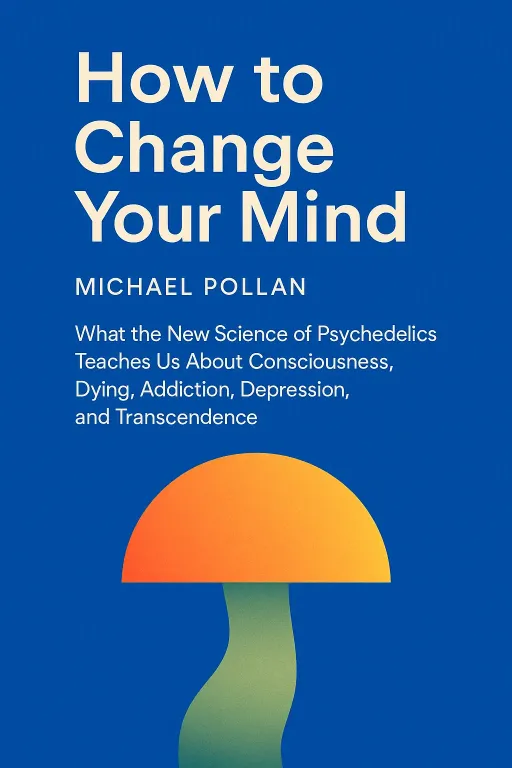
Nova: What if the reality you experience every single day is just one radio station, and right next to it on the dial are entirely different frequencies of consciousness, separated by the filmiest of screens? Today, we are diving into Michael Pollan’s masterpiece,, to explore the incredible science, history, and therapeutic potential of psychedelics. And I am absolutely thrilled to have analytical thinker and cross-domain explorer AsoisoG here with us today to help us unpack these deep concepts. Welcome, AsoisoG!
AsoisoG: Thanks, Nova! It is great to be here. You know, what really fascinates me about Pollan's book is how it bridges so many seemingly unrelated fields. We are looking at a story that is simultaneously about organic chemistry, evolutionary biology, clinical psychology, and even mysticism. It is a perfect case study in how changing our physical brain chemistry can fundamentally alter our philosophical outlook on life.
Nova: Oh, absolutely! It is like a grand tour of the human mind. And today, we are going to tackle this book from two really fascinating angles. First, we will dive deep into the cutting-edge neuroscience of the brain's Default Mode Network to see what happens when our mental ego goes completely offline. And second, we will look at the clinical alchemy of "set and setting" to understand how a single, guided mystical experience can permanently rewire destructive habits like addiction and existential dread. So, AsoisoG, are you ready to shake up our default settings?
AsoisoG: I am more than ready, Nova. Let's dive into the data.
Deep Dive into Core Topic 1
SECTION
Nova: Let's start with the brain itself. For a long time, people thought psychedelics like LSD or psilocybin worked by lighting up the brain like a Christmas tree, just turning up the volume on everything. But the actual neuroscience is so much more surprising, isn't it?
AsoisoG: It really is. The breakthrough came when researchers started putting people on psychedelics into fMRI scanners. They expected to see massive increases in brain activity. Instead, they found a significant in blood flow and activity in one specific, highly centralized system: the Default Mode Network, or the DMN.
Nova: Yes! The DMN. I love how Pollan describes it. It is basically the brain's "orchestra conductor" or the "executive suite." It is the part of the brain that is active when we are daydreaming, ruminating, thinking about the future, or reflecting on ourselves. It is essentially the physical home of our ego, right?
AsoisoG: Exactly. From a systems-thinking perspective, the DMN acts as a top-down filter. Our brains are constantly bombarded with an overwhelming amount of sensory data from the outside world. To keep us from going crazy, the DMN filters most of it out based on our past experiences and expectations. It builds a highly efficient, simplified model of reality. It tells us, "This is who you are, this is what is important, and this is how the world works." It is incredibly useful for survival, but the downside is that it can become incredibly rigid.
Nova: Right! It is like a path in the snow. The more you sled down the same hill, the deeper the ruts get, until you can't steer out of them if you try. And in conditions like depression, anxiety, or addiction, those ruts become mental prisons. We get stuck in these loops of negative self-talk and rigid thinking. But then, enter psychedelics. And to understand how we discovered this, we have to go back to a very famous, accidental discovery in Switzerland, back in 1943. AsoisoG, do you want to set the scene for us?
AsoisoG: Oh, the story of Albert Hofmann is legendary. He was a chemist working at Sandoz Laboratories in Basel, Switzerland. He was actually researching ergot, which is a fungus that grows on rye, looking for compounds that could stimulate circulation. In 1938, he synthesized the twenty-fifth molecule in a series of lysergic acid derivatives, which he called LSD-25. Initial animal testing didn't show much, so it was shelved for five years. But in April of 1943, Hofmann had this strange, intuitive feeling—a "peculiar presentiment," as he called it—that he should re-examine LSD-25.
Nova: Talk about a scientific hunch!
AsoisoG: Right? So, while he was synthesizing it, he accidentally absorbed a tiny, microscopic amount through his fingertips. He went home and experienced this incredible, uninterrupted stream of fantastic pictures, extraordinary shapes, and intense, kaleidoscopic colors. A few days later, being a good scientist, he decided to do a self-experiment. He took what he thought was a tiny dose—0.25 milligrams—which we now know is actually a massive dose of LSD!
Nova: Oh my goodness, he had no idea! That is a huge trip!
AsoisoG: It was a wild ride. He started feeling incredibly anxious and asked his lab assistant to help him ride his bicycle home. This was during World War II, so there were no cars on the streets, just Hofmann pedaling furiously on his bicycle, convinced he was going insane. He thought a demon had possessed him, and that his neighbor was a witch. But then, as the drug began to wear off, the terror gave way to this profound sense of peace and wonder. The next morning, he walked out into his garden and wrote that the world looked as if it had been newly created. Everything glistened in a fresh light.
Nova: That is so beautiful. That "afterglow" effect is something so many people report. And what is happening neurologically during that shift is that the Default Mode Network has been temporarily taken offline. When the conductor steps down, all the individual instruments in the orchestra start talking to each other directly.
AsoisoG: Yes, the brain's connectivity completely changes. In a normal brain, communication happens along highly established, localized highways. But under a psychedelic, those highways are bypassed. The visual cortex starts talking directly to the auditory cortex, which is why people experience synesthesia—hearing colors or seeing sounds. The brain enters a state of high entropy, or high complexity. It is like shaking a snow globe. The old, rigid patterns are disrupted, and the brain is given a chance to settle back down into a new, more flexible configuration.
Nova: I love that metaphor of shaking the snow globe! It is so encouraging because it means we aren't permanently stuck in our mental ruts. Our brains have this incredible capacity for neuroplasticity—the ability to grow new connections and adapt. But, as Pollan points out, you can't just take these substances anywhere and expect a healing miracle. The context is everything. And that brings us to our second big topic: the critical role of set, setting, and the mystical experience.
Deep Dive into Core Topic 2
SECTION
AsoisoG: This is where the science meets the humanities in a really profound way. In traditional pharmacology, if you take an aspirin, it works whether you are in a sterile hospital room or a beautiful forest. The drug does the work. But with psychedelics, the drug is only a catalyst. The actual therapeutic agent is the itself. And that experience is shaped entirely by what we call "set" and "setting."
Nova: Exactly. "Set" is your mindset—your expectations, your emotional state, and the intentions you bring into the experience. And "setting" is the physical and social environment where it happens. If you take LSD in a cold, sterile laboratory under bright fluorescent lights while scientists in white coats stare at you, you are probably going to have a terrifying, paranoid experience. In fact, in the 1950s, researchers who did exactly that concluded that LSD mimicked psychosis! They called these drugs "psychotomimetics"—psychosis-mimicking.
AsoisoG: It is a classic case of observer bias. They created a terrifying environment, got a terrifying result, and assumed it was the drug's fault. But then, a few pioneers started to realize that if you changed the environment, you changed the entire nature of the trip. One of the most colorful and mysterious figures in this transition was a man named Al Hubbard, also known as "Captain Trips." Nova, his story is just wild.
Nova: Oh, Al Hubbard is like a character out of a spy novel! He was a millionaire, a bootlegger during Prohibition, he had connections to the CIA and the Vatican, and he was an ardent mystic. In 1951, he had a life-changing LSD experience where he felt he witnessed the very beginning of life on Earth. He became convinced that LSD was an elixir that could save humanity, but he believed in changing society from the top down. He wanted to "turn on" the leaders of the world—politicians, CEOs, artists, and scientists.
AsoisoG: He was a master of set and setting. He realized that the clinical, cold hospital rooms were a mistake. So, he started designing comfortable, warm spaces for sessions. He would bring in classical music, beautiful art, fresh flowers, and meaningful religious or natural objects. He understood that the psychedelic experience makes a person incredibly sensitive to their environment, and that by curating a supportive, beautiful setting, you could reliably guide someone toward a positive, transformative experience.
Nova: He really laid the groundwork for how psychedelic therapy is conducted today. If you look at the modern clinical trials at places like Johns Hopkins or NYU, they use those exact same principles. The treatment room looks like a cozy living room with a comfortable couch, soft lighting, and beautiful art. The patient wears eyeshades and headphones playing a carefully curated playlist of classical and ambient music. And they are accompanied the entire time by two trained therapists, or guides, who are there to provide a safe, supportive presence.
AsoisoG: And the results of these modern trials are absolutely staggering, especially when it comes to treating existential distress in terminal cancer patients. Pollan writes in detail about a man named Patrick Mettes, who was a television news director diagnosed with terminal bile duct cancer. He was struggling with immense anxiety, depression, and the terrifying fear of his impending death. He volunteered for the NYU psilocybin trial, guided by a therapist named Tony Bossis.
Nova: Patrick's story is so deeply moving. During his high-dose psilocybin session, he went on this epic, turbulent journey. He felt himself being birthed again, experiencing the unconditional love of a mother. He encountered deceased relatives, and at one point, he actually took a mental "tour" of his own lungs. He saw the cancer spots, but from this elevated perspective, he realized they were "no big deal" in the grand scheme of things. He experienced what he described as an "orgasm of the soul"—this overwhelming sense of love and connection to everything in the universe.
AsoisoG: What is so analytical and fascinating about this is that Patrick didn't come out of the session believing his cancer was cured physically. But his to his cancer and his death was completely transformed. He realized that his physical body was just a temporary vessel, and that his consciousness was part of something much larger. He lived his remaining seventeen months in a state of profound peace, joy, and gratitude. He told his therapist, "I am the luckiest man on earth," even as he was slowly dying.
Nova: It makes me tear up just thinking about it. It is so powerful. And the data backs this up! In the NYU and Johns Hopkins trials, about eighty percent of cancer patients showed clinically significant, long-term reductions in anxiety and depression after just a psilocybin session. And those benefits lasted for six months or more.
AsoisoG: That is unprecedented in psychiatry. Usually, with antidepressants, you have to take a pill every single day, and it often just blunts your emotions. But with psychedelic therapy, a single, profound subjective experience leads to a lasting, objective change in personality and behavior. And the researchers found a direct correlation: the patients who reported the most complete "mystical experiences" had the greatest and most sustained relief from their symptoms.
Nova: Yes! The mystical experience is the key. And William James, the great American psychologist, actually defined the characteristics of a mystical experience over a century ago. He said they have a "noetic quality"—meaning they feel like direct, authoritative revelations of truth, not just hallucinations. They feel more real than real.
AsoisoG: Exactly. And that noetic quality is what allows people to break free from deep-seated addictions, too. Think about the smoking cessation studies at Johns Hopkins, directed by Matthew Johnson. They took lifetime smokers who had tried to quit dozens of times and failed. They gave them cognitive behavioral therapy combined with two or three psilocybin sessions.
Nova: And the success rates were mind-blowing, right?
AsoisoG: Unbelievable. Six months after their sessions, eighty percent of the participants were confirmed as completely abstinent from smoking. At the one-year mark, it was still sixty-seven percent. Compare that to standard nicotine patches or gums, which have a success rate of around fifteen to twenty percent.
Nova: That is a massive difference! And the stories of they quit are so fascinating. There was a book editor, Alice O'Donnell, who during her trip traveled through time and witnessed the dawn of creation. She realized the absolute, sacred importance of breath, and she saw smoking as this ridiculous, disrespectful act of throwing junk into her body. She emerged with this deep conviction to cherish her breath, and she never touched a cigarette again. She didn't quit because she was afraid of lung cancer; she quit because smoking became completely irrelevant to her new worldview.
AsoisoG: It is a shift in the narrative of the self. As Matt Johnson explained, addiction is a story we get stuck in: "I am a smoker, and I am powerless to stop." The psychedelic experience opens a window of mental flexibility where you can step outside of that story, look at it from a distance, and realize, "Oh, this is just a script I've been writing. I can choose to write a different one." It is a wedding of biological neuroplasticity and psychological meaning-making.
Synthesis & Takeaways
SECTION
Nova: It is just so beautiful how the science and the human experience come together here. As we wrap up our conversation today, it really feels like the big takeaway from Michael Pollan's book is this idea of "neural diversity" and the value of mental flexibility. We spend so much of our lives locked in our default settings, running on autopilot, letting our egos dictate our fears and our limits. But shows us that those default settings are not permanent.
AsoisoG: Absolutely, Nova. From an analytical perspective, the book challenges the materialist assumption that our everyday waking consciousness is the only valid way to perceive reality. It reminds us that the mind is vaster, and the world is far more alive and interconnected than we typically allow ourselves to see. And while psychedelics are a powerful catalyst for accessing these states, they aren't the only way. Practices like deep meditation, breathwork, or even cultivating a sense of daily awe in nature can also help us quiet the Default Mode Network and step outside of our egos.
Nova: I love that. It is about keeping our minds elastic, open, and curious. So, to our wonderful listeners out there, we want to leave you with a little challenge today. How can you shake up your own default settings this week? Maybe it is taking a different route to work, spending ten minutes in silent meditation, or just walking outside and looking at a tree with the fresh, curious eyes of a child, as if you were seeing it for the very first time.
AsoisoG: Let's not close our accounts with reality prematurely, as William James said. Keep exploring, keep connecting, and keep changing your mind.
Nova: Well said, AsoisoG! Thank you so much for sharing your brilliant insights with us today. This was an absolutely mind-expanding conversation.
AsoisoG: Thank you, Nova. It was an absolute pleasure.
Nova: And thank you to all our listeners! Until next time, stay curious, stay warm, and remember: a little mental flexibility can change your entire world. Bye-bye!