

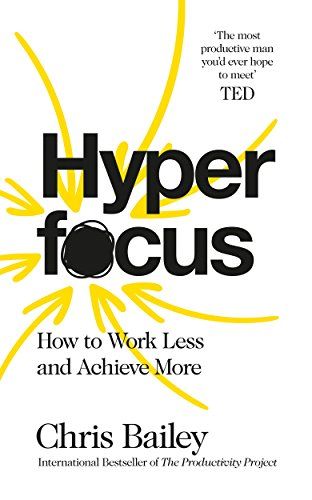
The Architecture of Deep Focus
Golden Hook & Introduction
SECTION
Nova: Research indicates that the average knowledge worker is interrupted roughly every eleven minutes, and it takes nearly twenty-five minutes to regain full cognitive focus after such a distraction. That means for most people, true, deep focus is mathematically impossible throughout the standard workday.
Atlas: That is an absolutely brutal statistic. When you lay it out like that, it makes the entire concept of a productive nine-to-five look like a complete illusion. We are essentially living in a state of perpetual cognitive fragmentation.
Nova: Exactly. We are living in a state of constant context switching, which drains our mental resources before we even get to the high-leverage work we care about. That is precisely what we are diving into today with the book, The Architecture of Deep Focus. It is a brilliant, rigorous look at how we can stop treating our attention as an infinite resource and start managing it like the scarce, high-value asset it actually is.
Atlas: I love the title because it suggests that focus isn't a personality trait or some mystical state of flow we stumble into by accident. It implies that focus is a structure, something we build, something we design.
Nova: That is the core premise. The author argues that most of our productivity struggles stem from trying to force focus onto an environment that is actively designed to destroy it. To master our output, we have to change the architecture of our daily lives.
The Cognitive Budget
SECTION
Atlas: Okay, let’s unpack this idea of a cognitive budget. I think most people, myself included, assume that if we just drink enough coffee or grit our teeth hard enough, we can power through any task. But you are saying that is fundamentally flawed.
Nova: It is flawed because willpower is a finite, biological resource. Think of your cognitive capacity as a battery. Every decision you make, every notification you glance at, and every task you switch between drains that battery. By midday, most people are running on fumes, which is why we end up doom-scrolling or checking email for the tenth time. We are not lazy; we are just biologically bankrupt.
Atlas: So, the strategy isn't to get better at gritting our teeth. It’s to stop spending our energy on the wrong things.
Nova: Precisely. The book introduces the concept of the Cognitive Budget. You have a set amount of high-quality mental energy each day. If you spend it on reactive tasks—like clearing a crowded inbox or attending meetings that could have been emails—you have nothing left for the creative, strategic, or complex work that actually moves the needle.
Atlas: I can see how that feels for a lot of people. You get to the end of the day, you have been busy for eight hours, but you haven't actually accomplished anything meaningful. It feels like you ran a marathon, but you were running on a treadmill.
Nova: That is the perfect analogy. You are exhausted, but you have gone nowhere. The Architecture of Deep Focus suggests that the most successful people are not the ones who work the longest hours. They are the ones who are the most ruthless about protecting their peak cognitive hours. They treat their focus like a bank account. They refuse to make small, low-value withdrawals throughout the day so they can make one massive, high-impact investment when it matters most.
Atlas: But how do we actually identify those high-impact investments? Sometimes everything feels urgent. How do we distinguish between what needs our focus and what is just noise?
Nova: The book proposes a filter. Ask yourself: Does this task require my unique expertise, or can it be automated, delegated, or eliminated? If it is a task that doesn't require deep, creative synthesis, it is a drain on your budget. The goal is to move those tasks to your "low-energy" hours. Do the administrative, rote work when your battery is already low, and save the deep, complex problem-solving for when your cognitive budget is fully charged.
Atlas: That makes sense, but it sounds like it requires a massive amount of planning. Most people I know just open their laptop and start responding to whatever is flashing at them.
Nova: And that is exactly where the "architecture" part comes in. We cannot rely on intention alone. We need to build a system that forces us into the right behavior.
Environmental Architecture
SECTION
Atlas: Let’s talk about that environment. I have a friend who claims they can work perfectly fine in a busy coffee shop with music blaring and people talking. They say it helps them focus. Are they just fooling themselves, or is there a nuance here I am missing?
Nova: That is a common debate. The author addresses this by differentiating between "arousal" and "focus." Some people need external stimulation to keep their energy levels up, which is why a coffee shop works for them. But deep work—the kind of work that requires complex problem-solving or high-level strategy—requires a specific type of environment. It requires the removal of "cognitive friction."
Atlas: What does "cognitive friction" look like in a real-world office or home setup?
Nova: It is anything that forces your brain to make a micro-decision. If your phone is on the desk, your brain is constantly deciding not to check it. That is friction. If you have twenty tabs open in your browser, your brain is constantly scanning them, wondering if you need to switch to one. That is friction. The architecture of deep focus demands that we eliminate these micro-decisions.
Atlas: So, it is not just about willpower; it is about physical design.
Nova: Exactly. It is about creating a "fortress" for your brain. The book describes this as "environmental design." You want to reach a state where you don't have to think about focusing. You just sit down, and the environment pulls you into the work.
Atlas: I have tried this with the "phone in another room" trick, and it is honestly shocking how much of an urge I have to go get it.
Nova: That urge is proof of how much your brain has been conditioned to seek distraction. The author notes that we have trained our brains to be hyper-reactive. We have essentially hacked our own attention spans. To reverse this, we need to create "friction buffers." If you want to stop checking your phone, don't just put it in another room; turn it off and put it in a drawer. Make the act of checking it so physically difficult that your brain decides it isn't worth the effort.
Atlas: That sounds almost extreme, but when you frame it as a way to reclaim your cognitive budget, it makes total sense. It is like a diet. If you want to stop eating junk food, you don't keep it in the pantry. You just don't buy it.
Nova: That is a great comparison. We are protecting our cognitive diet. The author discusses how we need to treat our focus with the same care we treat our physical health. We wouldn't expect to run a marathon on a diet of sugar and caffeine, yet we expect to produce high-level work while constantly feeding our brains dopamine-hit distractions.
Atlas: I also want to touch on the "open office" culture. A lot of people are working in environments that seem designed to maximize distraction. How do you build a fortress when you are sitting in the middle of a loud, open plan office?
Nova: That is the challenge of the modern workplace. The book suggests that if you cannot change your physical environment, you must create a "psychological environment." This involves using tools like noise-canceling headphones, not just for music, but as a visual signal to others that you are in a deep-work block. It also involves establishing clear communication protocols with your team. You have to be proactive. Tell your colleagues, "I am going to be unavailable for the next two hours to focus on this project. If it is a true emergency, message me here, but otherwise, I will be back at three."
Atlas: People are often afraid to set those boundaries because they don't want to seem uncooperative.
Nova: That is a valid concern, but the author points out that most people actually respect clear boundaries. When you are clear about your focus, you are not being uncooperative; you are being professional. You are ensuring that when you do engage with your team, you are fully present and providing your best work, rather than being half-distracted and mediocre.
The Recovery Cycle
SECTION
Atlas: We have talked about the budget and the environment, but there is a third piece that I think people ignore, which is the rest. I feel like we have this cultural narrative that if you are not exhausted, you are not working hard enough.
Nova: That is perhaps the most dangerous myth of all. The Architecture of Deep Focus argues that deep work is not a continuous state. It is cyclical. You cannot sustain peak cognitive output indefinitely. The brain needs to oscillate between high-intensity focus and total, disengaged rest.
Atlas: I have heard the term "productive idleness" before. Is that what we are talking about?
Nova: Yes, and it is a concept that feels counterintuitive to our current culture. We feel guilty when we are not "doing" something. But the author explains that the brain does a massive amount of processing when we are not actively focusing. It is when you step away from the desk, go for a walk, or just sit quietly, that your subconscious mind makes those connections between disparate ideas. That is where the real breakthroughs happen.
Atlas: So, the walk is not a break from the work. The walk is part of the work.
Nova: Exactly. It is part of the creative process. The book cites studies showing that people who take regular, complete breaks—where they are not checking emails or scrolling—consistently outperform those who try to power through without stopping. The ones who take breaks are not "slacking off." They are allowing their cognitive battery to recharge so they can return to the task with renewed focus.
Atlas: I think for a lot of people, the problem is that they don't know how to rest. They think "resting" means scrolling through social media or watching a show. But that is not rest, is it?
Nova: That is a crucial distinction. The author emphasizes "active recovery" versus "passive consumption." Passive consumption, like scrolling, is still input. It is still consuming your cognitive budget. It is still filling your brain with information. True rest is disconnection. It is giving your brain a chance to clear the cache. It means doing something low-effort, like walking, gardening, or just staring at a wall. It is about letting your mind wander rather than directing it.
Atlas: That is so difficult for me. My mind wants to be occupied. The idea of just sitting there and letting my mind wander feels like I am wasting time.
Nova: It feels like a waste, but it is actually the most efficient use of your time. Think of it like this: if you are in a car, you cannot drive at top speed forever. You have to stop for gas. If you never stop, you will eventually break down. True rest is the gas station. It is not an interruption to the journey; it is what allows you to finish the journey.
Atlas: I love the idea of framing rest as a strategic necessity rather than a reward. It changes the whole mindset. Instead of saying, "I have earned a break," you say, "I need this recovery to maintain my performance."
Nova: That shift in language is everything. It takes the guilt out of it. It makes rest a professional obligation. If you are committed to mastery, you have to be committed to your recovery.
Synthesis & Takeaways
SECTION
Atlas: This has been a massive shift in perspective for me. We started by talking about the scarcity of attention, then moved to the importance of designing our environment to reduce friction, and finally, the necessity of strategic recovery. It really does feel like architecture—you are building a structure for your life.
Nova: That is the perfect way to summarize it. You are the architect of your own cognitive life. You are not a victim of your inbox or your notifications. You are the one who decides how to allocate your most precious resource: your attention.
Atlas: So, for the person listening who feels like they are drowning in distractions, what is the one, high-leverage thing they can do today to start building this architecture?
Nova: Start with the "Focus Block." Don't try to change your entire life overnight. Just identify one ninety-minute block tomorrow morning, before the rest of the world starts demanding your attention. During that block, put your phone in another room, close all unnecessary tabs, and work on your single most important project. Just ninety minutes. That is all.
Atlas: Just ninety minutes. That sounds doable. It is not about changing your whole life; it is about reclaiming a small piece of it.
Nova: And once you experience the quality of work you can produce in that ninety-minute block, you will start to crave it. You will start to see the rest of your day as something that needs to be optimized to protect that time. That is how you begin to build the architecture of deep focus. It is a slow, intentional process of reclaiming your autonomy.
Atlas: It is empowering to realize that we have more control than we think. We often feel like we are just reacting to the world, but we can actually design the world we work in.
Nova: We absolutely can. It requires discipline, and it requires the courage to say "no" to the trivial so that we can say "yes" to the profound. The payoff is not just better work; it is a life where you feel more present, more intentional, and significantly more fulfilled.
Atlas: I think that is a powerful note to end on. It is not just about productivity. It is about the quality of our experience.
Nova: Exactly. Because how we spend our attention is, ultimately, how we spend our lives.
Atlas: Well, that is a thought I am going to be sitting with for a while. This has been a fantastic dive into the mechanics of focus.
Nova: It has been a pleasure. Remember, you are the architect. Build a life that allows your best work to flourish.
Atlas: Thanks for joining us for this deep dive. We will be back next time with more insights. This is Aibrary. Congratulations on your growth!