

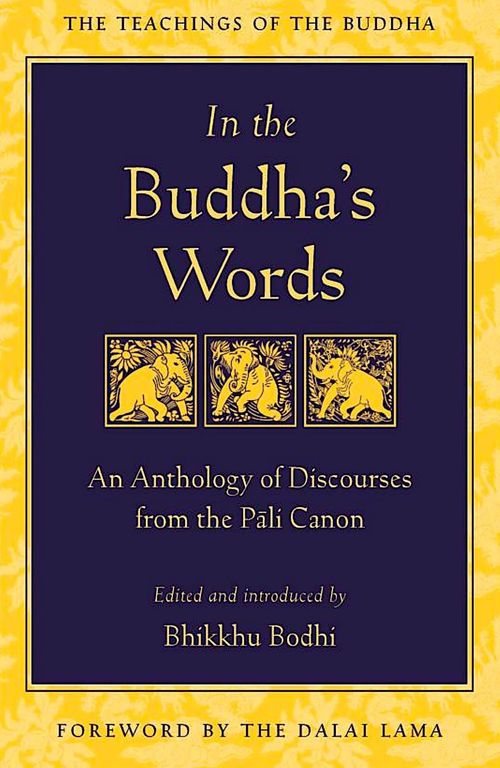
In the Buddha's words
An Anthology of Discourses from the Pali Canon
Introduction
Nova: Imagine holding a library in your hands. Not a metaphor — literally thousands of ancient discourses, distilled into a single volume that maps the entire path of Buddhist practice from the first step to final liberation. That's exactly what Bhikkhu Bodhi accomplished with his 2005 anthology, In the Buddha's Words. And here's the wild part: this book has become the standard textbook for Buddhist studies courses across American universities, while simultaneously serving as a beloved bedside companion for practitioners worldwide. How does one book pull that off?
Nova: : That's a great question, Nova. I've seen this book on shelves and it's substantial — over 500 pages. But what makes it different from just picking up any translation of Buddhist scriptures? There are so many out there.
Nova: That's exactly the right question to start with. Most translations of Buddhist texts are either single texts — like the Dhammapada — or they're massive, multi-volume scholarly editions that only specialists would tackle. What Bhikkhu Bodhi did was something remarkably ambitious: he curated a progressive, thematic journey through the Pali Canon, the earliest complete collection of the Buddha's teachings. He selected suttas from across the four major Nikayas and arranged them not by source or by length, but by the spiritual path itself.
Nova: : So it's not just a random collection. It's curated with intention.
Nova: Precisely. Think of it as a map. Most anthologies hand you a pile of landmarks. Bodhi gives you the trail. He starts with the human condition — why we suffer — and walks you step by step through ethical living, meditation, wisdom, all the way to the stages of enlightenment. Each of the ten chapters has a substantial introduction where he, as both a scholar and a practicing monk, frames what you're about to read. It's like having a wise guide who knows both the ancient Pali language and the modern Western mind.
Nova: : That sounds almost too good to be true. A single book that takes you from beginner to advanced practitioner?
Nova: Well, that's exactly what we're going to explore today. We'll walk through the architecture of this remarkable anthology, unpack its ten thematic chapters, and understand why it's become such an essential resource. Let's dive in.
Who Is Bhikkhu Bodhi?
The Architect Behind the Anthology
Nova: Before we get into the book itself, let's talk about the man behind it. Bhikkhu Bodhi is an American Buddhist monk, born Jeffrey Block in Brooklyn, New York, in 1944. He was ordained as a monk in Sri Lanka in 1972, and he spent decades there studying Pali, the ancient language of the earliest Buddhist texts.
Nova: : Brooklyn to Buddhist monk in Sri Lanka — that's quite a journey. What drew him to this work?
Nova: He studied philosophy in college and was drawn to Buddhism through its analytical rigor. But here's what makes him uniquely positioned for this project: he served as the editor and then president of the Buddhist Publication Society in Kandy, Sri Lanka, for many years. During that time, he translated major portions of the Pali Canon, including the entire Samyutta Nikaya — that's the Connected Discourses, about 2,900 pages in English. He's one of the most prolific and respected translators of Pali texts into English alive today.
Nova: : So he's not just someone who read about Buddhism and decided to compile a book. He lived it, studied the original languages, and translated the source material himself.
Nova: Exactly. And that dual identity — rigorous scholar and committed practitioner — infuses every page of In the Buddha's Words. He can explain a subtle grammatical point in Pali and then immediately connect it to what that means for your meditation practice. He's also deeply aware of the Western reader. He knows what concepts will be unfamiliar and need unpacking, and which ones will resonate immediately.
Nova: : I've heard he's also known for his social engagement. Doesn't he run a charity?
Nova: Yes, Buddhist Global Relief, which he founded to address hunger and poverty. But that's a story for another podcast. For our purposes, the key thing is that when Bhikkhu Bodhi compiled this anthology, he brought together three things that rarely coexist in one person: mastery of the ancient language, decades of monastic practice, and a deep understanding of the Western intellectual tradition. That's the secret sauce of this book.
How the Book Is Structured
The Architecture of Awakening
Nova: Let's talk about the structure of the book, because it's genuinely brilliant. Bodhi organizes the anthology into ten chapters, and they follow what he calls a gradual training — a progressive path that mirrors how the Buddha himself taught.
Nova: : Ten chapters. That sounds manageable. Walk me through them.
Nova: The first chapter is called The Human Condition, and it sets the stage by presenting the Buddha's diagnosis of the human predicament. It includes suttas about aging, illness, death, and the fundamental unsatisfactoriness of existence. It's not cheerful reading, but it's honest. The Buddha is saying: here's the problem. Let's not look away.
Nova: : So it starts with the bad news first.
Nova: Exactly. But then chapter two, The Bringer of Light, shifts to the story of the Buddha himself — his quest for enlightenment, his decision to teach, and the core qualities that made his teaching possible. It's the good news: there is a solution, and here's the person who found it.
Nova: : And then the teaching itself begins?
Nova: Chapter three, Approaching the Dhamma, is fascinating because it's about how to approach the teachings. It's almost meta. The Buddha warns against blind faith, against accepting teachings just because they're traditional or because a respected teacher said them. He tells the famous Kalamas — a group of people confused by competing teachers — to test teachings against their own experience. It's remarkably empirical for a religious tradition.
Nova: : That's surprising. Most people think of religion as requiring faith, not investigation.
Nova: And that's one of the things this anthology makes crystal clear. Buddhism, at least in its earliest form, is deeply investigative. But then the book moves into practical ethics. Chapter four, The Happiness Visible in This Present Life, covers how to live well in the world — right livelihood, friendship, family relationships. Chapter five, The Way to a Fortunate Rebirth, discusses karma and rebirth, the moral quality of actions and their consequences across lifetimes.
Nova: : So it's building layer by layer. Ethics first, then the deeper stuff.
Nova: Right. Chapter six, Deepening One's Perspectives on the World, tackles the three marks of existence: impermanence, suffering, and non-self. This is where the teaching gets philosophically profound. Then chapter seven, The Path to Liberation, presents the Noble Eightfold Path in detail. Chapter eight, Mastering the Mind, focuses on meditation. Chapter nine, Shining the Light of Wisdom, explores insight and the nature of reality. And finally, chapter ten, The Planes of Realization, describes the stages of awakening — from stream-entry to full enlightenment.
Nova: : It's like a curriculum for a complete spiritual education.
Nova: That's exactly what it is. And each chapter has Bodhi's extensive introduction, which provides context, explains key concepts, and connects the suttas to each other. Then you get the suttas themselves, in his clear, precise translations, with helpful notes.
Deep Dive: Chapters 1-3
The Human Condition and the Diagnosis
Nova: Let's zoom in on those first three chapters, because they lay the foundation for everything that follows. The opening sutta in the book is one of the most powerful in the entire canon. It's about a king who, in the prime of his life, surrounded by luxury, suddenly realizes that he is subject to aging, illness, and death. He's shaken to his core.
Nova: : That's the story of the Buddha himself, right? The young prince who sees old age, sickness, and death for the first time?
Nova: Actually, no — that's the interesting thing. This sutta is about a different king, but it captures the same existential shock. Bodhi chose it deliberately because it universalizes the experience. You don't have to be the Buddha to feel this. Any reflective person, at some point, confronts the fragility of life. The chapter includes the famous sutta where a woman named Kisagotami, mad with grief over her dead child, comes to the Buddha asking for medicine. He tells her to bring a mustard seed from a house where no one has died. She goes door to door and, of course, cannot find one. The universality of loss dawns on her.
Nova: : That's devastating. And beautiful.
Nova: It is. But here's what makes Bodhi's curation so smart. He doesn't leave you in despair. Chapter two pivots to the Buddha's own story — his renunciation, his years of striving, his enlightenment under the Bodhi tree. There's a wonderful sutta where the Buddha, right after his awakening, hesitates to teach because he thinks the truth he's discovered is too subtle, too deep for people to grasp. A god has to come down and plead with him to teach.
Nova: : Wait — a god? In Buddhism?
Nova: Yes, the Pali Canon includes devas, celestial beings. But they're not eternal or all-powerful. They're just beings in other realms of existence, also subject to impermanence. The point of the story is that even the Buddha had doubts about whether the teaching could be communicated. It humanizes him.
Nova: : And chapter three — the approach to the teaching?
Nova: This is where the famous Kalama Sutta appears. The Kalamas tell the Buddha that many teachers come through their town, each claiming their doctrine is true and all others are false. They're confused. The Buddha doesn't say believe me. He says: don't go by reports, by tradition, by scripture, by logical reasoning, by the authority of a teacher. When you know for yourselves that certain things are wholesome and lead to welfare and happiness, then adopt them. It's one of the most celebrated passages in Buddhist literature, and it resonates powerfully with modern, skeptical readers.
Deep Dive: Chapters 4-7
Living Well and the Path Forward
Nova: The middle chapters of the book shift from diagnosis to prescription. Chapter four, The Happiness Visible in This Present Life, might surprise people who think Buddhism is all about renunciation and detachment from the world.
Nova: : That's certainly the stereotype. Monks meditating in caves, rejecting everything.
Nova: And yet here's the Buddha giving detailed advice to laypeople about how to earn a living ethically, how to manage money, how to maintain friendships, how to have a good marriage. There's a beautiful sutta where he describes the four kinds of friendship — the helper, the friend in good times and bad, the mentor, and the compassionate friend. It's practical, warm, and deeply human.
Nova: : So Buddhism isn't just for monks.
Nova: Not at all. The Buddha taught both monastics and laypeople, and he gave different advice to each. For laypeople, he emphasized generosity, ethical conduct, and cultivating relationships. Chapter five extends this into the framework of karma and rebirth — the idea that our actions have consequences that extend beyond this life. It's not about fatalism. It's about taking radical responsibility for your choices.
Nova: : That's a big idea. How does Bodhi handle it for a modern audience?
Nova: Carefully and honestly. In his introduction to the chapter, he acknowledges that rebirth is a challenging concept for many Western readers. He doesn't demand belief. He presents the suttas as they are and lets readers engage with them. But he also points out that the Buddha's ethical framework makes the most sense within a larger cosmological context. Actions matter because they shape not just this life but future ones.
Nova: : And then chapter six gets into the deep philosophy?
Nova: Yes. The three marks of existence: anicca, dukkha, anatta — impermanence, suffering or unsatisfactoriness, and non-self. This is the core insight of Buddhism. Everything we cling to is impermanent. Because it's impermanent, clinging to it causes suffering. And nothing — including what we call the self — has a permanent, independent essence. These are not just philosophical positions. They're insights to be realized through meditation.
Nova: : And chapter seven is the Noble Eightfold Path?
Nova: Exactly. Right view, right intention, right speech, right action, right livelihood, right effort, right mindfulness, right concentration. Bodhi presents suttas that unpack each factor. What's striking is how integrated the path is. It's not eight separate practices. It's eight dimensions of a single, holistic way of life. Wisdom, ethics, and meditation all support each other.
Deep Dive: Chapters 8-10
Meditation, Wisdom, and Liberation
Nova: The final three chapters take us into the heart of Buddhist practice: meditation, wisdom, and the stages of awakening. Chapter eight, Mastering the Mind, is where the rubber meets the road.
Nova: : This is what most people think of when they hear Buddhism — sitting on a cushion, watching the breath.
Nova: And that's certainly part of it. But the suttas Bodhi selects show that meditation is much more than relaxation or stress reduction. It's a systematic training of the mind. There are suttas on overcoming the five hindrances — sensual desire, ill will, sloth and torpor, restlessness and worry, and doubt. There are suttas on the four foundations of mindfulness: body, feelings, mind, and mental phenomena. And there are suttas on the jhanas, the deep states of meditative absorption.
Nova: : The jhanas — those are controversial, right? Some traditions emphasize them, others don't.
Nova: Good catch. Yes, there's debate about whether the jhanas are necessary for liberation or optional. Bodhi presents the suttas that describe them without taking a sectarian position. He lets the texts speak. But what's clear from the suttas is that the Buddha himself practiced and taught these states. They're not a later addition.
Nova: : And chapter nine — wisdom?
Nova: This is where meditation meets insight. The suttas in this chapter explore dependent origination — the twelve-link chain that explains how suffering arises and how it can cease. It's one of the most profound and difficult teachings in Buddhism. Bodhi's introduction to this chapter is particularly helpful. He walks through each link of the chain, from ignorance through to aging and death, and then shows how the reversal of the chain leads to liberation.
Nova: : That sounds abstract. How does it connect to actual practice?
Nova: Because each link is something you can observe in your own experience. When you feel a craving arise, you can trace it back to feeling, to contact, to the sense bases, and so on. It's a map of the mind. And the final chapter, The Planes of Realization, describes what happens when the chain is broken. The four stages of awakening: stream-entry, once-returner, non-returner, and arahantship. The suttas describe the qualities of each stage, what's been abandoned, what remains.
Nova: : It's remarkable that the book ends with a description of the goal. Most spiritual books leave that vague.
Nova: That's one of the things that makes this anthology so powerful. The Buddha was remarkably specific about what liberation looks like. It's not a mystery. It's a clearly defined state that results from clearly defined causes. The book ends with suttas describing the arahant — the fully liberated person — and it's both inspiring and humbling. The path is laid out completely. The rest is up to the practitioner.
Impact and Legacy
Why This Book Matters
Nova: So we've walked through the architecture of the book. But let's step back and ask: why has this particular anthology become so influential? It's been adopted by university courses, Buddhist study groups, and individual practitioners around the world. What makes it special?
Nova: : That's what I've been wondering. There are other anthologies of Buddhist texts out there.
Nova: There are, but most of them fall into one of two categories. Either they're scholarly collections organized by textual source — all the Digha Nikaya suttas in one volume, for example — or they're thematic collections that cherry-pick inspiring passages without much context. Bodhi's anthology does something different. It's organized by the spiritual path itself, which means it has a narrative arc. You're not just reading ancient texts. You're being guided through a curriculum.
Nova: : So it's pedagogical. It's designed to teach.
Nova: Exactly. And Bodhi's introductions to each chapter are masterful. He doesn't just summarize the suttas. He provides historical context, explains key Pali terms, connects the teachings to each other, and addresses potential misunderstandings. He's particularly good at anticipating where a modern Western reader might stumble and offering clarification without being defensive or apologetic.
Nova: : Can you give an example?
Nova: Sure. When he introduces the teaching on karma and rebirth, he acknowledges that many readers will find it difficult. He doesn't say just believe it. He explains the logic of the teaching within the Buddhist worldview and suggests that even if one isn't ready to accept rebirth, the ethical framework of karma — that actions have consequences — is valuable in its own right. He meets the reader where they are.
Nova: : That's a generous approach.
Nova: It is. And it reflects his decades of experience teaching Westerners. He knows the objections, the doubts, the questions. Another thing that sets this book apart is the quality of the translations. Bodhi's English is clear, precise, and dignified without being archaic. He avoids both the thee-and-thou style of older translations and the overly casual style of some modern ones. The Buddha sounds like a wise teacher, not a Victorian gentleman or a self-help guru.
Nova: : What about criticisms? No book is perfect.
Nova: Fair question. Some scholars have noted that Bodhi's selection leans toward the Theravada interpretation, which is natural given his training in Sri Lanka. The Pali Canon is the scripture of Theravada Buddhism. Mahayana practitioners might wish for more material that points toward the bodhisattva ideal. Others have noted that the book is dense — at over 500 pages, it's not a light read. And some of the suttas are repetitive, which is a feature of oral literature but can be challenging for modern readers.
Nova: : But overall, the reception has been overwhelmingly positive?
Nova: Extraordinarily so. It's widely considered the best single-volume introduction to the Buddha's teachings available in English. The Dalai Lama himself wrote a foreword to one of Bodhi's other books. And In the Buddha's Words has become the standard text for introductory courses on Buddhism at colleges across the United States. That's a remarkable achievement for a book of ancient religious texts.
Conclusion
Nova: So here we are, at the end of our journey through In the Buddha's Words. Let's bring it all together. What Bhikkhu Bodhi has given us is not just an anthology. It's a complete map of the Buddhist path, drawn from the earliest sources, presented with scholarly rigor and practical wisdom.
Nova: : What strikes me, Nova, is how the structure mirrors the teaching itself. It starts with the problem — suffering — and moves step by step toward the solution. It doesn't skip steps. It doesn't promise quick fixes. It lays out a path and says: here it is. Walk it if you want.
Nova: That's beautifully put. And that's exactly what the Buddha did. He was called the shower of the way, not the enforcer of the way. This book honors that spirit. It presents the teachings clearly and lets the reader engage with them freely.
Nova: : If someone is listening and thinking about picking up this book, what should they know?
Nova: First, it's a book to be read slowly. These are not texts to speed through. Each sutta rewards contemplation. Second, it helps to read Bodhi's introductions carefully — they're not filler, they're essential context. Third, don't feel you have to agree with everything. The Buddha himself encouraged questioning. Engage with the texts honestly. And finally, consider reading it with others. Many Buddhist groups use this book for study circles, and the discussions that emerge are often as valuable as the reading itself.
Nova: : What's the one thing you hope listeners take away from this conversation?
Nova: That the Buddha's teachings, as preserved in the Pali Canon and presented in this anthology, are not dusty museum pieces. They're alive. They speak directly to the human condition — to our suffering, our confusion, our longing for happiness. And they offer a path that is as relevant today as it was 2,500 years ago. In the Buddha's Words is the best doorway into that world that we have in English. If you're curious about what the Buddha actually taught, in his own words, this is where you start.
Nova: : And where you might end up spending a very long time.
Nova: Indeed. The path is long, but the first step is right there on page one. This is Aibrary. Congratulations on your growth!