

Designing Beyond the Trap of Behavioral Loops
Golden Hook & Introduction
SECTION
Nova: I bet you haven't gone a single hour today without checking your phone, even if you didn't have a specific reason to look at it.
Atlas: Ouch. That is a brutal way to start the conversation, but honestly, it’s spot on. I’m guilty as charged. It’s like a reflex at this point, isn't it?
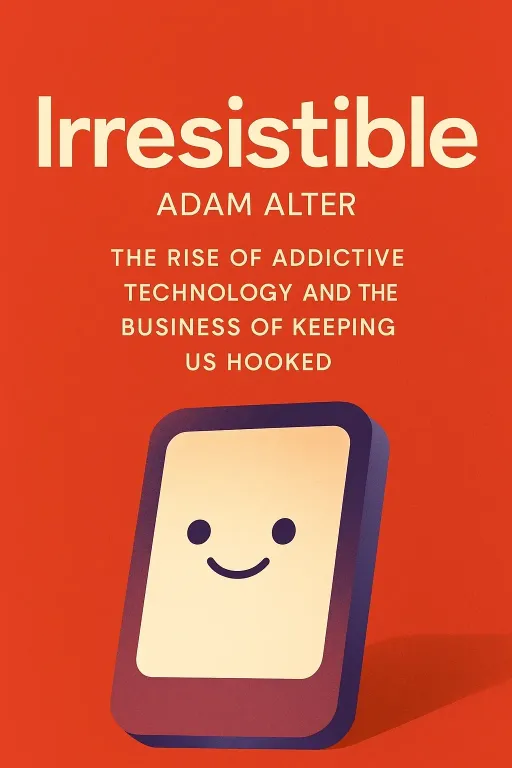
Nova: It is a reflex, but not one you were born with. We are living through an era of extreme digital design, where our cognitive architecture is being mapped and exploited. Today, we are exploring how to break free from these invisible traps. We are looking at the work of Adam Alter in his book Irresistible, which dissects how digital products are engineered to be compulsive. And to counter that, we are bringing in the ancient, grounding wisdom of Don Miguel Ruiz from The Four Agreements. It sounds like an odd pairing—tech addiction and Toltec philosophy—but it provides the exact framework an architect needs to build better systems.
Atlas: That is a fascinating combination. On one hand, you have the cold, hard science of how we are being hacked by algorithms. On the other, you have this deep, almost spiritual approach to personal agency. I am curious how we bridge that gap, especially for the people listening who are building the next generation of AI agents. Let’s get into it.
The Mechanism of the Trap
SECTION
Nova: To understand why we are hooked, we have to look at the mechanism. Adam Alter’s research in Irresistible is compelling because he doesn't just call these apps addictive; he explains the specific design patterns that make them so. He focuses on the variable reward schedule. Think about a slot machine. If you pulled the lever and knew exactly what you would get every single time, you would get bored quickly. The magic, or the horror, is in the unpredictability.
Atlas: That makes perfect sense. It’s the uncertainty that keeps the brain firing. But how does that translate to, say, a social media feed or a notification badge?
Nova: It is exactly the same principle. Every time you pull down to refresh your feed, you are pulling the lever. You don't know if you are going to get a message from a friend, a funny video, or just an advertisement. That variable reward triggers a dopamine release that reinforces the behavior. Alter points out that these aren't bugs; they are features. They are engineered to keep us in the loop.
Atlas: I see what you are getting at. It’s a feedback loop. But hold on, for the engineers and architects listening, isn't this just good user engagement? We are taught to maximize time-on-site, maximize retention, and keep users coming back. Are you suggesting we should stop doing that?
Nova: That is the pivotal question. There is a massive difference between engagement that serves the user and engagement that extracts value from the user. When you build a system that relies on variable rewards to keep a user stuck, you are essentially designing a cage. If you are an architect, you have to ask yourself: are you building a tool that empowers the user to solve a problem, or are you building a Skinner box that keeps them clicking?
Atlas: That’s a sharp distinction. It’s the difference between a tool that helps me achieve a goal and a slot machine that just wants my coins. But let’s play devil's advocate for a second. If I am building an Agent, I want it to be helpful. I want it to be engaging so the user actually uses it. How do I make something engaging without falling into that trap of manipulation?
Nova: That is where the shift in mindset happens. Instead of focusing on "time-on-site," focus on "utility-per-interaction." An engagement-optimized system wants the user to stay as long as possible. A utility-optimized system wants the user to achieve their objective as quickly and efficiently as possible and then get on with their day. It sounds counterintuitive for a business, but in the long run, users build trust with tools that respect their time.
Breaking the Conditioning
SECTION
Atlas: I am thinking about how this relates to the second part of our discussion. We mentioned Don Miguel Ruiz and The Four Agreements. How does ancient wisdom help me, as a developer, avoid building these manipulative traps?
Nova: It provides a cognitive firewall. Don Miguel Ruiz’s work is fundamentally about breaking the agreements we make with ourselves based on societal conditioning. In the context of technology, we have been conditioned to believe that "more is better." More notifications, more features, more engagement. Ruiz argues that we need to be impeccable with our word and not take things personally.
Atlas: Wait, how does "being impeccable with your word" apply to software architecture?
Nova: It means being honest about the intent of your system. If your Agent is designed to harvest data or keep a user distracted, be honest about that. But if you want to create something truly valuable, you need to be impeccable with the system's promise. Does your system do exactly what it says it will do, without hidden agendas or manipulative triggers? That is a form of integrity that is rare in modern software.
Atlas: That is a profound way to look at it. It is like treating the user as a partner rather than a resource to be mined. But let’s get practical. How does someone who is deep in the weeds of building an Agent, someone who is managing the decision logic and the flow of information, actually implement this?
Nova: It starts with the feedback states. In Irresistible, Alter talks about how we are constantly seeking that next hit of feedback. If you design your Agent to provide high-utility, predictable feedback, you break that loop of anxiety and craving.
Atlas: Can you give me an example of what that looks like in a real-world scenario? I am trying to visualize this.
Nova: Imagine you are building a research assistant Agent. A bad design—a manipulative design—would send the user constant, vague notifications like, "We found something interesting for you!" just to get them to open the app. It creates a state of low-grade anxiety.
Atlas: I know exactly what that feels like. It’s the "you have a new update" notification that turns out to be nothing.
Nova: Exactly. Now, consider the alternative. The Agent only interrupts the user when it has completed a specific, high-utility task, like summarizing a document or finding a specific data point. And when it does provide feedback, it is predictable and clear. It says, "I have completed the summary you requested. It is ready for your review." There is no mystery, no slot-machine pull, just a clear, useful service.
Atlas: That sounds incredibly refreshing. It’s the difference between an Agent that acts like a needy coworker trying to get your attention and an Agent that acts like a professional assistant who respects your focus.
Nova: That is the perfect analogy. And this is where the Four Agreements come back in. Ruiz talks about "not making assumptions." In design, we often assume that users want constant engagement. We assume that if they aren't clicking, they aren't interested. But if we stop making that assumption and instead focus on the agreement we have with the user—which is to provide value—we can design much cleaner, more respectful systems.
The Architect's Perspective
SECTION
Atlas: I love that. It shifts the burden from "how do I trick the user" to "how do I serve the user." But let me push back a little. If I am an architect, I am also thinking about the business. If I build an Agent that is efficient and respectful, will it survive in a market that is built on attention extraction?
Nova: That is the risk, but it is also the opportunity. We are seeing a shift in the market. People are becoming aware of the costs of digital distraction. They are looking for tools that give them their time back, not tools that steal it. If you build a system that is transparent, predictable, and highly utility-focused, you are creating a different kind of value. You are building trust. And in the long term, trust is the most valuable currency in any market.
Atlas: That is a great point. It’s like the difference between a fast-food chain that hooks you with sugar and salt, and a high-end restaurant that keeps you coming back because the food is actually nourishing. One is addictive, the other is sustaining.
Nova: Precisely. And if we look at the history of technology, the tools that endure are the ones that act as extensions of our own intelligence, not as parasites on our attention. The best systems are the ones that disappear when they aren't needed.
Atlas: I am curious about the "how." For the developers listening, what is the first step they can take tomorrow? If they are in the middle of a project, how do they audit their current design for these "behavioral loops"?
Nova: It’s a simple, though difficult, audit. Look at every notification, every interaction, every UI element that triggers a user to take an action. Ask yourself: "Does this action serve the user’s stated goal, or does it serve the system’s goal of keeping the user here?"
Atlas: That is a brutal question to ask yourself.
Nova: It is, but it is necessary. If the action serves the system—like a "pull to refresh" or a "streak count"—you have to justify it. Is it helping the user achieve their objective, or is it just a variable reward? If it is the latter, you have the opportunity to replace it with something more predictable and useful.
Atlas: I can see how this would even apply to the decision logic of the Agent itself. If you are training an LLM or designing a prompt chain, you can optimize for "task completion" rather than "conversational length."
Nova: That is exactly right. Many developers are currently optimizing for longer conversations, thinking that longer equals better. But often, the user just wants the answer. If you optimize for the shortest path to a high-quality answer, you are respecting the user’s time. You are building a system that values their life outside of the application.
Atlas: That feels very aligned with the "value creator" mindset we talk about. It’s not just about adding features; it’s about refining the experience so that the technology becomes invisible.
Synthesis & Takeaways
SECTION
Nova: We have covered a lot of ground today, from the neurological traps of variable rewards to the ancient wisdom of personal integrity. The core takeaway for anyone building these systems is that you have a responsibility. You are not just writing code; you are shaping human behavior.
Atlas: And that is a huge responsibility. It’s easy to get lost in the engineering challenges—the latency, the accuracy, the scalability—but the human element is what determines whether your system is actually a success or just another source of noise.
Nova: Exactly. Don Miguel Ruiz’s wisdom, and Adam Alter’s research, point to a single truth: we need to design with intention. If we want to build Agent systems that are truly intelligent and truly valuable, we have to move away from the model of human-as-a-resource and toward a model of human-as-a-partner.
Atlas: I like that. Human-as-a-partner. It changes everything. It changes the way you write your prompts, the way you structure your feedback loops, and the way you measure success.
Nova: It does. So, for everyone listening, here is your challenge. Look at the system you are building. Identify one loop that is designed to keep the user clicking rather than solving their problem. And replace it with a state of high-utility, predictable feedback. See how that changes the way your users interact with your system. I suspect you will find that they don't just use it more; they value it more.
Atlas: That is a powerful call to action. It’s not just about better design; it’s about better ethics in engineering. I’m going to go look at my current project and ask those hard questions.
Nova: I think that is the best place to start. We are at a turning point in how we interact with technology. The systems that respect our attention will be the ones that define the next decade of innovation.
Atlas: I am genuinely excited to see where that leads. Thank you for this, Nova. It gave me a lot to think about—not just as an architect, but as a person living in this digital world.
Nova: It was a pleasure, Atlas. And to all of our listeners, keep building, keep questioning, and keep creating value. This is Aibrary. Congratulations on your growth!









