Reconstructing the Self After Emotional Rupture
Golden Hook & Introduction
SECTION
Nova: There is a common cultural trap we all fall into, especially when things go wrong. We treat emotional pain like a bug in a software system. We want to patch it, debug it, and get back to the previous version of ourselves as quickly as possible.
Atlas: That is the ultimate efficiency trap. We treat heartbreak or loss like a project that needs a deadline. We tell ourselves, I’ll be over this by next month, or I’ll have this figured out by the weekend. But reality rarely cooperates with our project management style.
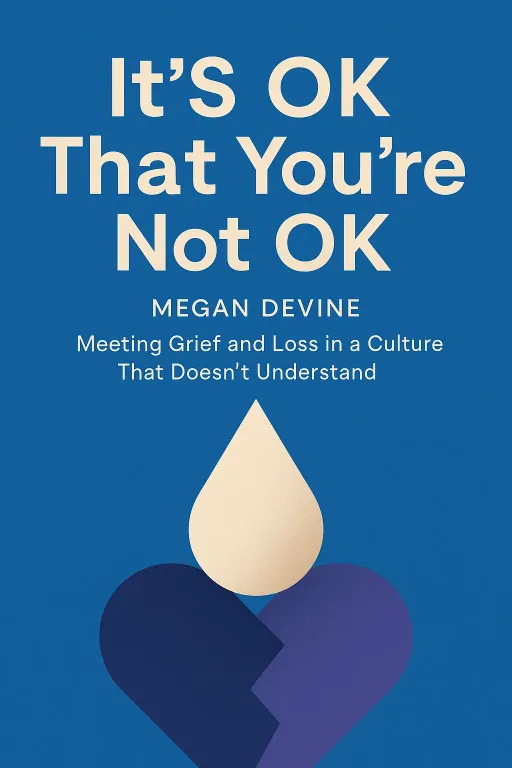
Nova: Exactly. And that is the central tension we are exploring today. We are looking at the work of Megan Devine, specifically her book It’s OK That You’re Not OK, and Lysa TerKeurst’s Forgiving What You Can’t Forget. Megan Devine, who is a therapist, wrote her book from the crucible of her own life when her partner drowned. Her work is a direct challenge to the idea that grief is something to be fixed. It is a state of being to be inhabited.
Atlas: And Lysa TerKeurst adds another layer to this. She focuses on the messy, complex reality of betrayal and hurt. She argues that we often mix up the act of forgiving someone with the necessity of trusting them again. Separating those two things is a massive, often overlooked, tactical advantage for anyone trying to navigate a difficult relationship.
Nova: Today, we are going to unpack how to stop forcing recovery and start building boundaries that actually work.
The Myth of Fixing Grief
SECTION
Atlas: Let’s start with the grief side. I think most of us have been in a position where someone tells us, at least you have your health, or everything happens for a reason. And honestly, those comments feel like a punch to the gut. Why do we do that?
Nova: We do it because witnessing pain is uncomfortable. When someone is grieving, we feel a desperate urge to make them feel better because their pain makes us feel helpless. Megan Devine calls this the problem of the fix-it culture. We have this deep-seated belief that if we can just find the right words or the right logical framework, we can solve the pain. But Devine points out that some things in life cannot be fixed. They can only be carried.
Atlas: That sounds heavy. If I am a pragmatic person, and I want to solve problems, hearing that I cannot fix something is frustrating. How do I shift my perspective?
Nova: You shift from a mindset of problem-solving to a mindset of companionship. Think of it like this. If a friend breaks their leg, you do not tell them to just walk it off because they are being too slow. You accept the broken leg as a reality. You offer them crutches. You help them navigate the stairs. With emotional rupture, we try to tell people to walk on a broken leg. Devine argues that the most valuable thing you can do for yourself or someone else is to simply acknowledge the reality of the pain without trying to change it.
Atlas: So, the efficiency play here is actually to stop spending energy trying to fix the unfixable. That is a massive energy saver.
Nova: It is. When you stop trying to solve your grief, you stop wasting energy on the impossible task of erasing it. Instead, that energy becomes available for living within the new reality. It is a change in resource allocation. You stop trying to force a return to the person you were before the loss, and you start focusing on how to integrate that experience into who you are now.
Atlas: I can see how that applies to major life events, but what about smaller losses? Like a failed business venture or a career pivot that didn't go as planned?
Nova: It applies exactly the same way. We treat professional failures as personal grief. We rush to say, well, I learned so much, which is true, but it doesn't mean the sting of the failure isn't real. When you give yourself permission to say, this hurts and it sucks, you actually move through it faster than if you try to immediately frame it as a positive learning experience. The suppression of the emotion is what creates the drag.
Forgiveness and the Power of Boundaries
SECTION
Atlas: That leads us into the second part of this. Because once the dust settles from that initial shock, we are often left dealing with the people who caused the hurt. This is where Lysa TerKeurst’s work comes in. She talks about forgiving what you cannot forget.
Nova: TerKeurst makes a vital distinction that helps with clarity. She argues that forgiveness is an internal transaction. It is about releasing the other person from the debt you feel they owe you. It is about reclaiming your own peace of mind. But she is very clear that this does not mean you have to invite that person back into your life or trust them with your vulnerabilities again.
Atlas: That is a distinction that gets lost so often. People assume that if you forgive someone, you have to reconcile with them. It creates this false choice where you either stay bitter and guarded, or you open yourself up to being hurt again.
Nova: Precisely. TerKeurst suggests we decouple those two things. You can offer forgiveness as a gift to your own mental health, while simultaneously maintaining a firm boundary that protects your future well-being. Think of it as a professional standard. You can forgive a vendor who missed a deadline and ruined a project, but that doesn't mean you have to sign another contract with them.
Atlas: That makes perfect sense in a professional context. It is the difference between being a professional and being a pushover. You can be gracious, but you can also be firm about your standards.
Nova: Exactly. And the power in that approach is that it puts you back in the driver’s seat. When you wait for the other person to apologize, or to change, or to admit they were wrong, you are handing them the keys to your emotional state. You are waiting for them to validate your experience. TerKeurst’s approach is about taking the keys back. You forgive for your own freedom, and you set boundaries for your own safety.
Atlas: It sounds like the goal is to stop outsourcing your peace.
Nova: That is the most accurate way to put it. We often look to the person who hurt us to provide the closure. We want them to understand why they hurt us. But as TerKeurst highlights, you might never get that. The person who hurt you might never acknowledge it. If your healing is dependent on their confession, you are stuck in a holding pattern.
Atlas: This feels like it requires a high level of discipline. It is easy to say, I will forgive them but keep my distance. It is much harder when that person is a family member or a close colleague you see every day. How do you maintain that boundary without becoming cold or cynical?
Nova: You maintain it by focusing on the function of the boundary. A boundary is not a wall you build to keep people out of spite. It is a filter you put in place to keep your energy focused on what matters. You can be kind, you can be polite, but you can also be extremely selective about the access you grant someone. You are essentially managing your own capacity.
Synthesis and Practical Application
SECTION
Atlas: So, if I am listening to this and I am trying to synthesize these two ideas, I’m looking at a two-part strategy. First, I stop trying to fix my grief or emotional pain, and I just acknowledge it as a current reality. And second, I separate my forgiveness from my need for reconciliation.
Nova: You have it perfectly. And notice how both of those strategies are about reclaiming your own agency. The fix-it culture makes you a victim of your own emotions. Waiting for the offender to change makes you a victim of their behavior. When you accept the pain and set the boundaries, you are taking charge of your internal environment.
Atlas: It is a shift from being a passive recipient of circumstances to being an active manager of your own growth.
Nova: And that is the core of it. We often think that growth means becoming harder or more resilient in a way that nothing can touch us. But true growth is becoming more aware. It is knowing exactly what you are feeling, knowing exactly what you need to protect, and having the courage to do both without apology.
Atlas: I think for our listeners who are constantly trying to optimize their lives, this is a counter-intuitive lesson. We want to optimize our emotions, but sometimes the most optimized path is the one that requires the most patience.
Nova: It is about sustainable growth. If you suppress the grief, it eventually leaks out in other ways—burnout, irritability, loss of focus. If you force reconciliation without boundaries, you eventually get hurt again, which leads to deeper cynicism. By honoring the pain and setting the boundaries, you create a foundation that can actually hold the weight of your ambitions.
Atlas: That is a great way to frame it. It is not about stopping the process; it is about managing the process so it doesn't stop you.
Nova: Exactly. We have a challenge for you this week. The next time you feel that urge to rush past a difficult emotion, or to force a resolution with someone who has hurt you, pause. Take fifteen minutes. Sit with the feeling without trying to solve it. Write down one boundary that would protect your peace, regardless of what the other person does. You do not have to act on it immediately, but just defining it is the first step toward reclaiming your time and your energy.
Atlas: It is a small investment of time for a massive return on your mental clarity. And remember, you don't need to be fixed. You just need to be honest with yourself about where you are.
Nova: That is the path to real growth. Thank you for joining us in this exploration. This is Aibrary. Congratulations on your growth!