Mastering Your Mental Operating System
Golden Hook & Introduction
SECTION
Nova: You spend twelve hours a day working on your computer, optimizing your workflow, upgrading your software, and ensuring your hardware is lightning fast. Yet, you are still running your brain on an operating system from the Stone Age.
Atlas: That is a brutal way to start the morning, Nova. But I see the point. We treat our professional tech stack with more reverence than the cognitive machinery that actually runs the show. We debug code, but we rarely debug our own reactions to a bad email or a missed deadline.
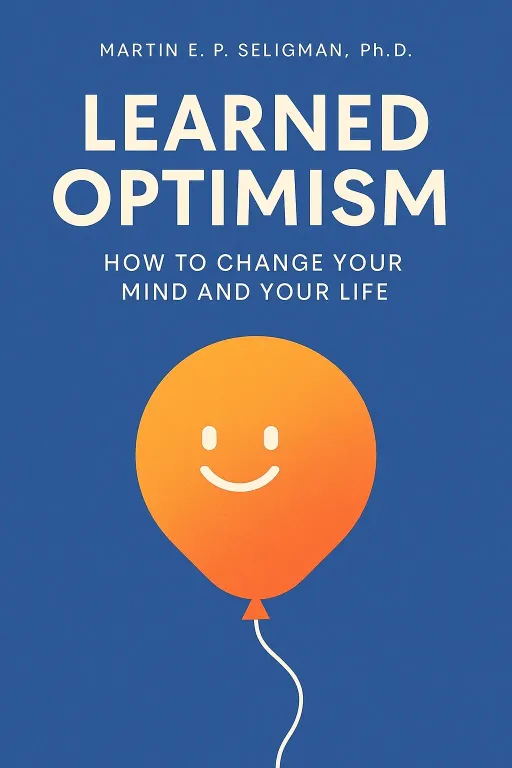
Nova: Exactly. Most of us are walking around with legacy software that was designed for survival on the savanna, not for managing complex projects or building a legacy in the modern world. Today, we are upgrading that system. We are diving into two essential frameworks: Learned Optimism by Martin E. P. Seligman and Master Your Emotions by Thibaut Meurisse.
Atlas: I am familiar with Seligman. He is essentially the architect of positive psychology, right? He shifted the field from just fixing what is broken to actually building human strength. That is a massive pivot from the traditional clinical focus.
Nova: He is. And Thibaut Meurisse complements that perfectly. Where Seligman gives us the cognitive architecture to reframe our reality, Meurisse provides the tactical, ground-level instructions for intercepting those negative emotions before they hijack your focus. Together, they create a complete mental operating system for the high-performing professional.
Atlas: That combination sounds practical, which is what I crave. I am less interested in abstract theories and more interested in the mechanics of how to stop a bad mood from sabotaging a high-stakes meeting. Let us get into the hardware first. How do we even identify that the system is glitching?
The Physiological Trigger
SECTION
Nova: The first step is realizing that your emotions are not just abstract feelings. They are physiological data points. Meurisse argues that before you even have a conscious thought like, "I am failing at this," your body has already registered a shift. Your heart rate spikes, your breathing shallows, your palms might get slightly damp.
Atlas: That sounds incredibly familiar. I can feel the tension in my shoulders the moment a project starts to drift off-track. It is almost like a physical notification pinging on my screen, but I usually ignore it until it is too late and I am already spiraling.
Nova: That is the crucial moment. Most people ignore the signal until the system is already crashed. Meurisse suggests that you need to treat these physiological shifts as objective data. When you feel that tightness in your chest or that heat in your face, you do not need to immediately label it as "stress" or "anxiety." You just need to label it as "input."
Atlas: I like that framing. Calling it "input" removes the emotional weight. It turns a subjective catastrophe into an objective observation. If I am sitting in a meeting and someone challenges my data, and I feel that heat rise, I can tell myself, "Okay, hardware detected a spike in arousal." It is almost like I am observing myself from a third-person perspective.
Nova: Precisely. That is the interception phase. If you wait until the thought "I am bad at this" appears, you have already lost the battle. The thought is the software glitch that follows the hardware spike. If you can catch the physiological surge before the narrative forms, you can prevent the hijack.
Atlas: That makes sense, but how do we stop the feedback loop? Because once that physiological signal hits, the brain usually scrambles to find a reason for it. It looks for a villain or a flaw.
Nova: That is where the brain’s narrative-seeking behavior takes over. It hates uncertainty. If your heart rate goes up, your brain asks, "Why?" and it will grab the first available narrative—usually a negative one—to explain it. "I feel hot and my heart is racing because I am incompetent."
Atlas: And that is the trap. The body provides the signal, the brain provides the faulty software, and suddenly, my productivity is in the gutter for the next three hours. So, the goal is to create a gap between the signal and the interpretation.
Nova: You nailed it. That gap is where your freedom lies. It is the space between stimulus and response. Meurisse is essentially teaching us to extend that gap. By recognizing the physical sensation as a neutral signal, you deny the brain the permission to attach a catastrophic narrative to it.
The ABCDE Model
SECTION
Atlas: That covers the interception, but what happens when the narrative has already taken hold? Sometimes I am already deep in the story before I notice the physiological signal. I am already convinced that the project is failing. How do we fix the code once it is running?
Nova: That is where Martin Seligman comes in. If Meurisse is the firewall, Seligman’s ABCDE model is the debugging tool. It is a systematic way to dismantle those persistent, pessimistic thoughts.
Atlas: I have heard of the ABC model, but what are the D and E?
Nova: The A stands for Adversity. This is the event itself. A client cancels a contract, or you make a mistake in a presentation. The B is Belief. This is your automatic, often distorted interpretation of that event. The C is Consequence. This is how you feel and act as a result of that belief.
Atlas: So, for example: Adversity is the client canceling. Belief is "I am not good enough to retain clients." Consequence is I shut down, stop prospecting, and spiral into a slump.
Nova: Exactly. Now, most people stop there. They live in the Consequence. But Seligman introduces D, which is Disputation. This is the most critical part for a high-performer. You do not just accept the Belief. You actively challenge it with data.
Atlas: I can see how that would work for a Strategic Architect. I deal in data. If I have a belief that I am incompetent, I should look at the evidence. I have successfully delivered ten other projects this year. I have a track record.
Nova: You are already doing the Disputation. You are looking at the objective facts to prove the belief wrong. You are essentially saying, "The evidence does not support this conclusion."
Atlas: That is powerful. It turns the internal monologue into a courtroom. I am the prosecutor, but I am also the judge. I am looking for the truth, not just the most painful story.
Nova: And that leads to E, which is Energization. When you successfully dispute the belief, you don't just feel "neutral." You feel energized because you have regained control. You have dismantled the lie, and now you have the fuel to act again.
Atlas: I am curious about the nuance of Disputation. Is it just about being positive? Because that feels dangerous. If I am failing, I don't want to just "think happy thoughts." That seems like a recipe for disaster.
Nova: That is a vital distinction. Seligman is not talking about empty positive thinking. He is talking about "learned optimism," which is actually about accuracy, not blind positivity. It is about being a realist. If the client canceled because you actually made a mistake, the Disputation isn't "I am perfect." It is "I made a specific mistake in this one instance, but I have the skills to fix it and do better next time."
Atlas: That is much more grounded. It is about narrowing the scope of the failure. Pessimism tends to make failure permanent, pervasive, and personal. "I am bad at this, I will always be bad at this, and it affects everything I do."
Nova: You hit the nail on the head. Seligman calls those the "Three Ps" of pessimism. Permanence, Pervasiveness, and Personalization. Optimism, or rather, the healthy explanatory style, does the opposite. It makes the failure temporary, specific, and external.
Atlas: I like that framework. It feels like a diagnostic tool. If I am feeling overwhelmed, I can ask myself: "Am I making this permanent, pervasive, or personal?" If the answer is yes, I am likely caught in a cognitive distortion and need to run the Disputation process.
Synthesis & Application
SECTION
Nova: Let us bring this together. You have the hardware—the physiological triggers that Meurisse talks about. And you have the software—the cognitive scripts that Seligman helps you edit. When you face a setback, you first use the hardware check. You feel the tension, and you label it as input, not reality. You intercept the hijack.
Atlas: And then, if the narrative has already slipped through—if I have already started telling myself that I am failing—I switch to the software patch. I use the ABCDE model to dispute that narrative. I look at the evidence. I make the failure specific, temporary, and external.
Nova: Exactly. And the "Tiny Step" that ties this all together is exactly what you need to do next time you hit a wall. Don't just sit with the frustration. Write it down.
Atlas: Physically write it down?
Nova: Yes. There is something about externalizing the thought that makes it much easier to dispute. When it is just in your head, it feels like the absolute truth. When you see it written on paper, it looks like a hypothesis. You can look at it and say, "Is this actually true, or is this just a story I am telling myself?"
Atlas: I can see the value in that. It is like code review. You don't debug by just staring at the screen; you print the logs, you look at the lines, you find the error.
Nova: And once you dispute it, you don't just stop. You have to take that Energization and immediately apply it to a small, actionable step. Don't try to fix your whole life. Just fix the next twenty minutes. What is the one thing you can do right now to move the needle on that project?
Atlas: That resonates with me. It prevents the paralysis. I think the danger for people like us—people who want to optimize everything—is that we try to fix the entire operating system at once. We want a complete overhaul. But these methods are actually about incremental, tactical adjustments.
Nova: It is not about becoming a zen master overnight. It is about becoming a better debugger of your own experience. It is about realizing that you are not your emotions, and you are not your initial thoughts. You are the operator.
Atlas: This feels like the kind of framework that builds long-term resilience. It is not about avoiding the setback; it is about changing the recovery time. If I can go from a three-day spiral to a twenty-minute recovery, I have effectively tripled my output capacity.
Nova: And you have drastically improved your well-being. Because the stress of the spiral is often worse than the event itself.
Atlas: That is a profound point. The event is usually manageable. The story we tell ourselves about the event is what destroys us.
Nova: We have covered a lot of ground today. We moved from the physiology of the trigger to the cognitive structure of the response. It is a powerful system.
Atlas: I am genuinely going to try the "write it down" method. It feels like the most practical, high-leverage move I can make today.
Nova: Let us see how that goes. The goal is mastery, not perfection.
Atlas: I think that is a perfect place to land. It is about the process, not the outcome.
Nova: Thank you for diving into this with me. It is always a pleasure to sharpen the saw.
Atlas: Likewise. And to everyone listening, remember: you are the architect of your own mental operating system. Start debugging.
Nova: This is Aibrary. Congratulations on your growth!