The Art of Letting Go and Healing from Within
Golden Hook & Introduction
SECTION
Nova: Imagine you are walking through your day carrying a backpack. But instead of books or a laptop, it is filled with every minor annoyance, every awkward conversation, and every lingering worry from the last three years. You are exhausted by noon, and you cannot figure out why.
Atlas: Oh, I know that backpack. I think most of us have been wearing that backpack since roughly 2020. It is heavy, it is uncomfortable, and honestly, we have gotten so used to the weight that we have stopped noticing it is there.
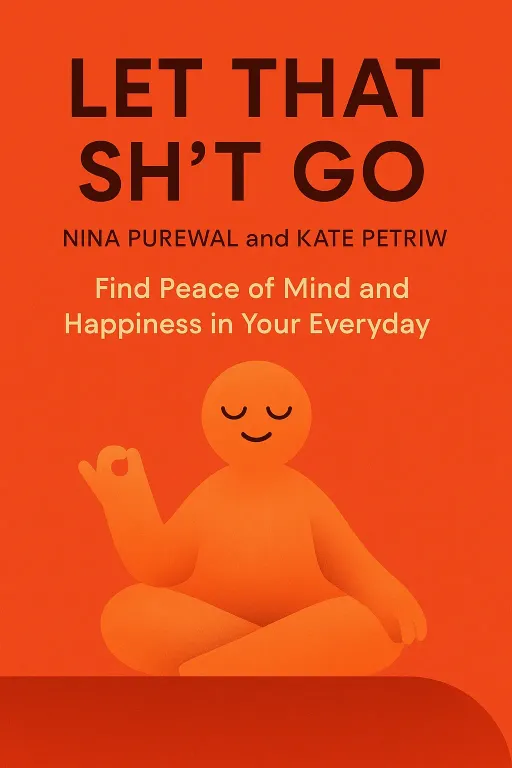
Nova: Exactly. We become so accustomed to the mental clutter that we start thinking it is just a normal part of existing. Today, we are going to talk about how to take that bag off. We are diving into the wisdom found in Let That Sh*t Go by Nina Purewal and Kate Petriw, and we are pairing it with the transformative insights from Lighter by Yung Pueblo.
Atlas: I have heard a lot about both of these. Purewal and Petriw come at this from a very grounded, mindfulness-based perspective, right? And Yung Pueblo, or Diego Perez as he is known in the real world, he has this incredible background as a poet and a meditator who really blew up online because he speaks to the universal struggle of modern healing.
Nova: You nailed it. Purewal and Petriw are actually based in Canada and have spent years teaching mindfulness to people who, frankly, do not have time for retreats in the mountains. They are about bringing peace into the chaos of a 9-to-5 life. And Yung Pueblo’s work is fascinating because he frames personal healing not just as a self-help project, but as a duty to the collective. It is about how your internal state dictates the quality of your relationships.
Atlas: That is a massive shift in perspective. Most of us view healing as this solitary, almost selfish endeavor. If you are saying that healing is a collective duty, that changes the stakes entirely.
The Mindfulness of Releasing
SECTION
Nova: Let’s start with that idea of the backpack. Purewal and Petriw introduce a framework they call mindfulness in the moment. The core concept is that we suffer not because of the events themselves, but because of the judgment we attach to them.
Atlas: Wait, can we pause there? Because that sounds a bit like the classic "just don't worry" advice, which is usually the least helpful thing anyone can say. If I am stressed about a project deadline, how does mindfulness actually help me?
Nova: I am glad you pushed back on that. It is not about ignoring the deadline or pretending the stress does not exist. That would be toxic positivity. The framework is about acknowledging the thought without the judgment. You feel the stress, you label it as a thought, and you observe it. The moment you label it, you create a tiny bit of space between you and the emotion.
Atlas: So, instead of saying, "I am a failure because I am behind on this project," the practice is to say, "I am having the thought that I am a failure, and I am feeling stress in my chest."
Nova: Precisely. That shift is the game-changer. When you drop the judgment, the emotional charge of the thought starts to dissipate. Think of it like a soda bottle that has been shaken up. The judgment is the cap. When you judge yourself for being stressed, you are tightening the cap. When you acknowledge the feeling without the label of good or bad, you are unscrewing the cap. The pressure can finally release.
Atlas: That makes sense. It is the difference between being the storm and watching the storm. But let’s be real, in a high-pressure environment, that is much easier said than done. How do you maintain that observer status when your boss is breathing down your neck?
Nova: It starts with practice in low-stakes moments. If you wait until you are in the middle of a career-defining crisis to try mindfulness, you will likely struggle. You build the muscle when life is calm. Purewal and Petriw suggest that you start by noticing the trivial things. Maybe you are standing in line for coffee and you feel impatient. That is your moment. Instead of spiraling into frustration about the slow barista, you acknowledge the impatience. You label it. You watch it pass. You are training your brain to decouple the event from the emotional reaction.
Atlas: So you are basically bio-hacking your own nervous system. You are teaching your brain that it does not need to go into full fight-or-flight mode every time a minor inconvenience pops up.
Nova: Exactly. And the ripple effect is significant. When you stop reacting to every small trigger, you save your energy for the things that actually matter. You stop wasting your emotional currency on things that do not have a long-term impact.
The Collective Duty of Healing
SECTION
Atlas: That leads me to something I have been thinking about regarding the second book we mentioned, Lighter. If I am working on my own emotional regulation, I am doing that for myself, right? But Yung Pueblo takes this in a different direction. He talks about healing as a collective duty. How does that connect to what we just discussed?
Nova: It connects because your internal state is contagious. Think about the last time you were in a room with someone who was deeply anxious or angry. You likely felt that tension in your own body within minutes.
Atlas: Oh, absolutely. It is like the air in the room changes.
Nova: That is the point. When you neglect your own healing, you are essentially walking around with an unhealed wound that you are accidentally bumping into everyone else. Yung Pueblo’s argument is that when you process your trauma and release your emotional weight, you are not just getting lighter for your own sake. You are becoming a more stable, compassionate, and effective person for everyone around you.
Atlas: That is a compelling way to frame it. It shifts the motivation from "I need to fix myself because I am broken" to "I need to heal so I can be a better partner, parent, colleague, or friend." It makes the work feel less narcissistic and more generous.
Nova: It is inherently generous. Think about the capacity for connection. If you are constantly preoccupied with your own unresolved fears, your own insecurities, and your own past triggers, you are not truly present with the people in your life. You are partially occupied by the ghosts of your past.
Atlas: That is a brutal but accurate way to put it. We are all living with ghosts. But how do you actually do that work without getting lost in the past? Because that is the danger, right? You start digging into your trauma, and suddenly you are just wallowing in it.
Nova: That is the crucial distinction. The goal is to process, not to dwell. Processing involves looking at the past, understanding the patterns, feeling the emotion, and then releasing it. Dwelling involves replaying the scene over and over, hoping for a different outcome, or using it as an identity. Yung Pueblo emphasizes that we have to be willing to let go of who we were to become who we are capable of being.
Atlas: It sounds like the ultimate form of decluttering. We are talking about emotional minimalism. You keep the lessons, but you discard the weight.
Nova: That is a perfect analogy. Emotional minimalism. You are keeping the wisdom you gained from your experiences, but you are throwing away the baggage that no longer serves you. And when you do that, you find that your capacity to connect with others expands. You have more room for empathy because you are not so focused on self-preservation.
The 5-Minute Strategy
SECTION
Atlas: I love the theory, but I know our listeners are probably waiting for the "how." We have talked about the mindfulness of releasing and the collective duty of healing. But what happens on a Tuesday afternoon when everything is falling apart? What is the practical application?
Nova: This is where we get to the takeaway. Purewal and Petriw have this very specific, very effective exercise. When you are overwhelmed by a recurring worry—and we all have those, the ones that circle back in our minds at 3:00 AM—you have to ask yourself one question: "Can I do anything about this in the next five minutes?"
Atlas: That is a powerful filter. It is simple, but it cuts right through the noise. Because most of the things we worry about fall into two categories: things we can fix right now, and things we cannot touch at all.
Nova: Exactly. If the answer is yes, you do it. You send the email, you make the call, you schedule the meeting. You take action. But if the answer is no—if the worry is about the future, about someone else’s opinion, or about an outcome you cannot control—then you have to consciously set it aside.
Atlas: How do you "set it aside"? That sounds abstract.
Nova: You visualize it. You literally imagine yourself taking that thought, putting it into a box, closing the lid, and placing it on a shelf. You are telling your brain, "I see you, I acknowledge this concern, but I am not dealing with this right now."
Atlas: I have tried this, and it is weirdly effective. It is not that the problem disappears, but it moves from the center of your mental workspace to the background. It stops hijacking your current focus.
Nova: It moves from a state of "active threat" to "managed concern." You are reclaiming your hours. You are prioritizing what actually matters. And the beauty of this is that it builds trust with yourself. When you consciously set things aside, you are telling your brain that you are capable of handling your own mental state. You are not a victim of your thoughts; you are the manager of them.
Atlas: And what if the thought comes back five minutes later? Because, knowing my brain, it definitely will.
Nova: Then you repeat the process. It is not a one-time event; it is a discipline. You do it again. You label it, you notice it, and you put it back in the box. Over time, the frequency of the thought will decrease. The emotional charge will lessen. You are retraining your neural pathways to prioritize the present moment over the hypothetical future.
Synthesis & Takeaways
SECTION
Atlas: So, we have covered a lot of ground here. We started with the idea of mindfulness in the moment, moved to the collective necessity of our own healing, and ended with a very tactical, five-minute tool for managing daily anxiety.
Nova: It all comes down to the same fundamental truth: your internal state is the foundation of your external reality. If you want to change your life, you have to start by changing how you relate to your own mind.
Atlas: It is easy to look at the world and think, "If only this, that, or the other thing changed, then I would be happy." But both of these books are pointing us back to the only thing we actually have control over, which is our own internal landscape.
Nova: That is the ultimate freedom. When you realize that you have the power to decide what to hold onto and what to release, you stop being a passenger in your own life and start being the driver.
Atlas: I think that is a perfect place to land. For everyone listening, try the box method today. Find that one nagging worry, ask the five-minute question, and see what happens when you decide to let it go.
Nova: It is the most productive thing you can do for yourself and for everyone around you.
Atlas: This is Aibrary. Congratulations on your growth!