Personalized Podcast
Golden Hook & Introduction
SECTION
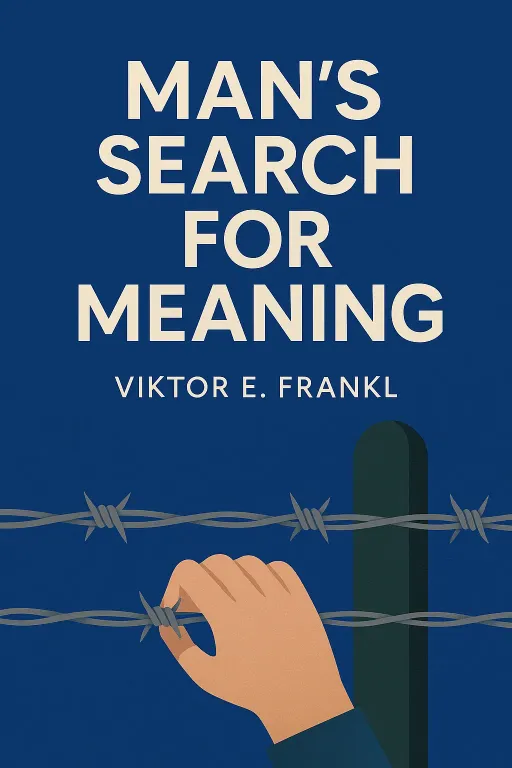
Prof. Eleanor Hart: If you strip a human being of their name, their home, their clothes, and their life's work, what is left? In 1945, Viktor Frankl entered Auschwitz as a prominent Viennese psychiatrist and emerged as prisoner number 119,104. Yet, in that absolute void, he discovered something indestructible: the last of human freedoms—the ability to choose one's attitude in any given set of circumstances. Today, we are joined by Rohingya writer, researcher, and storyteller TG Azim to explore how this profound truth echoes across decades, from the barbed wire of World War II to the modern refugee settlements of Cox's Bazar. Azim, welcome to the show.
TG Azim: Thank you, Eleanor. It is an honor to be here. When I first read Frankl's words, they didn't feel like historical text or abstract psychology. They felt like a mirror. Living in the refugee settlements, documenting the everyday struggles of my community, I see Frankl's observations playing out in real-time. The search for meaning isn't a luxury for the comfortable; it is the very currency of survival for the displaced.
Prof. Eleanor Hart: That is incredibly profound, Azim. Today, we're going to tackle Frankl's seminal work from three distinct angles. First, we'll explore the psychological transition from shock to survival and the protective shell of apathy. Then, we'll discuss the power of the inner sanctuary—how love, memory, and beauty sustain us. And finally, we'll focus on tragic optimism and the profound shift from asking what we expect from life to answering what life expects from us. Let's start at the very beginning: the moment of arrival, the shock of entry.
Deep Dive into Core Topic 1
SECTION
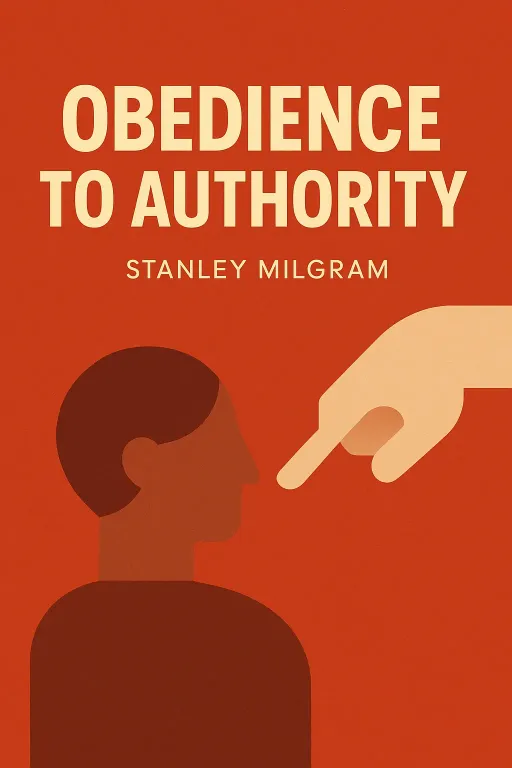
Prof. Eleanor Hart: Frankl describes the first phase of a prisoner's psychological journey as "shock upon admission." Imagine being packed eighty to a train carriage, traveling for days with no food or water, arriving at a place where the very name—Auschwitz—breathes terror. He talks about the "delusion of reprieve," that desperate, irrational hope that maybe, just maybe, things won't be that bad. And then comes the selection. An SS officer with a deceptively elegant, casual finger points to the right or to the left. Left meant immediate death in the gas chambers; right meant forced labor. Ninety percent of Frankl's transport went left. They became smoke rising from the chimneys. Frankl went right. But even for those who survived the selection, the stripping of identity was instantaneous. Frankl tried to save his life's work—a scientific manuscript hidden in his coat. When he asked an older prisoner if he understood its value, the man just laughed and said, "Shit!" In that moment, Frankl realized his past life was completely erased. He was left with nothing but his "naked existence." Azim, when you read about this sudden, violent stripping of identity, how does that resonate with the experiences of displaced communities today?
TG Azim: It resonates with a terrifying accuracy, Eleanor. When people are forced to flee their homes—whether it's from violence, persecution, or conflict—they undergo a very similar existential shock. You leave behind your land, your degrees, your family photos, your legal status. In the blink of an eye, you go from being a teacher, a doctor, a farmer, a father, to being a "refugee." You are assigned a registration number. Your identity is digitized, categorized, and managed by humanitarian agencies. That "delusion of reprieve" Frankl talks about? I see it in the eyes of newly arrived families. They think, "This is temporary. We will go home next week." But as the days turn into months, and months into years, the crushing weight of reality sets in. The loss of the manuscript is particularly poignant. For a writer or researcher, our words are our soul. To have them dismissed as "nothing" is a form of spiritual death.
Prof. Eleanor Hart: Yes, it's the death of the former self. And Frankl notes that once this shock subsides, the prisoner enters the second phase: a state of deep, profound apathy. He calls it a "necessary protective shell." The mind simply cannot cope with the constant trauma, the beatings, the sight of death, so it numbs itself. Frankl tells a chilling story from the typhus ward where he was working as a doctor. A patient had just died, and Frankl watched, completely devoid of emotion, as other prisoners immediately scavenged the warm corpse. One took the dead man's shoes, another took his coat, a third took his leftover potatoes. Finally, the nurse dragged the body away, its head bumping loudly on the wooden steps. And Frankl? He just sat there, calmly sipping his thin soup, watching the whole thing without a flicker of pity or horror. He realized his own humanity had been blunted to keep him alive.
TG Azim: That story is incredibly difficult to read, but it is so true to human nature under extreme duress. In the settlements, people sometimes ask me, "How can you live amidst such crowdedness, such lack of basic services, and still go about your day?" The truth is, the human mind adapts. Apathy isn't necessarily a moral failure; it's a psychological defense mechanism. If you felt the full weight of the tragedy around you every single second, you would collapse. You have to numb yourself to the mud, the heat, the uncertainty, just to focus on the next meal, the next bucket of water. But the danger, as Frankl points out, is when that apathy becomes permanent, when it completely erases your empathy. That's why storytelling and documentation are so vital. My camera, my pen—they are my tools to pierce through that apathy. They force me, and the world, to look at the individual behind the statistic. To see the person, not just the number.
Prof. Eleanor Hart: It's like you're fighting the numbing effect of the camp with your art. Frankl mentions that the only time ordinary prisoners smoked their own cigarettes—which were used as currency to buy soup—was when they had completely given up hope. They had lost the will to live, so they decided to enjoy their last few hours. The "smoking comrade" was a tragic signal that death was imminent.
TG Azim: Exactly. It's the moment of surrender. When the future becomes so bleak that you trade your survival for a fleeting moment of comfort. In our context, we see this when young people lose faith in education or legal pathways and risk their lives on dangerous sea journeys or fall into deep despair. When you lose your "why," the "how" becomes unbearable.
Deep Dive into Core Topic 2
SECTION
Prof. Eleanor Hart: That brings us beautifully to our second core topic: the inner sanctuary. Frankl argues that even when the body is enslaved and the mind is numbed, the spirit can find a path to freedom. He describes a freezing morning march to a work site. The wind is biting, the guards are shouting, and Frankl is limping on swollen, painful feet. To escape the misery, he retreats inward. He begins to converse with his wife. He doesn't even know if she is still alive—and tragically, she had already perished—but in that moment, it didn't matter. He writes, "The salvation of man is through love and in love." He realized that love transcends the physical person of the beloved; it finds its deepest meaning in their spiritual being. Azim, how does this concept of the "inner sanctuary" manifest in the lives of those who have lost everything externally?
TG Azim: This is where the beauty of the human spirit truly shines, Eleanor. In the refugee camps, despite the physical confinement, people build these incredible inner sanctuaries. For some, it is faith. They pray, they find solace in the sacred texts, connecting to something larger than their immediate suffering. For others, it is memory. Parents sit in the evenings and tell their children stories of the rivers, the paddy fields, and the homes they left behind. They are preserving a landscape of the mind that no border guard can confiscate. And for the youth I work with, it is education and creativity. When a young girl writes a poem, or a boy learns to paint, they are stepping out of the physical boundaries of the camp. They are claiming their intellectual and spiritual freedom. Love, too, is a massive anchor. The sacrifices parents make for their children, the way neighbors share their meager rations—that is the "salvation through love" in action. It's a quiet, defiant declaration that "you can control my body, but you cannot control my capacity to love."
Prof. Eleanor Hart: It's a beautiful defiance. Frankl also talks about how the appreciation of art and nature became incredibly intensified in the camps. He recalls a moment when prisoners were traveling in a carriage, exhausted, having given up on life. Suddenly, someone looked out the barred window and saw the Salzburg mountains glowing in the sunset. They were so moved by the beauty that they forgot their hunger and fear. Another time, a prisoner called his comrades out of their hut to watch a spectacular sunset. They stood in silence, and one said, "How beautiful the world could be!" It's almost grotesque, isn't it? Finding aesthetic bliss in the middle of a death camp. But Frankl says it was a vital source of spiritual nourishment.
TG Azim: It's not grotesque at all to me, Eleanor; it's a lifeline. When you are surrounded by gray tarpaulins, bamboo, and mud, a single flower blooming in a plastic pot outside a shelter becomes a masterpiece. As a photographer, I am constantly looking for those moments. I don't just photograph the misery; I photograph the children laughing as they play in the rain, the vibrant colors of a woman's dress against the dusty earth, the warm light of a candle inside a dark shelter. These aren't distractions from reality; they are a reclamation of reality. They remind us that we are still capable of experiencing beauty, which means we are still human. If we only focus on the horror, we allow the dehumanization to win.
Prof. Eleanor Hart: That is a powerful perspective, Azim. Your camera is literally capturing those "Salzburg mountain" moments in Cox's Bazar. But Frankl also warns us of the fatal danger of losing this inner connection to the future. He shares the tragic case of a well-known composer in the camp, F----, who had a vivid dream that the war would end for him on March 30, 1945. He clung to this hope with absolute certainty. But as the date approached, and the news from the front made it clear that liberation was not coming, F---- fell ill with a high fever. On March 30, he became delirious. On March 31, he died. The official diagnosis was typhus, but Frankl knew the real cause: his hope had died, his "will to live" had collapsed, and his physical body simply surrendered to the virus.
TG Azim: This is a profound warning. Hope is not a passive feeling; it is a biological necessity. When you set a specific date for your salvation—whether it's "we will go home by winter" or "the policy will change next month"—and that date passes without change, the disappointment can be lethal. We see this "give-up-itis" in the camps. People who have survived years of physical hardship suddenly decline when they lose faith in the future. That's why Frankl quotes Nietzsche: "He who has a to live can bear with almost any." We must help people find a "why" that is not dependent on external timelines, but rooted in daily purpose and internal dignity.
Deep Dive into Core Topic 3
SECTION
Prof. Eleanor Hart: That brings us to our final and perhaps most revolutionary topic: tragic optimism and the shift to responsibility. Frankl defines "tragic optimism" as the capacity to say "yes to life" in spite of the "tragic triad" of human existence: pain, guilt, and death. It's about turning suffering into a human achievement. But to do this, Frankl says we must undergo a radical Copernican revolution in our thinking. We must stop asking, "What do I expect from life?" and instead ask, "What does life expect from me?" We are not the ones asking the questions; we are the ones being questioned by life, and we must answer through our actions and our responsibility. Azim, how does this shift from "expecting" to "answering" change the narrative of displacement?
TG Azim: This shift is everything, Eleanor. It is the difference between being a passive victim and an active agent of your own destiny. If we ask, "What do we expect from life?" the answer for a refugee is often despair. We expect justice, we expect safety, we expect a home, but the world often fails to deliver those things. But if we ask, "What does life expect from me right now, in this camp, in this moment?" the narrative changes completely. Life expects me to survive. Life expects me to help my neighbor. Life expects me to teach the children who have no school. For me, as a writer and researcher, life expects me to document this history so it is not forgotten. When I write, I am answering life's question. I am taking responsibility for the story of my people. It gives my suffering a purpose. It is no longer just senseless pain; it is the raw material for a legacy of dignity.
Prof. Eleanor Hart: It's the ultimate form of self-transcendence. Frankl illustrates this with the beautiful story of the elderly general practitioner who came to him suffering from severe depression after the death of his beloved wife. Frankl didn't offer empty platitudes. Instead, he asked the doctor: "What would have happened, Doctor, if you had died first, and your wife would have had to survive you?" The doctor replied that it would have been terrible for her; she would have suffered immensely. Frankl then said, "You see, Doctor, such a suffering has been spared her, and it was you who have spared her this suffering—to be sure, at the price that you now have to survive and mourn her." The doctor said nothing. He shook Frankl's hand and left. His suffering had not changed, but its meaning had. It was now a sacrifice.
TG Azim: That story brings tears to my eyes, Eleanor. It is so simple, yet so incredibly deep. It shows that meaning is not about eliminating pain; it's about understanding its purpose. In our community, we have mothers who have lost their husbands and children, who carry an unimaginable weight of grief. But when they realize that their survival is what keeps their remaining children alive, that their strength is the foundation of their family's future, their grief is transformed. It becomes a sacred duty. They are bearing the pain so their children can have a chance at a better life. That is attitudinal heroism.
Prof. Eleanor Hart: "Attitudinal heroism." I love that phrase. Frankl actually references a Polish cardiologist who organized the Warsaw Ghetto uprising, who said that true heroism is not just about picking up a gun; it's about "going your way with dignity" when you can do nothing else. It's the ultimate freedom that no oppressor can take away. But Frankl also warns us about the dangers of nihilism—the belief that life is completely meaningless. He argues that nihilism is a collective neurosis that can lead to a dangerous utilitarian view of humanity, where people are valued only for their usefulness or productivity.
TG Azim: Yes, and we see this danger in the modern world's response to humanitarian crises. When refugees are viewed merely as a "burden," a "drain on resources," or "socially useless," we are falling into that nihilistic trap. We are forgetting the unconditional value of every human life, regardless of their economic productivity or legal status. Frankl's Logotherapy is a powerful antidote to this. It reminds us that every individual has a unique, irreplaceable worth. A person's dignity is not based on what they can produce, but on who they are and how they face their destiny.
Synthesis & Takeaways
SECTION
Prof. Eleanor Hart: Azim, our conversation today has been incredibly rich and deeply moving. We've journeyed from the shocking dehumanization of the camps to the quiet resilience of the inner sanctuary, and finally to the transformative power of tragic optimism and responsibility. If you had to synthesize the most important takeaway from Frankl's work for our listeners today, especially those who might be facing their own personal "camps" of struggle, what would it be?
TG Azim: I think it is the realization that we always have a choice. We cannot always choose our circumstances—we cannot stop the storm, the conflict, or the loss—but we can always choose how we respond. We can choose to let the suffering break us, or we can choose to let it reveal the depth of our spirit. And to remember that our lives are constantly questioning us. When you face a dark day, don't ask, "Why is this happening to me?" Ask, "What is this situation demanding of me? How can I answer with dignity?"
Prof. Eleanor Hart: "How can I answer with dignity?" That is a question that should guide us all. Frankl leaves us with a powerful ethical imperative in his book: "Live as if you were living for the second time and had acted as wrongly the first time as you are about to act now." It forces us to realize the immense responsibility of the present moment. Azim, thank you for sharing your profound insights, your beautiful stories, and your defiant hope with us today. You are living proof of Frankl's belief in the unshakeable dignity of the human spirit.
TG Azim: Thank you, Eleanor. It has been a privilege. I hope our listeners will remember that even in the darkest corners of the world, the light of meaning is never fully extinguished. We just have to choose to look for it.
Prof. Eleanor Hart: And to our listeners, as you go about your day, we leave you with this thought: What is life expecting from you today? How will you answer? Until next time, keep searching for meaning in the margins.