*The Portfolio of Purpose: Securing Global Scholarships through Viktor Frankl’s Logotherapy*
Content
Content
Shakespeare: -
Shakespeare: -
Golden Hook & Introduction
SECTION
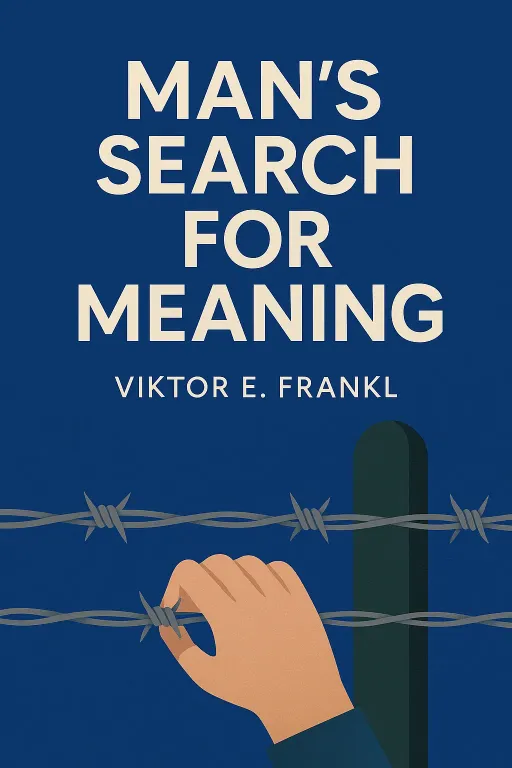
Shakespeare: Imagine standing upon a frozen stage, stripped of your name, your garments, your very history, left with nothing but a cold wind howling through the barbed wire of Auschwitz. How does one build a temple of hope when the world has ground the bricks to dust? Today, we do not speak of mere survival. We speak of the ultimate triumph of the human spirit over the tyranny of circumstance. And joining me in this theater of contemplation is Ashma, a seeker of knowledge from the majestic valleys of Nepal, a student of business who dares to look beyond the horizon of her current limitations. Welcome, Ashma.
Ashma: Thank me, Shakespeare. It is an absolute honor to be here. You know, when I look at the towering peaks of my home country, I often feel a profound contrast. On one hand, there is this immense, beautiful ambition to scale the heights of global education, to secure a fully funded scholarship abroad. On the other hand, there is the reality of limited financial resources, the lack of expensive corporate internships, and the quiet anxiety of wondering if a girl from Kathmandu can truly compete on the world stage. When I read Viktor Frankl’s masterpiece, I didn't just see a historical memoir. I saw a blueprint for survival and, more importantly, a strategy for self-determination.
Shakespeare: Ah, the crucible of the mountains meets the crucible of the soul! You speak of limitations, yet Frankl reminds us that when we are no longer able to change a situation, we are challenged to change ourselves. Today, we shall dismantle the modern myth that greatness requires a golden path. We will explore how Frankl’s profound philosophy of Logotherapy can be forged into a shield and a compass for your academic journey. We will dive into two transformative realms: first, the Copernican revolution of the mind, shifting from what we demand of the world to what the world demands of us; and second, the art of tragic optimism, turning the very stones of financial scarcity into the foundation of a peerless academic portfolio.
Shifting the Question – The Ultimate Scholarship Value Proposition
SECTION
Shakespeare: Let us begin our march into the deep snows of the camp. Frankl observed a tragic phenomenon among his fellow captives. There was a well-known composer, F----, a man of delicate sensibilities, who clung to a dream. In the dark days of early March, a voice in his sleep whispered a prophecy: that for him, the war would end, and liberation would dawn on the thirtieth day of March. He was filled with a vibrant, desperate hope. But as the days marched relentlessly forward, and the news from the front brought no promise of freedom, the composer’s spirit began to wither. On the twenty-ninth of March, he fell suddenly ill with a raging fever. On the thirtieth, as his prophecy proved false, he sank into delirium. On the thirty-first, he was dead. The medical diagnosis was typhus, but Frankl knew the truth: his physical resistance had been utterly broken by the sudden loss of hope, the shattering of his expectation.
Ashma: That story is so heartbreaking, Shakespeare, but it is also a profound psychological warning. In business and marketing, we talk about managing expectations, but Frankl takes it to an existential level. The composer was living for a specific, passive expectation—what the future was going to him. When that transaction failed, his system collapsed. Frankl contrasts this with his own experience. When he entered Auschwitz, his life's work—a scientific manuscript containing the foundations of Logotherapy—was ripped from his coat and destroyed. He was left with nothing. Yet, when he contracted typhus in a Bavarian camp, instead of giving up, he spent his feverish nights jotting down key concepts on tiny scraps of paper, determined to survive so he could reconstruct his book. He had a "why" to live for, a responsibility to his work, which allowed him to bear the brutal "how" of the camp.
Shakespeare: "He who has a why to live can bear with almost any how." The words of Nietzsche, which Frankl wore like armor! It is not what we expect from life, Ashma, but what life expects from us. We are the ones being questioned!
Ashma: Exactly! And this is where the massive shift happens for anyone applying for a scholarship. Let’s look at this through an analytical lens. Most scholarship essays are written from a place of "will to pleasure" or "will to power." Students write about how much they the scholarship, how it will change lives, how it will give prestige, or how they need it because of their financial hardships. They are asking, "What can this scholarship do for me?" But the selection committee is sitting there, looking at thousands of identical, pleading essays. They don't want to buy your despair; they want to invest in your purpose.
Shakespeare: A profound truth! You are reframing the beggar’s plea into the ambassador’s promise.
Ashma: Yes! We have to apply Frankl’s Copernican revolution to the essay. We must ask: "What does my community, my country, or my field of study expect from me right now? And how is this specific scholarship the precise tool I need to answer that call?" For example, as a BBS student in Nepal, I shouldn't just say, "I want to study finance abroad to get a good job." I should say, "Nepal’s micro-enterprises are struggling to scale due to a lack of structured investment frameworks. Life has placed me in Kathmandu, in the middle of this economic transition. I have a responsibility to build those frameworks, and your university's master's program is the missing asset I need to fulfill that duty." Do you see the difference? It changes the entire power dynamic of the application. You are no longer a passive victim of your circumstances asking for a handout; you are an active agent of change offering a partnership.
Shakespeare: By the rood, it is magnificent! You are not asking the committee to save you; you are inviting them to join you in a crusade of your own making. You paint your local valley not as a prison of poverty, but as a fertile ground of questions waiting for your answers. Frankl writes that each man is questioned by life, and he can only answer by being responsible. Your responsibility is your value proposition!
Ashma: Precisely. In marketing, we call this "positioning." If you position yourself as a commodity—just another smart student with high grades and low income—you are easily replaced. But if you position yourself as a unique solution to a specific problem, you become irreplaceable. Frankl talks about the "uniqueness and singleness" of each human existence. My limited resources are not a marketing defect; they are the exact context that makes my perspective unique. A wealthy student from a developed nation cannot speak with authority on the financial struggles of a small tea-shop owner in Kathmandu. I can. That is my market gap. That is my competitive edge.
Tragic Optimism and the Scarcity Edge
SECTION
Shakespeare: To turn the very poison of our plight into a healing draft! This is what Frankl calls "tragic optimism"—the capacity to say yes to life in spite of the tragic triad of pain, guilt, and death. But tell me, Ashma, how does a student, bound by the heavy chains of financial scarcity, build the golden armor of an academic profile? How do we act when our pockets are empty?
Ashma: This is where we look at one of the most fascinating, lesser-known studies mentioned in the book. In 1933, during a time of severe economic depression, Frankl conducted a study on what he called "unemployment neurosis." He noticed that young, jobless people were falling into a deep, pathological depression. Traditional psychiatrists thought this was purely due to financial stress. But Frankl dug deeper. He realized their depression stemmed from a double identification: they equated being jobless with being useless, and being useless with having a meaningless life.
Shakespeare: Ah! They believed their worth was bound to their wage!
Ashma: Exactly. So, Frankl did something revolutionary. He persuaded these young, unemployed people to volunteer. He got them to work in youth organizations, adult education centers, and public libraries—completely unpaid. And do you know what happened? Their depression vanished! Their economic situation hadn't changed by a single cent. They were still poor, they were still unemployed, but they were no longer suffering from neurosis because their time was filled with meaningful, self-transcending activity. They realized that usefulness and dignity are not commodities you buy; they are actions you perform.
Shakespeare: What a spectacular victory of the mind! They found their stage, though no manager paid them a wage. They realized that the soul’s currency is purpose, not gold.
Ashma: This is the ultimate strategy for building a scholarship profile on a zero budget. Many students think, "I can't build a good profile because I can't afford expensive certificate courses, or I can't take an unpaid internship in another city because of travel costs." But Frankl’s study proves that the most valuable asset you can build is free: it is local, voluntary responsibility. If you are a business student, you don't need a corporate office to practice business. Look around you. Kathmandu is filled with micro-entrepreneurs—street vendors, local weavers, small agricultural traders. They don't have marketing budgets or financial analysts.
Shakespeare: They are the unsung actors in the drama of survival!
Ashma: Yes! So, what if I apply my BBS knowledge right here? What if I start a free, weekly financial literacy circle for five local women who run small tea shops? What if I help a local handicraft artisan set up a free social media page to market their products to tourists, using nothing but my smartphone and free internet? I am not doing this for money; I am doing this because my community needs it, and I have the skills to help.
Shakespeare: And in doing so, you write a story that no classroom could ever teach!
Ashma: Exactly! When a scholarship committee reads my application, they won't see a passive student who waited for opportunities to find her. They will see a self-starter who looked at her resource-constrained environment, identified a gap, and used her business education to create real, measurable value. That is "attitudinal heroism" in action. You are demonstrating that you don't need a million dollars to make an impact. If you can create value with nothing, imagine what you will do when they give you a fully funded degree and a global network!
Shakespeare: It is the ultimate return on investment! You are showing them a seed that has cracked through the dry, mountain earth and blossomed by its own fierce will. They will scramble to water such a plant! You remind me of the story Frankl tells of the dying young woman in the camp. She knew her days were numbered, yet she was cheerful. She pointed out her window to a single branch of a chestnut tree, which had two small blossoms. She told Frankl, "I speak to this tree. It tells me: 'I am here—I am here—I am life, eternal life.'" She found a transcendent, beautiful meaning in her final moments, independent of her physical confinement. You, too, are looking at the small blossoms of Kathmandu and finding the eternal life of your ambition.
Ashma: That story always brings tears to my eyes, Shakespeare. It shows that even in the most restricted space, our internal freedom of attitude remains untouched. Frankl calls it "the last of human freedoms." For a scholarship applicant, this means refusing to let your financial status define your academic worth. You might not have the money to buy a fancy profile, but you have the absolute freedom to choose how you respond to that lack. You can choose to let it paralyze you, or you can choose to let it provoke your creativity.
Synthesis & Takeaways
SECTION
Shakespeare: The shadows lengthen, and our dialogue must draw its curtains. But let us not leave our audience without a final, structured map of our journey. We have traveled from the dark barracks of Auschwitz to the bustling streets of Kathmandu. Ashma, let us synthesize this philosophy into a practical guide for the seekers who listen to us today.
Ashma: Let’s break it down into three concrete, actionable steps that any student can start applying today, with zero financial resources:
Shakespeare: A magnificent trilogy of action! You have taken the heavy, leaden grief of the concentration camps and spun it into the gold of human potential. To our listeners, we leave you with this final, haunting question from the great doctor himself: When life stands before you, demanding an answer, will you turn your face away in despair, or will you stand erect, look into the storm, and say, "I am here, and I am ready to answer"?
Ashma: Thank you, Shakespeare. To everyone listening, remember: your circumstances may limit your resources, but they can never limit your capacity to find meaning. Build your portfolio of purpose, and let the world see what you are truly capable of.
Shakespeare: Until our paths cross again in the great theater of life, fare thee well!