Navigating Friction and Restoring Trust
Golden Hook & Introduction
SECTION
Nova: Research indicates that the average professional spends nearly twenty hours every single week dealing with interpersonal friction or toxic behavior from colleagues. That represents half of a standard work week effectively cannibalized by office politics, power plays, and emotional turbulence.
Atlas: That is a staggering statistic. I imagine many of our listeners are currently nodding along, thinking about that one person on their team who seems to thrive on creating chaos. It feels like a massive tax on our productivity and our mental health.
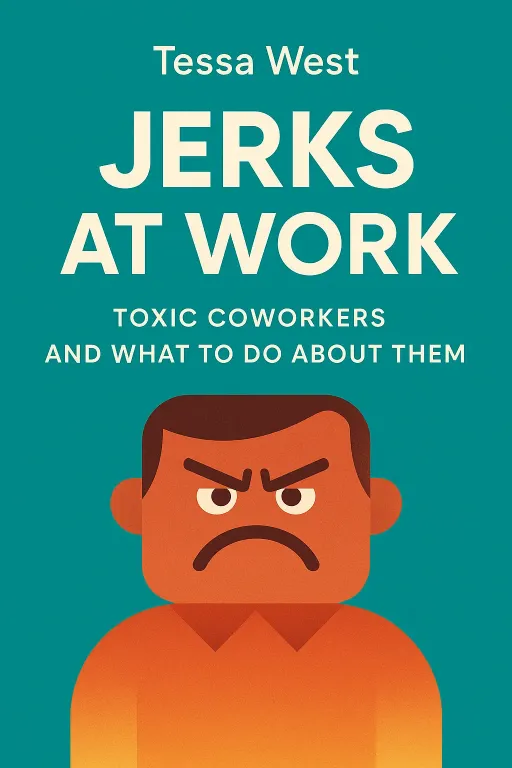
Nova: It is a tax, and often a very expensive one. Today, we are going to look at how to stop paying that toll. We are diving into two essential frameworks. First, we have Jerks at Work by Tessa West, which provides a masterclass in identifying and neutralizing toxic archetypes. And to balance that out, we are looking at Move Fast and Fix Things by Frances Frei and Anne Morriss, which gives us the Trust Triangle as a tool to rebuild what those jerks break.
Atlas: I like that pairing. One book acts as the shield against the chaos, and the other acts as the blueprint for rebuilding the culture. I have always been fascinated by how Tessa West approaches this. She writes from a perspective of someone who has spent years studying the organizational psychology behind these interactions. She does not just tell you to ignore the jerks; she gives you a playbook for surviving them.
Nova: Exactly. And Frances Frei and Anne Morriss bring a different energy. They focus on the idea that speed and trust are not enemies. They argue that if you want to move fast, you actually need more trust, not less. It is a very pragmatic way to look at leadership and team dynamics.
Atlas: Let’s get into the trenches. If I am dealing with someone who is making my life miserable, where do I even start?
Identifying the Toxic Archetype
SECTION
Nova: You start by removing the emotional lens. When we are dealing with a difficult colleague, our brains often go into a defensive, emotional spiral. We start taking things personally. We wonder what is wrong with us. The first step in West’s framework is to stop that spiral by labeling the behavior. She identifies several specific archetypes, but the most destructive one is often the Kiss-Up Kick-Downer.
Atlas: Oh, I have absolutely worked with that person. They are the ones who are absolute sunshine and rainbows when the boss is in the room, but the moment the supervisor turns their back, they become a different person entirely. They are dismissive, rude, or they actively sabotage the people below them.
Nova: That is the textbook definition. It is a classic power play. The reason this archetype is so effective at causing damage is that they create a reality distortion field. To the people above them, they look like high performers, team players, and future leaders. To the people below or beside them, they are a nightmare.
Atlas: It is infuriating because you feel like you are losing your mind. You try to raise the issue, and you look like the problem. You look like the person who cannot get along with a star employee.
Nova: That is the trap. The Kiss-Up Kick-Downer relies on you reacting emotionally. They want you to get angry, to vent, or to lash out. When you do that, you confirm their narrative that you are the difficult one. The strategy West suggests is to shift from emotional reaction to strategic documentation.
Atlas: Walk me through that. What does strategic documentation actually look like? Most people think that means keeping a diary of grievances, which feels petty.
Nova: It is not about writing a diary of complaints. It is about creating a record of business outcomes. You stop focusing on the person’s personality and start focusing on their impact on the work. You track how their behavior specifically delays projects, creates rework, or forces others to pick up their slack. You are building a case file that is entirely objective. If you say, this person is a jerk, that is an opinion. If you say, this person missed the deadline on three separate occasions, causing the team to work through the weekend, that is a business fact.
Atlas: That makes sense. It changes the conversation from a personality clash to a performance issue. But what if the Kiss-Up Kick-Downer is your direct manager? That feels much riskier.
Nova: It is riskier, but the principle remains the same. You need to build alliances. You cannot fight a battle like this in isolation. You need to find other people who have experienced the same behavior. You are not looking to form a gossip ring or a mob. You are looking to create a network of objective observers who can corroborate the patterns. When multiple people independently verify the same impact on the work, the narrative of you being the problem falls apart.
Atlas: It sounds like a slow game. It is not an overnight fix. It is about playing the long game to protect your own career and sanity.
Nova: It is a game of patience. The goal is to remove your emotions from the equation so that you can see the behavior for what it is—a strategy that the other person is using to get ahead. Once you identify it as a strategy, you can counter it with your own strategy. You are no longer a victim of their behavior; you are an observer of their tactics.
The Trust Triangle
SECTION
Atlas: I love that shift in perspective. But let’s say you have managed to neutralize the toxic person or at least protect yourself. Now you are left with a team that has been through the wringer. The trust is gone. That is where I see the connection to the second book, Move Fast and Fix Things.
Nova: You are spot on. If you have had a Kiss-Up Kick-Downer in the mix, the team’s foundation is likely cracked. People are walking on eggshells. They are not sharing ideas because they are afraid of being penalized. This is where Frei and Morriss introduce the Trust Triangle.
Atlas: I have heard this referenced before. It is Empathy, Logic, and Authenticity. It sounds simple, but I imagine the execution is where people trip up.
Nova: It is deceptively simple. Most people think trust is just about being a nice person, but that is only one part of the equation. Empathy is the first leg. It is the ability to show the other person that you care about them and their experience. It is the belief that you are on their side.
Atlas: I think a lot of leaders fail here because they confuse empathy with agreement. You can have empathy for someone without agreeing with their position.
Nova: That is a vital distinction. Empathy is about understanding. It is about making the other person feel seen. If you are a manager and your team is burnt out because of a toxic colleague, you cannot just tell them to work harder. You have to acknowledge the friction they have been experiencing. You have to validate their reality.
Atlas: Okay, so you have Empathy. What about Logic?
Nova: Logic is the second leg of the triangle. This is the competence part. Do you know what you are talking about? Do you have a clear plan? Are you making decisions that make sense to the rest of the team? If you have all the empathy in the world but you cannot execute or you do not understand the business, people will not trust you to lead them.
Atlas: That is a great point. I have worked for leaders who were incredibly supportive and kind, but they were lost when it came to strategy. I ended up feeling like I was on a sinking ship with a captain who was very nice but had no idea how to steer.
Nova: Exactly. Empathy without Logic leads to comfort, but it does not lead to progress. The third leg is Authenticity. This is often the hardest one for people in corporate environments. Authenticity is about being the real version of yourself. It is not about oversharing or being unprofessional. It is about being consistent. If you say one thing in a meeting and do another thing behind closed doors, you are failing the authenticity test.
Atlas: I struggle with this one. In a professional setting, we are taught to put on a mask. We are taught to be corporate. How do you balance being authentic with being professional?
Nova: It comes down to transparency. You do not need to share your deepest personal secrets. You just need to be honest about what you know, what you do not know, and what your intentions are. When you are authentic, people know where they stand with you. They do not have to spend energy trying to decode your hidden agendas.
Atlas: It sounds like the three legs are interdependent. If you have Empathy and Logic but lack Authenticity, you come across as a politician. You are saying what people want to hear, but you do not actually believe it.
Nova: That is a perfect observation. And if you have Logic and Authenticity but lack Empathy, you come across as a tyrant. You might be brilliant and honest, but you are also terrifying to work for. You are the person who is always right, but you do not care who you crush in the process.
Atlas: And that brings us right back to the Kiss-Up Kick-Downer. They might have Logic—they might be very good at their job—but they are completely missing Empathy. They are the antithesis of the Trust Triangle.
Nova: That is the key insight. The toxic archetypes West describes are people who have broken the Trust Triangle. They have chosen to optimize for their own gain at the expense of the team’s trust. When you are trying to repair a team dynamic, you have to look at which leg of the triangle is missing. Are people not trusting the leader because they do not feel cared for? Is it because the leader is incompetent? Or is it because the leader is being fake?
Atlas: This is a diagnostic tool. If I am the leader, I can look at my team and ask, where are we failing? If we are failing on Empathy, I need to listen more. If we are failing on Logic, I need to clarify our goals. If we are failing on Authenticity, I need to be more transparent.
Nova: Precisely. And if you are an individual contributor, you can use the Trust Triangle to evaluate your own interactions. Are you showing up with enough empathy for your colleagues? Are you being clear and logical in your communication? Are you being authentic about your contributions and your limitations?
Atlas: It is a self-assessment as much as it is a management tool. I think that is where the real power lies. We spend so much time looking at other people’s faults—like the toxic coworker we talked about earlier—that we forget to check our own alignment.
Nova: It is easier to point out the jerk than it is to build the trust. But building the trust is the only way to insulate yourself from the jerks in the long run. If your team is a cohesive unit built on the Trust Triangle, a toxic person cannot easily infiltrate or divide you. They thrive in environments where trust is already low.
Synthesis & Takeaways
SECTION
Atlas: We have covered a lot of ground here. We started with identifying the toxic people, the ones who create the friction, and we moved to the systemic way to build resilience through the Trust Triangle. If I am a listener and I want to take one actionable step today, what should it be?
Nova: The next time you feel that spike of frustration or anger with a colleague, pause. Do not react. Instead, take a moment to map their behavior against the archetypes in Jerks at Work. Ask yourself, what is the strategy here? Why are they doing this? Once you have identified the pattern, use the Trust Triangle from Move Fast and Fix Things to assess the root cause. Is there a lack of empathy in the team? Is the logic of the project unclear? Is there a lack of authenticity in how we are communicating?
Atlas: That is a powerful two-step process. First, diagnose the disruption. Second, identify the missing piece of trust. It moves you from being a passive recipient of office chaos to an active participant in your own professional environment.
Nova: It changes your entire posture. You stop being a victim of the environment and start being an architect of it. Even if you are not the manager, you can influence the trust levels in your immediate circle. You can be the person who brings empathy. You can be the person who brings logic. You can be the person who brings authenticity.
Atlas: It sounds like the best defense against a toxic environment is to be the kind of person who makes it impossible for that environment to thrive.
Nova: That is the ultimate goal. When you lead by example, you force the system to change. You do not have to wait for permission to start building trust. You can start in your next meeting.
Atlas: I love that. It takes the power away from the jerk and puts it back in your hands.
Nova: Exactly. And that is how you reclaim those twenty hours a week. You stop fighting the friction and start building the foundation.
Atlas: This has been a great exploration of how we can navigate these complex human dynamics. It is not just about surviving; it is about thriving in the middle of it all.
Nova: It is about creating a space where you can actually do your best work. Thank you for joining us on this deep dive into navigating friction and restoring trust.
Atlas: If you found this helpful, take a moment to share it with a colleague who might be dealing with their own office challenges. We are all in this together.
Nova: And remember, the work you do to build trust is the most important work you will ever do. This is Aibrary. Congratulations on your growth!