Unwritten Agreements and Toxic Relationship Patterns
Golden Hook & Introduction
SECTION
Nova: Imagine you are sitting down to sign a contract for a new job. You read every single clause. You check the salary, the benefits, the vacation days. You do not sign until you understand every word. Now, consider that you are signing contracts every single day with the people around you, and with yourself, but you have never even read the fine print.
Atlas: That is a terrifying thought because I know for a fact I have signed some terrible deals without realizing it. I think everyone has. We walk into conversations, dates, and meetings, and we just assume the rules are obvious. But the truth is, most of the conflicts we face, especially in our personal lives, come from agreements we made in our heads that the other person never even saw.
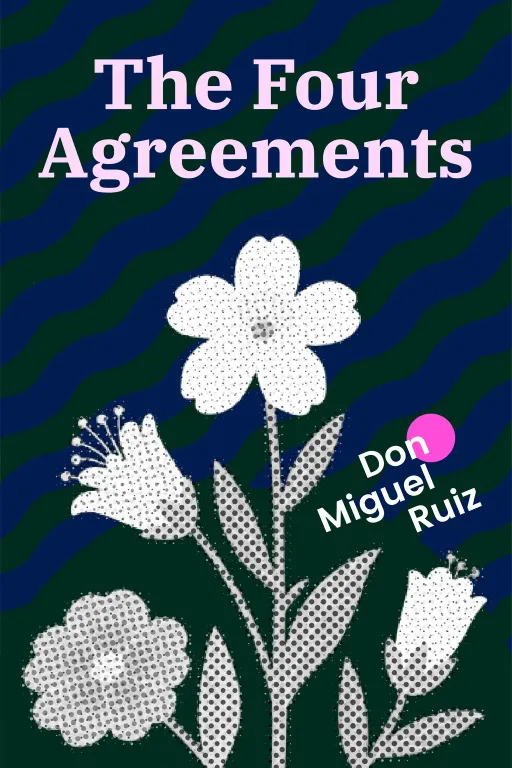
Nova: Exactly. And that is the central friction point we are exploring today. We are looking at two powerful, distinct perspectives on how these invisible contracts sabotage our happiness. First, we have the foundational wisdom of The Four Agreements by Don Miguel Ruiz, which teaches us how to clear the clutter from our own minds. Then, we are going to pivot to the modern, gritty reality of the dating world with Mr Unavailable and the Fallback Girl by Natalie Lue.
Atlas: It is an interesting pairing. One feels like ancient, sweeping philosophy, and the other feels like a direct, no-nonsense manual for navigating modern heartbreak. It is like taking a masterclass in emotional strategy from a Zen monk and a brutally honest best friend at the same time.
Nova: That is the perfect way to describe it. Don Miguel Ruiz, for those who might not know, brought these Toltec teachings to a massive global audience. His work has become a staple for anyone seeking personal freedom because it strips away the societal conditioning we all grow up with. It is widely acclaimed as a guide for breaking the cycles of self-limiting beliefs.
Atlas: And then you have Natalie Lue. Her work emerged from her own experiences and a desire to help people stop waiting for the wrong partners to suddenly change. She writes with a very specific, sharp edge that cuts through the excuses we tell ourselves. It is less about philosophy and more about the mechanics of why we keep picking the wrong person.
Nova: Right. And when you combine the two, you get a complete picture. One gives you the internal rules to live by, and the other gives you the boundary tools to enforce them in the real world. Let’s dive into how these invisible agreements are actually holding us back.
The Invisible Contracts and the Ego
SECTION
Atlas: Let’s start with the big one. The Four Agreements. I have heard people quote the title for years, but the actual practice of it is brutal. Specifically, the idea of not taking anything personally. I struggle with that. If someone is rude to me, or if a partner pulls away, my brain immediately goes to, what did I do wrong? How is that even avoidable?
Nova: It is the most human response possible. But here is the shift in perspective Ruiz offers. He argues that when someone treats you poorly, it has almost nothing to do with you. It is a projection of their own internal reality. When someone says, you are annoying, or they ignore your text, they are filtering their world through their own beliefs, their own fears, and their own pain.
Atlas: I get that intellectually. But emotionally, it feels like a rejection. If I am the one receiving the message, it lands on me. How do you build a shield for that?
Nova: You start by recognizing that every interaction is a reflection of the other person’s mental state. Think of it like a mirror. If someone is screaming at you, they are not screaming at you, the person. They are screaming at the chaotic, painful, or confused world they are living in inside their own head. By taking it personally, you are essentially agreeing to take on their emotional baggage. You are signing a contract that says, I will accept your chaos as my truth.
Atlas: That is a powerful way to frame it. I am essentially volunteering to be a dumping ground for their emotional clutter.
Nova: Exactly. And the moment you choose not to take it personally, you are effectively canceling that contract. You are saying, I see your frustration, but I do not own it. This creates a massive amount of emotional energy for yourself. Most of us spend our entire day exhausted because we are carrying around the heavy, negative projections of everyone we interacted with.
Atlas: So, if I stop taking things personally, I am not just being stoic. I am actually reclaiming my own energy.
Nova: That is the goal. But this is where it gets tricky. We often keep these agreements because we think we need to earn our worth. We think if we can just fix the other person, or if we can just be perfect enough, they will finally see us and treat us well. And that leads us directly into the dynamic Natalie Lue describes.
The Fallback Girl and the Price of Availability
SECTION
Atlas: This is where I want to dig in, because the term Fallback Girl sounds incredibly specific. It sounds like a role someone gets cast into without an audition.
Nova: It is exactly that. Natalie Lue defines the Fallback Girl as someone who accepts crumbs of affection because she believes that is all she is worth, or because she thinks she can change the person she is with. She is the person who is always available, always understanding, and always waiting for the other person to realize she is the one.
Atlas: I imagine a lot of listeners are nodding along to that. It is the person who makes excuses for their partner. They say, he is just busy, or she is just afraid of commitment, but they will come around if I am just patient enough.
Nova: Precisely. The tragedy is that the Fallback Girl is actually very high-value, but she is spending all her energy on someone who is emotionally unavailable. Lue points out that being emotionally unavailable is not just a personality quirk. It is a structural issue. These partners are often incapable of meeting the needs of a healthy relationship because they are operating from a place of fear or selfishness.
Atlas: But why do we stay? If the deal is bad, why do we keep signing the contract?
Nova: That is the million-dollar question. It usually comes down to an unspoken agreement we have with ourselves. We tell ourselves, if I can just be the best partner, if I can just be the most patient, the most beautiful, the most accommodating, then I will win. I will prove my value. We are trying to win a game that the other person is not even playing.
Atlas: That is painful to hear, but it makes so much sense. It is like trying to win a soccer game when the other person is playing chess. You are just running around the field, sweating, trying to score, and they are sitting there, confused about why you are running at all.
Nova: And while you are running, you are losing. You are losing time, you are losing self-respect, and you are losing your own boundaries. Lue emphasizes that the antidote to being a Fallback Girl is not to try harder. It is to enforce boundaries that might actually end the relationship.
Atlas: Wait, hold on. You are saying the solution to the relationship problem is to potentially end the relationship? That sounds like a high-stakes move.
Nova: It is the highest stake. But consider the alternative. If you stay in a dynamic where your needs are consistently ignored, you are already in a broken relationship. You are just pretending it is working. By setting a boundary—like saying, I need consistent communication, or I am not interested in a casual arrangement—you are essentially testing the contract. If they cannot meet the boundary, the contract is void. And that is a good thing.
Atlas: I see. So the boundary acts as a filter. It is not a punishment for the other person. It is a protection mechanism for you.
Nova: Exactly. It filters out the people who are incapable of meeting your needs. The people who are truly available will respect your boundary. The people who are not available will leave. And both outcomes are actually a win for you.
Atlas: I have never thought about it that way. Usually, we think of boundaries as walls that keep people out. But you are saying they are actually just a way to clarify the terms of the deal.
Nova: They are the terms of the deal. If you don't state the terms, you are signing a blank contract. And when you sign a blank contract, you are the one who loses.
The Interconnectedness of Internal and External Rules
SECTION
Atlas: Let’s connect these two ideas. We have the Four Agreements—the internal work—and we have the Fallback Girl dynamic—the external manifestation. They seem to be two sides of the same coin.
Nova: They are inseparable. Think about it. Why does the Fallback Girl accept crumbs? It is because she is taking the lack of availability personally. She thinks, if I were smarter, or sexier, or more supportive, he would be available. She is taking his inability to connect and turning it into a reflection of her own inadequacy.
Atlas: Oh, wow. That is the link. If she applied the Four Agreements, she would realize, this person’s lack of availability is his issue, not mine. It is his limitation.
Nova: Precisely. If she didn't take it personally, she would see his behavior for what it is—a structural inability to be a partner—rather than a critique of her worth. And if she realized that, she would not be tempted to try and fix him. She would just walk away.
Atlas: It is like the Four Agreements provide the mental clarity to see the reality of the situation, and the boundary work gives you the courage to act on that reality.
Nova: That is a perfect synthesis. Without the mental clarity, you will keep trying to fix the unfixable. Without the boundaries, you will keep letting the wrong people into your life.
Atlas: I am thinking about the listeners who might be in this spot right now. It is a heavy place to be. It feels like you are stuck in a loop. How do they break it?
Nova: It starts with an audit. You have to look at the agreements you are currently keeping. We all have them. Some of us have an agreement that says, I am only lovable if I am useful. Others have an agreement that says, I must sacrifice my comfort to keep the peace.
Atlas: I definitely have an agreement like that. I am the peacekeeper in my group of friends. I will always be the one to compromise.
Nova: And that is a noble trait, but it becomes a trap when it is an unspoken contract. When you compromise your own emotional well-being for someone else’s comfort, you are not being a good friend. You are being a martyr. And martyrs eventually burn out and grow resentful.
Atlas: That is a sharp point. Resentment is the silent killer of relationships.
Nova: It is. So, the transition requires you to rewrite the contract. You have to change the agreement from, I must keep the peace at all costs, to, I will contribute to a peaceful environment, but not at the expense of my own integrity.
Atlas: That is a massive shift. It changes the whole dynamic. It changes how people interact with you, too. Some people might not like the new version of you.
Nova: And that is the litmus test. The people who benefited from your old, self-sacrificing contract will be the ones who push back the hardest. They will tell you that you have changed, or that you are being difficult. But really, you are just being clear.
Atlas: I love that. You are not being difficult; you are being clear. That is a great mantra.
Synthesis & Takeaways
SECTION
Nova: So, let’s bring this back to that deep question we started with. Which unspoken agreement are you currently keeping with yourself that forces you to compromise your own emotional well-being for someone else's comfort?
Atlas: That hits home. It forces you to look at where you are still playing the role of the fixer, or the peacemaker, or the fallback. And it forces you to acknowledge that the power to change the contract is entirely in your hands.
Nova: The beauty of this is that you don't need the other person to agree to the new terms. You just need to stop signing the old ones. The moment you decide that your peace and your well-being are not negotiable, the entire dynamic shifts.
Atlas: It sounds like the ultimate form of self-respect. It is not about being cold or distant. It is about being so full of self-respect that you simply no longer have room for relationships that require you to diminish yourself.
Nova: Exactly. It is about moving from a place of scarcity, where you are clinging to crumbs, to a place of abundance, where you know your worth and you are willing to wait for a partnership that actually reflects that worth.
Atlas: I think for our listeners, the actionable step here is to identify one area this week where they are over-functioning—where they are doing the work for someone else, or taking on someone else's emotional load—and just stop. Just pause. See what happens when you don't perform that role.
Nova: That is the perfect experiment. Don't announce it, don't argue about it. Just stop signing the contract. See how the other person reacts, and more importantly, notice how much lighter you feel when you are not carrying the weight of an agreement that was never yours to hold.
Atlas: I am definitely going to try that. It feels a little scary, but also incredibly freeing.
Nova: It is supposed to feel scary. That is the feeling of a new, healthier boundary being built. Embrace it.
Atlas: This has been such a deep dive. I feel like I have a new toolkit for navigating the relationships in my life.
Nova: I am glad to hear that. Remember, you are the author of your own agreements. You get to decide what the terms are.
Atlas: That is a perfect note to end on. Thank you for walking through this with me.
Nova: It was my pleasure. And to everyone listening, take a moment today to look at the fine print of your own life. You might be surprised at what you are still agreeing to.
Atlas: We hope you take this insight and apply it to your week. This is Aibrary. Congratulations on your growth!