

Decoding the Mind's Medium: How Language Shapes What We Know and Teach
Golden Hook & Introduction
SECTION
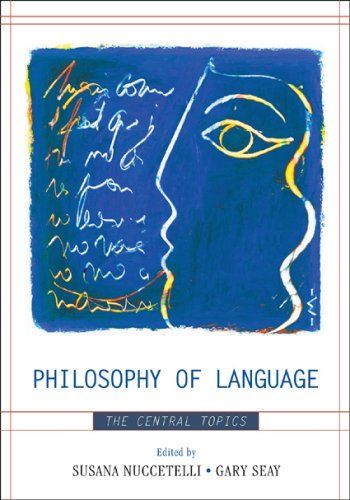
Nova: Imagine looking up at the night sky. You see a brilliant point of light and call it the Evening Star. Hours later, before dawn, you see it again and call it the Morning Star. For centuries, people thought they were two different things. But they are both Venus. If they refer to the exact same planet, why do the words Morning Star and Evening Star feel so completely different to our minds? This is the classic puzzle of Gottlob Frege's Sense and Reference, and it reveals a profound truth: language isn't just a label we slap onto reality—it is the very architecture of how we think. Welcome to Mind's Medium, the podcast where we unpack the deepest ideas in philosophy and cognitive science. I'm Nova, and today we are diving into Susana Nuccetelli's brilliant book, Philosophy of Language: The Central Topics. Joining us is Dr. Zen, a world-class education researcher with over fifteen years of experience analyzing how minds construct knowledge. Zen, it is so wonderful to have you here with us today!
Zen: Thank you, Nova. It is a pleasure to be here. You know, as a researcher, I often think of language as the ultimate operating system of human cognition. We don't just use language to communicate our thoughts; we use it to construct them. Nuccetelli's book is a masterclass in showing how the mechanics of language—the semantics, the pragmatics, the reference—actually build the scaffolding of our intellectual world. I'm excited to unpack how these philosophical concepts aren't just academic theories, but are actively playing out in classrooms, research labs, and our daily cognitive development.
Nova: Oh, I love that! Language as an operating system—that is such a perfect way to frame it. And today, we're going to tackle this book from two fascinating perspectives. First, we'll explore the mechanics of meaning through Frege's sense and reference, looking at how our minds map words to the world and how that impacts learning. Then, we'll shift our focus to pragmatics and speech acts, examining how language acts as a force that actively constructs our social and educational realities. Ready to dive down the rabbit hole, Zen?
Zen: Absolutely, Nova. Let's start mapping.
Deep Dive into Core Topic 1
SECTION
Nova: Awesome! Let's start with Gottlob Frege. He's often called the father of modern mathematical logic and analytic philosophy. In Nuccetelli's book, she highlights Frege's groundbreaking 1892 paper, On Sense and Reference. Now, for our listeners, let's break this down simply. Frege argued that a proper name or a noun phrase has two distinct aspects of meaning: its reference, which is the actual object in the world it points to, and its sense, which is the mode of presentation—the way the object is described or thought of. Zen, how does this distinction help us understand the way we process information?
Zen: It's a fundamental distinction, Nova. Think of it this way: the reference is the destination, but the sense is the route you take to get there. If I say the Morning Star and the Evening Star, both phrases have the exact same reference—the planet Venus. But they have different senses because they present Venus to our minds in different ways. One presents it as a morning phenomenon, the other as an evening one. If meaning were only about reference, then the sentence 'The Morning Star is the Evening Star' would mean the exact same thing as 'Venus is Venus.' It would be a boring, trivial identity statement. But it's not! When astronomers discovered they were the same planet, it was a massive cognitive breakthrough. That breakthrough happened because two different senses were unified under one reference.
Nova: That is such a clear way to put it! The route versus the destination. So, when we learn something new, we are essentially navigating these different routes to find out they lead to the same place. How does this play out in your research in education?
Zen: It plays out constantly, especially when we look at how students build mental representations of abstract concepts. In education, we often make the mistake of assuming that because we, as experts, are pointing to a specific reference, the student shares our sense of it. For example, take the concept of gravity. To a physicist, the reference is a fundamental interaction described by general relativity—spacetime curvature. But to a middle school student, the sense of gravity might be 'the invisible force that pulls my pencil to the floor.' They are pointing to the same physical phenomenon—the same reference—but their cognitive routes, their senses, are worlds apart. If an educator doesn't bridge that gap, real learning doesn't happen.
Nova: Wow, so true! We might be using the same words, but our mental maps are totally different. And Nuccetelli also discusses Bertrand Russell's response to this, right? Russell had a slightly different take with his Theory of Descriptions. He was really bothered by how we talk about things that don't actually exist. Like, if I say, 'The present King of France is bald,' how can that sentence even make sense if there is no King of France? There's no reference!
Zen: Exactly. Frege would say that the phrase 'the present King of France' has a sense—we can understand the concept—but it lacks a reference. Russell, however, thought that was messy. He wanted a logic where sentences about non-existent entities could be systematically evaluated as true or false. So, in his famous 1905 paper, On Denoting, Russell argued that definite descriptions like 'the present King of France' aren't actually proper names at all. Instead, they are disguised logical assertions. When we say 'The present King of France is bald,' we are actually making three claims: first, there is a King of France; second, there is only one King of France; and third, whoever is the King of France is bald. Since the first claim is false, the entire sentence is simply false.
Nova: Ah, I see! So Russell cleans up the logical landscape by turning these descriptions into a set of hidden claims. It's like a detective breaking down a suspect's story into individual, testable facts. But Zen, why does this matter for how we think and learn? Why should a researcher care about Russell's King of France?
Zen: Because it directly relates to how we handle misconceptions and non-existent concepts in our minds. In science education, for instance, students often hold onto historical, outdated concepts. Think of phlogiston—the hypothetical substance that people in the seventeenth century believed was released during combustion. Or think of suction as an active force, rather than the result of air pressure differentials. When a student talks about suction pulling water up a straw, they are using a definite description that lacks a real-world reference. By applying Russell's analysis, we can deconstruct the student's claim. We can show that their assertion 'the suction force pulls the water' contains a false existential claim—namely, that there is an active force called suction. Once we expose that false premise, we can help them reconstruct their mental model using the actual reference: atmospheric pressure.
Nova: That is brilliant! It's like using philosophy as a diagnostic tool to pinpoint exactly where a student's understanding is breaking down. We aren't just correcting them; we are analyzing the logical structure of their misunderstanding. That is incredibly powerful, Zen.
Zen: It really is. It shows that semantic clarity is not just a luxury for philosophers; it is a cognitive necessity for effective learning and scientific inquiry.
Deep Dive into Core Topic 2
SECTION
Nova: Absolutely. Now, let's pivot from how language maps the world to how language actually changes the world. This brings us to the second core topic from Nuccetelli's book: pragmatics and speech acts. And we have to talk about J. L. Austin and his legendary book, How to Do Things with Words. Austin noticed that for a long time, philosophers assumed the sole purpose of language was to describe some state of affairs—to make statements that are either true or false. Austin called these constative utterances. But then he realized, wait a minute, we use language to do things all the time! He called these performative utterances. Zen, can you give us some classic examples of performatives?
Zen: Of course. Think of a wedding ceremony. When the officiant says, 'I now pronounce you partners for life,' or when a ship sponsor says, 'I name this ship the Queen Elizabeth,' or even when you say to a friend, 'I promise to pay you back tomorrow.' In these cases, the speaker isn't describing a marriage, a naming, or a promise that already exists. The act of speaking those words is the very thing that creates that reality! You can't ask, 'Is it true or false that I promise?' The promise is made by the very utterance. Austin showed that language is a form of action.
Nova: Yes! It's like magic, right? You say the words, and poof, a new social reality is born. But Austin didn't stop there. He realized that even descriptive statements have an active force. He broke speech acts down into three dimensions: the locutionary act, which is the physical act of saying the words with a certain meaning; the illocutionary act, which is what you are actively doing in saying those words—like promising, warning, or asserting; and the perlocutionary act, which is the actual effect your words have on the listener, like persuading them, scaring them, or inspiring them.
Zen: Exactly, Nova. And this distinction is where the philosophy of language becomes incredibly relevant to educational research and leadership. In any learning environment, every single utterance by an educator carries these three forces. Let's analyze a common classroom scenario. A teacher looks at a student and says, 'You are a very creative thinker.' The locutionary act is simply the physical utterance of those words. The illocutionary act—the teacher's intent—is to praise and encourage. But the perlocutionary effect—the actual impact on the student—can be profound. It can shift the student's self-schema, boost their cognitive agency, and motivate them to take intellectual risks.
Nova: Oh, that is beautiful. But it can also go the other way, right? A poorly phrased comment can have a devastating perlocutionary effect, even if the illocutionary intent wasn't malicious.
Zen: Precisely. Consider a teacher who says, 'This is a very difficult concept; most of you won't get it on the first try.' The illocutionary intent might be to manage expectations and reduce frustration. But the perlocutionary effect might be to induce anxiety, trigger a fixed mindset, and cause students to give up prematurely. John Searle, who built upon Austin's work, classified speech acts into five categories: assertives, directives, commissives, expressives, and declarations. In education, declarations are particularly powerful. When an authority figure makes a declaration—like labeling a student as 'gifted' or 'remedial'—they are performing a speech act that alters the social and institutional reality of that child. It changes how other teachers treat them, what resources they get, and how they view themselves.
Nova: That is a heavy responsibility. It really highlights how teachers aren't just transmitting information; they are linguistic architects constructing the social and psychological landscape of the classroom.
Zen: Yes, and as researchers, we have to study these linguistic dynamics. We use speech act theory to analyze classroom discourse. By coding the types of speech acts teachers and students use, we can measure the power dynamics and the level of cognitive engagement. For instance, in a traditional, teacher-centered classroom, you see a high volume of directives and assertives from the teacher, and very few speech acts from the students other than simple responses. But in a highly collaborative, inquiry-based classroom, you see students performing assertives, directives to their peers, and expressives. The linguistic profile of the classroom directly reflects the cognitive profile of the learning.
Nova: That is fascinating! So, by changing the types of speech acts we encourage in the classroom, we can actually reshape the cognitive habits of the students. We can literally talk our way into better thinking!
Zen: Absolutely. If we want students to think like scientists, we have to give them the space to perform the speech acts of scientists: making hypotheses, challenging assertions, and negotiating meanings.
Synthesis & Takeaways
SECTION
Nova: This has been such an eye-opening conversation, Zen. We started with Frege and Russell, looking at how our minds map words to the world through sense and reference, and how we have to be careful about the cognitive routes we take to build understanding. Then, we moved to Austin and Searle, exploring how our words don't just map the world, but actively shape and construct it through speech acts. It seems like the common thread here is that language is never neutral. It is always active, always shaping our cognitive and social realities.
Zen: You've summarized it perfectly, Nova. The core of our podcast today is really an exploration of how language is not merely a passive mirror of reality, but an active, cognitive, and social tool that shapes how we conceptualize, construct, and transmit knowledge. For anyone in education, research, or leadership, understanding the philosophy of language isn't just an academic exercise. It's about gaining a deeper awareness of the tools we use to build minds. We need to treat our language with the same precision and care that a surgeon treats a scalpel.
Nova: I love that metaphor. A surgeon's scalpel. It can heal, it can construct, but if used carelessly, it can cause real harm. So, Zen, what is one actionable takeaway you can leave our listeners with today? How can they apply this in their daily lives?
Zen: I would challenge everyone to practice what I call 'linguistic mindfulness' for just one day. Pay close attention to your performative speech acts. When you speak to your colleagues, your children, or your students, ask yourself: What is my illocutionary intent, and what is the likely perlocutionary effect of my words? Are my declarations opening up cognitive possibilities for others, or are they closing them down? By becoming conscious of the actions we perform with our words, we can become much more intentional and effective communicators.
Nova: That is a powerful challenge, and I am definitely going to try that myself tomorrow! Zen, thank you so much for sharing your incredible insights and your analytical mastermind perspective with us today. You've made these complex philosophical concepts feel so accessible and deeply relevant.
Zen: Thank you, Nova. It was a truly engaging discussion.
Nova: And to all our listeners, thank you for tuning in to Mind's Medium. If you enjoyed today's episode, don't forget to subscribe, leave us a review, and share this with someone who loves to think deeply about how we think. Until next time, keep exploring the maps of your mind, and remember: the words you choose are the world you build. Bye for now!