

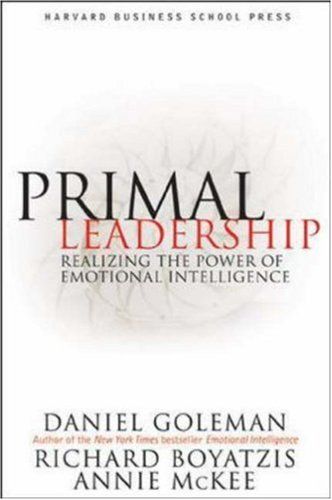
Primal leadership : realizing the power of emotional intelligence
Introduction
Nova: Imagine walking into a room at work. Your boss is sitting there, arms crossed, jaw tight. Nobody has said a word yet, but you can feel it. Something is wrong. Your stomach tightens, your energy drops, and before anyone speaks, the whole team has been infected by a single person's mood. That is not an accident. That is primal leadership in action. Welcome to Aibrary. I'm Nova.
Nova: Exactly. And Daniel Goleman, Richard Boyatzis, and Annie McKee argue in their book Primal Leadership that this emotional contagion is not just a workplace annoyance. It is the single most important act of leadership. The word primal here is deliberate. It means first, original, fundamental. Before strategy, before vision statements, before quarterly targets, the leader's emotional influence comes first.
Nova: That is exactly the pushback the authors address. They acknowledge you can drive short-term results through sheer pressure, but they make a neuroscience-backed case that sustained, outstanding performance requires something deeper. And they back it with data. Their research drew on a database of nearly four thousand executives worldwide.
Nova: Let's start inside the brain. Specifically, the limbic system. Because that is where the whole theory of primal leadership lives.
Nova: It is, but stick with me. The authors make a fascinating distinction. Your circulatory system is closed-loop. Your heartbeat doesn't directly sync with mine. But our emotional systems are open-loop. We are biologically wired to pick up on and mirror each other's emotional signals. And in any group, people instinctively look to the leader for emotional cues. The leader's mood quite literally sets the thermostat for the entire organization.
Nova: Precisely. And neuroscience shows this is not metaphorical. Mirror neurons fire in our brains when we observe someone else's emotional expression. We feel a shadow of what they feel. The leader, by virtue of their position, broadcasts the loudest emotional signal.
Why Leaders' Moods Are Contagious
The Science Behind Emotional Contagion
Nova: Let's dig deeper into the neuroscience. The book introduces a concept that is both intuitive and radical. The leader's emotional impact operates primarily through the limbic system, the brain's emotional center. This is not the rational, analytical prefrontal cortex. It is the ancient, fast-acting emotional circuitry that evolved for survival.
Nova: Exactly. The amygdala hijack, as Goleman calls it. When a leader radiates anger or anxiety, it triggers threat responses in the brains of everyone around them. Cortisol spikes. Creativity narrows. Risk-taking plummets. People shift into survival mode, and that is terrible for business. Conversely, when a leader projects calm confidence and genuine warmth, oxytocin levels rise. People feel safe. Trust builds. Collaboration flourishes.
Nova: Absolutely. The authors cite research showing that a leader's emotional state accounts for roughly fifty to seventy percent of what employees perceive as the organization's climate. And climate, in turn, drives nearly thirty percent of business performance. These are not small numbers. The emotional weather created by a leader has a direct line to the bottom line.
Nova: That is the core argument. And here is the kicker. The more senior the leader, the more contagious their emotions become. People pay closer attention to the boss. They scrutinize every micro-expression, every tone shift. A CEO who sighs in a meeting doesn't just sigh. They trigger a ripple of anxiety that cascades through the entire organization.
Nova: Right. And the authors have a name for one of the most dangerous consequences of this: CEO disease. It is the information vacuum that forms around top leaders. People stop telling them the truth because they are afraid of the emotional reaction. The leader's mood becomes so powerful that it silences honest feedback. And without feedback, the leader loses touch with reality.
The Two Emotional Poles of Leadership
Resonant vs. Dissonant Leadership
Nova: The book organizes all leadership behavior around two poles: resonance and dissonance. A resonant leader creates an emotional climate where people feel understood, valued, and energized. Think of a tuning fork. When you strike one, nearby tuning forks of the same pitch start vibrating in sympathy. Resonance is that harmony. Dissonance is the opposite. It is the emotional equivalent of fingernails on a chalkboard.
Nova: Picture a resonant leader. Something goes wrong on a project. Instead of pointing fingers, she gathers the team and says, 'What can we learn from this? How do we move forward together?' She acknowledges the disappointment but channels it toward growth. The team feels safe enough to admit mistakes and creative enough to solve problems.
Nova: Same scenario. Something goes wrong. The dissonant leader explodes. 'Who dropped the ball on this?' They demand answers, assign blame, and create an atmosphere of fear. People's cognitive resources shift from solving the problem to protecting themselves. Innovation dies. Engagement craters. And the worst part is that the leader often gets exactly the opposite of what they want.
Nova: That is a fair challenge, and the book actually has a nuanced answer. The authors do not argue that leaders should be relentlessly positive all the time. They acknowledge that certain styles, including the demanding ones, have their place. The key is knowing when and how to use them without creating chronic dissonance. Which brings us to the six leadership styles.
Nova: It is, but think of them like golf clubs in a bag. A great golfer doesn't use just one club. They choose the right club for the right shot. Effective leaders do the same with leadership styles. The authors' research found that the best leaders are fluent in at least four of the six, and they switch between them seamlessly depending on the situation.
A Toolkit for Emotional Influence
The Six Leadership Styles
Nova: Let's walk through the six styles, because this framework is one of the most practical contributions of the book. The first, visionary leadership, is the most consistently positive. A visionary leader articulates a compelling where we are going and trusts people to figure out the how. It creates clarity, aligns everyone around a shared purpose, and generates enormous motivation.
Nova: In its best form, yes. Visionary leaders move people by connecting daily work to a larger mission. The research showed this style has the strongest positive impact on organizational climate of all six.
Nova: Coaching. This leader focuses on developing people for the long term. They have deep conversations about strengths, aspirations, and growth plans. They delegate challenging assignments not just to get the work done, but to stretch and develop the person. The coaching style builds intense loyalty and capability, though it works poorly when people are resistant to change or when the leader lacks expertise.
Nova: Affiliative. This is the people first leader. They prioritize harmony, emotional bonds, and team morale. After a crisis or during periods of intense stress, an affiliative leader can heal wounds and rebuild trust. The risk is that problems go unaddressed because nobody wants to disrupt the good feelings.
Nova: Exactly. The fourth style is democratic. This leader builds consensus by inviting input and participation. When you need buy-in from a talented team or when you genuinely do not have all the answers, the democratic style generates ownership and commitment. The downside is it can lead to endless meetings and decision paralysis.
Nova: That is the democratic style gone wrong. Now the fifth style is pacesetting. This is the leader who leads by example, sets extremely high standards, and expects excellence. They model the behavior they want. When it works, it drives incredible performance from a highly competent, self-motivated team. But overused, it crushes morale. The implicit message is, 'Do it my way, as fast as me, or you're failing.'
Nova: Precisely. And the research showed that pacesetting, when used as a dominant style, actually has a negative impact on organizational climate. It drains people. Which brings us to the sixth and most dangerous style: commanding or coercive.
Nova: Yes. This style demands immediate compliance. It is the 'do it because I said so' approach. In genuine emergencies, like a corporate turnaround or a safety crisis, it can be essential. But as a default style, it is toxic. It kills initiative, crushes morale, and drives talent out the door. The authors are emphatic: this style should be used sparingly and only in the situations where nothing else will work.
Nova: Beautifully put. And that fluency is built on emotional intelligence.
How Leaders Build Their Inner Foundation
The Four Domains of Emotional Intelligence
Nova: The book builds on Goleman's earlier framework of emotional intelligence, organizing the competencies into four domains: self-awareness, self-management, social awareness, and relationship management. These are the building blocks that make the leadership styles possible.
Nova: Self-awareness is the foundation of everything. It is the ability to read your own emotions and recognize their impact. It means knowing your strengths, your limits, and your values. A self-aware leader can accurately say, 'I am frustrated right now, and that frustration is making me interrupt people.' Without self-awareness, you cannot manage yourself because you do not know what you are managing.
Nova: Exactly. And the research shows this is the rarest competency. Most leaders overestimate their self-awareness. The more senior they are, the bigger the gap between how they think they come across and how they actually come across.
Nova: Precisely. Now, self-management builds directly on self-awareness. Once you recognize you are frustrated, self-management is the ability to regulate that emotion. It is emotional self-control, transparency, adaptability, achievement drive, and optimism. It is the difference between feeling the impulse to lash out and choosing a productive response.
Nova: Right. But it is also the capacity to stay calm and clear-headed in a crisis so your team can do the same. The third domain is social awareness, which is essentially empathy. It has three flavors: cognitive empathy, understanding how someone else thinks; emotional empathy, feeling what they feel; and empathic concern, genuinely caring about their wellbeing.
Nova: That is one of the most encouraging findings in the book. Empathy is not a fixed trait. The brain circuits involved can be strengthened through practice. It is not about becoming a different person. It is about building new habits of attention. Paying closer attention to people's facial expressions, their tone of voice, what they are not saying.
Nova: Relationship management. This is where the other three domains come together and produce visible leadership. It includes influence, developing others, conflict management, teamwork, and inspirational leadership. This is the domain where the six leadership styles live. If self-awareness is the foundation, relationship management is the visible structure.
Five Discoveries and the Power of Practice
The Path to Sustainable Change
Nova: One of the most valuable sections of Primal Leadership is its roadmap for actually changing leadership behavior. The authors outline a process called the Five Discoveries, grounded in the concept of intentional change theory.
Nova: Exactly. The first discovery is the ideal self. Who do you want to be? Not what others expect of you, not the ought self, but your genuine vision of your best self as a leader. This is an emotional, aspirational vision. It has to pull you forward with desire, not push you with fear.
Nova: It is everything. Most change efforts fail because they are driven by the ought self, by external pressure, by guilt. The authors argue that sustainable change is powered by the ideal self, by the gap between who you are and who you genuinely want to become.
Nova: The real self. This is where self-awareness becomes brutally practical. You need an honest picture of how you actually show up. How do others experience you? What are your strengths? What are the gaps between your ideal self and your real self? This requires feedback, often from a 360-degree assessment, and the courage to really hear it.
Nova: It is profoundly uncomfortable. But here is what the authors emphasize. You do not need to fix all your weaknesses. You need to identify a few key gaps that matter most and focus there. The third discovery is the learning agenda. You create a concrete plan for building new habits. Not abstract goals like be more empathetic, but specific, actionable practices like, 'Before responding in meetings, I will paraphrase what the other person said to make sure I understood them.'
Nova: Yes. The fourth discovery is experimenting with and practicing new behaviors. This is where neuroplasticity comes in. The brain changes through repeated practice. You try out new ways of responding, you stumble, you adjust, you keep practicing. Over time, what felt awkward becomes natural. The old neural pathway weakens. The new one strengthens.
Nova: It is profoundly hopeful. The brain continues to reshape itself throughout life. But it requires sustained, deliberate practice. A weekend workshop will not do it. The fifth and final discovery is developing supportive and trusting relationships. You cannot do this work alone. You need people who encourage your efforts, who give you honest feedback, who hold you accountable.
Nova: Completely. Change happens in relationship. The book emphasizes the importance of learning groups, peer coaches, and mentors. These relationships provide the safety net when you stumble and the mirror when you are kidding yourself. Leadership development, at its deepest level, is a communal act.
Conclusion
Nova: So let's bring this together. Primal Leadership makes a deceptively simple argument with profound implications. Leadership is not primarily about strategy, vision statements, or operational excellence, though those all matter. It is fundamentally about emotional influence. The leader's mood, for better or worse, sets the emotional thermostat for everyone they lead.
Nova: The book gives us a practical framework. Six leadership styles, from visionary to commanding, each with its place and its dangers. The best leaders are fluent in multiple styles and switch between them as the situation demands. And underneath all of it are the four domains of emotional intelligence: self-awareness, self-management, social awareness, and relationship management.
Nova: And perhaps most importantly, the book offers genuine hope. Leadership is not a fixed trait. The brain is plastic. With sustained practice, honest feedback, and supportive relationships, people can and do grow into more resonant leaders. The Five Discoveries provide a roadmap: know your ideal self, see your real self, build a learning plan, practice relentlessly, and do it all in community.
Nova: Pay attention to your emotional impact. Every interaction you have as a leader, every meeting, every hallway conversation, is shaping the emotional climate of your team. You are always having an impact. The only question is whether you are doing it consciously and constructively, or unconsciously and destructively. Primal leadership is not optional. It is happening right now, whether you intend it or not. The invitation is to take responsibility for it.