Personalized Podcast
Golden Hook & Introduction
SECTION
Nova: Think about the most complex system you know. Is it a global financial network? An advanced, multi-modal AI model? Or is it the three pounds of wet, electrified tissue sitting inside your skull? When we look at trauma, we are looking at a system that has run a protective security protocol so deep, it has essentially locked out the administrator. Today, we are cracking open the black box of the human mind. Welcome to the show! I am Nova, and joining me today is the incredibly analytical and ever-curious abhi. Abhi, it is so wonderful to have you here with us.
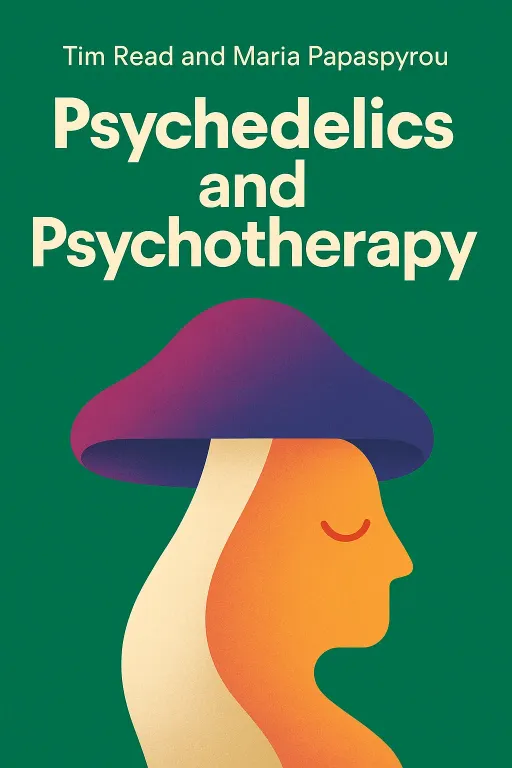
abhi: It is great to be here, Nova. You know, when I was reading Tim Read and Maria Papaspyrou's, I couldn't help but view the entire text through a systems-engineering lens. It is a remarkable collection of insights from clinical therapists, but at its core, it is really a manual on how to debug the deepest, most complex software in existence: human consciousness.
Nova: Oh, I love that! "Debugging human consciousness." That is exactly what we are tackling today, and we are going to do it from two fascinating angles. First, we will explore the deep architecture of the psyche—looking at Stanislav Grof's perinatal matrices and how our mind's automated security protocols protect us from trauma. Then, we will dive into what we are calling the "alignment problem"—how we actually integrate these massive, high-dimensional spiritual upgrades into our physical bodies and daily lives.
abhi: It is a perfect parallel to what we are seeing in advanced technology today. In artificial general intelligence, or AGI, we talk about the alignment problem—how to ensure a highly complex, emergent system behaves in harmony with its physical environment and core values. It turns out, psychedelic psychotherapy has been solving this exact problem for decades, but on organic hardware.
Nova: Organic hardware! That is brilliant. Let's start with that hardware's deepest operating system.
Deep Dive into Core Topic 1
SECTION
Nova: In the book, Tim Read and several contributors talk about how Western medicine often fails because it treats mental health as a purely biological, surface-level bug. It is like trying to fix a deep system crash by just wiping the dust off the monitor! But pioneers like Stanislav Grof realized that if you want to actually heal, you have to go down into the deep architecture. Grof mapped this out using what he called the Basic Perinatal Matrices, or BPMs. These are four distinct phases of the birth process that are stored deep in our unconscious.
abhi: Right, and what is fascinating from a systems perspective is that these matrices aren't just physical memories of being born; they are foundational templates for how we process threat, constriction, and liberation. BPM I is the primal, oceanic state of the womb—pure unity. BPM II is when labor begins, but the cervix is closed. It is the ultimate state of cosmic engulfment, constriction, and absolute hopelessness. There is no exit.
Nova: Yes! It is that feeling of being completely trapped. And the book shares this incredible, vivid story of Scott Hill, who underwent a massive LSD journey back in 1967 on the Big Sur coast of California. He was only nineteen, and he took a very large dose. He ended up hallucinating weeping faces on a tree trunk, and then became absolutely convinced that God was demanding he end his life to prove his spiritual integrity. He actually attempted suicide during the trip.
abhi: That is an extreme system failure. But look at the cause-and-effect chain that Scott Hill uncovered years later. When he was just two years old, he suffered severe third-degree burns and was hospitalized, isolated, and subjected to agonizing medical treatments. At two years old, his cognitive system couldn't process that pain. So, his mind ran a massive, automated defense protocol. It dissociated. It split the pain away from his conscious ego to keep him from literally going insane.
Nova: Exactly. And then, decades later, in 2006, Scott participated in an MDMA-assisted psychotherapy session to work through this. During the session, as he started to recount that terrifying suicide attempt, he suddenly looked at his guide and became convinced the guide was Satan, and that he had been lured into Satan's den.
abhi: This is where Donald Kalsched's model of the psyche's "archetypal self-care system" comes in, which Scott Hill writes about so beautifully. When a child experiences overwhelming trauma, the psyche creates these "daimonic" or persecutory-protective figures—like Satan, a witch, or a monster. To the conscious mind, these figures seem evil and terrifying. But algorithmically, they are actually acting as a legacy firewall!
Nova: A legacy firewall? How so?
abhi: Think about it. The "Satan" figure emerged in Scott's MDMA session the exact moment he started to approach the core trauma of his childhood burns. The firewall recognized that the user was trying to access a highly corrupted, painful sector of memory. To protect the system from crashing again, the firewall deployed an automated threat—Satan—to terrify the ego and force it to retreat. It is a brilliant, self-protective mechanism that literally saves the child's psychological life. But thirty years later, that same firewall is still running, blocking the system updates that would allow for deep connection and healing.
Nova: Wow. So the very thing that saved us as children becomes the prison that locks us in as adults. And because it is running in the background, in the "black box" of the unconscious, we don't even realize it is a program! We just think the world is a terrifying place.
abhi: Exactly. It is a hard-coded security protocol. And this is why Andrew Feldmar, another incredible therapist in the book, argues so strongly against standardized, clinical protocols. He says psychotherapy is an ethical and political endeavor, not a productive science. If a therapist acts like an "expert" or an "obstetrician" trying to force a result, they just trigger the client's legacy firewalls. Feldmar advocates for "desirelessness, listening, and love." The therapist has to be a "midwife" who simply keeps company and ensures safety, allowing the system to debug itself.
Nova: He tells that beautiful story of Mary, who was severely depressed, heavily medicated, and had attempted suicide four times. She sat in silence with Feldmar for three months! No talking cure, no interpretations. Just pure, safe presence. And when she finally spoke, she said she was terrified he would take away her freedom to commit suicide. By respecting her autonomy, by not trying to "fix" her, he built a bridge of trust. They did three years of therapy, weaned her off meds, and then she did three LSD sessions. In the third session, she had this profound breakthrough where she realized she didn't have to play roles anymore. She could just. And ten years later, she was still perfectly well!
abhi: That is a perfect example of system optimization through non-intervention. By providing a completely safe, non-judgmental container, the therapist allows the client's "inner healing intelligence" to safely disable the legacy firewalls. The system realizes, "Oh, the threat is gone. I don't need to run the Satan protocol anymore."
Deep Dive into Core Topic 2
SECTION
Nova: But that brings us to our second major topic: the alignment problem. Because having a massive, mind-expanding breakthrough during a ceremony or a session is one thing. But how do you actually compile that new software update so it runs smoothly on your daily, physical hardware? Tim Read and Maria Papaspyrou emphasize that psychedelic states offer unequalled access to the deep psyche, but that is usually not enough. There has to be "traction, an engagement with process, a working through."
abhi: This is the ultimate alignment problem. In AI, alignment is about translating high-dimensional, abstract mathematical representations into safe, predictable, low-dimensional physical actions in the real world. In human terms, a psychedelic journey takes you into a high-dimensional, mystical state of cosmic unity. But you still have to wake up the next morning, wash the dishes, pay your taxes, and interact with your family. If you don't align those two states, you get what psychologists call "spiritual bypassing"—where people use the high-dimensional bliss to escape their low-dimensional, unresolved real-world issues.
Nova: Oh, absolutely. We see that so often! The book highlights how crucial the therapeutic relationship is for this alignment. Rachel Harris writes about her research with Ayahuasca, and she found something astonishing: seventy-four percent of people who drink Ayahuasca report having an ongoing, personal relationship with the "spirit" of the plant, often calling her "Grandmother Ayahuasca."
abhi: That is a massive statistic. From a systems perspective, why does that happen?
Nova: Well, Harris suggests that for individuals with deep attachment wounds—people who never had a safe, loving caregiver in childhood—the "spirit" of Ayahuasca actually acts as a secure attachment figure. She tells the story of Veronica, a woman in her thirties who had survived an abusive relationship and had zero self-confidence. Veronica felt this profound, unconditional love from Grandmother Ayahuasca during her ceremonies. She realized she could "call on her day or night" and feel loved.
abhi: That is fascinating. It is like the mind is utilizing an anthropomorphized projection of the plant to install a "secure attachment" software patch. It gives the user a reference point for what safety and love actually feel like, which they can then use to make better relationship choices in the real world. But Harris also notes that ruptures still happen! She tells a story of a client who was describing the incredible, beautiful lights she saw during an Ayahuasca ceremony, and the therapist, getting a bit impatient, interrupted and asked, "But what did you?" The client immediately shut down.
Nova: Yes! It was a classic therapeutic rupture. The therapist imposed her own agenda instead of attuning to the client's experience. But because the therapist was self-aware, she caught herself, apologized, and repaired the connection. And that allowed the client to open up again and describe how those lights felt like they were streaming directly into her body, healing her.
abhi: That repair is where the alignment actually happens. It is the real-world practice of catching yourself in an old, reactive pattern and choosing to respond differently. And this alignment has to be somatic—it has to happen in the body. Ingrid Pacey, who worked with survivors of sexual abuse using both Holotropic Breathwork and MDMA-assisted therapy, talks about how trauma is literally stored in our physical tissues, our fascia, our muscles.
Nova: Oh, Bess's story in the book is such a powerful example of this! Bess was a trauma survivor who had been severely abused by her mother, who harshly scrubbed her skin and left her outside in the freezing cold because she denied Bess's mixed-race heritage. During her Holotropic Breathwork sessions, Bess would experience this intense, bone-chilling coldness. No matter how many blankets they piled on her, she was shivering.
abhi: Right, and the facilitators didn't just try to warm her up physically. Ingrid Pacey recognized that this coldness was a somatic file—a physical recording of the emotional coldness, rejection, and abandonment she experienced as a child. When Pacey gently pointed this out, Bess burst into tears. She finally connected the physical sensation to the emotional pain. She compiled the code.
Nova: She really did. And that release allowed her jaw pain and facial tension to completely disappear after years of suffering. It shows that the body is the compiler. If the software update doesn't compile somatically, the system remains unaligned. Daniel McQueen, who pioneered legal cannabis-assisted psychedelic therapy in Colorado, actually calls cannabis the "somatic psychedelic" for this exact reason. It amplifies body awareness so intensely that it allows clients to track and release physical trauma held in the fascia and muscles through shaking and trembling.
abhi: It is like a physical defragmentation process. When the body shakes during a somatic release, it is discharging the pent-up, survival energy that was trapped in the nervous system during the original trauma. The therapist's role is to act as an "auxiliary nervous system," providing a safe, grounded presence so the client's body can complete that discharge cycle. It is incredibly elegant.
Synthesis & Takeaways
SECTION
Nova: It really is. And as we look at the whole picture presented in, from the opening circle to the closing circle, it represents a massive paradigm shift. It is a shift from "treatment" to "healing."
abhi: Yes, and the authors make that distinction so clear. Treatment is based on exclusion—identifying a "bad" symptom and trying to suppress, delete, or medicate it away. It is like trying to delete a buggy line of code without understanding what the rest of the program is doing. Healing, on the other hand, is based on inclusion. It is about welcoming the symptom, amplifying it, feeling through it, and understanding it as a messenger of the soul.
Nova: "Healing relies on the powers of inclusion." That is such a beautiful quote from the closing circle of the book. It means we don't heal by cutting parts of ourselves out; we heal by bringing them back into the fold, by reconciling with our repressed pain.
abhi: And that reconciliation is guided by what the MAPS protocol calls the "inner healing intelligence." In systems theory, we talk about emergent self-organization. If you create the right conditions—safety, trust, set, and setting—the system naturally moves toward wholeness and balance. The inner healing intelligence is the human mind's innate, self-correcting algorithm.
Nova: I love that. We don't have to force the healing; we just have to create the safe container for our inner algorithm to do its work. Abhi, this has been such an incredibly rich and mind-expanding conversation. Thank you so much for bringing your unique, analytical perspective to this.
abhi: Thank you, Nova. It has been an absolute pleasure. It is comforting to remember that no matter how complex or fragmented our systems might feel, we all have that self-correcting code written deep inside us. We just need the courage and the right container to let it run.
Nova: Beautifully said. And to everyone listening out there, we leave you with this question to ponder: What legacy firewall is your mind running today to protect you from an old pain, and what would it look like to create a safe space in your life to finally invite an update?