Cultivating Inner Peace and Healing from Toxic Dynamics
Golden Hook & Introduction
SECTION
Nova: If you tracked the cortisol levels of the average person during a single Tuesday afternoon, you would likely find a graph that looks like a stock market crash. We are living in a state of chronic, low-level emergency.
Atlas: That is a terrifyingly accurate way to put it. It feels like my internal alarm system is permanently set to vibrate, and I just cannot find the off switch.
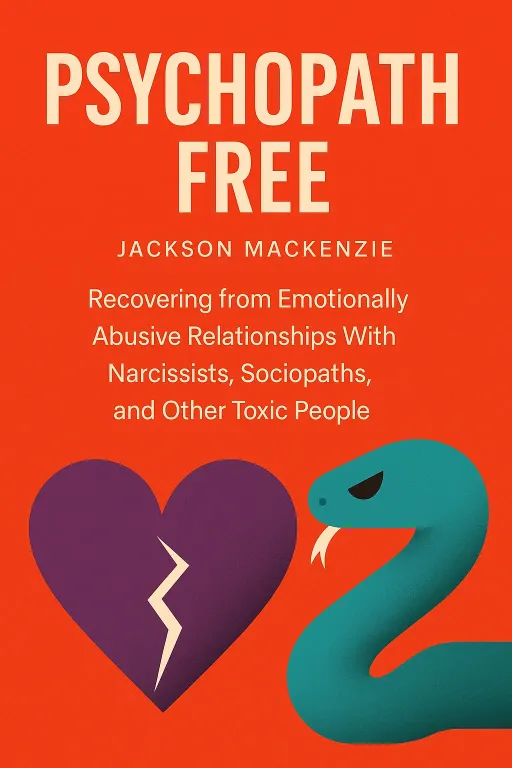
Nova: Exactly. And that is the exact space where we find ourselves today. We are looking at two very different, yet surprisingly complementary books. The first is Anxious for Nothing by Max Lucado, which offers a practical framework for turning down that internal volume. The second is Psychopath Free by Jackson MacKenzie, which tackles the external stressors—specifically, how to spot and heal from the toxic dynamics that drain our energy.
Atlas: I love that pairing. It is like handling the internal weather and the external climate all at once. Max Lucado has been a fixture in the world of encouragement and spiritual reflection for decades. He writes with this incredibly gentle, accessible style that has made him a household name for millions of readers. Then you have Jackson MacKenzie, who came at this from a completely different angle. His work is rooted in his own experience navigating the aftermath of a toxic relationship, and he has become a go-to voice for people trying to identify patterns of emotional manipulation that aren't always obvious to the naked eye.
Nova: Right. And while Lucado is teaching us how to calm the storm inside, MacKenzie is teaching us how to identify the people who are actively trying to summon more storms. Let’s start with that internal storm. Lucado introduces what he calls the C. A. L. M. framework.
The C.A.L.M. Framework and Internal Peace
SECTION
Atlas: Okay, I have heard of frameworks before, but C. A. L. M. sounds almost too simple for something as heavy as anxiety. What does that actually look like when you are in the middle of a high-stress workday?
Nova: It is deceptively simple, but that is the point. The C stands for Celebrate. Now, when I say celebrate, I don’t mean throwing a party because you are stressed. It is about shifting your focus. It is the practice of intentional gratitude. When you are anxious, your brain is hyper-focused on the threat, the deadline, or the failure. Celebrating is the mental act of forcing your attention onto something that is going right.
Atlas: That makes sense. It is like redirecting a spotlight. But is it really effective? Does shifting focus actually change the physiology of the stress, or are we just distracting ourselves?
Nova: It actually changes the neurological pathway. You are physically interrupting the feedback loop of the anxiety. When you focus on what is working, you are training your brain to scan for positives rather than threats. The A in C. A. L. M. is for Ask. This is where you bring your specific needs to the table. Instead of vague, floating anxiety, you articulate exactly what you need help with. It is about moving from worry to petition.
Atlas: I see the value there. Most of the time, my anxiety is just this amorphous cloud. Giving it a name or a request turns it into a problem I can solve. What about the L?
Nova: The L is for Leave. This is the hardest part for many people. It stands for leaving your concerns with a higher power or, if you prefer a secular view, leaving them in the hands of the universe. It is the act of surrender. You do the work, you make the plan, and then you release the outcome. You acknowledge that you cannot control everything, and you stop trying to carry the weight of the future.
Atlas: That hits home. I think most of my stress comes from trying to predict and control things that are fundamentally out of my hands. It is like trying to hold back the tide with a broom. And the M?
Nova: The M is for Meditate. This is the final piece. Lucado talks about filling your mind with good things. It is about replacing the narrative of catastrophe with a narrative of peace or truth. If your mind is a garden, you cannot just pull the weeds; you have to plant something else, or the weeds will just grow back.
Atlas: That is a great analogy. You need to crowd out the negative thoughts with better ones. So, it is a cycle: Celebrate, Ask, Leave, Meditate. It sounds like a daily maintenance routine for your mental health.
Nova: Exactly. It is not a one-time fix; it is a discipline. But here is the thing, Atlas—you can practice all the meditation and gratitude you want, but if you are surrounded by people who are actively undermining your reality, your internal peace is going to be under constant siege.
Navigating Toxic Dynamics
SECTION
Atlas: That is a perfect pivot, because that is where Jackson MacKenzie comes in. I have always been fascinated by how we can do all the self-work in the world, only to have it dismantled by someone else’s behavior. What does Psychopath Free tell us about that?
Nova: MacKenzie’s central insight is about the hidden nature of manipulation. He argues that toxic people—he often uses terms like psychopaths or narcissists—don’t always look like villains. They often start as the most charming, attentive, and perfect people you have ever met. He calls this the love-bombing phase.
Atlas: I have read about that. It is the "too good to be true" energy, right? They mirror everything you want to see.
Nova: Precisely. They are chameleons. They figure out exactly what you are missing, and they pretend to be that thing. The danger is that because they are mirroring you, you feel an instant, deep connection. You feel seen. But it is a trap. Once they have your trust, the mask starts to slip.
Atlas: This is the part that confuses people, myself included. How do you distinguish between a new relationship that is just exciting and one that is manipulative? What is the red flag?
Nova: The red flag is the inconsistency. Toxic dynamics often involve this push-pull cycle. One moment, you are the center of their world, and the next, you are the source of all their problems. MacKenzie highlights gaslighting as a primary tool here. They will deny things that happened, or they will make you question your own memory or sanity.
Atlas: That is the most insidious part. When you start to doubt your own perception, you lose your footing. And once you lose your footing, you are much easier to manipulate. It is like being on a boat where the captain keeps changing the destination and telling you that you were the one who suggested it.
Nova: That is such a vivid way to put it. MacKenzie’s path to reclaiming self-worth starts with recognizing that you are not the problem. He emphasizes that the victim of these dynamics often spends months or years trying to "fix" the other person or trying to understand why they changed. He suggests the only way out is to recognize the pattern and disconnect completely.
Atlas: But isn't that harsh? Sometimes people have trauma, or they are just having a bad time. How do you distinguish between someone who is toxic and someone who is just struggling?
Nova: That is the critical question. MacKenzie would say that the distinction lies in the capacity for empathy and accountability. A person who is struggling but healthy will own their mistakes. They will apologize, they will try to change, and they will respect your boundaries. A toxic person will blame you for their behavior. They will weaponize your empathy against you. If you bring up a boundary, they won't say, "I'm sorry, I didn't realize." They will say, "You are being too sensitive," or "You are the one who is making this difficult."
Atlas: That makes the boundary setting even more important. It acts as a litmus test. If you set a boundary and the person respects it, you have a foundation for a relationship. If they push back, rage, or make you feel guilty for existing, you have your answer.
Nova: Exactly. And that is where the C. A. L. M. framework from Lucado and the insights from MacKenzie meet. To set those boundaries—to say "no" to toxic behavior—you need the internal stability that comes from C. A. L. M. You need to be able to "Leave" the outcome in someone else's hands and "Meditate" on your own worth so that you aren't dependent on their validation.
Synthesis & Takeaways
SECTION
Atlas: It feels like we are talking about building a fortress. Lucado is teaching us how to keep the inside of the fortress peaceful, and MacKenzie is teaching us how to keep the drawbridge up against the people who want to tear it down.
Nova: That is a beautiful way to synthesize it. We often think of self-growth as a solitary pursuit, but it is deeply relational. You cannot have peace if you are constantly being gaslit, and you cannot maintain healthy boundaries if your own internal state is chaotic and anxious. They feed each other.
Atlas: So, for our listeners who are feeling that "always on" anxiety or the "walking on eggshells" feeling in a relationship, what is the one tiny step they can take this week?
Nova: I would suggest starting with the C. A. L. M. framework, but applying it specifically to a boundary. When you feel that surge of anxiety, practice the C. A. L. M. steps. Celebrate one thing you did well today, Ask for clarity on what you need, Leave the outcome of that conversation in the hands of the universe, and Meditate on your own value. And then, identify one boundary you need to reinforce. Maybe it is not answering emails after 7 PM, or maybe it is telling someone that you cannot be the person they vent to for three hours every night.
Atlas: That is actionable. It takes the abstract concept of "boundaries" and makes it a concrete practice. It is not about being mean; it is about protecting the energy you have worked so hard to cultivate.
Nova: Precisely. You are not responsible for other people's reactions to your boundaries. You are only responsible for the integrity of your own life. When you combine the internal work of calming your mind with the external work of protecting your space, you create a life that is not just manageable, but truly peaceful.
Atlas: I love that. It turns the idea of peace from a passive state—which feels impossible right now—into an active state of management and protection.
Nova: And that is the secret. Peace isn't something that happens to you. It is something you build, one thought and one boundary at a time. It is about reclaiming your sovereignty. Whether it is anxiety or a toxic person, the goal is to return to yourself.
Atlas: This has been such a grounding conversation. It feels like we’ve moved from the high-level theory down to the actual, messy, real-life application.
Nova: That is where the real work happens. It is not in the books; it is in the Tuesday afternoons when everything feels like a crisis, and you choose to take a breath, set a boundary, and trust yourself.
Atlas: A perfect note to end on. Thank you for this, Nova. And to our listeners, remember: your peace is worth protecting.
Nova: This is Aibrary. Congratulations on your growth!