The Path to Radical Healing and Rebirth
Golden Hook & Introduction
SECTION
Nova: Most of us treat our emotional baggage like a bad habit we can just think our way out of. We analyze the past, we dissect our childhoods, and we wait for the logic to catch up with our emotions. But what if your brain isn't the primary problem? What if your biology has essentially recorded a high-definition movie of your trauma, and it’s playing on a loop in your nervous system regardless of how much you rationalize it?
Atlas: That is a brutal way to start the morning, but I appreciate the efficiency. We love to intellectualize our pain, don't we? We want a spreadsheet for our suffering. But you are suggesting that the pain is living in the hardware, not the software.
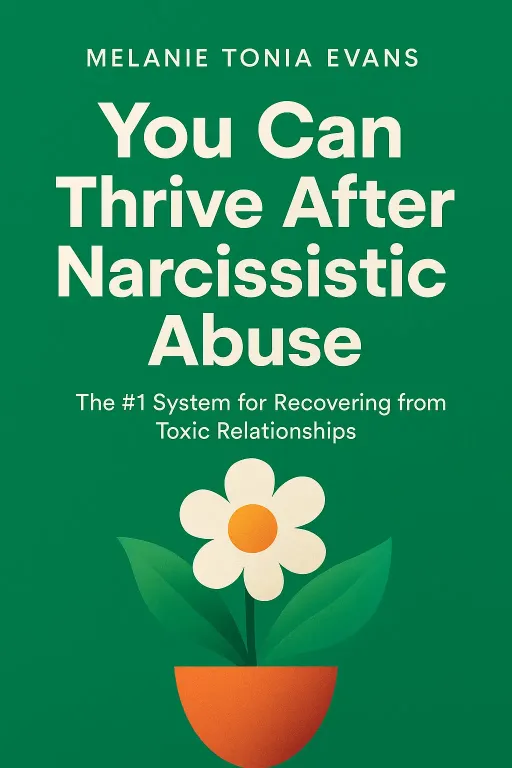
Nova: Exactly. And that is the central tension we are diving into today. We are looking at two distinct but oddly complementary approaches to breaking those loops. First, we are exploring the work of Melanie Tonia Evans in her book, You Can Thrive After Narcissistic Abuse. She introduces the Quanta Freedom Healing method, which argues that we need to address the cellular, somatic storage of trauma.
Atlas: And then we are balancing that with Russell Brand’s book, Recovery. Now, people might see Brand and think of his public persona, but this book is a surprisingly clinical, step-by-step deconstruction of the 12-step program. He frames recovery not just for substance abuse, but as a universal operating system for anyone stuck in repetitive, self-sabotaging patterns.
Nova: It is a fascinating pairing. Evans focuses on the specific, visceral impact of narcissistic abuse, while Brand offers a broader framework for the mechanics of addiction. Both authors, in their own way, are asking the same question: How do we stop the loop from playing?
The Anatomy of Stored Trauma
SECTION
Atlas: I want to start with the Evans perspective, because the idea of cellular trauma sounds slightly esoteric to a pragmatic listener. When she talks about Quanta Freedom Healing, is she suggesting we have memories physically etched into our cells? How does that actually work in a way that someone who values logic can get behind?
Nova: It sounds abstract, but it is deeply rooted in how our nervous system functions. Think about the last time you had a significant stress response. Your heart rate spiked, your palms sweat, your breath shortened. That is a physiological event. Evans argues that when we experience narcissistic abuse, we are not just having a bad time; we are experiencing a sustained, traumatic assault on our nervous system. If that nervous system does not get to discharge that energy, it stays trapped. It becomes what she calls a "cellular narrative."
Atlas: So, it is less about memory as a mental file and more about memory as a physical sensation.
Nova: Precisely. The body keeps the score, as others have said, but Evans goes a step further by providing a modality to shift that energy. She posits that we often get stuck in a "victim loop" because our subconscious is trying to protect us by constantly scanning for the threat that hurt us in the past. It is an efficiency mechanism gone wrong. It is trying to keep us safe, but it keeps us stuck in the trauma.
Atlas: This makes sense from a biological standpoint. The brain is a prediction machine. If it predicts that a certain person or environment equals pain, it will prioritize that warning above everything else. But I have a question about the "thriving" part. She talks about "radical healing." Does this mean the goal is to erase the memory, or is it about changing the relationship to the memory?
Nova: It is about changing the emotional charge. If you think about a past event and your chest tightens, that is the charge. If you think about that same event and it feels like a neutral fact—like reading a history book—that is healing. Evans suggests that by targeting the subconscious and the somatic, we can discharge that charge. We are not deleting the data; we are deleting the emotional spike that forces us to relive it every time we think about it.
Atlas: That distinction is useful. It moves from "I am broken" to "I have some unprocessed data that needs to be cleared." It feels like clearing a cache on a computer. But how does this translate to the average, high-achieving professional who doesn't have time to spend years on a therapist's couch?
Nova: That is the core of her argument. She suggests that traditional talk therapy can sometimes be a trap because it keeps us in the loop of retelling the story. We talk about the narcissist, we analyze the narcissist, we obsess over the narcissist. We are just reinforcing the neural pathway. The Quanta Freedom Healing approach is about bypassing the story and going straight to the feeling. It asks us to locate the sensation—the tightness, the heat, the heaviness—and then apply a specific process to release it. It is about speed and efficacy.
The Universal Loop of Addiction
SECTION
Atlas: This brings me to the Russell Brand side of things. If Evans is looking at the trauma of abuse, Brand is looking at the trauma of the self-destructive loop. And honestly, I think a lot of people write off his book because of his celebrity, but the mechanics he describes in Recovery are incredibly systematic. He views the 12-step program as a universal tool.
Nova: He really does. He strips away the religious connotations that often alienate people and highlights the psychological architecture underneath. He treats the "addict" label as something that applies to everyone who has ever found themselves doing something they know is bad for them, simply because they cannot stop.
Atlas: Exactly. It is the "I know I shouldn't do this, but I am doing it anyway" phenomenon. Whether that is checking your email at 2:00 AM, doom-scrolling, or staying in a toxic relationship. The mechanism is identical. He argues that we are all looking for a "fix" to soothe an internal discomfort.
Nova: And that is the bridge between Evans and Brand. Evans identifies the "trauma" as the source of the discomfort, and Brand identifies the "addiction" as the attempt to soothe that discomfort. They are two sides of the same coin.
Atlas: I like that. So, if Evans is saying "clear the trauma so you don't feel the need to soothe," Brand is saying "recognize the mechanism of your soothing so you can stop the behavior." Brand’s approach is very much about radical honesty. He talks about taking an inventory of your life. It is about looking at your patterns without the defensive storytelling we usually employ.
Nova: And that is where the 12-step framework becomes a tool for growth, not just for sobriety. It is about identifying the "character defects" or the "repetitive patterns" that keep us trapped. For a pragmatic learner, this is essentially a data-gathering exercise. You are auditing your own behavior to see where the leakage is.
Atlas: It is an audit, but it is an uncomfortable one. He forces you to look at the people you have harmed, the patterns you have repeated, and the excuses you have made. It is the opposite of the "self-help" genre that tells you to affirm how great you are. This is about acknowledging how messy you are, so you can actually clean it up.
Nova: That is the crucial difference. Most self-help is additive—"add this habit, add this mindset." Both Evans and Brand are subtractive. They are about removing the obstacles that are already there. Evans removes the trapped trauma; Brand removes the defensive ego patterns.
Synthesis & The Deep Question
SECTION
Atlas: It brings us back to the idea of efficiency. If we want to reclaim our time and our focus, we have to stop spending energy on these loops. We are burning fuel just to keep the engine idling in the same spot.
Nova: And that requires a shift in perspective. We have to stop asking "Why is this happening to me?" and start asking "What is the pattern here, and how do I interrupt it?"
Atlas: That is a much more empowering question. It moves us from passive victims of our biology or our past to active agents of our own recovery. But let's bring this home for our listeners. We started with a deep question: What is one repetitive emotional reaction you experience that actually stems from an old, unhealed narrative rather than your present reality?
Nova: I think the key to answering that is to look for the disproportionate reaction. If you are reacting to a minor email from a colleague with the same intensity you would use for a life-threatening emergency, that is the signal. That is the loop. That is the old narrative overriding your present reality.
Atlas: That is a perfect metric. The "disproportionate reaction" test. If the volume of your emotion is turned up to ten, but the situation is a two, you are not in the present. You are in the past.
Nova: And once you identify that, you have the choice. You can use the somatic approach to release that charge, or you can use the inventory approach to see what behavior you are trying to soothe with that reaction.
Atlas: It is about moving from the subconscious, automatic pilot to the conscious, deliberate pilot. And that is the only way to gain true efficiency in your life. You cannot optimize a machine that is constantly being sabotaged by its own hidden code.
Nova: You have to debug the code first. It is the most important meeting you will have all day—the one with yourself.
Atlas: I love that. It is not about "fixing" yourself because you are broken; it is about refining your operating system because you are capable of so much more.
Nova: Well said. Let's leave our listeners with that challenge. Next time you feel that surge of disproportionate emotion, pause. Don't act. Just notice. Ask yourself: Is this happening now, or is this a recording from the past?
Atlas: That is a 15-minute daily practice right there. Observe the loop, don't feed the loop.
Nova: It is the most productive work you can do. Thank you for diving into this with me today.
Atlas: Always a pleasure to audit the internal software. See you next time.
Nova: This is Aibrary. Congratulations on your growth!