

Words That Work: How We Do Things with Language in the Classroom and Beyond
Golden Hook & Introduction
SECTION
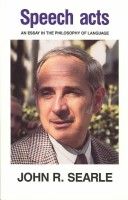
Shakespeare: Imagine a world where a single phrase doesn't just describe a promise, but is the promise itself. When a judge says, "I sentence you," or a priest says, "I pronounce you," they aren't just making noise—they are reshaping reality. John R. Searle's masterpiece, Speech Acts, reveals that language is not a passive mirror, but a powerful engine of action. Today, we're going to tackle this book from three different angles. First, we'll explore the difference between rules that merely control us and rules that create entirely new worlds. Second, we'll dissect the anatomy of a speech act—how we do things with words. And finally, we'll look at indirect speech acts, uncovering how polite hints and institutional power shape our classrooms and society. Welcome to the stage of the spoken word! I am Shakespeare, joined today by the brilliant education researcher, Dr. Zen.
Zen: It is a pleasure to be here, Shakespeare. As someone who has spent over fifteen years analyzing educational systems and classroom dynamics, Searle's work is incredibly close to my heart. In education, we often treat language as a mere delivery vehicle for information. But Searle forces us to look at the cognitive and structural architecture of communication. He shows us that speaking a language is engaging in a highly rule-governed form of behavior. It is systemic, it is intentional, and it literally constructs the social reality of our schools.
Shakespeare: Ah, a rule-governed tapestry! You speak of rules, Zen, but Searle draws a line in the sand between two very different kinds of rules. He speaks of regulative rules, which govern a pre-existing activity, and constitutive rules, which create the very activity itself. Let us paint a picture for our listeners. Think of the rules of the road. The traffic flows, and the rules regulate it—keep to the right, stop at the red light. The driving exists independently of the rules. But then, look at the grand game of chess! Without the rules of chess, the wooden pieces are but silent blocks. The rules do not just regulate chess; they create it!
Zen: Exactly, Shakespeare. That distinction is a powerful analytical tool. To put it in Searle's terms, regulative rules take the form of "Do X" or "If Y, do Z." For example, "When the bell rings, sit down." The act of sitting down exists independently of the school bell. But constitutive rules have a completely different logical structure. They take the form: "X counts as Y in context C." In chess, moving a wooden piece in an L-shape counts as a knight's move in the context of the game. If you don't follow that rule, you aren't just playing chess badly; you are simply not playing chess.
Shakespeare: Marvelous! "X counts as Y in context C." It is the alchemy of the mind! We take a physical action—a sound, a gesture—and by the magic of shared rules, we transform it into a social reality.
Zen: Yes, and if we apply this to education, it changes how we view the entire system. Think about a grade. A teacher writing the letter "A" on a piece of paper. Physically, it's just ink on wood pulp. That's the X. But in the context of the educational institution, C, that mark counts as an assessment of excellent performance, Y. It has institutional power. It can determine college admissions, scholarships, and career paths. The entire apparatus of schooling is built on these constitutive rules. As researchers, if we don't understand how these rules are constructed and maintained through language, we miss the entire structural foundation of how learning environments operate.
Deep Dive into Core Topic 1
SECTION
Shakespeare: So, the classroom is not merely a room of desks and chalkboards, but a grand theater built upon these invisible, constitutive rules! Let us dive deeper into this. How does a teacher, standing before a sea of young minds, use these rules to establish order and foster learning?
Zen: Well, let's look at the difference between how a novice teacher and an experienced teacher might use language. A novice teacher might rely heavily on regulative rules: "Be quiet," "Raise your hand," "Don't talk over me." These are attempts to regulate pre-existing behaviors. But an experienced teacher often establishes constitutive rules that define the very nature of the classroom community. For example, they might establish that "Sharing an incorrect answer counts as a valuable step in the scientific process."
Shakespeare: Oh, beautiful! They redefine the very meaning of failure!
Zen: Precisely. They change the formula. X—making a mistake—now counts as Y—a learning opportunity—in context C—this classroom. By changing the constitutive rules, they change the cognitive safety of the environment. Students are no longer afraid to speak because the linguistic and social reality of the room has been structurally altered. This isn't just "positive thinking"; it's a structural linguistic shift.
Shakespeare: It is the poet's dream! Weaving a safe haven out of thin air and syntax! But tell me, Zen, how does Searle help us understand the actual mechanics of these utterances? When the teacher speaks, what is actually happening in the air between them and the student?
Zen: This brings us to Searle's core taxonomy of speech acts. He builds on the work of J. L. Austin, but he refines it into a highly systematic model. When we make an utterance, we are performing multiple acts simultaneously. First, there is the utterance act—simply making sounds or writing words. Then, there is the propositional act—referring to something and expressing a predicate about it. But the real magic happens at the next level: the illocutionary act. This is the act performed saying something. It is the force of the utterance. Are you asserting, promising, commanding, or warning?
Shakespeare: Ah! The illocutionary force! It is the wind that propels the arrow of speech! I might say, "The ice is thin." On the surface, it is a simple description of frozen water. But my illocutionary force is a warning! I am telling you, "Do not step there, or the cold depths will claim you!"
Zen: Exactly. And then, Searle identifies the perlocutionary act, which is the effect or consequence the utterance has on the hearer. In your example, the perlocutionary effect is that I feel afraid and step back from the ice. Now, in education, there is often a massive, problematic gap between the illocutionary intent of the educator and the perlocutionary effect on the student.
Shakespeare: A tragic disconnect! Pray, illuminate this gap for us.
Zen: Let's take a common scenario. A researcher is observing a classroom. The teacher says to a struggling student, "This draft has a lot of potential, but we need to work on the structure." The teacher's illocutionary act is an assertion of evaluation combined with a directive to revise, intended as encouragement. However, the perlocutionary effect on the student—due to their own academic anxieties or past trauma—might be a feeling of defeat, leading them to believe, "I am a terrible writer, and I should give up."
Shakespeare: The arrow intended to guide instead pierces the heart!
Zen: Yes. And as researchers, we have to analyze these speech acts systematically. We can't just look at the transcript of what was said—the locution. We have to analyze the illocutionary forces and the perlocutionary outcomes. Searle provides us with the precise tools to categorize these. He breaks illocutionary acts into five distinct categories: assertives, directives, commissives, expressives, and declarations. By using this taxonomy, we can map classroom discourse with mathematical precision, identifying exactly where communication breaks down.
Deep Dive into Core Topic 2
SECTION
Shakespeare: Five categories! Like the five acts of a grand tragedy! Let us parade them before our audience. Assertives, which commit the speaker to the truth of a proposition. Directives, which attempt to get the hearer to do something. Commissives, which commit the speaker to a future course of action—the sacred promise! Expressives, which lay bare the speaker's inner emotional state. And Declarations, those mighty words that alter the world in their very utterance! "I declare this session open!"
Zen: It's a beautiful taxonomy, Shakespeare, and it's incredibly useful for analyzing power dynamics. Let's think about "Declarations." In Searle's framework, a declaration is a unique speech act where the successful performance of the act brings about the fit between the words and reality. If the referee says, "You're out!"—you are out. The words make it so. But declarations require an extra-linguistic institution. I can't just walk up to you and say, "You're out," unless we are playing baseball and I have been granted the institutional role of referee.
Shakespeare: Indeed! The crown must sit upon the head for the decree to hold sway!
Zen: Exactly. In education, teachers hold a massive amount of institutional power, which means they are one of the few people in the room who can perform valid declarations. When a teacher says, "Class is dismissed," or "This exam is over," or "You have earned an F," they are performing declarations that alter the student's institutional reality. If a student says, "Class is dismissed," nothing happens, because they lack the institutional authority.
Shakespeare: They speak to the wind, while the teacher speaks to the law!
Zen: Yes, but here is the catch, and this leads us to our third core topic: indirect speech acts. Because of the power imbalance, teachers rarely use direct commands. They don't often say, "Sit down and be quiet," which is a direct directive. Instead, they use indirect speech acts. They might say, "I'm waiting," or "Is someone talking?" or "It's getting quite loud in here."
Shakespeare: Ah, the gentle art of the mask! We speak of one thing, yet we mean another. We ask, "Can you reach the salt?" We do not desire a lecture on the length of your arm; we desire the salt!
Zen: Precisely! Searle's analysis of indirect speech acts is brilliant. He asks: how is it possible that a speaker can say one thing, mean what they say, but also mean something more? How does the hearer understand the indirect meaning? Searle argues that we rely on shared background information, both linguistic and non-linguistic, and the general powers of rationality and inference. When the teacher says, "I see some trash on the floor," they are performing an assertive act—stating a fact. But the student immediately infers that this is an indirect directive: "Pick up the trash."
Shakespeare: It is a delicate dance of inference! But tell me, Zen, what happens when the shared background is fractured? When the student and the teacher do not share the same cultural or linguistic codes?
Zen: That is the critical point for educational equity. In my research, we see this constantly. Students from diverse cultural backgrounds may interpret language differently. If a teacher uses an indirect directive like, "Would you like to open your book now?" a student from a background that values direct authority might interpret that as a genuine question, a choice. They might think, "No, not really," and continue what they are doing. The teacher then views this as defiance, when in reality, it was a failure of the indirect speech act. The student decoded the literal locution, but missed the indirect illocutionary force.
Shakespeare: A clash of unseen rules! The teacher plays chess, while the student plays checkers, and both wonder why the pieces do not move in harmony!
Zen: Yes! And this is why Searle's work is so vital. It moves us away from blaming the student's "attitude" and forces us to look at the communicative system. We have to ask: what are the constitutive rules of communication in this classroom? Are they explicit? Are we assuming a shared background that doesn't actually exist? By breaking down these indirect speech acts, we can design more inclusive, transparent learning environments. We can teach students how to navigate these institutional language games, rather than punishing them for not knowing the unwritten rules.
Synthesis & Takeaways
SECTION
Shakespeare: How profound! We see that language is not merely a tool for conveying thoughts, but the very mortar and brick of our social institutions. From the simple "thank you" to the grand declaration of a degree, we are constantly performing actions, building realities, and navigating a web of invisible rules. Zen, as we draw our curtain on this intellectual feast, how can our listeners—be they teachers, researchers, or curious minds—apply Searle's wisdom to their daily lives?
Zen: I would offer two primary recommendations. First, become highly conscious of your illocutionary intent versus your perlocutionary effect. Before you speak, especially in positions of authority, ask yourself: "What action am I trying to perform, and how might the listener's background alter the impact of my words?" Second, make your constitutive rules explicit. If you are leading a team, teaching a class, or even navigating a relationship, don't assume the rules of engagement are shared. Explicitly define what "success," "collaboration," or "respect" counts as in your specific context.
Shakespeare: Beautifully put! Let us not be passive speakers, drifting on the currents of habit. Let us be conscious architects of our words, recognizing that every utterance is a deed, every sentence a step, and every conversation a chance to build a better world. Thank you, Dr. Zen, for sharing your profound insights with us today.
Zen: Thank you, Shakespeare. It has been an absolute pleasure to dissect these ideas with you.
Shakespeare: And to our listeners, we leave you with this question to ponder: What realities are you creating with your words today? Until next time, let your speech be purposeful, and your actions bold!