Personalized Podcast
Golden Hook & Introduction
SECTION
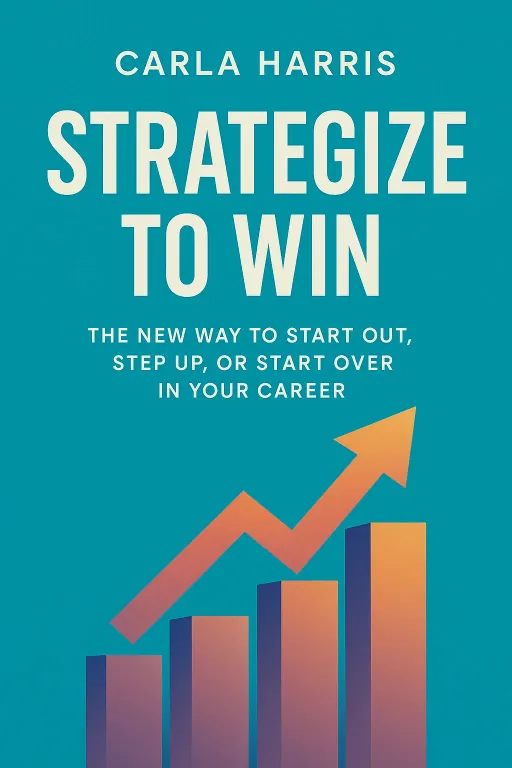
Nova: Imagine walking into a high-stakes Wall Street interview, and instead of boasting about your Ivy League finance courses, you spend the entire time talking about your summer job flipping burgers at McDonald's. Sounds like a career disaster, right? Well, what if that exact conversation was the golden ticket that landed the job? Today, we are diving deep into Carla Harris's powerhouse book,, and we are going to tackle this career playbook from two game-changing angles. First, we will look at why the traditional, lifelong career plan is officially dead, and why you need to start thinking in dynamic five-year modules. Then, we will crack the code on what Harris calls performance currency versus relationship currency, and how understanding the difference is the ultimate key to scaling your professional influence. And joining us to unpack all of this is Kehinde Olayiwola, a Business Administration professional who is incredibly passionate about strategy, leadership, and helping organizations scale. Kehinde, welcome! It is so wonderful to have you here with us today.
Kehinde Olayiwola: Thanks, Nova! It is absolutely fantastic to be here. You know, that McDonald's story you just teased is such a perfect hook because it speaks directly to something I talk about all the time in business and consulting. It is all about positioning and recognizing the underlying value of your experiences, rather than just looking at the surface-level labels. Harris's book is essentially a masterclass in strategic positioning, and as someone who looks at how businesses grow, I think these exact same strategic principles apply beautifully to how we manage our own careers. We have to treat ourselves like a growing enterprise.
Nova: Oh, I love that! "Treating yourself like a growing enterprise." That is such a powerful way to frame it. And it really sets the stage for why we need to rethink the whole career journey. I mean, we’ve all been told at some point that we need this grand, thirty-year master plan, right? But Harris basically says, "Throw that old playbook out the window."
Kehinde Olayiwola: Exactly. The idea of a single, lifelong career path at one company is completely outdated. In today's fast-paced, technology-driven market, agility is everything. From a strategic management perspective, planning thirty years out is almost impossible because the market changes too rapidly. Instead, viewing your career as a series of modular, five-year blocks allows you to remain competitive, adapt to economic shifts, and continuously upskill. It is about building a robust professional platform rather than just climbing a single, fragile ladder.
Deep Dive into Core Topic 1
SECTION
Nova: Yes! A robust professional platform. That is a great transition into our first big topic: focusing on the of a job rather than just the fancy title. Harris emphasizes this so much, especially when the economy gets bumpy or when you're just starting out. She tells this great story about a graduate who wanted to get into magazine advertising sales, but the market was incredibly tight. No one was hiring entry-level people. So, instead of giving up, this person took a job in telemarketing, selling home security systems over the phone. Now, on paper, telemarketing doesn't sound like a dream corporate job, does it?
Kehinde Olayiwola: Right, most people would look at a telemarketing job and think it is a step backward. But if you analyze the of that role, what are you actually doing? You are cold calling, you are handling constant rejection, you are engaging potential clients, and you are closing sales under pressure. Those are the exact core competencies required for high-level advertising sales! When that candidate finally got an interview with a magazine hiring manager, they didn't apologize for doing telemarketing. They sold it. They explained how making eighty cold calls a day prepared them to hit the ground running. That is pure strategy.
Nova: It really is! It’s about translating those raw skills. And it contrasts so sharply with what happened during the 2008 and 2009 financial crisis. Harris points out that so many professionals, out of sheer panic, just grabbed job they could find without looking at the content. And then, when the economy started to recover a few years later, they found themselves stuck. They couldn't explain to recruiters how their panic-jobs actually prepared them for the roles they actually wanted.
Kehinde Olayiwola: That is a classic strategic trap. In business, we call it a lack of alignment. If you accept a role purely out of desperation without analyzing how the day-to-day activities—the content—align with your long-term objectives, you risk diluting your professional brand. You have to be able to connect the dots for your future employer. If you can't explain how your current role serves as a stepping stone, they won't see it either. It is like a company launching a product that has nothing to do with its core capabilities; it just confuses the market.
Nova: That makes total sense. It’s all about the narrative and the skills you are accumulating. It reminds me of another story in the book about a college sophomore named Gregory. He was really passionate about sports medicine because of his own basketball injuries, but he was also fascinated by technology and smartphones. He felt completely stuck because he thought he had to choose one or the other. He couldn't see how they fit together.
Kehinde Olayiwola: I loved Gregory's story because it highlights the power of cross-disciplinary thinking, which is so vital in consulting and innovation. The author sat down with him and helped him deconstruct his interests. Instead of seeing sports medicine and tech as two separate silos, they looked at the intersection. What if he studied mechanical engineering or physiology? Suddenly, he wasn't just choosing a job title; he was looking at the content of designing orthopedic medical devices or creating advanced prosthetic limbs for athletes. He went from having zero clear paths to having five distinct, highly specialized career options. It is about looking at the components of what you love and assembling them strategically.
Nova: It’s like playing with career Legos! You just have to find the pieces that click together. But once you find those pieces and actually land the job, Harris drops another truth bomb. She says, "What got you there won't keep you there." The skills that help you land a position are not the same skills that will ensure your success in that role. That can be a pretty tough pill to swallow, don't you think?
Kehinde Olayiwola: It is a vital reality check. In business administration, we see this when a brilliant technical specialist gets promoted to manager and struggles because they are still trying to do the technical work instead of leading. The transition requires a completely different toolkit. You have to shift from execution to relationship management, communication, and reading the subtle political signs within the organization. And that brings us right to the heart of how we manage our value within a company.
Deep Dive into Core Topic 2
SECTION
Nova: It absolutely does! And that is the perfect bridge to our second core topic: the concept of "Performance Currency" versus "Relationship Currency." This is honestly one of my favorite parts of the book because it is so eye-opening. Nova, we often think that if we just put our heads down, work super hard, and do an amazing job, we’ll naturally get promoted. But Harris says that is a major misconception. Can you break down what these two currencies actually are?
Kehinde Olayiwola: Absolutely. This is a crucial framework for anyone looking to scale their career. Performance currency is the value you generate by delivering excellent work. It is meeting your targets, writing great reports, and exceeding expectations. It is incredibly important early on because it establishes your credibility and gets you noticed. But here is the catch: performance currency has a diminishing rate of return. Once people know you are good at your job, doing it well is simply expected. It becomes the baseline.
Nova: Ah, so it’s like a entry ticket to the game, but it won't necessarily win you the championship.
Kehinde Olayiwola: Exactly! You cannot rely on performance currency alone to get promoted or to survive a corporate restructuring. That is where relationship currency comes in. Relationship currency is the value you build through the connections you establish with key decision-makers, peers, and mentors across the organization. It is about trust, visibility, and mutual respect. When major decisions are made behind closed doors—like who gets promoted or who leads a new strategic initiative—it is rarely just about the data on a spreadsheet. It is about who knows you, who trusts your judgment, and who is willing to advocate for you.
Nova: That is so true. It’s about having people in the room who will speak up for you when you’re not there. And Harris has such a great personal example of this from her own life. When she was a student at Harvard, she applied for a highly competitive Wall Street internship. She didn't have a traditional finance background, but she had worked at McDonald's during high school. Instead of downplaying it, she used her relationship and communication skills to connect with the recruiter. She explained how she was promoted to Crew Chief, how she suggested ideas to increase sales, and how she consistently ran the highest-grossing cash register. She turned a fast-food job into a story of leadership and commercial drive!
Kehinde Olayiwola: That is a masterclass in selling your value. She understood what the "buyer"—in this case, the Wall Street recruiter—was actually looking for. They weren't just buying finance knowledge; they were buying self-motivation, resilience, leadership, and a drive to win. By framing her McDonald's experience through that lens, she created a powerful connection. She built relationship currency right there in the interview room by being memorable and authentic.
Nova: Yes! And she read the signs perfectly. Which leads us to Chapter 6 of the book, where she talks about the importance of communication and reading the corporate environment. Sometimes, the signs that it’s time to pivot or change your strategy are very subtle. It’s not always a blunt conversation; sometimes it’s a shift in how people interact with you, or being left out of certain meetings.
Kehinde Olayiwola: Reading the signs is a critical strategic skill. In consulting, we call it environmental scanning. You have to pay attention to the non-verbal cues and the shifting dynamics around you. If your boss's role changes, or if the company's strategic priorities shift, your position might be affected. Harris advises that you must always be proactive, not reactive. If you sense a change, you don't wait for the axe to fall. You leverage your relationship currency, ask clarifying questions, and start repositioning yourself immediately.
Nova: It’s like having a career radar system. You have to keep it turned on and calibrated! And if the radar shows that a storm is coming, or if you realize you’ve hit a ceiling, that is when you have to know when it's time to make a change. Harris dedicates a whole section to "Starting Over" and repositioning yourself, which can feel incredibly scary, especially if you’ve been in one place for a long time.
Kehinde Olayiwola: It is scary, but from a strategic standpoint, staying too long in a stagnant role is actually a much higher risk. It compromises your professional platform, your compensation, and your long-term marketability. When you decide to make a change, Harris provides this wonderful three-step framework. First, ask yourself: "If money were no object, how would I spend my days?" That defines your desired content. Second, "What jobs actually have this content?" And third, "What skills or education do I need to acquire to be competitive for those roles?" It is a structured, analytical approach to reinvention. It takes the emotion out of it and turns it into a clear, executable strategy.
Synthesis & Takeaways
SECTION
Nova: I love how structured that is. It takes the fear out of the unknown and gives you a concrete roadmap. We have covered so much ground today, Kehinde! From shifting our mindset to five-year career modules, to focusing on job content over titles, and strategically building both performance and relationship currency. If you had to synthesize all of this into one major takeaway for our listeners who are looking to scale their careers or businesses, what would it be?
Kehinde Olayiwola: I would say the core message is that you are the author of your own career strategy. Do not let your career just "happen" to you. Treat your professional journey like a business that requires continuous innovation, market research, and relationship building. Deliver excellent work to build your performance currency, but never underestimate the power of relationship currency to open doors that performance alone cannot touch. Be clear about the content you want to master, and be nimble enough to pivot when the market shifts.
Nova: That is incredibly inspiring, Kehinde. "Treat your career like a business that requires continuous innovation." I love that so much. And for everyone listening out there, here is our call to action for you today: Take fifteen minutes this week to sit down and answer those three questions Carla Harris poses. Define the content of your ideal day, identify the roles that match that content, and pinpoint one skill you can start developing today to bridge the gap.
Kehinde Olayiwola: Thank you, Nova! It was an absolute pleasure. Here's to everyone out there strategizing to win!
Nova: Yes! Here is to your success. Thank you all for listening, and we will see you next time on the podcast!