

** Redesigning the Man of Steel: Systems, Constraints, and the UX of Heroism
Golden Hook & Introduction
SECTION
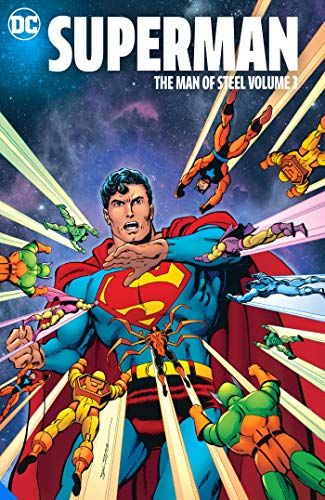
Atlas: Picture this. You are handed the keys to a fifty-year-old legacy system. It is bloated, completely overpowered, and rapidly losing touch with its actual users. Your job? Redesign it from the ground up without breaking the core brand. That is exactly the monumental challenge writer-artist John Byrne faced in 1986 when he rebooted Superman in. Today, we are looking at this legendary comic through a completely different lens: the UX of heroism. And I have got the perfect co-host to help me break this down. Joining me is ahmed, a veteran UX/UI designer with over fifteen years of experience in crafting systems and solving complex user problems. ahmed, welcome to the show.
ahmed: Thanks, Atlas. It is great to be here. You know, when you look at Byrne's work on through a designer's eyes, it is incredibly fascinating. It is not just a comic book reboot; it is a textbook case of system refactoring. He took a character who had suffered from decades of feature creep—where Superman could literally sneeze away solar systems or travel through time—and he asked, what is the core user value here? How do we redesign this experience to make it meaningful again?
Atlas: Love that. Feature creep is the perfect way to describe the Silver Age of comics. Today, we are going to tackle this redesign from two distinct angles. First, we will explore how Byrne stripped away that narrative bloat to design Superman around human constraints. Then, we will dive into a massive, complex challenge: systemic heroism. We will look at how a modern protector can move past temporary, flashy interventions to design lasting, structural aid for communities in crisis, like helping to rebuild devastated regions. Let us jump right in.
Deep Dive into Core Topic 1
SECTION
Atlas: Start with the redesign. Before 1986, Superman was basically a god. He could do anything. He had no limits. But Byrne changed the game. He made Krypton a cold, sterile, lifeless world, and he made Clark Kent the real person, with Superman being the disguise. He also dialed back the power levels. Superman could still lift tanks, sure, but he could not move planets anymore. He got tired. He could actually get hurt. ahmed, as a designer, why is introducing constraints like this so vital?
ahmed: It is everything, Atlas. In design, we have a saying: constraints breed creativity. If a user interface can do absolutely everything, it ends up doing nothing well. It becomes overwhelming and completely unrelatable. By stripping away those god-like, infinite powers, Byrne created a defined set of constraints. Suddenly, the 'user journey' of being Superman has stakes. When he tries to save a falling space plane in the very first issue, he does not just fly up and catch it effortlessly. He has to figure out where to grab it so the structural integrity of the plane does not collapse under its own weight. That is a physics problem. That is a design constraint.
Atlas: Yes. Think about that scene. It is not just about raw strength; it is about structural engineering. He has to find the load-bearing points of the space shuttle. It makes the heroism feel grounded, almost tactile.
ahmed: Exactly. It shifts the focus from 'what' he can do to 'how' he does it. And more importantly, Byrne redesigned the relationship between the user and the system. By making Clark Kent the core identity—the guy who grew up in Kansas, went to high school, has living parents who still give him advice—Byrne anchored the character in human empathy. In UX, we talk about user-centric design. Clark Kent is the user interface. He is the relatable, human layer that allows us to connect with this massive, powerful system that is Superman. If you only have the god-like Superman, you have no empathy. You have no connection.
Atlas: Break that down further. How does keeping Ma and Pa Kent alive change the system? In the original origin, they died when Clark was young. Byrne kept them alive and well in Smallville. Why does that matter structurally?
ahmed: It acts as a vital feedback loop. Every great system needs a feedback loop to prevent it from running wild or crashing. For Clark, his parents are that feedback loop. When he is overwhelmed by his responsibilities, or when he is struggling with the ethical implications of his power, he goes back to the farm. He talks to his dad. That interaction recalibrates his moral compass. It keeps him grounded in human values. Without that feedback loop, a system as powerful as Superman risks becoming cold, detached, and ultimately dangerous. It is like designing an AI without any safety alignment or human-in-the-loop oversight.
Atlas: That is a brilliant comparison. No human-in-the-loop means the system runs unchecked. And Byrne also redesigned the antagonist, Lex Luthor. Before this, Luthor was a mad scientist in a green and purple jumpsuit hiding in swamps. Byrne turned him into a respected, untouchable corporate billionaire who practically owns Metropolis. Talk about a systemic shift.
ahmed: Oh, it is a massive shift. From a design perspective, the old Luthor was a localized bug—a rogue element you just had to patch or defeat. The new corporate Luthor is a systemic issue. He controls the infrastructure of the city. He employs the citizens. He influences the media. You cannot just punch a corporate conglomerate. It forces Superman to operate within a completely different set of rules. It is no longer a simple battle of physical strength; it is a battle against a deeply entrenched, corrupt system. It requires strategic, analytical thinking, not just brute force.
Deep Dive into Core Topic 2
SECTION
Atlas: Transition to our second topic. This idea of systemic challenges leads us directly to a really compelling question. Our listeners wanted us to explore the concept of Superman helping in deeply complex, real-world crises—specifically, how a hero like him could help in a place like Palestine, or any region devastated by conflict, displacement, and broken infrastructure. If we apply your fifteen years of systems design thinking to this, ahmed, how does a hero move past temporary 'band-aid' interventions to create actual, sustainable change?
ahmed: This is where the limitations of unilateral power become incredibly clear, Atlas. If you look at it through a traditional superhero lens, the instinct is to fly in, stop the immediate violence, and fly away. But as any designer will tell you, that is just treating the symptom, not the root cause. It is a classic 'savior complex' design failure. If Superman flies into a conflict zone like Palestine, what happens the moment he leaves? The underlying systemic issues—the lack of clean water, the destroyed electrical grids, the displacement, the lack of economic opportunity—none of that has changed.
Atlas: Right. Spot on. You cannot just punch a broken water treatment plant back into working order. You cannot laser-vision a sustainable economy into existence.
ahmed: Exactly. If you want to design a solution that actually works for the people on the ground, you have to focus on infrastructure and empowerment. If I were advising Superman on a systemic intervention, I would tell him to put away the cape for a minute and think like a builder, a crafter. Use that incredible speed and strength not as a weapon, but as a tool for rapid prototyping and infrastructure deployment. Imagine him working alongside local engineers to rebuild desalination plants, to lay down modern fiber-optic cables for communication, to construct sustainable, modular housing for displaced families. That is designing for human needs.
Atlas: Yes. Focus on the foundational layers of the pyramid. Give people the tools and the safety to rebuild their own lives, rather than making them dependent on a god-like figure who might not be there tomorrow.
ahmed: Precisely. In UX, we talk about user autonomy. A good design does not make the user dependent on the designer; it empowers the user to achieve their goals independently. If Superman does everything, he robs the community of their agency. He becomes an occupying force of benevolence, which is still an occupying force. But if he uses his abilities to clear landmines in seconds, to transport heavy building materials that would otherwise take years to import due to blockades, and to secure the borders so peaceful reconstruction can happen—then he is acting as an enabler. He is building the platform, and letting the local community design their own future on top of it.
Atlas: That is a profound shift in perspective. It is the difference between being a hero who solves problems people, and a hero who designs systems that allow people to solve problems. But what about the geopolitical complexity? In Byrne's book, Superman actually encounters foreign dictators and international borders, and he realizes he cannot just ignore global sovereignty without becoming a tyrant himself. How does a designer navigate those kinds of rigid, hostile constraints?
ahmed: You have to map the stakeholders. In any complex system, you have multiple users with conflicting needs and power dynamics. You have the local population, the regional governments, international bodies, and hostile actors. If you ignore those constraints, your design will fail, no matter how beautiful it is. Superman has to operate with immense diplomatic tact. He cannot just bypass local leadership, even if he disagrees with them, because doing so collapses the social contract. He has to find the leverage points—the areas where everyone, even hostile stakeholders, can agree on a basic human need, like access to medicine or agricultural restoration. You start with those universal user needs and build the system outward from there.
Atlas: Start small, secure the core utility, and scale up. That is classic agile methodology applied to global humanitarian aid.
ahmed: It really is. You do not try to ship the perfect, peaceful utopia on day one. You release the Minimum Viable Product of safety and basic infrastructure. Clean water, shelter, medical access. Once those systems are stable and the feedback loops are positive, you iterate. You help build schools, you support local commerce, you facilitate communication. It is a slow, methodical process of crafting a sustainable ecosystem. It is not as flashy as throwing a villain into a mountain, but it is the only way to actually save a world.
Synthesis & Takeaways
SECTION
Atlas: Bring it all together now. We have looked at John Byrne's as a masterclass in system redesign—stripping away the bloat, embracing constraints, and focusing on the human-centric Clark Kent. And we have applied those exact same design principles to the massive, real-world challenge of systemic global aid and reconstruction. ahmed, what is the ultimate blueprint here? What can we, as thinkers, designers, and everyday heroes, take away from this?
ahmed: The biggest takeaway is that real power lies in understanding constraints and empowering humanity. Whether you are redesigning a legendary comic book character or trying to solve a complex humanitarian crisis, you cannot rely on brute force or flashy, superficial fixes. You have to look at the underlying architecture. You have to ask: who is the user? What are their actual, fundamental needs? And how do we build a system that supports their agency rather than creating dependency? Byrne's Superman succeeded because he was, at his core, a human being trying to do his best within a complex world. He was a crafter of hope, not just a force of nature.
Atlas: Love that. A crafter of hope. Stop looking for the silver bullet. Start building the foundation. To everyone listening out there: look at the systems in your own lives, your own projects, your own communities. Where is the bloat? What are your constraints? And how can you design a solution that truly empowers the people around you? ahmed, thank you for bringing your incredible design perspective to the show today. This was an absolute masterclass.
ahmed: Thank you, Atlas. It was a blast. Keep building, everyone.
Atlas: You heard him. Get to work. We will see you next time.