Rewiring Your Brain for Action and Optimism
Golden Hook & Introduction
SECTION
Atlas: I have a confession to make. This morning, I spent a full twenty minutes standing in my kitchen, staring at my coffee mug, debating whether to use the one with the chip in the rim or the one that says World's Greatest Dad.
Nova: That sounds less like a morning routine and more like a decision-making paralysis.
Atlas: It was exactly that. I was stuck in this weird loop of overthinking something that literally does not matter. I knew I needed coffee, I knew I needed to start my day, but I was frozen. It felt like my brain was buffering.
Nova: You know, what you are describing is actually a fascinating neurological phenomenon. We think of ourselves as rational agents, but our brains are wired to prioritize comfort and avoid the effort of new action. That hesitation loop you felt is exactly what we are going to dismantle today.
Atlas: I hope so, because that kind of mental friction is the thief of productivity. It is not just about mugs; it is about the big, scary projects I put off until the last minute.
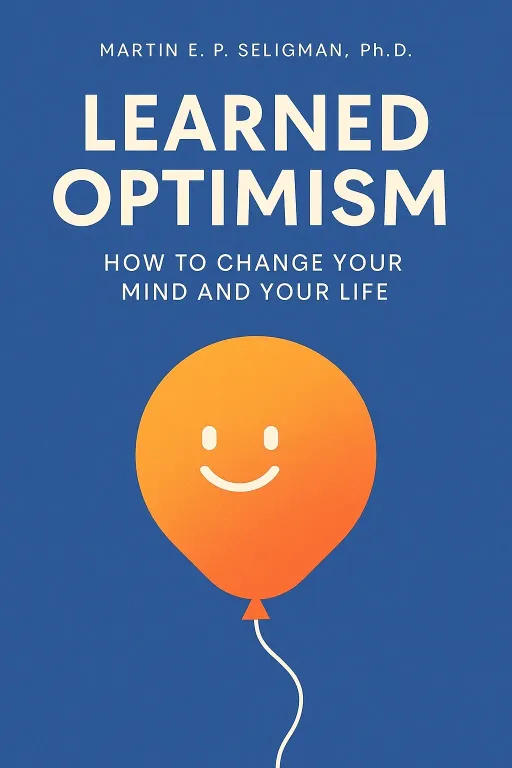
Nova: That is the perfect place to start. We are looking at two powerhouse frameworks today. First, we are diving into The 5 Second Rule by Mel Robbins, which is arguably the most practical, blunt-force tool for bypassing that hesitation loop you just described. Then, we are going to contrast that with the more introspective, cognitive work in Learned Optimism by Martin Seligman.
Atlas: It is a great pairing. One is about the immediate, physical spark to get moving, and the other seems to be about the long-term, mental architecture of why we move at all.
Nova: Exactly. Mel Robbins developed her rule after a period of intense personal struggle, where she was literally watching her life fall apart in real-time. She turned a simple, almost childish counting trick into a global phenomenon. It is raw, tactical, and immediate.
Atlas: And Seligman? He is the heavyweight, right?
Nova: He is. Martin Seligman is essentially the father of positive psychology. He spent decades researching what he termed learned helplessness, which is the exact opposite of what we want. He discovered that our explanatory style—how we talk to ourselves about failure—is the single biggest predictor of our future success.
Atlas: So, we are going from the tactical firing of the brain to the strategic reframing of the mind. Let’s get into it.
The 5 Second Rule and the Neuroscience of Action
SECTION
Atlas: I have to be honest, when I first heard about the 5 Second Rule, I thought it was just another life-hack gimmick. Count down from five and suddenly you are a productivity machine? It sounds almost too simple to be true.
Nova: That is the beauty of it. The simplicity is the point. The reason it works is that it exploits a gap in your brain's processing. When you have an impulse to act on a goal, you have a window of about five seconds before your brain kills that impulse.
Atlas: Kill the impulse? Why would my brain do that? I thought it wanted me to succeed.
Nova: Your brain is not wired for success; it is wired for survival. It loves habits. It loves the path of least resistance. When you hesitate, your brain enters what researchers call the hesitation loop. It starts trying to protect you from the discomfort of change or the risk of failure by flooding you with reasons to stay put.
Atlas: So, when I am standing there staring at my coffee mug, or staring at an unopened email from a difficult client, my brain is actually trying to protect me?
Nova: In a twisted way, yes. It is minimizing risk. But the 5 Second Rule is a circuit breaker. By counting backward—5, 4, 3, 2, 1—you are shifting your focus from the emotional part of your brain, the limbic system, to the prefrontal cortex. That is the part of the brain responsible for decision-making and conscious action.
Atlas: It forces the brain to switch gears.
Nova: Precisely. You cannot be in a state of high-stress hesitation and a state of active counting at the same time. They are mutually exclusive. It is a physical act of hijacking your own neural pathways.
Atlas: That makes sense. It is like a manual override for your own psychology. I imagine this is incredibly useful for that specific moment of dread when you have to do something you really do not want to do, like hitting the gym or making a cold call.
Nova: That is exactly where it shines. Think about the alarm clock. Everyone has that moment where the alarm goes off and the immediate, visceral response is to hit snooze. That is your brain fighting the change. If you count 5, 4, 3, 2, 1, and physically sit up on one, you have acted before your brain could talk you out of it.
Atlas: I have tried this, actually. I tried it with a workout routine. The temptation to just stay on the couch is immense. But the second I feel that pull, I just start counting. By the time I hit one, I am already putting my shoes on. It is hard to argue with yourself when you are already moving.
Nova: That is the key. Momentum. Once you are in motion, your brain stops looking for reasons to stop and starts looking for ways to continue. It changes your identity in the moment from someone who is thinking about doing something to someone who is actually doing it.
Atlas: It feels like it removes the negotiation. Most of our procrastination is just a negotiation with ourselves, right? We are trying to convince ourselves that doing the task later is a valid, logical choice.
Nova: You hit the nail on the head. We are master negotiators when it comes to avoiding discomfort. We tell ourselves, I will do it when I have more energy, or I will do it when I have more time. Counting backward eliminates the negotiation table entirely. You do not negotiate with five seconds. You just launch.
Atlas: I love that. It is not about motivation. I think we wait for motivation to strike, like we are waiting for lightning to hit a kite. But this suggests that action creates the motivation, not the other way around.
Nova: That is the most important takeaway. Motivation is a feeling, and feelings are fickle. If you wait until you feel like doing the work, you will be waiting forever. Action is a choice. The 5 Second Rule turns action into a reflex.
Learned Optimism and the Explanatory Style
SECTION
Atlas: Okay, so I have used the rule, I have jumped out of bed, I have started the task. But what happens when things go wrong? Because they always do. I can act fast, but if I fail, my internal monologue is usually, Well, of course you failed, you are terrible at this, and you will always be terrible at this.
Nova: That is exactly the bridge we need to cross. Action gets you started, but your explanatory style determines whether you stay in the game. This is where Martin Seligman’s work on Learned Optimism becomes vital.
Atlas: I have heard that term, but I always assumed it meant just being happy and positive all the time. Is that what it is?
Nova: Not at all. That is a common misconception. Learned Optimism is not about putting on a smiley face and ignoring reality. It is about how you explain setbacks to yourself. Seligman identified three dimensions that differentiate optimists from pessimists: personalization, pervasiveness, and permanence.
Atlas: Those sound like academic terms. Break them down for me.
Nova: Let’s look at your example. You failed at a project. A pessimist looks at that failure and says, First, it is personal. I failed because I am incompetent. Second, it is pervasive. I am bad at everything, not just this project. Third, it is permanent. I will always fail at this kind of work.
Atlas: Oh, man. That sounds exactly like my internal voice. It is a total attack on my identity.
Nova: Right. And the optimist looks at the exact same situation and explains it differently. They say, First, it is external. This project failed because the market shifted or I lacked specific data, not because of some inherent flaw in me. Second, it is specific. I failed at this project, but I am still great at strategy and communication. Third, it is temporary. This was a one-time setback, and I can fix it for the next attempt.
Atlas: That is such a subtle shift in language, but it feels like a massive shift in power. It takes the failure and isolates it, rather than letting it infect my whole sense of self.
Nova: That is the goal. You are not denying the failure; you are just accurately characterizing it. The pessimist is actually being inaccurate by generalizing a single event into a global catastrophe.
Atlas: So, how do we actually do this? When I am in the middle of that spiral, how do I stop and reframe?
Nova: Seligman suggests a technique called disputation. When you hear that pessimistic voice, you treat it like a lawyer would treat an opposing witness. You ask, Is this really true? What is the evidence that I am incompetent? Is there evidence that I have succeeded before?
Atlas: I like that. It turns it into an intellectual exercise rather than an emotional one. It is like I am cross-examining my own brain.
Nova: Exactly. You are looking for the objective truth. If you failed, you examine the external causes. Maybe you were tired, maybe the deadline was unrealistic, maybe the resources were lacking. Once you see the external factors, the weight of the failure starts to lift.
Atlas: I imagine this is tough to do in the heat of the moment. It is easy to talk about this in a quiet room, but when I am embarrassed or stressed, that negative voice is so loud.
Nova: It takes practice. It is a muscle. But think about the synergy here. If you use the 5 Second Rule to get moving, you are going to encounter more challenges, because you are actually doing things. And when you encounter those challenges, you use Learned Optimism to navigate the inevitable bumps in the road.
Atlas: It is a complete system. 5 Seconds to start, and Learned Optimism to keep going. I can see how that would make someone incredibly resilient.
Nova: It is the difference between someone who tries once and gives up, and someone who treats their life as a series of experiments. The optimist is just a better scientist. They view failure as data, not as a verdict.
Atlas: That is a powerful way to put it. Failure as data. It removes the emotional sting and replaces it with curiosity.
Nova: Precisely. If you are a scientist, you do not get depressed when an experiment fails; you get interested. You ask, Why did this happen? What can I change for the next run? That is the essence of optimism.
Synthesis & Takeaways
SECTION
Atlas: You know, it is interesting. We started this by talking about a coffee mug, and now we are talking about the fundamental way we perceive our own potential.
Nova: That is the journey. Small, tactical changes lead to big, strategic shifts in identity.
Atlas: I think the biggest insight for me is that we do not have to be victims of our own biology. We are not just hardwired to be lazy or to be pessimists. We have tools to override the system.
Nova: We have the hardware, which is our brain, but we also have the software, which is our mindset. The 5 Second Rule is a software update that forces the hardware to cooperate. Learned Optimism is the operating system that keeps the whole thing running smoothly over the long term.
Atlas: I am definitely going to start using the countdown. It feels so simple, but I can see how it would save me hours of wasted time every week. And the next time I feel that internal critic starting to narrate a failure as something permanent, I am going to challenge it. I am going to ask for the evidence.
Nova: That is the spirit. It is not about being perfect. It is about being effective. You do not need to be a superhuman to achieve great things; you just need to be a little bit more intentional about how you act and how you think.
Atlas: And that is something anyone can do. It is not about talent, it is not about luck, it is about the mechanics of action and the logic of our own internal dialogue.
Nova: If you are listening to this, I want you to try it right now. Pick one thing you have been putting off. Maybe it is sending an email, cleaning your desk, or starting that project you have been avoiding. Do not think about it. Count 5, 4, 3, 2, 1, and just start.
Atlas: And once you start, if you stumble, remember that it is just one event. It is not you. It is just a temporary, localized challenge. You can fix it, you can learn from it, and you can go again.
Nova: That is how you rewire your brain. One countdown and one reframed thought at a time. It is a process, but it is a process that works.
Atlas: I am really glad we broke this down. It makes the path to change feel so much more concrete.
Nova: It is never as complicated as we make it out to be. We just have to get out of our own way.
Atlas: Well, I have a project I have been avoiding for three days. I think I know exactly what I am going to do the moment we finish this recording.
Nova: I have no doubt you will. And that is the perfect note to end on. Remember, you have more control over your brain than you think. You just have to be willing to take the wheel.
Atlas: Thank you for this. It has been a genuinely refreshing perspective.
Nova: It has been a pleasure. And to everyone listening, keep questioning, keep acting, and keep growing.
Atlas: This is Aibrary. Congratulations on your growth!