

The Transition Accelerator: Navigating Your First 90 Days in Tech
Golden Hook & Introduction
SECTION
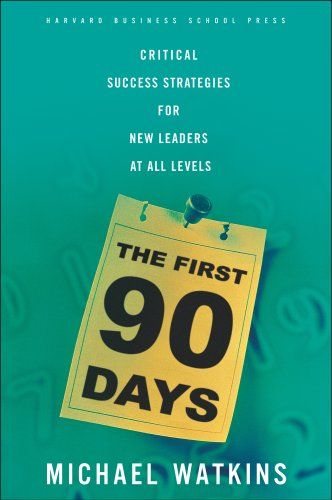
Nova: Imagine stepping onto a moving treadmill at top speed. That is what starting a new role in tech feels like, right? You want to make a great impression, but you are also trying to figure out where the systems are, how the legacy data flows, and who is who. Today, we are unpacking Michael D. Watkins' classic, The First 90 Days. We are going to tackle this transition blueprint from two key angles. First, how to use the STARS model to diagnose your new business environment so you do not play the wrong game. And second, how to secure those crucial early wins and align expectations with your manager to build unstoppable momentum. Joining me today is Kehinde Olayiwola, a Business Analyst in tech who is passionate about strategy, consulting, and helping businesses scale. Kehinde, welcome! It is so wonderful to have you here with us.
Kehinde Olayiwola: Thanks, Nova! It is great to be here. You know, that treadmill metaphor is so spot on. In the tech space, things move at such a breakneck pace that you often feel this immense pressure to deliver value on day one. But as Watkins points out, jumping in without a map is exactly how smart people fail in new roles. I am really excited to dive into these frameworks today because they are not just theoretical, they are highly practical tools for anyone trying to navigate organizational complexity.
Nova: They really are! And we want to make sure we are giving everyone that map today. We often think that if we are smart and work hard, we will naturally succeed. But Watkins argues that transition failures are rarely about a lack of talent. It is usually about a mismatch between the strategy you use and the actual situation you are in. So, let us start with that first big piece: diagnosing the landscape.
Deep Dive into Core Topic 1
SECTION
Nova: Watkins introduces this brilliant framework called the STARS model. It stands for Start-up, Turnaround, Realignment, and Sustaining Success. Each of these represents a completely different business situation. And if you treat a Realignment like a Turnaround, or vice versa, you are going to run into a wall. To make this concrete, let us look at a case study from the book. Watkins talks about a leader named Douglas who took over a division that was in a Realignment phase. Now, in a Realignment, the organization has had past success, but it is starting to drift. The real challenge is that people do not see the need for change. They think everything is fine! But Douglas came in acting like it was a Turnaround. He started slashing budgets, changing processes rapidly, and treating everyone like they were failing. The result? Massive internal resistance. People felt insulted, they shut down, and Douglas lost his credibility within months.
Kehinde Olayiwola: That is such a classic trap, Nova. From a business analysis perspective, Douglas failed to do his initial stakeholder analysis and requirements gathering. He assumed the problem was operational inefficiency, when the real problem was cultural complacency. In a Turnaround, everyone knows the ship is sinking, so they are actually hungry for a savior. They want you to make big, bold moves. But in a Realignment, you have to be much more of a diplomat. You have to use data to gently wake people up to the reality that while they are safe today, their current path leads to trouble tomorrow. You have to build consensus before you start breaking things.
Nova: Exactly! We have to meet the organization where it is, not where we wish it was. And as a Business Analyst, you are in such a unique position to do that because you are looking at the data, the processes, and the people. How do you see the STARS model applying to someone entering a tech role, maybe even in their first year?
Kehinde Olayiwola: Well, think about it. If you join a tech team that is in a Start-up phase, you are building from scratch. There are no legacy systems, no established processes. Your job is to create structure out of chaos. You need to be fast, adaptable, and comfortable with ambiguity. But if you join a team that is in Sustaining Success, the challenge is completely different. There, you are inheriting a well-oiled machine. If you start changing things just to make your mark, you might break what is already working. Your job there is to learn the history, understand why things are done the way they are, and look for those marginal, high-impact improvements. It is about matching your analytical focus to the lifecycle of the product or the team.
Nova: That is a beautiful way to put it. It is about matching your focus to the lifecycle. We can easily get blinded by our own strengths. If you are a natural builder, you want to build. If you are a natural fixer, you want to fix. But Watkins reminds us that we have to suspend our default settings and ask: What does this specific situation actually need from me right now?
Kehinde Olayiwola: Yes, and that requires a lot of self-awareness and intellectual humility. As an INFJ, I tend to look at the big picture and try to understand the underlying dynamics of a system. When you enter a new environment, you have to resist the urge to offer solutions immediately. Instead, you should spend your first few weeks asking deep, diagnostic questions. Who are the key decision-makers? What are the historical pain points? What does success look like for my manager, and for my manager's manager? By doing this, you are not just gathering data, you are also building trust. People want to feel heard before they are led.
Nova: Oh, that is so true! People want to feel heard before they are led. That is going on my sticky note for the week! And it transitions us perfectly into our second core topic. Once you have diagnosed the situation, how do you actually start building momentum? How do you secure those early wins without trying to boil the ocean?
Deep Dive into Core Topic 2
SECTION
Nova: This is where Watkins talks about the psychology of securing early wins. When you are new, everyone is watching you. They are trying to figure out if you are a high-performer, if you are collaborative, if you are trustworthy. If you try to tackle a massive, complex project right away, you risk getting bogged down and looking ineffective. Instead, Watkins suggests focusing on a few highly visible, low-risk, and easily achievable goals in your first thirty to sixty days. Let us look at another case study. Watkins shares the story of Sarah, a new product manager. Instead of trying to redesign the entire product roadmap, which would have taken months and caused endless political battles, she noticed a small but incredibly painful bottleneck in how the developers deployed their code. It was a simple fix, but it was driving everyone crazy. She focused her energy on resolving that one bottleneck within her first month. The developers were thrilled, leadership saw immediate progress, and she built the social capital she needed to tackle the bigger strategic changes later.
Kehinde Olayiwola: I love that story because it highlights the difference between activity and impact. In tech, it is so easy to get caught up in the daily firehose of emails, meetings, and Slack messages. You feel busy, but are you actually moving the needle? Sarah did not just work hard; she worked strategically. She identified a high-leverage point. For a Business Analyst, an early win might be as simple as documenting a complex legacy process that nobody else had time to write down, or creating a clean, automated dashboard that saves the team three hours of manual reporting every week. It is about finding those small friction points, solving them, and using that success to build credibility.
Nova: Yes! It is about finding those small friction points and solving them. It is like laying a solid foundation brick by brick. But to do that successfully, we also have to make sure we are aligned with our manager. Watkins talks about the Five Conversations you need to have with your boss. These are: the Situational Diagnosis conversation, the Expectations conversation, the Resource conversation, the Style conversation, and the Personal Development conversation. We cannot just assume our boss knows what we are working on or what we need. We have to actively manage that relationship.
Kehinde Olayiwola: Absolutely, and that Expectations conversation is perhaps the most critical one early on. You have to explicitly ask: What does success look like in the next thirty, sixty, and ninety days? What are the absolute non-negotiables? And just as importantly, what are the things I should not be focusing on right now? Because if you do not define your boundaries, other people will define them for you. You will end up saying yes to every request, spreading yourself too thin, and failing to deliver on the core priorities that actually matter to your manager.
Nova: That is such a vital point, Kehinde. We have to learn how to say a strategic 'no' so we can say a high-impact 'yes.' And that requires a real partnership with your manager. It is not a one-way street where they just hand down orders. It is a collaborative dialogue. You are bringing your analytical insights from the ground level, and they are providing the high-level strategic context. Together, you are shaping the role.
Kehinde Olayiwola: Exactly. It is about co-creating the role. And as you have those conversations, you also learn your manager's style. Do they want high-level summaries, or do they want to dig into the raw data? Do they prefer weekly email updates, or a quick fifteen-minute sync? Adapting to their communication style is a massive part of accelerating your transition. It reduces friction and builds a sense of partnership.
Synthesis & Takeaways
SECTION
Nova: This has been such a rich conversation. We have covered the STARS model for diagnosing your business situation, the importance of securing targeted early wins, and how to actively manage your relationship with your manager through structured conversations. As we start to wrap up, Kehinde, what is the big takeaway you want our listeners to walk away with today?
Kehinde Olayiwola: I think the biggest takeaway is that transitions are a process, not an event. You do not just show up on day one and suddenly know how to do the job. It takes time, structure, and intentionality. If you are in a transition right now, take a step back. Ask yourself: What STARS situation am I actually in? What is one small, high-impact win I can secure this week to build momentum? And have I had that explicit expectations conversation with my manager? By breaking down the transition into these manageable, strategic steps, you take control of your own success.
Nova: That is incredibly empowering. It is about taking control of your own success by being intentional and structured. Thank you so much, Kehinde, for sharing your insights and your analytical perspective with us today. This has been absolutely wonderful.
Kehinde Olayiwola: Thank you, Nova! It was a pleasure being here.
Nova: And to our listeners, thank you for tuning in. We leave you with this question to ponder: What is the one small bottleneck in your current team or project that you can solve this week to secure your next early win? Go out there, build those coalitions, and accelerate your transition. We will see you next time!