The Authentic Core of High-Impact Leadership
Golden Hook & Introduction
SECTION
Nova: Most leadership advice operates on a dangerous assumption. It tells you that if you just upgrade your external toolkit—your communication style, your delegation tactics, your public speaking—you will eventually arrive at the destination of a high-impact leader. But that is a strategy built on sand.
Atlas: That sounds like you are describing the difference between a coat of paint and a structural renovation. We see this constantly in the tech world. A leader tries to adopt a new management framework or a communication hack, but the underlying system is fundamentally broken. It is like trying to install high-speed software on hardware that is rusting out from the inside.
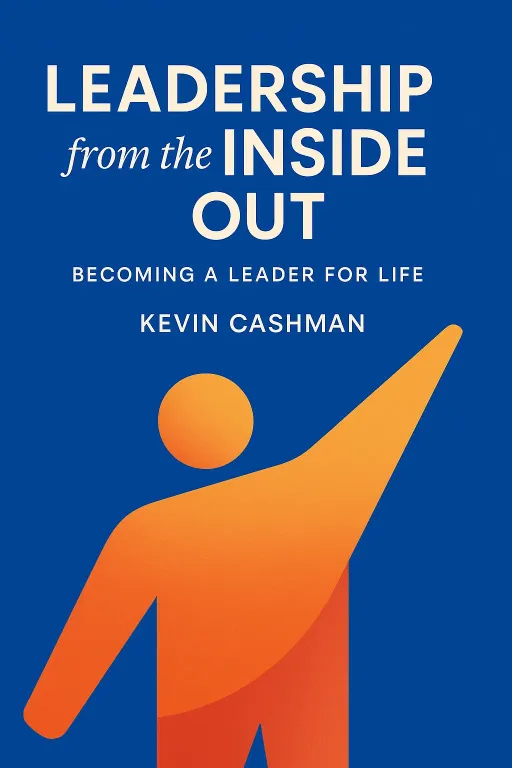
Nova: Exactly. And that is why we are looking at two specific frameworks today that flip the script. We are digging into Kevin Cashman’s work in Leadership from the Inside Out and the ancient, yet brutally pragmatic, wisdom of Don Miguel Ruiz’s The Four Agreements. Cashman, who spent decades as a top executive coach, realized that leadership isn't something you do; it is something that emanates from who you are.
Atlas: It is fascinating to look at Ruiz, too. He pulls from the Toltec tradition, which sounds esoteric, but when you strip away the mysticism, he is essentially proposing a high-performance protocol for human interaction. It is about removing the friction that kills velocity in teams.
Nova: Right. And for our listeners who are builders, strategists, and visionaries, the goal here is not personal growth for the sake of feeling good. The goal is to optimize your internal operating system so that your external impact becomes inevitable.
The Architecture of Authenticity
SECTION
Atlas: Let’s start with that "internal operating system" idea. I talk to leaders all the time who are obsessed with "optimization." They have their calendars locked down, their KPIs are tracked to the decimal point, and their strategy decks are flawless. But then they hit a wall. They feel like they are performing a role rather than actually leading. How does Cashman’s approach actually solve that?
Nova: Cashman’s core argument is that we often view leadership as a set of external competencies. We think if we just learn the "right" way to give feedback, we will be effective. But he argues that leadership is authentic self-expression. He identifies seven pathways to mastery, and the first one is the "Authentic Self." The problem is that most people live in a state of "externalized" identity. They are constantly scanning the environment to see what is required of them, and then they shape-shift to fit that mold.
Atlas: That rings true. I see this in high-stakes environments all the time. A leader walks into a room, senses the tension, and immediately suppresses their own perspective to maintain harmony or to avoid conflict. They think they are being diplomatic, but they are actually just being invisible.
Nova: Precisely. And when you are invisible, you cannot lead. You can only manage. Cashman points out that the more you try to project power, the less you actually possess. The breakthrough comes when you shift from "performance" to "presence." When you are grounded in your own core—your values, your purpose, your authentic perspective—you stop reacting to the room and start shaping it.
Atlas: Okay, I can see the logic, but let’s push on the practical implementation. If I am a strategist who values structure and clear, measurable outcomes, how do I build this "authentic core"? It sounds a bit abstract. Does he give a clear process for this, or are we just talking about "finding yourself"?
Nova: It is much more tactical than that. Cashman suggests a process of intentional self-reflection. He asks leaders to look at their "Purpose." Not a mission statement you put on a wall, but a personal anchor. What is the unique contribution only you can make? When you are clear on that, you stop trying to be the leader everyone else wants you to be. You start being the leader that the situation actually demands.
Atlas: That is an interesting pivot. It turns authenticity into a strategic asset. If I know my "purpose anchor," I am less likely to get derailed by office politics or the shiny new object syndrome. I can filter decisions through that core. It acts like a compass.
Nova: That is exactly it. Most leaders suffer from "identity drift." One day they are a visionary, the next they are a micromanager because they are scared. When you have an authentic core, your behavior becomes consistent. And consistency is the bedrock of trust. People don’t follow leaders who are unpredictable. They follow leaders who are reliable, even when the situation is volatile.
The Social Contract of Impeccability
SECTION
Atlas: So, we have the internal foundation. Now let’s move to the external application. You mentioned The Four Agreements. I have seen that book on a million coffee tables, usually with a candle next to it. It has a reputation for being a bit "soft." How do we make that relevant for a high-intensity, high-output team environment?
Nova: It is easy to dismiss it as self-help fluff, but if you look at the first agreement—"be impeccable with your word"—it is actually one of the most rigorous operational standards you can set for a team. In a corporate environment, "impeccability of word" means absolute transparency and the total elimination of ambiguity.
Atlas: That is a bold claim. Let’s break that down. In a typical tech team, "impeccability" is rare. We have meetings where people say "I think we can hit that deadline," when they actually know they can’t. We have emails where we hedge our bets to avoid accountability. Are you saying that applying this agreement is a system for performance?
Nova: It is the ultimate efficiency hack. Think about the energy wasted on "decoding" what people mean. "Did they really mean next week, or did they mean 'I’m working on it when I get to it'?" When you require impeccability of word, you are saying: "If you say it, it is a fact. If you cannot do it, you must say so immediately." It removes the need for follow-up meetings, status checks, and the endless anxiety of wondering if a project is actually on track.
Atlas: I see the value there. It is about reducing the cognitive load on the entire team. But let’s play devil’s advocate. If I am in a culture where people are used to hedging—where "I’ll try" is the standard answer—and I suddenly demand this level of absolute, stark transparency, isn't that going to be a shock to the system? Isn't there a risk that people will feel attacked if I call out their lack of precision?
Nova: That is the crucial transition point. It requires a leader who is secure enough to model it first. If you want impeccability, you must be the first person to say, "I missed the mark on this," or "I don’t know the answer yet." When you model that, you remove the fear. The "impeccability" isn't about being perfect; it’s about being accurate with your communication.
Atlas: That makes sense. It’s not about never failing; it’s about never bullshitting. I can see how that transforms a team standup. Instead of the usual "I'm working on it" update, which is often just a placeholder to avoid scrutiny, the meeting becomes a place where we identify blockers immediately because everyone is being honest about their capacity.
Nova: Exactly. And that leads to the other agreements, like "don't take anything personally." When you have a team that is impeccable with their word, feedback is no longer a personal attack. It is just data. If I say, "This code is not meeting the performance specs," and you don't take it personally, you don't waste energy defending your ego. You just fix the code.
Atlas: It creates a high-velocity environment. The emotional friction is removed. I’ve noticed that the teams that move the fastest aren't the ones with the smartest people; they are the ones with the lowest "interpersonal drag." They don't spend hours debriefing the politics of a meeting because the meeting was straightforward, honest, and focused on the work.
Nova: That is the perfect term—interpersonal drag. It is the hidden tax on every project. And Ruiz’s framework, when applied to a team, is the ultimate way to lower that tax. It allows you to build a culture where the truth is the default setting, not a luxury.
Synthesis & Takeaways
SECTION
Atlas: We have covered a lot of ground. We have the internal, authentic core from Cashman—which acts as the anchor—and then the external, impeccable communication style from Ruiz, which acts as the propulsion system. If I am a listener sitting in a leadership position, trying to build something significant, how do I bridge these two things tomorrow morning?
Nova: Start with the "30-minute deep work" block we talked about earlier. Use that time not just to work on your strategy, but to work on your "Internal Core." Ask yourself: "What was the decision I made yesterday that felt like a performance rather than an authentic choice?" That is your starting point.
Atlas: And then, take that into the team meeting. I love the idea of using "impeccability of word" as the new standard for the standup. It is a very low-effort, high-impact change. Just notice how many times you or your team use hedging language—"I think," "maybe," "I'll try"—and challenge the team to replace that with "I will," "I cannot," or "I don't know."
Nova: It will feel uncomfortable for the first week. People will feel exposed. But once they realize that they aren't going to be punished for being honest, the velocity of the team will skyrocket. The trust you build by being impeccable is more valuable than any process or tool you could implement.
Atlas: It is a long-term play. It is not a quick fix, but it is the kind of fix that actually lasts. You aren't just optimizing a process; you are optimizing the human beings involved in the process.
Nova: And that is the ultimate leverage. You can change your tools, you can change your strategy, and you can change your market. But if you don't change your leadership core and your team’s communication culture, you are just running faster on the same treadmill.
Atlas: I love that. It is a reminder that the biggest bottleneck in any organization is usually the person at the top. If you want to scale your impact, you have to scale your own clarity and your own integrity first.
Nova: That is the only path that leads to sustainable results. It is about building something that lasts because it is built on a foundation of truth.
Atlas: Thanks for walking through this. It is a refreshing take on what it means to actually lead. It is not about the title; it is about the internal state and the external commitment.
Nova: And that is the work. It is the hardest work, but it is the only work that matters. This is Aibrary. Congratulations on your growth!