Balancing Deep Existential Meaning with High Performance
Golden Hook & Introduction
SECTION
Nova: There is a specific kind of exhaustion that hits the moment you cross the finish line. You finally land that promotion, close the massive deal, or hit that revenue target, and instead of feeling like a champion, you feel like an empty shell. It is the success paradox. You have everything you thought you wanted, but you are running on fumes.
Atlas: That is the exact feeling I hear about constantly. It is like climbing a ladder for ten years, reaching the top, and realizing you are on the wrong building. The view is nice, but you are not where you intended to be.
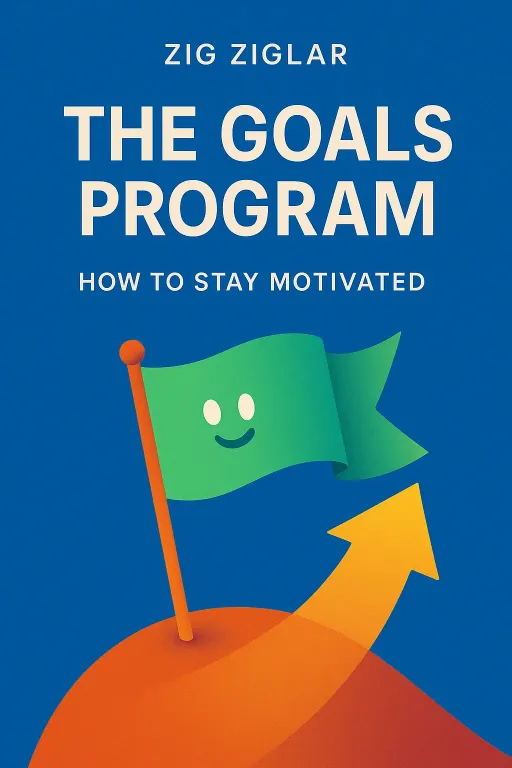
Nova: That is the perfect way to frame it. Today, we are going to unpack why that happens, and more importantly, how to fix it. We are looking at two very different thinkers who, when combined, create a roadmap for actual sanity. We are talking about René Girard’s massive work, Things Hidden since the Foundation of the World, and Zig Ziglar’s classic, The Goals Program.
Atlas: Girard and Ziglar. That sounds like an odd pairing. One is a dense French philosopher exploring the origins of human desire, and the other is the grandfather of American sales motivation. How do these two even talk to each other?
Nova: That is the fun part. Girard explains the disease, and Ziglar provides the medicine. Girard’s work is famous for being incredibly deep and, frankly, a bit challenging, but his core insight on mimetic desire is the single most important tool for understanding why we burn out. Ziglar, on the other hand, is all about the mechanics of building a life that actually functions.
Atlas: I am intrigued. I have always thought of goals as just a to-do list for my career. Are you saying that my goals might be the reason I am burning out?
Nova: Exactly. Let’s dive in.
The Mimetic Trap
SECTION
Atlas: Okay, lay it out for me. If I am sitting in my office, or working from home, and I am grinding away to hit a goal—maybe it is a promotion or a specific income level—how is Girard’s theory of mimetic desire relevant to me? I feel like I am just working hard.
Nova: Here is the reality. According to Girard, human beings do not desire objects; we desire what other people desire. We are mimetic creatures. We look at someone we admire—or someone who seems successful—and we unconsciously adopt their goals as our own. We think we want the corner office, or the specific lifestyle, or the industry accolades because want them. But often, we just want to be like the people who have them.
Atlas: That is a sharp pivot. So, it is not about the object itself, like the title or the money. It is about the social validation.
Nova: Precisely. Think about the last time you saw a colleague get a promotion. You might not have been thinking about that role five minutes before, but suddenly, that job feels like the only thing that matters. You start plotting how to get it. You are not pursuing the role because of your own deep-seated values; you are pursuing it because your colleague’s success turned that role into a "desirable object."
Atlas: I see this all the time. It is like the "keeping up with the Joneses" effect, but for our entire career trajectory. It explains why so many people end up in high-status roles they actually hate. They were just copying the desire of the person next to them.
Nova: And that is where the burnout comes from. When you pursue a goal that is fundamentally mimetic—meaning it is based on what someone else wants—you are running on a treadmill that someone else built. You can run as fast as you want, but you are never going to arrive at a destination that satisfies you, because the destination was never yours to begin with.
Atlas: That feels heavy. If I have been spending the last five years chasing things because I saw other people chasing them, how do I even know what I actually want? Is everything just a copy of a copy?
Nova: It feels that way sometimes, doesn't it? But that is where the distinction between "mimetic desire" and "authentic values" comes in. Girard’s work suggests that we are trapped in this loop of rivalry. We compete with our peers for the same things, which turns everyone into a competitor. It creates this endless cycle of comparison and exhaustion.
Atlas: So, the competition isn't just external; it is internal. I am competing against my own peace of mind because I am distracted by what everyone else is doing.
Nova: That is the core of it. When you are focused on what your neighbor, your colleague, or your competitor has, you are not focused on your own path. You are just trying to win a game that someone else designed.
The Systematic Cure
SECTION
Atlas: Okay, I am sold on the problem. I can see the pattern of just copying other people's ambitions. But if I just stop, I am left with a vacuum. How do I fill that space? I assume this is where Zig Ziglar comes in?
Nova: Exactly. This is the pivot. If Girard defines the problem—this tendency to chase the wrong things—Ziglar provides the structural solution. His Goals Program is not just about "dreaming big." It is about a systematic methodology to ensure your goals are balanced across three specific planes: physical, mental, and spiritual.
Atlas: I have heard the "balanced life" advice a thousand times, but it usually feels fluffy. How does Ziglar make it practical?
Nova: Ziglar is very tactical. He argues that most people fail because they focus on one area—usually the professional—at the expense of everything else. They build a high-performance career but neglect their health or their mental clarity.
Atlas: That resonates. In my experience, when I am hyper-focused on a project, my physical and mental health are the first things I sacrifice. I tell myself it is temporary, but it never is.
Nova: And that is the trap. Ziglar’s approach forces you to build a structure where your goals are interdependent. If your physical health is failing, your mental capacity drops, which means your performance at work will eventually suffer. He treats your life as a single system. You cannot optimize one part while letting the others rot.
Atlas: So, instead of just having a list of "career goals," I need to have a list of "life goals" that support each other.
Nova: Yes. And here is where the synthesis happens. If you use Ziglar’s system, you can filter out those mimetic goals we talked about. When you sit down to define a goal for your physical health, your mental growth, and your spiritual well-being, you are forced to look inward. You cannot copy someone else's physical health goals or their personal definition of success. Those are deeply personal.
Atlas: That is an interesting filter. If I have to balance my career goals with my physical and mental goals, it becomes much harder to chase "social status" goals. Because social status goals usually require me to sacrifice the other two.
Nova: That is the breakthrough moment. If your goal is to "become a director by age thirty," that is a classic mimetic goal. It is high-status, visible, and competitive. But if you hold that goal up against a system that requires physical health and mental balance, you might realize the cost of that promotion is a level of stress that destroys your health.
Atlas: So, the goal itself might be fine, but the for the goal changes.
Nova: Precisely. If you are pursuing the promotion because you genuinely love the work, that is one thing. But if you are pursuing it because you think it is the "next logical step" that everyone else is taking, the Ziglar methodology acts as a check. You start asking, "Is this goal worth the cost to my mental and physical balance?"
Atlas: It forces you to be honest. It is like a stress test for your ambitions.
Nova: And that is the key to high performance without the burnout. You are not working less hard; you are working on the things. You are aligning your energy with your actual values, not with a mirror of what everyone else is doing.
Deepening the Strategy
SECTION
Atlas: I want to get into the weeds of this. How do I actually start? If I am a high achiever, I am used to just setting a goal and hitting it. How do I interrupt that automatic process?
Nova: You start by auditing your current list. Take your top three career goals for this quarter. Just three. For each one, you have to ask the hard question: "Did this originate from my authentic values, or am I mimicking someone else's definition of success?"
Atlas: That feels like a question that could lead to some uncomfortable answers.
Nova: It is supposed to. If you find that a goal is there because you think it will impress your peers, or because you think it is what "successful people" do, you have to be willing to drop it or redefine it.
Atlas: Let’s say I have a goal to launch a new project at work. How do I know if that is mimetic?
Nova: Ask yourself what happens if you succeed. Does the success bring you genuine satisfaction, or does it bring you a feeling of relief that you are finally "keeping up"? If it is relief, it is probably mimetic. If it is a sense of genuine excitement about the work itself, that is authentic.
Atlas: I like that distinction. Relief is a sign of escaping a threat, not achieving a desire.
Nova: That is a brilliant way to put it. When you are chasing mimetic goals, you are running away from the fear of being left behind. When you are chasing authentic goals, you are running toward something you genuinely want to create.
Atlas: What about the physical and spiritual aspects? How do I make sure those aren't just "check the box" items on a to-do list?
Nova: You treat them with the same level of seriousness as your professional goals. Ziglar emphasizes that these are not "nice to haves." They are the foundation. If you are writing down your quarterly goals, you need a physical goal—like a specific health metric or a routine—and a mental goal—like a reading habit or a skill you are developing.
Atlas: It sounds like I am building a portfolio of my own life, rather than just building a resume.
Nova: That is exactly the shift. You are the architect of your own life, not a copycat of someone else's. And the beauty of this is that it actually improves your performance. When you are not constantly looking over your shoulder at what others are doing, you have more energy to focus on your own unique output.
Atlas: It is a paradoxical efficiency. By focusing less on the competition, I actually become more competitive in my own lane.
Nova: Because you are the only one who can be you. When you try to be someone else, you are always a second-rate version of them. When you focus on your own authentic goals, you are the only one playing that game.
Synthesis & Takeaways
SECTION
Atlas: This has been a massive shift in perspective for me. It is not just about time management or productivity hacks. It is about the fundamental motivation behind why we do what we do.
Nova: It really is. We started with Girard, who showed us how our desires are often just echoes of the people around us, leading to a cycle of burnout. And we moved to Ziglar, who gave us the systematic tools to ground our lives in balanced, authentic goals.
Atlas: The takeaway that hits me the hardest is that the "tiny step" isn't about doing more work. It is about doing the work that actually belongs to me. Writing down those three goals and asking, "Is this mine or is this theirs?" That is an incredibly powerful filter.
Nova: It is a filter that saves you years of wasted effort. You don't have to overhaul your entire life overnight. Just start with those three goals. Be ruthless about the source of your desire.
Atlas: And remember, if the goal is just about status or keeping up, it is not a goal; it is a trap. If it is about your own growth and your own unique contribution, that is where the real performance comes from.
Nova: That is a perfect summary. The goal isn't to win the game everyone else is playing. The goal is to define the game that only you can play.
Atlas: I love that. It turns the whole idea of "high performance" on its head. It is not about speed; it is about direction.
Nova: And that is a direction that leads to much less burnout and much more fulfillment.
Atlas: I am definitely going to audit my current list after this. It is a necessary exercise for anyone who wants to make sure they are climbing the right ladder.
Nova: That is the best way to spend fifteen minutes. Thank you for walking through this with me.
Atlas: Thank you. This has been a great reminder to check the compass before I start running again.
Nova: This is Aibrary. Congratulations on your growth!