Systemic Goal Setting Meets Psychological Momentum
Golden Hook & Introduction
SECTION
Nova: We treat goal setting like a lottery ticket, hoping for a win, when we should be treating it like a structural engineering project.
Atlas: That is a brutal reality check, Nova. And honestly, it is the exact reason most people fail. They have a vague vision of a finished skyscraper, but they do not have the blueprints for the foundation.
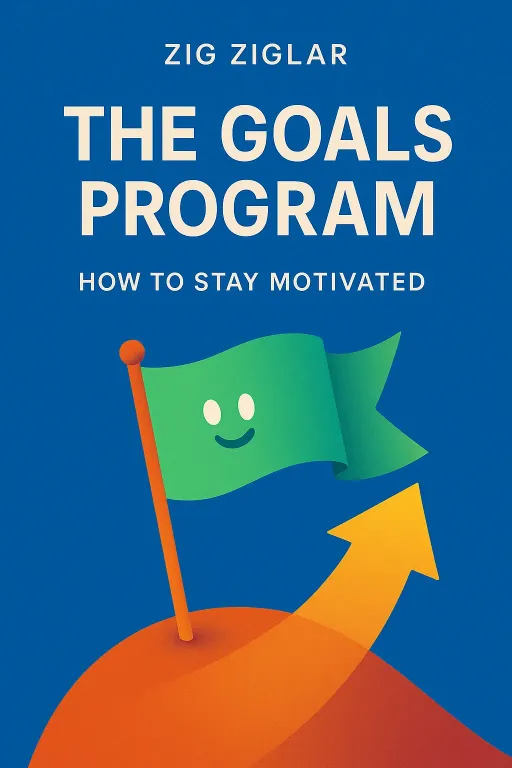
Nova: Exactly. Most people skip the architecture phase and go straight to the demolition. Today, we are looking at how to fix that. We are blending the rigorous, old-school structural discipline of Zig Ziglar’s classic work, The Goals Program, with the modern, neurobiological hacks found in Mel Robbins’ The High 5 Habit.
Atlas: I love that pairing. Ziglar is the grandfather of structured success, and Robbins is the master of current, actionable psychology. It feels like we are combining the hardware of a system with the software update for the human operating system.
Nova: That is the perfect analogy. Ziglar provides the seven-step formula for identifying exactly what you want, mapping out the obstacles, and listing the skills you need. It is pure, high-level strategy.
Atlas: And then Robbins comes in with the High 5 Habit to actually get you to execute that strategy. Because let's be honest, we have all written down a goal, stared at the paper, and then done absolutely nothing about it for three months.
Nova: That is the gap we are closing today. We are moving from wishful thinking to systemic execution.
The Structural Architecture of Goals
SECTION
Atlas: Okay, let’s start with the foundation. Ziglar’s seven-step process is famous for being incredibly detailed. For someone who loves systems and clarity, this is essentially a checklist for life. But for listeners who haven't encountered it, what is the core of this formula?
Nova: It starts with the understanding that a goal without a plan is just a dream. Ziglar’s approach is about specificity. You don't just say, I want to be more productive. You define the precise details. You identify every single obstacle standing in your way. You list the necessary skills you need to acquire. It is a process of decomposition. You take a massive, intimidating objective and break it down into the smallest possible units of work.
Atlas: That sounds like building a project roadmap in the tech industry. You have the high-level goal, but you have to break it down into sprints, tasks, and sub-tasks to actually make it deployable. If you don't list the skills, you end up hitting a wall because you don't know how to code the next feature.
Nova: You nailed it. And Ziglar was a master at this. He didn't just talk about willpower; he talked about the mechanics of achievement. He understood that when you write down the obstacles, you are performing a risk assessment. You are debugging the plan before you even start the execution.
Atlas: I see the value there. It is about reducing the ambiguity. When you are staring at a blank screen or a massive project, the ambiguity is what causes the brain to freeze. It creates a cognitive load that makes you want to procrastinate. If you have clearly identified the obstacles, the brain doesn't have to guess what to do next. It just follows the script.
Nova: Exactly. And there is a psychological layer to this. When you write down the skills you need, you are acknowledging your own growth edge. You are admitting, I don't know this yet, but I have a plan to learn it. That is a massive shift from the feeling of inadequacy that comes when you just wish you were better at something.
Atlas: That makes me wonder, though. If this is so logical, why do we still struggle to do it? I can write a perfect seven-step plan for my week, and by Tuesday, I am already ignoring it.
Nova: That is the critical missing link. You can have the best blueprint in the world, but if the construction crew is asleep, the building never goes up. This is where we run into the problem of momentum. You have the strategy, but you lack the emotional and neurobiological ignition to start the engine.
The Neurobiological Ignition
SECTION
Atlas: That brings us to Mel Robbins. I have heard a lot about this High 5 Habit, and to be fair, when I first heard it, I thought it sounded a bit strange. You are telling me the secret to success is high-fiving a mirror?
Nova: It sounds ridiculous on the surface, doesn't it? But here is the reality of why it works. Robbins designed this as a neurobiological pattern interrupt. When you are in a state of self-criticism or hesitation, your brain is caught in a loop of negative feedback. That loop keeps you stuck.
Atlas: Right. It is like a system error that keeps repeating. The more you think about how you should be working, the more stressed you get, and the less you actually work.
Nova: Precisely. The act of high-fiving your reflection in the mirror is a physical gesture that signals a shift in state. It triggers a dopamine release. It is a way of creating a physical anchor for self-trust. You are literally looking at yourself and saying, I am on my own team. You are reinforcing the idea that you are the one who is going to execute the plan.
Atlas: I can see how that helps with the emotional side of things. It is hard to be a self-critical perfectionist when you are literally high-fiving your own reflection. It forces a moment of levity and connection. But how does that bridge the gap to the hard, disciplined work of the seven-step plan?
Nova: Think of it as the activation energy. The seven-step plan is the engine. The High 5 Habit is the starter motor. You cannot drive the car without the engine, but you also cannot move anywhere without the starter. The habit locks in the momentum you need to execute the first step of your plan.
Atlas: That is a fascinating way to frame it. It is about changing your internal state before you engage with the external task. Most people try to use brute force willpower to get through a task. They sit down and force themselves to work. But if they are feeling anxious or self-doubting, that willpower is being drained by the emotional friction.
Nova: You are spot on. Willpower is a finite resource. If you spend it fighting your own internal monologue, you have nothing left for the actual work. The High 5 Habit clears the cache. It resets your internal state so you can apply your full cognitive power to the task at hand.
Atlas: I am thinking about the listeners who might be in high-pressure roles, like software engineers or project managers. They are used to dealing with complex systems, but they often ignore their own internal system. They treat their brains like machines that should just work on command.
Nova: And that is the biggest trap. You cannot treat your brain like a machine if you are ignoring the biological reality of how it functions. Your brain craves dopamine. It craves validation. If you are constantly beating yourself up, you are starving your brain of the energy it needs to function at a high level.
Atlas: That gives me a new perspective on the mirror thing. It is not about being cheesy or self-obsessed. It is about a tactical intervention. It is a way to hack your own dopamine response to ensure you have the fuel to execute the strategy you built using Ziglar’s steps.
Nova: Exactly. You are using the strategy to build the map, and you are using the habit to fuel the journey.
Synthesizing the Strategy
SECTION
Atlas: So, if I am a listener who wants to implement this, what does the synthesis look like? How do I actually combine these two things?
Nova: It starts tonight. You take 20 minutes. You sit down with a pen and paper—not a digital note app, but physical paper—and you walk through Ziglar’s seven steps. You define your goal, you list the obstacles, you identify the skills. You create the blueprint.
Atlas: And then tomorrow morning, you don't just look at the paper. You go to the mirror.
Nova: Yes. You go to the mirror, you high-five your reflection, and you tell yourself that you are the one who is going to execute this plan. You are essentially signing a contract with yourself. Then, you immediately dive into your 20-minute deep work block. No checking email, no scrolling, no distraction. Just the first step of the plan.
Atlas: I really like the 20-minute constraint. It feels manageable. It removes the fear of the "big project." It is just 20 minutes. Anyone can do 20 minutes.
Nova: That is the secret to consistency. Most people fail because they try to do too much at once. They try to overhaul their entire life in a day. The key is to start with a small, high-impact block. Progress is better than completion. Every single day, you are building a track record of wins.
Atlas: That brings up a great point about resilience. If you are a stoic, you understand that you cannot control the outcome of every project. You cannot control the market, you cannot control the client, you cannot control the technology. But you can control your own actions. You can control the 20 minutes you put in today.
Nova: That is a profound way to look at it. The goal is not just the end result. The goal is the process. When you focus on the process, you become resilient because your self-worth is not tied to the outcome. It is tied to your ability to show up and do the work.
Atlas: And the High 5 Habit is the reminder of that commitment. It is the ritual that says, I am showing up for myself, regardless of what happens out there in the world.
Nova: It is the ultimate act of self-reliance. You are not waiting for someone else to validate you or give you a high-five. You are giving it to yourself. You are the source of your own momentum.
Atlas: I have to say, this feels like a complete system. You have the structural analysis from Ziglar to ensure you are headed in the right direction, and you have the neurobiological hack from Robbins to ensure you actually have the energy to get there.
Nova: And you have the 20-minute deep work block to ensure you are actually making progress. It is a closed-loop system. It is designed for mastery.
Atlas: That makes me wonder about the long-term impact. If you do this for a year, what does that look like?
Nova: You wouldn't even recognize yourself. You would be operating on a level of clarity and execution that most people only dream about. You would have a library of completed projects, a refined set of skills, and a level of self-trust that is unbreakable.
Atlas: That is the ultimate goal, isn't it? It is not just about finishing the project. It is about becoming the kind of person who finishes projects.
Nova: Precisely. You are building the foundation of your own character. Every time you follow through on a plan, you are casting a vote for the person you want to become.
Atlas: I love that. It is not just about the output. It is about the identity shift.
Synthesis & Takeaways
SECTION
Nova: So, let’s wrap this up with the core takeaway for our listeners. We are talking about bridging the gap between intention and action.
Atlas: Right. And the bridge is built with two things: structural clarity and emotional momentum.
Nova: You need the structure of Ziglar’s seven steps to ensure you are not just busy, but effective. You need to know exactly what you are doing, why you are doing it, and what is standing in your way.
Atlas: And you need the momentum of Robbins’ High 5 Habit to ensure you are not just planning, but acting. You need that physical, neurobiological trigger to get you out of your head and into the work.
Nova: If you are listening to this, and you feel stuck, don't try to solve the whole problem today. Just take 20 minutes. Write down the seven steps for one goal. And tomorrow morning, high-five yourself in the mirror.
Atlas: It sounds simple, but the simplicity is the point. It is the most effective way to cut through the noise and start making real, tangible progress.
Nova: And remember, you don't need to be perfect. You just need to be consistent. 20 minutes a day is all it takes to change the trajectory of your life.
Atlas: I’m going to try it. I’ve got a project I’ve been putting off, and I think this is the exact framework I need to stop thinking about it and start building it.
Nova: That is exactly what we want to hear. The world needs your best work, and you need the systems to produce it.
Atlas: Absolutely. This has been a great conversation. I feel like we’ve taken two very different approaches and synthesized them into something that is actually usable.
Nova: That is the goal. We are here to help you build the foundation that withstands the pressure.
Atlas: Thanks for joining us today. This is Aibrary. Congratulations on your growth!
Nova: We will see you in the next one.