

The Anatomy of Curiosity: How Google Rewrote the Rules of Information
Golden Hook & Introduction
SECTION
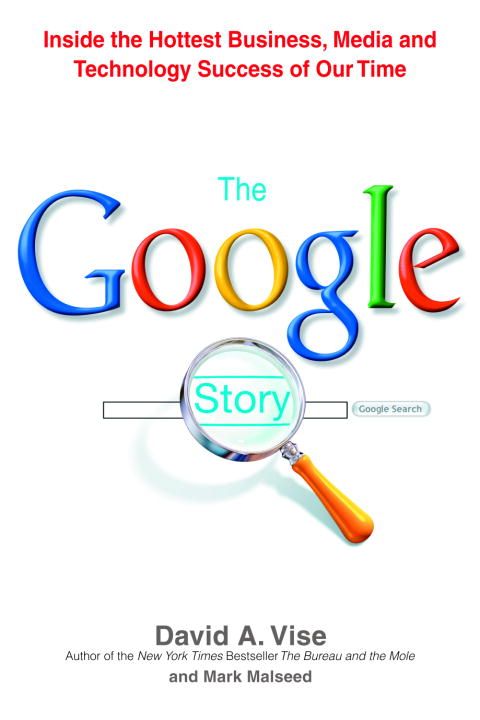
Nova: Imagine standing in the world's largest library, but all the books are piled on the floor in random, chaotic heaps. There are no shelves, no catalog, and no librarian. How would you find a single sentence about the migration patterns of monarch butterflies? It sounds impossible, right? Well, back in the mid-nineties, that was exactly what the early World Wide Web felt like. It was a massive, beautiful mess. But then, two graduate students at Stanford decided to build a digital librarian. Welcome to today's episode, where we are diving deep into David A. Vise's classic book,. I'm Nova, and joining me today is Peris Karanga, an incredibly curious and analytical learner who loves connecting the dots across different domains. Peris, it is so wonderful to have you here with us!
Peris Karanga: Thanks, Nova! I'm absolutely thrilled to be here. You know, that library metaphor is spot on. As a learner, I'm constantly searching for information, and we often take for granted the sheer magic that happens every time we type a query into that simple white box. Reading really made me appreciate the elegant, systemic thinking that solved what seemed like an insurmountable problem.
Nova: It really is like magic, isn't it? But as we know, behind every great piece of magic is a lot of hard work, brilliant engineering, and a healthy dose of curiosity. Today, we're going to tackle this incredible journey from three distinct angles. First, we'll explore the revolutionary PageRank algorithm and how looking at the web as a network of relationships changed everything. Second, we'll look at the business model pivot that turned a brilliant academic project into an economic powerhouse without losing its soul. And finally, we'll extract some powerful mental models that we can all use to supercharge our own learning and problem-solving. Ready to jump in, Peris?
Peris Karanga: Oh, absolutely. Let's unpack how Larry Page and Sergey Brin actually tamed the wild west of the early internet.
Deep Dive into Core Topic 1
SECTION
Nova: Awesome! Let's start at the very beginning. In the mid-nineties, search engines like AltaVista and Yahoo! were struggling. They ranked web pages based on how many times a search term appeared on the page. So, if you searched for "best coffee," a page that just wrote the word "coffee" a thousand times would rank first, even if it was complete garbage. It was so easy to game the system. But Larry Page had a completely different insight. He realized that the web is essentially a giant citation network, much like academic papers. Peris, how did that shift in perspective change the game?
Peris Karanga: It's a beautiful example of cross-domain thinking, Nova. In academia, the importance of a research paper isn't determined by how many times the author repeats a keyword. It's determined by how many researchers cite that paper in their own work. Larry Page looked at the hyperlinks on the web and thought, "Hey, a link is basically a digital citation. It's a vote of confidence."
Nova: Exactly! A link is a vote. But they didn't stop there, did they? Because not all votes are created equal.
Peris Karanga: Right, and that's where the analytical brilliance of the PageRank algorithm comes in. If a random, obscure blog links to your website, that's nice, but it doesn't carry much weight. But if the or Stanford University links to your website, that single vote is incredibly powerful because those sites already have high authority. It's a recursive relationship. The authority of a page is determined by the authority of the pages linking to it, which in turn is determined by the pages linking to.
Nova: It's like a digital popularity contest, but one run by the most respected intellectuals in the room! Let's paint a picture of how this actually worked in practice. Imagine Larry and Sergey working out of their dorm rooms, surrounded by cheap, custom-built computers made of Lego bricks. Literally, Lego bricks! They were scraping the entire web, downloading terabytes of data, and running this massive mathematical equation to calculate the "importance" of every single page on the internet.
Peris Karanga: I love that image of the Lego servers. It shows that you don't need perfect, expensive infrastructure to test a world-changing idea. You just need a robust framework. From a learning perspective, what PageRank did was shift the focus from isolated data points to the between those points. It's a lesson in synthesis. When we learn, we shouldn't just collect facts; we need to understand how those facts connect to and validate one another.
Nova: That is such a profound way to look at it, Peris! It's not just about the information itself, but the web of connections we build around it. But you know, even with this brilliant algorithm, Google almost didn't make it. In the early days, they were just burning through cash, and they didn't even want to run their own search engine at first. They tried to sell the technology to Yahoo! and Excite for a million dollars, and both companies turned them down! Can you believe that?
Peris Karanga: It's mind-boggling in hindsight, but it makes sense when you look at the prevailing business mindset of the time. Back then, portals like Yahoo! wanted to keep users on their site for as long as possible to show them banner ads. Google's philosophy was the exact opposite: they wanted to get you to the right answer and send you away as fast as possible. To the traditional business mind, that looked like suicide. Why would you build a tool designed to make people leave your website?
Nova: Oh, absolutely! It was a total clash of paradigms. But that brings us perfectly to our next big topic: how they actually figured out how to make money without destroying the clean, fast, and user-centric experience that made people love Google in the first place.
Deep Dive into Core Topic 2
SECTION
Nova: So, let's set the scene. It's the late nineties, the dot-com bubble is bursting, and venture capitalists are demanding that Google start making money. The pressure is intense. Many search engines were turning to flashy, intrusive banner ads that popped up everywhere and slowed down the user experience. But Larry and Sergey were fiercely protective of their clean homepage. They hated banner ads. They thought they were distracting and irrelevant. So, how did they solve this monetization paradox, Peris?
Peris Karanga: They solved it by aligning their business model with their core user value. Instead of forcing irrelevant ads onto users, they decided that ads should be just as useful and relevant as the search results themselves. This led to the creation of AdWords. The genius of AdWords was that the ads were purely text-based, fast-loading, and directly related to what the user was searching for at that exact second. If you search for "running shoes," you get text ads for running shoes. It wasn't intrusive; it was helpful.
Nova: Yes! It was contextual. But there was another layer of genius to this, right? The auction system. They didn't just sell the top spot to the highest bidder.
Peris Karanga: Exactly, and this is where their analytical, algorithmic mindset shone through again. If an advertiser was willing to pay ten dollars per click, but their ad was terrible and nobody clicked on it, Google wouldn't show it. Instead, they introduced the "Click-Through Rate" into the formula. They multiplied the bid amount by the ad's relevance and popularity. This meant that a highly relevant ad that cost only one dollar per click could beat out a terrible ten-dollar ad because users actually wanted to click on it.
Nova: It's a win-win-win! The user gets a relevant ad, the advertiser gets a genuine lead, and Google makes money while maintaining the integrity of their search engine. It's just so elegant. And then they expanded this with AdSense, taking that same contextual ad engine and placing it on millions of independent websites across the internet. Suddenly, any blogger or content creator could monetize their passion, and Google became the economic engine of the entire web.
Peris Karanga: It really democratized the internet economy. What strikes me here is the concept of "incentive alignment." Google didn't view monetization as a compromise of their values; they engineered a system where making money actually required them to deliver search results. As a learner, I find this incredibly inspiring. It shows that when you encounter a conflict between two seemingly incompatible goals—like user experience versus profitability—the solution isn't to compromise. The solution is to think deeper and design a system where both goals support each other.
Nova: Oh, I love that! "Don't compromise, design a better system." That is going on my sticky note wall immediately! It really highlights how Larry and Sergey approached business not as traditional managers, but as computer scientists solving an optimization problem. They looked at the constraints and engineered a beautiful solution.
Synthesis & Takeaways
SECTION
Peris Karanga: It's true. And when you look at the trajectory of Google as detailed in the book, from search to Gmail, Google Maps, and beyond, it all stems from that foundational mission: to organize the world's information and make it universally accessible and useful. It's a massive, almost infinite scope, but they approached it with a very specific, structured mindset.
Nova: It's an incredible story of scale. We've covered so much ground today, Peris. We looked at how PageRank revolutionized search by focusing on the relationships and citations between web pages, rather than just isolated keywords. Then, we explored how Google solved the monetization puzzle by aligning their business model with user value through highly relevant, text-based ads and a smart auction system. If you had to distill all of this into one key takeaway for our listeners—especially those who share your passion for learning and analytical thinking—what would it be?
Peris Karanga: I think the biggest takeaway is to cultivate what I call "systemic curiosity." Don't just look at things in isolation. Whether you are studying a new subject, building a project, or trying to solve a complex problem in your career, ask yourself: "What are the underlying relationships here? How do these pieces connect? And how can I align my goals so that they feed into and strengthen one another?" Just like Google saw the web as a network of citations, we should view our own knowledge as a connected web of insights.
Nova: "Systemic curiosity." That is absolutely beautiful, Peris. It's about building our own personal PageRank for our minds, prioritizing the ideas and connections that truly add value to our lives. Well, that is all the time we have for today's episode. A huge thank you to Peris Karanga for sharing such brilliant insights, and to all of you listening at home, in your cars, or on your daily walks.
Peris Karanga: Thank you so much for having me, Nova! This was an absolute blast.
Nova: Until next time, keep asking questions, keep connecting the dots, and remember: the world is full of information, but it's up to us to find the meaning. See you in the next episode!