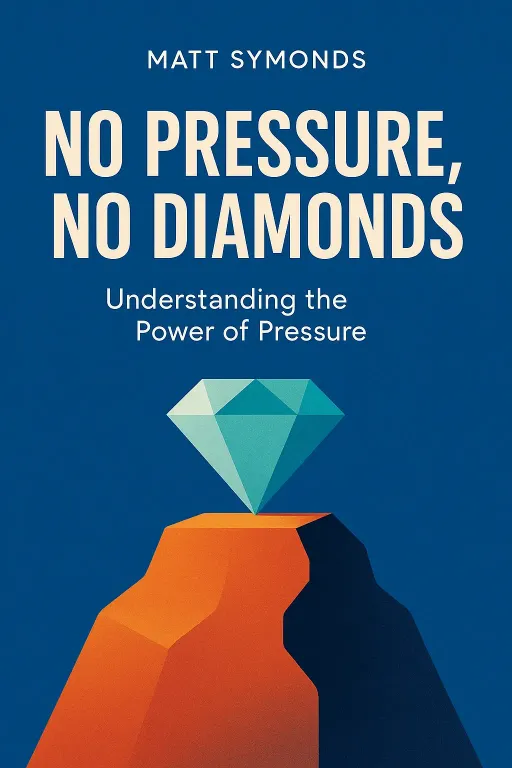
Navigating Friction at Work and Within
Golden Hook & Introduction
SECTION
Nova: Everyone has that one colleague who makes them want to throw their laptop out the window. You know the type. The one who sends passive-aggressive emails at four fifty-five on a Friday, or the one who smiles to your face and then takes credit for your project in the team meeting.
Atlas: Oh, I know that person. That is the person who turns a simple Monday morning into a tactical exercise in survival. We all have that coworker who seems to exist solely to test our patience and our professional composure.
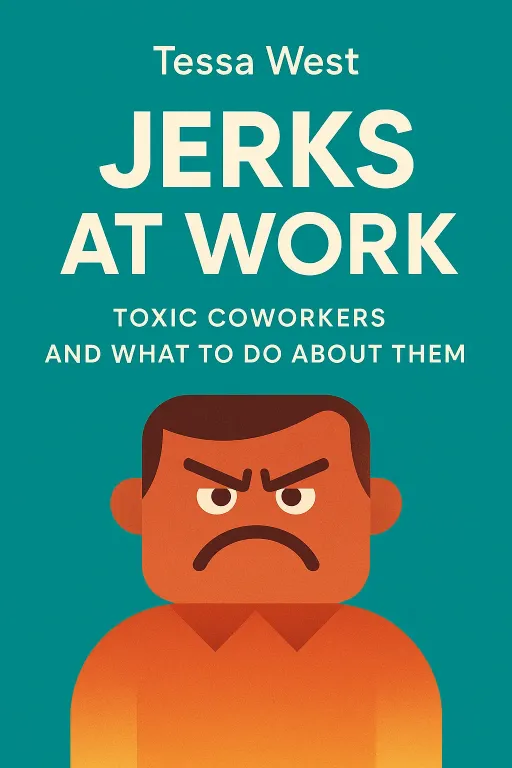
Nova: Exactly. And that is why we are looking at two very different, but equally essential, books today. We are diving into Jerks at Work by Tessa West, and we are pairing it with The High 5 Habit by Mel Robbins.
Atlas: That is an interesting combination. One sounds like a guide to workplace warfare, and the other sounds like some sort of self-help morning ritual. How do these even fit together?
Nova: They fit together because they address the two fronts of the battle you face every single day. Tessa West’s book is all about the external friction—how to identify the specific types of jerks you are dealing with and how to handle them without losing your mind. She is a professor of psychology, and her work is rooted in actual organizational behavior, not just venting.
Atlas: That makes sense. I have read plenty of books that just tell you to be the bigger person, which, frankly, is usually code for letting people walk all over you.
Nova: Right. And that is where Mel Robbins comes in. Once you have the external situation managed, you still have to deal with the internal critic. The High 5 Habit is about using neuroscience to rewire how you talk to yourself, specifically when you are staring at your own reflection in the mirror. It is about building a foundation of self-acceptance so that when the external jerks do show up, they cannot rattle you.
Atlas: I see where you are going. You are building a fortress from the inside out and the outside in. Let us start with the external. I am dying to know how Tessa West categorizes these people. Because in my experience, they are all just labeled as difficult.
The Taxonomy of the Workplace Jerk
SECTION
Nova: That is the first mistake. Calling everyone difficult is like calling every animal a mammal. It is technically true, but it does not help you figure out if you are dealing with a house cat or a mountain lion. Tessa West breaks them down into specific archetypes.
Atlas: That sounds incredibly useful. I am picturing a field guide for office predators. What are the big ones we should be looking out for?
Nova: The most dangerous one might be the Kiss-Up/Kick-Downer. This is the person who is charming and sycophantic to anyone above them on the org chart, but absolutely ruthless and demeaning to anyone below or beside them.
Atlas: I have worked for that person. They are the ones who change their entire personality the moment the boss walks into the room. It is like watching a Jekyll and Hyde transformation in real-time. How do you deal with that? They are usually the boss's favorite.
Nova: You have to be extremely careful with the Kiss-Up/Kick-Downer. West suggests that you never try to expose them directly. If you try to tell the boss that this person is a nightmare, you will look like the problem. Instead, you need to document everything. You need a paper trail that is undeniable. When they take credit for your work, you make sure there is a timestamped email or a shared document that proves the lineage of that idea.
Atlas: That feels like defensive driving. You are not trying to crash into them; you are just keeping enough distance so they cannot hit you. What about the people who are just loud and aggressive? The ones who steamroll every meeting?
Nova: West calls those the Bulldozers. They are the ones who think their voice is the only one that matters. The key with a Bulldozer is to interrupt them, but to do it professionally. You have to be comfortable with the silence you create when you stop them. You say something like, I am going to stop you there, because I want to make sure we hear from Sarah before we move on.
Atlas: That sounds terrifying. Interrupting a Bulldozer? I feel like that is how you start a war.
Nova: It is a risk, but the alternative is letting your team’s best ideas get buried under the weight of one person’s ego. The point West makes is that these behaviors are often predictable. If you know you are dealing with a Bulldozer, you stop expecting them to be a good listener. You change your strategy to match their behavior. It is about detachment. You are not trying to change their personality; you are trying to manage the interaction.
Atlas: That is a relief. I think a lot of us spend way too much energy wishing our difficult coworkers would just have an epiphany and become kind, empathetic people.
Nova: Exactly. And they are not going to. The Kiss-Up/Kick-Downer is not going to wake up one day and decide to be nice to the interns. The Bulldozer is not going to suddenly develop active listening skills. Once you accept that this is their default setting, you stop taking it personally. That is where the power shifts back to you.
Atlas: So, categorization is not about labeling them to be mean; it is about diagnostic clarity. It is about knowing the tool to use for the job.
Nova: Precisely. You do not use a hammer to fix a leaky faucet. You do not use empathy to fix a professional boundary violation. You use the right tool for the specific type of jerk.
The Internal Antidote
SECTION
Atlas: Okay, I am on board with the external strategy. It makes me feel less like a victim and more like a strategist. But let us talk about the other half of this. You mentioned Mel Robbins and this High 5 Habit. I have to be honest, it sounds a little bit like something you would see on a motivational poster in a dentist’s office. High-fiving a mirror? Is that not just a placebo?
Nova: It definitely sounds strange at first. But Mel Robbins is not pulling this out of thin air. She talks about neuroplasticity and the way our brains are wired to criticize ourselves. Think about your morning routine. You wake up, you stumble to the bathroom, you look in the mirror, and what is the first thing you do?
Atlas: I usually critique the bags under my eyes or think about how much I have to do that day.
Nova: Right. You are immediately judging yourself. You are reinforcing a neural pathway of self-criticism. Every single morning, the first thing you do is beat yourself up. You are literally training your brain to be your own worst enemy.
Atlas: That is a depressing way to put it, but you are right. It is like the first task of the day is to run a self-diagnosis on everything that is wrong with me.
Nova: The High 5 Habit is a physical intervention to break that loop. When you look in the mirror and give your reflection a high-five, you are doing something physical that your brain cannot ignore. You are signaling support and celebration. It is a physical act that forces your brain to shift from judgment to encouragement.
Atlas: So it is a pattern interrupt. You are physically stopping the cycle of self-criticism.
Nova: Exactly. It is not about narcissism or vanity. It is about neuroplasticity. You are creating a new neural pathway. When you do this consistently, you are training your brain to see yourself as an ally rather than a project that needs fixing.
Atlas: I can see how that would be useful when dealing with the office jerks we talked about earlier. If I am already starting my day with a feeling of self-support, I am less likely to let a passive-aggressive email ruin my entire afternoon.
Nova: That is the core of it. When you are insecure, you are a magnet for the jerks at work. If you do not value yourself, you are going to tolerate behavior that you should not tolerate. You are going to let the Bulldozers walk all over you because, deep down, you might be thinking, maybe they are right and I am not contributing enough.
Atlas: Wow. That hits hard. So the High 5 Habit is not just about feeling good; it is about building the emotional resilience required to actually set those boundaries with the jerks.
Nova: You nailed it. You cannot successfully execute Tessa West’s tactical communication if you do not believe you deserve to be treated with respect. If you are constantly criticizing yourself, you are already doing the jerk’s job for them. You are already tearing yourself down before you even walk into the office.
Atlas: That is a powerful connection. It is the perfect loop. The High 5 Habit builds the self-worth, and the Jerks at Work framework provides the tactical defense.
Nova: And it is so simple. It is one of those things that sounds almost too simple to work, which is why people dismiss it. But the evidence of how we change our brains through repetition is overwhelming. You are literally carving a new path in your mind.
Synthesis & Takeaways
SECTION
Atlas: I have been thinking about this while we talk. We often treat our work life and our personal life as these two completely separate silos. We try to be professional and stoic at the office, and then we come home and deal with our inner critic. But these two books suggest that they are actually the same battle.
Nova: They are absolutely the same battle. It is all about agency. It is about realizing that you have more control than you think. You can control how you diagnose the people around you, and you can control how you show up for yourself.
Atlas: If I am going to try this, I think the first step is actually the easiest. I do not need to rewrite my entire company policy. I just need to stand in front of the mirror tomorrow morning and do something that feels a little bit silly.
Nova: That is the beauty of it. It is a tiny step. But it is a step that changes the trajectory of your entire day. And when you combine that with the ability to look at a difficult colleague and say, oh, you are just a classic Kiss-Up/Kick-Downer, I know exactly how to handle you, you stop being a victim of your environment.
Atlas: It makes me wonder why we make this so complicated. We spend so much time trying to analyze why people are the way they are, or why we are the way we are, when sometimes we just need a new strategy and a little bit of self-compassion.
Nova: We love to overcomplicate things because it feels like we are doing work. But the most effective solutions are often the ones that get us out of our own heads and into action. Action is the antidote to anxiety.
Atlas: I love that. Action is the antidote to anxiety. So, for anyone listening who is currently dealing with a nightmare coworker or just feeling a bit burnt out, the advice is clear. Identify the type of jerk you are dealing with so you can stop taking it personally, and then give yourself a literal high-five in the mirror to start building your own defense system.
Nova: It sounds wild, but it works. And honestly, what have you got to lose? It takes five seconds.
Atlas: I am definitely going to try the mirror high-five tomorrow. I might feel ridiculous, but if it helps me handle the office Bulldozer, it is worth it.
Nova: Keep us posted on that. I want to hear if it changes your morning. This is the kind of practice that seems small, but over weeks and months, it fundamentally changes your relationship with yourself. And that changes everything else.
Atlas: This has been a great reminder that we are the architects of our own experience, even in the middle of a chaotic workplace. Thank you for breaking this down, Nova.
Nova: Thank you for the great questions, Atlas. It is a pleasure to explore these ideas with you. And to our listeners, good luck with the mirror tomorrow morning.
Atlas: This is Aibrary. Congratulations on your growth!