The Tech-Driven Future of Marketing
Golden Hook & Introduction
SECTION
Nova: Your phone knows what you want for dinner before you have even opened the fridge. It is not magic. It is the result of two massive shifts in how our world functions, and understanding them is the difference between shouting into the void and building a community that actually listens.
Atlas: That sounds like a bold claim. Most people just think they are being stalked by cookies and targeted ads. But you are saying there is a structural reason for that feeling of being constantly anticipated.
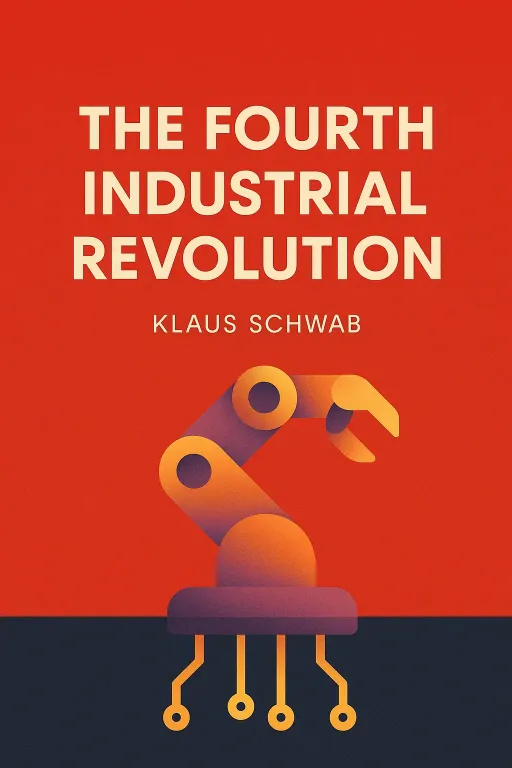
Nova: Exactly. We are living through a convergence that Klaus Schwab described in his seminal work, The Fourth Industrial Revolution. He lays out how physical, digital, and biological technologies are not just advancing; they are merging. Then, you layer in the mathematical reality that Pedro Domingos explores in The Master Algorithm, which explains how machine learning models analyze data to predict human behavior. When you put those two together, you get the blueprint for the modern digital landscape.
Atlas: Right. So, we are not just talking about better marketing software. We are talking about the fundamental way technology shapes human expectation. That is a heavy lift for one conversation, but I am ready.
Nova: It is, but it is also the most practical framework for anyone trying to build something meaningful today. Let us break down how these two worlds actually collide.
The Convergence of Worlds
SECTION
Atlas: Okay, let’s start with Schwab. When I hear Fourth Industrial Revolution, I immediately think of factory automation or robots. It feels distant. How does that translate into the screen I am holding right now?
Nova: That is the common misconception. We tend to think of the industrial revolutions as machines replacing muscles. The first was steam, the second was electricity, the third was computing. But this fourth one? It is about the blurring of boundaries. Schwab points out that the real change is that we are now connecting the physical, the digital, and the biological. Think about a fitness tracker. It is a physical object, it uses digital algorithms, and it measures biological data like your heart rate. That device is not just a gadget. It is a node in a network that knows you better than you know yourself.
Atlas: That is actually a bit unsettling when you put it that way. So, the technology is not just doing a task. It is participating in my physiology.
Nova: Precisely. And that changes the nature of expectation. If you are a consumer, you now expect everything to be as intuitive and responsive as that tracker. You expect your bank, your grocery store, and your favorite content creator to know what you need before you ask. The bar for engagement has been raised because the technology has dissolved the friction between desire and fulfillment.
Atlas: I can see how that creates a massive hurdle for anyone trying to build a brand or a community. If the audience is used to that level of seamless, hyper-personalized experience, then a generic newsletter or a standard social media post is going to feel like a relic from the Stone Age.
Nova: You hit the nail on the head. The Fourth Industrial Revolution is not just about faster internet. It is about the death of the generic experience. If you are trying to build a community today, you cannot just broadcast information. You have to design a system that acts like an organism, adapting to the people within it.
Atlas: So, if I am an aspiring architect of a community, I need to stop thinking about content as a static product. I need to start thinking about it as a dynamic system. But how do I actually build that? That is where the second piece of our puzzle, the Master Algorithm, comes in, right?
Nova: That is the perfect bridge. Because once you understand that the environment is hyper-connected, you need the tool to navigate it. That is where Pedro Domingos comes into play.
The Predictive Power of Algorithms
SECTION
Atlas: I have heard the term Master Algorithm thrown around, but it usually sounds like some sort of sci-fi supercomputer. Is it actually real, or is it just a theoretical concept?
Nova: Domingos uses it as a framework to explain how machine learning works. The core idea is that there is a universal learner, a mathematical model that can take any data and turn it into knowledge. In the world of social media, that algorithm is the engine that decides what you see. It is constantly analyzing your behavior, your clicks, your pauses, and your shares to predict what you will do next. It is not guessing. It is calculating probability.
Atlas: That makes sense. It is the librarian that knows exactly what book you want before you walk into the library. But here is my pushback. If the algorithm is just predicting what I want, then aren't we just stuck in a feedback loop? I click on cat videos, so I get more cat videos. Where is the room for growth or, frankly, for a brand to actually introduce something new?
Nova: That is a brilliant point. The danger of the predictive model is that it optimizes for the past. It assumes you will always want what you wanted yesterday. But here is the secret to using this for growth: you have to feed the algorithm the right data to change its prediction.
Atlas: Okay, I am listening. How do you feed an algorithm the right data to shift from a feedback loop to a growth loop?
Nova: You treat your content as a data point. If you post generic, broad content, the algorithm has no idea who your audience is. It sees a vague signal and sends it to a vague crowd, which leads to low engagement. But if you design your content to be highly specific, to solve a very particular problem for a very particular person, the algorithm gets a clear signal. It says, "Oh, this is for people who care about X." Then it finds those people.
Atlas: So, you are saying the algorithm isn't the enemy. It is a partner. If I am precise enough, the algorithm will do the heavy lifting of finding my audience for me.
Nova: Exactly. Domingos argues that the master algorithm is about finding the patterns. If you provide the pattern, you provide the map. Most people are afraid of the algorithm, so they try to hack it with tricks or trends. But the real strategy is to be so clear in your value proposition that the algorithm becomes an extension of your community strategy.
Atlas: That changes the perspective entirely. I have been looking at it as a hurdle to jump over, but you are framing it as a delivery system. If I am an architect of a community, my job isn't to trick the algorithm. My job is to give the algorithm such high-quality, high-intent data that it has no choice but to show my work to the right people.
Nova: That is the shift. You move from being a content creator to being a data architect. You are designing the inputs that lead to the desired output.
Designing for Impact
SECTION
Atlas: Let’s ground this. Suppose I am someone who wants to build an impactful community. Maybe I am a consultant, or I am trying to launch a newsletter about sustainable design. How do I apply this "Fourth Industrial Revolution" and "Master Algorithm" thinking to that?
Nova: Let’s take your example of sustainable design. The old way would be to write a blog post and hope people find it. The new way, the tech-driven way, is to understand that your audience is living in that hyper-connected world we discussed. They don't want a generic blog post. They want a solution to a specific problem they are facing today.
Atlas: So, instead of "The Importance of Sustainability," I would focus on something like "Three ways to lower your office energy bill by 20% this month."
Nova: Right. You are narrowing the scope. But you are also using the algorithm's predictive power. You are signaling exactly who this is for. The people who care about office efficiency are a specific, high-intent group. The algorithm finds them because you provided the clear data point.
Atlas: I see. And because you are providing value, the engagement metrics go up. The algorithm sees that people are reading, sharing, and commenting. It takes that as a signal that this content is valuable, so it shows it to more people.
Nova: And it doesn't stop there. Because you are creating a digital, physical, and biological feedback loop, you can start to engage with your community in real-time. You can use polls, you can ask for feedback, you can create a space where they feel heard. You are building a system where the community is part of the algorithm.
Atlas: That is the key, isn't it? The community is the data. When they interact, they are not just consuming; they are co-creating the future of the community.
Nova: That is the most profound part. When you stop looking at your audience as a group of people to be marketed to and start looking at them as a community to be architected, everything changes. You are not just pushing content. You are facilitating a shared experience that the algorithm then helps to amplify.
Atlas: I have to admit, I was skeptical at the start. I thought we were going to talk about how to manipulate people into clicking links. But this is actually much more empowering. It is about being intentional. It is about understanding the architecture of the world we live in so we can build something that actually lasts.
Nova: It is about reclaiming your agency. The technology is there, the algorithms are there. They are going to exist whether you use them or not. The question is whether you are going to let them happen to you, or if you are going to use them to build the impact you want to have.
Synthesis & Takeaways
SECTION
Atlas: This has been a complete shift in perspective for me. We started by talking about how the world is merging into this massive, interconnected system, and we ended with a strategy for building real, human communities within that system.
Nova: It is a powerful realization. The Fourth Industrial Revolution is not a scary event happening to us. It is the landscape we are building on. And the algorithms are not some mysterious force. They are the tools we use to connect with the people who need what we have to offer.
Atlas: So, for our listeners who are ready to take this and run with it, what is the one thing they should focus on this week?
Nova: Stop trying to be everything to everyone. The algorithms reward precision. Find the one specific problem your community is facing, and create the one piece of content that solves it perfectly. Be the architect of that solution. The algorithm will handle the rest.
Atlas: That is a great challenge. Solve one problem perfectly. I like that. It takes the pressure off trying to be a viral sensation and puts it back on being useful.
Nova: Being useful is the ultimate competitive advantage. In a world of noise, clarity is a superpower.
Atlas: I love that. Clarity is a superpower. Thank you for walking us through this, Nova. It feels like we have just scratched the surface, but I have a much clearer roadmap for how to move forward.
Nova: It has been a pleasure, Atlas. To all our listeners, remember that you are the architect of your own impact. Go out there and build something that matters. This is Aibrary. Congratulations on your growth!
Atlas: See you all in the next one.