The Sanctuary of the Present Moment
Golden Hook & Introduction
SECTION
Nova: Five words to describe our relationship with time: always running but never arriving.
Atlas: That hits incredibly close to home for anyone trying to survive a modern workload.
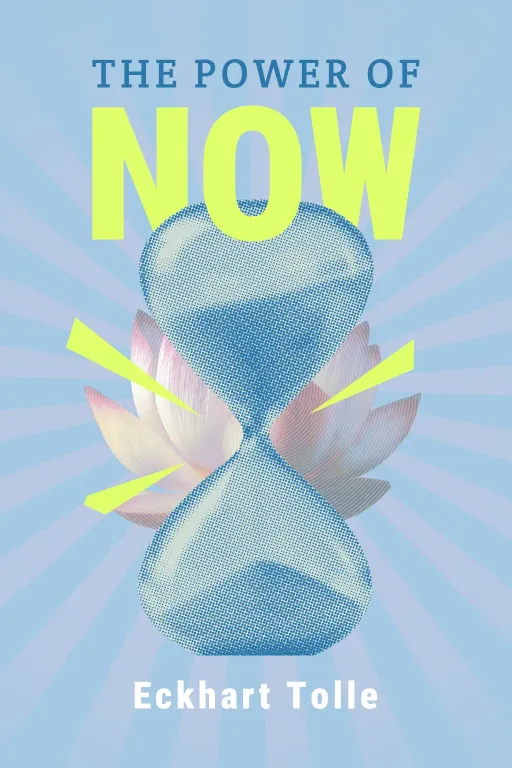
Nova: We are exploring how to break that cycle today. We are looking at two absolute giants of mindfulness literature: The Power of Now by Eckhart Tolle, and Wherever You Go, There You Are by Jon Kabat-Zinn.
Atlas: Now, I have to admit, when people start talking about mindfulness and living in the now, my inner skeptic immediately starts packing its bags. It often sounds like a luxury for people who do not have deadlines, back-to-back meetings, and a mountain of strategic decisions to make.
Nova: That is exactly why these two books are so crucial. Jon Kabat-Zinn actually brought this practice out of the monastery and straight into mainstream science. In 1979, he founded the Stress Reduction Clinic at the University of Massachusetts Medical School. He took people dealing with chronic, debilitating pain, people who had tried every medical treatment available, and he showed them how to use mindfulness to fundamentally alter their relationship with suffering.
Atlas: Wow, that is a heavy-duty starting point. So we are talking about clinical, measurable impact, not just vague, feel-good philosophy.
Nova: Exactly. This is about survival in high-stakes environments. Tolle provides the deep, psychological diagnosis of why our minds are constantly spinning out of control, and Kabat-Zinn gives us the practical, daily architecture to rebuild our mental equilibrium.
Atlas: Okay, let us dig into the diagnosis first. What is actually happening inside our heads that keeps us so perpetually exhausted?
The Analytical Mind Trap
SECTION
Nova: Let us start with Tolle's central premise in The Power of Now. He suggests that our primary source of suffering is our complete identification with our analytical minds. We believe we are our thoughts.
Atlas: Wait, hold on. For a lot of us, our analytical mind is our primary asset. It is how we solve complex problems, build strategies, and make a living. Are you saying our greatest tool is actually our biggest enemy?
Nova: The mind itself is a magnificent tool when used consciously. The trouble starts when the tool begins to run us. Tolle points out that for most of us, the mind runs on autopilot, constantly projecting into the future with anxiety or dissecting the past with regret. We become trapped in a mental loop, completely missing the only moment that actually exists, which is this very second.
Atlas: I can see how that plays out. You are sitting in a meeting, but half your brain is drafting an email for tomorrow, and the other half is analyzing a mistake you made yesterday. It is like we are time travelers, but in the worst way possible.
Nova: That is a perfect way to put it. Tolle actually shares his own story to illustrate this extreme state. Before he wrote the book, he spent years in a state of suicidal depression. One night, the mental agony became so intense he thought, I cannot live with myself any longer. And that thought triggered a massive shift. He asked himself, who is the I, and who is the self that I cannot live with?
Atlas: Oh, that is fascinating. It is like a glitch in the software. He realized there are two of him?
Nova: Yes, he realized there is the thinking mind, which was full of suffering, and then there is the conscious observer of those thoughts. That realization caused his analytical mind to completely collapse, leaving him in a state of profound peace. He spent the next couple of years literally sitting on London park benches, just observing the world flow by, completely free from the tyranny of constant thought.
Atlas: That sounds incredibly peaceful, but most of our listeners cannot just abandon their careers to sit on park benches for two years. How does a highly disciplined professional use this without losing their edge?
Nova: The key is learning to disidentify from the mental noise. You do not have to stop thinking entirely. You simply want to step back and observe the thoughts. Imagine your mind is a busy highway. Instead of standing in the middle of traffic, trying to dodge every car, you step onto the overpass and watch the cars pass below.
Atlas: Okay, I like that analogy. It feels manageable. But how do you actually make that transition when the traffic is bumper-to-bumper and everyone is honking?
Nova: You start by noticing the gaps between thoughts. Tolle talks about creating a gap in the mind's stream of chatter. You can do this by directing all your attention to a single, sensory experience in the present moment. For example, just feel the weight of your body in your chair, or listen to the hum of the air conditioner. The moment you do that, you are no longer lost in thought. You are the observer.
Atlas: That sounds simple, but I imagine the mind resists that. The mind wants to analyze. It wants to say, why am I listening to the air conditioner? I have a spreadsheet to finish.
Nova: Absolutely. The mind is addicted to problem-solving. It views the present moment as an obstacle to overcome, or as a stepping stone to a better future. But Tolle warns that this is an illusion. The future is just a mental projection of a present moment that has not happened yet. If we do not learn to inhabit the present now, we will never actually enjoy the future when it arrives.
Atlas: That is a sobering thought. We are basically deferring our well-being to some imaginary horizon that keeps moving.
Nova: Exactly. We are constantly preparing to live, but never actually living.
Atlas: But wait, my job is literally to anticipate problems. If I stop projecting into the future, I will fail as a strategist. I need to foresee market shifts, competitor moves, and potential risks. How do I balance strategic foresight with being present?
Nova: There is a massive difference between conscious planning and obsessive worrying. When you plan, you allocate a specific, focused block of time to analyze future scenarios. You are fully present with the planning process. But when you worry, you are letting anxious thoughts run in the background of your mind all day long, draining your cognitive battery while you are trying to do other things.
Atlas: Ah, I see. So planning is a deliberate action, while worrying is a passive, uncontrolled state of mind.
Nova: Exactly. Planning is highly efficient. Worrying is incredibly wasteful. Tolle suggests that when you are done planning, you step back into the present moment. You do not let the future leak into your present and poison your current experience.
Atlas: That makes sense. It is about setting boundaries for your thoughts, just like you would set boundaries for your calendar.
Nova: Yes, it is cognitive discipline. It is about deciding when to use the tool of the mind, and when to put it down. Most of us have forgotten how to put it down, and that is why we feel so exhausted.
Atlas: So, if I am not my thoughts, who am I? That feels like a bit of an existential crisis for someone who prides themselves on their intellect.
Nova: It is a common fear. We worry that if we stop thinking, we will disappear or become incompetent. But Tolle suggests that who you really are is the awareness behind the thoughts. Think of your mind as a movie screen. The thoughts, the worries, the plans, those are just the movie playing on the screen. The movie can be incredibly chaotic, full of explosions and drama, but the screen itself remains completely untouched, silent, and whole. You are the screen, not the movie.
Atlas: I love that image. The screen is always there, completely unaffected by the drama of the film.
Nova: Exactly. When you realize you are the screen, you can watch the movie of your busy life without getting swept up in the panic of it. You gain a sense of spaciousness.
Atlas: That spaciousness sounds like exactly what we need when decision fatigue kicks in. It gives you room to breathe before you react.
Nova: It does. And that is the perfect bridge to Jon Kabat-Zinn, because he shows us how to build that spaciousness into our daily routine, even when we are in the middle of a chaotic work environment.
The Radical Power of Non-Doing
SECTION
Atlas: This brings us to Jon Kabat-Zinn. How does his approach in Wherever You Go, There You Are help us ground this philosophy into actual daily habits?
Nova: Kabat-Zinn demystifies the whole concept. He takes meditation off its pedestal. He explains that mindfulness actually involves observing the thoughts that arise, letting them pass like clouds, while keeping your mind open and unforced. It is about cultivating what he calls non-doing.
Atlas: Non-doing. That sounds like a tough sell for an analytical strategist. We are judged entirely on our doing, our output, our execution. How does non-doing fit into a high-performance lifestyle?
Nova: We can look at this as a fundamental shift in how we exist, moving away from constant doing and into quiet awareness. It sounds counterintuitive, but non-doing is actually the secret engine of high performance. Kabat-Zinn describes it as allowing yourself to simply observe the present without trying to change it, fix it, or judge it. It is about taking a temporary break from the constant pressure to achieve.
Atlas: Let me check if I have this right. It is like pausing the game to clean the screen, rather than just trying to play through the dirt?
Nova: That is an excellent comparison. When we are constantly in doing mode, we accumulate a massive amount of cognitive residue. We carry the stress of the last task into the next task. Non-doing is the process of clearing that residue so you can meet the next challenge with absolute clarity.
Atlas: Okay, but how does this work in practice? If I am in the middle of a high-pressure day, how do I actually practice non-doing without dropping the ball?
Nova: Kabat-Zinn suggests starting with very brief, daily practices. He emphasizes that the quality of your awareness matters far more than the duration of the practice. You do not need to sit on a cushion for an hour. You can practice mindfulness while walking down the hallway, or washing your hands, or even waiting for a web page to load.
Atlas: So it is about integrating mindfulness into the micro-moments of the day.
Nova: Yes. For instance, Kabat-Zinn shares a great case study from his clinic about a patient who suffered from severe chronic back pain. The patient spent all his energy fighting the pain, trying to find ways to escape it, which only made his body more tense and the pain more intense. Kabat-Zinn had him practice simply sitting with the physical sensation of the pain, observing it without the added layer of mental judgment, without saying, this is ruining my life, or, when will this stop?
Atlas: That sounds incredibly difficult. You are asking someone to run toward the fire. What happened?
Nova: The patient chose to accept the pain, allowing himself to coexist with the physical sensation. He discovered that a massive portion of his suffering was actually caused by his resistance to the pain, not the physical sensation itself. When he stopped fighting it, the muscle tension relaxed, and the pain became manageable. He regained his life, not because the pain miraculously vanished, but because he stopped letting his mind multiply the suffering.
Atlas: That is a profound shift. It suggests that our resistance to a stressful situation often causes more damage than the situation itself.
Nova: Exactly. In the professional world, we do this all the time. We experience a setback, and instead of dealing with the facts, our minds immediately spin a narrative about how this setback will ruin our career, or what others will think of us. We are multiplying our stress.
Atlas: Right, we turn a minor bump in the road into a multi-car pileup in our heads.
Nova: Yes, and mindfulness is the tool that lets us see the bump for what it is, a single, manageable moment, without the added drama.
Atlas: Let us talk about decision fatigue. By the time I reach the afternoon, my brain feels completely fried. Every minor decision feels like a mountain. How does Kabat-Zinn's non-doing address this?
Nova: Decision fatigue happens because we treat our minds like a machine that can run at maximum capacity indefinitely. We do not give ourselves any recovery time between decisions. Kabat-Zinn talks about the power of voluntary pauses. These are tiny oases of non-doing that you sprinkle throughout your day. When you finish a call, instead of immediately opening a new tab, you take thirty seconds to just sit. You let your cognitive system reset.
Atlas: I can see how that would help. It is like restarting your computer when it starts running slow because you have too many tabs open.
Nova: That is exactly what it is. You are clearing the cache. If you do not clear the cache, the system eventually crashes. That is what we call burnout.
Atlas: This makes the practice feel much more accessible. It is not about adding another item to my to-do list. It is about changing how I transition between the items already on my list.
Nova: Yes, it is a way of being, not another task. You are not trying to get somewhere else. You are simply fully inhabiting where you already are.
Atlas: I am curious about the science behind this. As analytical people, we like data. Is there actual neurological proof that these brief pauses do anything to our brains?
Nova: There is a mountain of research now. Studies show that regular mindfulness practice actually alters the physical structure of the brain. It shrinks the amygdala, which is the region responsible for our fight-or-flight stress response, and it thickens the prefrontal cortex, which handles executive functioning, decision-making, and emotional regulation.
Atlas: That is incredible. We are literally rewiring our brains to be more resilient.
Nova: Yes, you are training your brain to stay calm under pressure. Instead of reacting automatically to a stressor, you create a space where you can choose your response. That is the definition of mindful leadership.
Atlas: I can see how that would completely change team dynamics. If a leader is reacting from a place of stress, it infects the whole team. But if they can stay grounded, they bring stability to the entire organization.
Nova: Absolutely. A mindful leader is fully present in meetings. They listen to what is being said, and what is not being said, rather than just waiting for their turn to speak or thinking about their next appointment. That presence builds trust and clarity.
Synthesis & Takeaways
SECTION
Atlas: This brings us to the practical blueprint. If our listeners are feeling a wave of burnout approaching today, what is the immediate, tactical step they can take?
Nova: Here is your two-minute sanctuary. When you feel that wave of overwhelm, pause. Step away from your screens, close your eyes, and focus entirely on the physical sensation of your breath. Feel the air entering your nose, the rise and fall of your chest.
Atlas: And if your mind starts screaming about all the work you should be doing instead?
Nova: You simply notice that scream, let it go, and bring your focus back to the breath. Remind yourself that this present moment is the only one you actually have to manage. You do not have to solve the next ten steps of your project right now. You only have to breathe in, and breathe out.
Atlas: That feels like a massive cognitive reframe. It takes the pressure off the future and grounds you in the immediate task.
Nova: It restores your agency. When you operate from the present, you make strategic decisions rather than reactive ones. You preserve your energy for what actually matters.
Atlas: I love that. It is strategic minimalism for the mind.
Nova: It really is. By letting go of the need to control the future, you actually gain the clarity needed to shape it.
Atlas: This is Aibrary. Congratulations on your growth!