

The Esoteric Mind: Unlocking the Secret History of Human Thought
Golden Hook & Introduction
SECTION
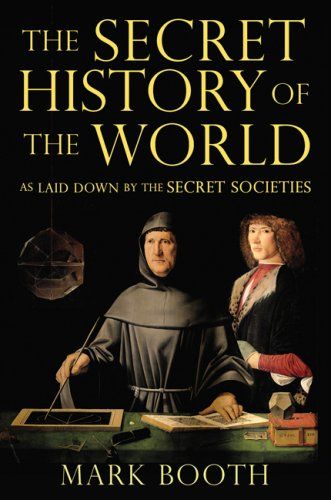
Nova: What if the history we have been taught is completely upside down? What if, instead of matter slowly evolving over billions of years to eventually produce human consciousness, the ancients were actually right, and consciousness is what created matter? Welcome to the show, everyone. Today, we are diving into Mark Booth's provocative masterpiece, The Secret History of the World, to explore history not through the lens of battles, treaties, and material progress, but through the secret history of human consciousness itself. Today, we are going to tackle this book from two different angles. First, we will explore the ancient mind-first worldview and the intense initiation rites designed to unlock it. Then, we will discuss secret societies as historical underground networks, almost like shadow universities, that preserved and incubated revolutionary ideas. Joining us today is veteran researcher Dr. Zen, whose analytical mind is going to help us decode these esoteric secrets. Zen, it is so wonderful to have you here with us.
Zen: Thanks, Nova. It is a pleasure to be here. You know, as a researcher, I spend a lot of time looking at how we construct knowledge and how our educational systems frame reality. What fascinates me about Mark Booth's work is how it challenges our fundamental epistemological assumptions. We are so conditioned by scientific materialism that we forget it is a relatively recent historical paradigm. Looking at history through the eyes of the initiates, as Booth suggests, is not just a historical exercise, it is a profound cognitive challenge.
Nova: Oh, absolutely. It is like putting on a completely different pair of glasses and seeing the entire world shift colors. Booth basically argues that for thousands of years, the smartest minds on the planet, from Plato to Newton, believed in a totally different version of reality. A version where the universe is alive, intelligent, and mentally constructed. We are talking about a complete inversion of our modern worldview.
Zen: Exactly. In research, we call this a paradigm shift, but Booth is asking us to do a reverse paradigm shift. He is asking us to step inside the minds of ancient people who did not see themselves as separate from nature, but as active participants in a living, breathing cosmos. For an INTJ like me, who loves analyzing systems, this is incredibly rich territory because it forces us to ask: how did they maintain this worldview, and what did they know that we might have forgotten?
Deep Dive into Core Topic 1
SECTION
Nova: That is the perfect transition to our first big topic: the mind-before-matter paradigm and the ancient initiation rites. Booth spends a lot of time describing how ancient civilizations, particularly the Greeks at Eleusis, used highly structured, secret rituals to completely dismantle a person's ordinary perception of the world. Let us paint a picture of the Eleusinian Mysteries, because this was not just a weekend retreat. This was a massive, life-altering event. Initiates would fast, walk for days in a solemn procession, and then enter a dark, underground hall where they drank a mysterious potion called the kykeon. Under the influence of this potion and intense sensory deprivation followed by sudden, blinding light and theatrical revelations, they experienced what they described as a literal death and rebirth. They saw the gods, they saw the spiritual scaffolding of the universe. And when they came out, they were completely changed. They no longer feared death because they believed they had seen the true, mental nature of reality.
Zen: What is fascinating here from a cognitive and educational perspective is the sheer structural design of these initiation rites. They were not just random, mystical experiences. They were highly sophisticated, albeit extreme, educational frameworks. In modern learning theory, we talk about cognitive dissonance, the discomfort we feel when confronted with new information that contradicts our existing beliefs. The initiation rites at Eleusis were designed to create the ultimate state of cognitive dissonance. By depriving the senses, using sacred geometry, chanting, and potentially psychoactive substances, they systematically broke down the initiate's ego and their habitual ways of categorizing the world.
Nova: Yes, it is like they had to completely reboot the brain's operating system.
Zen: Precisely. They cleared the cache, so to speak. And in that highly suggestible, open state, they introduced a new cognitive model. This model was not taught through lectures or textbooks, but through direct, immersive experience. The initiate did not just learn that the soul is immortal; they felt it. They experienced themselves as part of a cosmic mind. As a researcher, I look at this as a form of deep, transformative learning. It is the ultimate scaffolding of an experience to achieve a specific psychological outcome.
Nova: That is so interesting, Zen. But a skeptic listening to this might say, well, Nova, Zen, they were just hallucinating. They drank some fermented barley drink, got dizzy in a dark cave, and saw things that were not there. How do we reconcile the scientific explanation of a hallucination with the profound, civilization-building impact these mysteries had? Because, let us remember, people like Plato, Sophocles, and Cicero went through this and came out saying it was the most important experience of their lives.
Zen: That is the crucial question, isn't it? If it was just a cheap hallucination, it would not have laid the intellectual foundations of Western civilization. Plato's entire philosophy of Forms, the idea that the physical world is just a shadow of a higher, ideal reality, is directly derived from his initiation. From an analytical standpoint, we have to look at the utility of the belief. Whether the initiates actually met literal gods or simply tapped into deep archetypes of the collective unconscious, the result was a massive expansion of their cognitive capacity. It gave them a holistic framework that allowed them to connect art, science, mathematics, and morality into a unified whole. Today, our education system is incredibly fragmented. We study biology in one room, literature in another, and philosophy is treated as an afterthought. The ancient esoteric paradigm offered a unified theory of everything, rooted in the primacy of consciousness.
Nova: We really have lost that connective tissue, haven't we? We tend to look down on ancient people as primitive or superstitious, but Booth shows that their intellectual systems were incredibly complex. They were just operating on a different set of axioms.
Zen: Yes, and that is a vital distinction. A system can be perfectly logical and internally consistent even if its starting axioms are different from ours. If your axiom is 'matter is primary,' you build a materialist, technological society. If your axiom is 'mind is primary,' you build a society focused on the cultivation of consciousness, ritual, and cosmic alignment. Neither is inherently stupid; they are just pointing human intelligence in different directions.
Nova: And Booth suggests that this mind-first perspective was not just a philosophical preference, but a completely different way of experiencing sensory data. He writes about how ancient people did not see the sun as a giant ball of burning gas, but as the physical vesture of a great spiritual being. They did not just think this; they saw it. Their perception was deeply participatory.
Zen: It is what the philosopher Owen Barfield called 'original participation.' The boundary between the observer and the observed was highly permeable. In our modern, scientific worldview, we have placed a thick pane of glass between ourselves and the world. We observe, we measure, we analyze, but we do not participate. The ancient initiate's goal was to shatter that glass and feel the flow of cosmic intelligence directly. It is a completely different cognitive state, one that we occasionally glimpse today in flow states or deep meditation, but for them, it was the baseline of higher culture.
Deep Dive into Core Topic 2
SECTION
Nova: It is just mind-blowing to think about how different daily life must have felt under that paradigm. But, of course, history marched on. The rise of dogmatic theology and, later, rigid scientific materialism pushed this participatory, mind-first worldview into the shadows. And that brings us to our second core topic: the underground stream of secret societies. Booth argues that when the mainstream institutions, like the Church, began to persecute anyone who held these esoteric views, the knowledge did not just vanish. It went underground. Groups like the Templars, the Rosicrucians, and the Freemasons became the guardians of this ancient wisdom. But here is the twist: they were not just sitting in dark rooms wearing hoods; they were actively incubating modern science. Let us look at the incredible case of Isaac Newton. We are taught in school that Newton was the ultimate rationalist, the father of modern physics, the guy who saw an apple fall and figured out gravity. But Booth reminds us of a historical fact that often gets swept under the rug: Newton was a deeply committed alchemist. He spent decades in his lab trying to find the Philosopher's Stone, and he wrote millions of words on theology, prophecy, and esoteric philosophy.
Zen: This is one of my favorite parts of Booth's book because it completely dismantles the neat, linear narrative of the Scientific Revolution. We like to think that science emerged by completely rejecting the superstitious past, but the reality is much more complex, and frankly, much more interesting. Newton did not see his work on gravity as separate from his alchemical studies. In fact, his concept of gravity, this invisible, non-mechanical force that acts across empty space, was deeply shocking to his contemporaries. Mechanistic philosophers of his time, like Descartes, thought Newton's gravity was absurd because it seemed like an 'occult' force. And they were right. Newton got the idea of action at a distance directly from his studies of Hermetic philosophy and alchemy, which teach that all parts of the universe are connected by invisible, sympathetic forces.
Nova: That is wild. So, the very foundation of modern physics, the law of universal gravitation, was actually inspired by occult, esoteric ideas. We literally owe modern science to the very worldview we now dismiss as unscientific.
Zen: It is a beautiful historical irony, isn't it? And it shows the power of what I like to call 'shadow universities.' Throughout history, when mainstream academic or religious institutions become too dogmatic and siloed, alternative networks emerge to keep the flame of holistic inquiry alive. The Rosicrucians, for example, were essentially an underground network of scholars, physicians, and philosophers who wanted to combine spiritual wisdom with empirical observation. They recognized that if you study the physical world without understanding the spiritual or mental principles behind it, you end up with a cold, dead, manipulative science. They wanted a 'sacred science.'
Nova: And they had to keep it secret because, back then, if you started talking about a sacred science that did not align with Church dogma, you could find yourself tied to a stake. The secrecy was a survival mechanism, not just a club rule.
Zen: Absolutely. It was a matter of literal life and death. But the secrecy also served another purpose. It created a protected space where highly unconventional, paradigm-shattering ideas could be rigorously tested and debated without the pressure of public ridicule or institutional censorship. In research, we know how difficult it is to get funding or approval for ideas that challenge the dominant paradigm. Imagine trying to propose the heliocentric model or chemical medicine in the sixteenth century. Secret societies provided the cognitive safety zone needed for these revolutionary ideas to mature before they were introduced to the wider world.
Nova: It is like an intellectual incubator. You need that controlled environment to let the seedling grow before you plant it in the harsh wind of the public square. But, Zen, as a researcher, how do you see this playing out today? Obviously, we do not have to worry about the Inquisition burning us at the stake anymore, thank goodness. But do you think we still have these 'shadow universities' or alternative networks operating today?
Zen: Oh, absolutely. They just look different. Today, they might take the form of decentralized online communities, independent research institutes, or cross-disciplinary groups that operate on the fringes of traditional academia. Mainstream universities are incredibly powerful, but they are also highly bureaucratic and deeply invested in preserving their own paradigms. If you want to study things that sit on the border of current scientific understanding, like consciousness studies, parapsychology, or unconventional energy systems, you often have to go outside the traditional funding structures. The spirit of the underground stream is still very much alive in those who dare to ask the questions that mainstream institutions deem irrelevant or taboo.
Nova: That is so encouraging. It means the search for deeper truth is always finding a way, flowing like water around whatever obstacles we put in its path. We just have to know where to look.
Zen: Yes, and it requires a certain type of mind to navigate these waters. It requires someone who is not afraid of being labeled a heretic by the mainstream, but who also possesses the intellectual rigor to not fall into mere superstition. It is about finding that golden middle path between rigid skepticism and gullible belief. That is what the true initiates of the past were trying to achieve.
Synthesis & Takeaways
SECTION
Nova: This has been such a mind-expanding conversation, Zen. We have journeyed from the dark, transformative caves of Eleusis to the secret, alchemical laboratories of Isaac Newton. It really makes you realize that the history of the world is not just a sequence of events, but a rich tapestry of shifting consciousness. If we want to wrap this up for our listeners, what would you say is the ultimate takeaway from Mark Booth's secret history?
Zen: I think the most powerful takeaway is the value of intellectual flexibility. As researchers, educators, and simply as human beings living in a highly complex world, we cannot afford to be trapped in a single cognitive paradigm. Scientific materialism has given us incredible technology, medicine, and material comfort, and we should be deeply grateful for that. But it has also left us feeling somewhat alienated, disconnected from nature, and starved for deeper meaning.
Nova: We have traded connection for control, haven't we?
Zen: We really have. And by looking back at the secret history, by understanding the 'mind-first' worldview of the ancients, we can learn to cultivate a more holistic, participatory relationship with reality. We do not have to abandon science or believe in literal mythological gods, but we can begin to treat the universe as something alive, intelligent, and worthy of our reverence. We can start to see that our minds are not isolated islands of consciousness trapped inside our skulls, but active participants in a vast, interconnected cosmic web.
Nova: I love that so much. It is about expanding our toolkit. We do not have to throw away our microscopes; we just need to remember how to use our telescopes and our inner vision as well.
Zen: Exactly. It is about cognitive diversity. The more paradigms we can comfortably step into, the more creative, resilient, and empathetic we become.
Nova: Well, that is a beautiful note to end on. Thank you so much, Dr. Zen, for sharing your incredible insights and helping us navigate this fascinating, hidden landscape of human thought.
Zen: Thank you, Nova. It was an absolute pleasure.
Nova: And to all our listeners out there, we leave you with one final question to ponder: the next time you look up at the night sky, or even at a simple flower in your garden, ask yourself: are you just looking at dead matter, or is a living universe looking right back at you? Until next time, keep questioning, keep exploring, and keep your minds wide open. We will see you in the next episode.