The Cognitive and Spiritual Mechanics of Achievement
Golden Hook & Introduction
SECTION
Nova: The most successful people I know aren't the ones pushing the hardest against the wall. They are the ones who stopped hitting the wall entirely and started looking for the door. We spend so much of our lives convinced that success is a product of sheer force, grinding until we break, but the actual mechanics of achievement are far more subtle, and honestly, far more interesting.
Atlas: That sounds like a relief, frankly. I think a lot of us are tired of the grind mentality where the only measure of progress is how exhausted you are at the end of the day. But I have to ask, if we stop pushing, what are we actually doing? Are we just hoping for the best, or is there a system here?
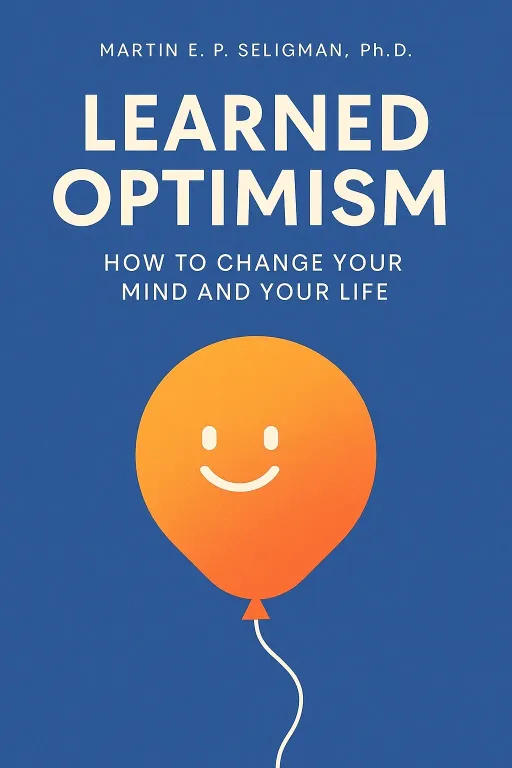
Nova: That is exactly the question we are going to dismantle today. We are looking at two very different, yet surprisingly compatible, frameworks for achievement. We are diving into the cognitive science of Martin Seligman, specifically his groundbreaking work in Learned Optimism, and pairing it with the spiritual, almost philosophical approach of Deepak Chopra in The Seven Spiritual Laws of Success.
Atlas: Okay, hold on. We are putting a hard-science psychologist next to a spiritual teacher? That is quite the cocktail. Seligman is the father of positive psychology, right? He spent decades in labs measuring how people react to stress. And Chopra is essentially the opposite end of the spectrum, talking about the laws of the universe and consciousness.
Nova: That is the beauty of it. Seligman gives us the cognitive software, the way we process data and failure. Chopra gives us the operating system, the way we align with our purpose. Seligman’s work, Learned Optimism, was a total shift in how the scientific community viewed human potential. Before him, the focus was mostly on what was wrong with people. He flipped that to study what makes people resilient.
Atlas: Right, and I remember reading that Seligman actually started by studying learned helplessness—what happens when people feel like they have no control. That seems like a pretty dark place to start a career.
Nova: It was. He saw that when people were subjected to unavoidable stressors, they eventually just stopped trying, even when a way out was presented to them. He called that learned helplessness. But then he discovered the flip side: learned optimism. He proved that we can actually teach ourselves to interpret the world differently. And that is the key to leadership, to finance, to navigating any complex future.
Atlas: So, we have the science of resilience from Seligman, and then we have the spiritual framework from Chopra. How do we actually bridge those? Because on the surface, one feels very analytical, and the other feels very intuitive.
Nova: Think of it this way. Seligman provides the discipline to keep going when the data looks bad. Chopra provides the wisdom to know when to let go of the specific outcome so you can actually perform at your best. Today, we are going to see how these two seemingly different worlds actually create a unified theory for high-level achievement.
The Cognitive Mechanics of Resilience
SECTION
Atlas: Let’s start with the cognitive side. I want to talk about this explanatory style you mentioned. We have all had moments where a project goes sideways, or a deal falls through, and the internal monologue starts. It usually sounds like, I am terrible at this, I am always going to fail, and everything I touch turns to dust.
Nova: That is the exact trap Seligman identified. He breaks down our explanatory style into three dimensions. The first is personalization, the second is pervasiveness, and the third is permanence. When we are feeling defeated, we tend to make our failures personal, pervasive, and permanent. We say, I failed because I am incompetent—that is personal. I fail at everything—that is pervasive. And I will always fail—that is permanent.
Atlas: That sounds like my internal monologue on a bad Tuesday. So, what is the fix? Are we just supposed to lie to ourselves and say, I am a genius when I clearly just messed up a spreadsheet?
Nova: Not at all. That would be toxic positivity, which is not what Seligman is advocating. The fix is to change the explanatory style to be situational, specific, and temporary. When that project fails, you don't say, I am a failure. You say, this specific campaign failed because of a timing delay, which we can adjust next week.
Atlas: I see the difference. You are taking the failure and putting it in a box. You are not letting it bleed out into your entire identity or your entire future.
Nova: Exactly. Let’s look at a concrete example. Imagine you are a leader at a firm, and you pitch a massive, innovative strategy to your board, and they reject it. The pessimist thinks, they hate my ideas, I am not cut out for this leadership role, and this firm is going to stagnate because I am not good enough.
Atlas: That is the spiral. I have seen that happen to brilliant people. They get one no, and they start looking for the exit.
Nova: The optimist, the person with learned optimism, thinks, the board had concerns about the budget volatility in this specific quarter, so I need to refine the financial model and re-pitch it when the market stabilizes. See the shift? It is not about ignoring the rejection. It is about categorizing it accurately. The failure was an event, not a character flaw. It was tied to a specific variable, not a permanent state of being.
Atlas: That is a massive distinction. It is the difference between a dead end and a detour. But how do we actually practice this in the moment? Because when you are in the middle of a high-pressure situation, you aren't exactly thinking about psychological frameworks.
Nova: You start by writing it down. This is the tiny step that makes all the difference. When you hit a wall, take fifteen minutes. Write out the explanation for why the failure happened. Then, go back and edit it. Rewrite your own internal narrative. If you wrote, I am a bad manager, cross it out. Write, I failed to communicate the project scope clearly during the meeting.
Atlas: So, you are essentially auditing your own thoughts. It is like debugging code. You are looking for the bugs in your logic—the personal, pervasive, and permanent labels—and you are replacing them with specific, actionable, and temporary facts.
Nova: That is the perfect analogy. You are debugging your own brain. And here is why this matters for the kind of person who is building a future or managing a team. If you default to a permanent, pervasive explanatory style, you will stop taking risks. You will stop innovating. You will become risk-averse because you are terrified of the personal stain of failure.
Atlas: And risk aversion is the death of innovation. If you are not failing, you are not trying anything new. So, learned optimism isn't just about feeling good. It is a strategic requirement for anyone who wants to build, create, or lead.
Nova: Precisely. It is a competitive advantage. When the economy shifts, when the technology changes, when your competitor undercuts you, the person who can look at that and say, this is a temporary situation, not a permanent reflection of my worth, that is the person who wins.
The Spiritual Laws of Achievement
SECTION
Atlas: Okay, I am sold on the cognitive side. It makes sense to audit your thoughts like code. But now, let’s pivot. We have this resilient, optimistic mindset, but how do we balance that with the idea of flow? I want to talk about this Law of Least Effort and the Law of Detachment from Chopra. Because sometimes, even when I am being optimistic, I feel like I am just forcing things.
Nova: That is where the second half of our puzzle comes in. Chopra’s perspective is that nature operates with minimum effort. Think about grass growing, flowers blooming, birds flying. They don't struggle. They don't expend unnecessary energy. He argues that human beings have lost that capacity because we are constantly trying to force outcomes.
Atlas: I think I know what you mean. We have all worked with people who are so intense, so driven, so full of friction that they exhaust everyone around them, including themselves. They are working hard, but they aren't working smart. Is that what the Law of Least Effort is about?
Nova: It is. It is about doing less to accomplish more. But this is where people get confused. It is not about laziness. It is about alignment. When your actions are based on love, or purpose, or a genuine desire to serve, the energy you expend is efficient. When your actions are based on fear, or ego, or the need to prove something, you create friction. And friction consumes massive amounts of energy.
Atlas: That is a fascinating way to put it. Friction. So, when I am forcing a deal because I am afraid of missing my quota, that is friction. When I am pursuing a partnership because it genuinely serves both parties and aligns with the long-term vision, that is flow.
Nova: Exactly. And that leads us to the Law of Detachment. This is the one that really trips people up. Detachment sounds like you don't care. But in Chopra’s framework, it is the opposite. It is about having an intention, but letting go of the specific way it manifests.
Atlas: Wait, explain that. Because as a professional, I am judged on results. If I detach from the outcome, don't I lose my edge?
Nova: That is the common misconception. Think of it like this: you are the archer. You focus intensely on your form, your breathing, the wind, the target. You do everything in your power to make the perfect shot. But once that arrow leaves the bow, you have to let go. You cannot control the arrow once it is in flight. If you try to guide it with your mind while it is in the air, you are just going to mess up your next shot.
Atlas: So, detachment is about focusing on the process and the input, and releasing the anxiety about the specific output.
Nova: Yes. And here is the paradox. When you are attached to the outcome, you are operating from a place of scarcity. You are terrified of the result not being what you wanted. That fear makes you rigid. You stop seeing opportunities that are right in front of you because you are so focused on the one path you thought was the only way to win.
Atlas: That makes sense. I have seen that in negotiations. When someone is desperate to close, they start making concessions they shouldn't make. They lose their leverage because they are too attached to the deal closing today.
Nova: Exactly. They lose their flow. They are forcing the outcome, and in doing so, they create friction. When you practice detachment, you are saying, I am committed to this vision, but I am open to the universe—or the market, or the team—finding the best way to get there. It gives you the flexibility to pivot when the data changes.
Atlas: So, if I am hearing you right, Seligman gives us the mental toughness to handle the setbacks, and Chopra gives us the wisdom to stay fluid and not get bogged down by our own ego or anxiety about the result.
Nova: That is the synthesis. Imagine a leader who has both. They have the cognitive skill to reframe any failure as a temporary, specific hurdle—that is the Seligman part. And they have the spiritual wisdom to pursue their goals with intense focus, but without the desperate, friction-filled need to force a specific outcome—that is the Chopra part.
Atlas: That leader would be unstoppable. They wouldn't burn out, because they aren't carrying the weight of the universe on their shoulders. They wouldn't be paralyzed by failure, because they know how to process it. And they wouldn't be rigid, because they are detached from the path, not the purpose.
Synthesis & Takeaways
SECTION
Nova: It is a powerful combination. We often think of achievement as this heavy, burdensome thing. We think we have to carry the weight of our goals to make them real. But what if achievement is actually about lightness?
Atlas: That is a radical thought. Lightness. I think we need to be very practical here, though. For our listeners who are building, who are managing, who are trying to innovate—what is the takeaway? How do they walk out of this conversation and actually use this?
Nova: It starts with that fifteen-minute audit we talked about. The next time you hit a setback, sit down. Don't just ruminate. Write down the failure. Then, apply the Seligman filter. Is this personal? Is it pervasive? Is it permanent? If it is, edit it. Change the narrative to be specific, temporary, and situational. That is your cognitive discipline.
Atlas: And then, pair that with the Chopra check-in. Ask yourself, am I forcing this? Is this coming from a place of fear or ego, or is this coming from a place of alignment and service? If you feel that friction, if you feel that desperate need to control the outcome, take a step back. Detach. Focus on the next right action, not the final result.
Nova: I love that. Focus on the next right action. That is the bridge. It is the tactical application of both frameworks. You keep the optimistic belief that you can handle the situation, and you keep the detached clarity to act without desperation.
Atlas: This feels like a sustainable system. It is not a hack, and it is not a quick fix. It is a way of building your internal architecture. You are literally designing how you process the world.
Nova: And that is the ultimate form of mastery. It is not about controlling the world; it is about mastering your own response to it. When you have that, you don't just achieve more; you enjoy the process of achieving. You become a person who can navigate the unknown with confidence, not because you know exactly what will happen, but because you know exactly how you will handle whatever does happen.
Atlas: That is a profound place to be. It is the difference between being a victim of circumstance and being an architect of your own experience. And honestly, that is the kind of leadership the world needs right now.
Nova: It really is. It takes courage to release the need for control and the need to personalize every failure. But on the other side of that courage is a level of freedom that most people never get to experience. So, the challenge for everyone listening is to embrace that journey. Start today. Every step forward, no matter how small, builds the momentum you need.
Atlas: And don't forget the growth recommendations we touched on earlier. Schedule that fifteen minutes of focused learning. Protect it. That is your time to sharpen the saw. Whether you are diving into leadership frameworks or behavioral economics, that commitment to your own growth is the foundation for everything else.
Nova: Exactly. Mastery isn't a destination. It is a continuous, beautiful process of refining who you are and how you show up in the world. We are excited to see where this takes you.
Atlas: This has been a fantastic deep dive. I feel like I have a new toolkit for my next Monday morning.
Nova: That is the goal. Thank you for joining us in this exploration. This is Aibrary. Congratulations on your growth!