The Anatomy of Courage: Systemic Justice and Moral Leadership in Maycomb
Golden Hook & Introduction
SECTION
Nova: Picture this. You are standing on a dusty street in a sleepy Southern town. A rabid dog is walking slowly toward you, and the local sheriff hands a rifle to a quiet, bookish lawyer who hasn't touched a gun in thirty years. That lawyer is Atticus Finch, and what happens next completely shatters his children's understanding of who their father really is. But as we will discover today, physical marksmanship is nothing compared to the moral marksmanship required to challenge an entire society's deeply ingrained prejudices. Today, we are going to tackle this timeless masterpiece from three distinct angles. First, we will dissect the true anatomy of moral courage, looking past physical strength to the quiet, agonizing battles of the human spirit. Second, we will analyze the systemic blindspots of Maycomb, Alabama, treating prejudice not just as an individual flaw, but as a structural disease. And finally, we will extract powerful, actionable leadership takeaways on how we can cultivate empathy as a diagnostic tool in our own lives and professional journeys. I am joined today by Solo Marvin Kasongo, a brilliant mind bridging the worlds of medicine, leadership, and systemic growth. Solo, it is wonderful to have you here with us.
Solo Marvin Kasongo: Thank you, Nova. It is an absolute pleasure to be here. You know, when we look at a classic like To Kill a Mockingbird, it is incredibly easy to view it simply as a historical artifact or a simple story about the American South. But as someone who constantly thinks about systems, whether we are talking about the human body in medicine or structural frameworks in leadership and global development, this book reads like a profound case study in social diagnostics. It is about identifying the underlying pathologies of a community and understanding what it takes for an individual to stand up as a force for systemic health. I am really excited to dive into these dynamics with you today.
Nova: Oh, I love that term, social diagnostics. That is exactly what we are doing today. We are putting Maycomb on the examination table and looking at what makes it tick, and more importantly, what heals it. Let's start with that first angle, the anatomy of moral courage.
Deep Dive into Core Topic 1 - The Anatomy of Moral Courage
SECTION
Nova: When Jem and Scout witness their father shoot that mad dog, Tim Johnson, with a single, perfect shot, they are absolutely thrilled. They think, wow, our father is a hero, he is the deadest shot in Maycomb County. But Atticus is actually deeply ashamed of that talent. He doesn't want his kids to think that courage is a man with a gun in his hand. Instead, he forces Jem to go read to their cantankerous, highly prejudiced neighbor, Mrs. Henry Lafayette Dubose, who is battling a severe morphine addiction. Solo, why do you think Atticus chooses this agonizing, slow process of reading to a dying woman to teach his son about real courage?
Solo Marvin Kasongo: This is one of the most brilliant pedagogical moves in literature, Nova. Atticus is deliberately decoupling the concept of courage from physical dominance or immediate, violent victory. In medicine, we often talk about the difference between acute interventions and chronic management. Shooting the mad dog is an acute, physical intervention. It is dramatic, it is visible, and it is relatively easy if you have the skill. But Mrs. Dubose's struggle against morphine addiction is a chronic, internal battle. It is slow, painful, and largely invisible to the outside world. Atticus tells Jem that he wanted him to see what real courage is, which he defines as when you know you are licked before you begin, but you begin anyway and you see it through no matter what. From a leadership perspective, this is about self-mastery. Mrs. Dubose wanted to die free of her addiction, beholden to nothing and no one. Even though she knew she was dying anyway, she chose the harder path of withdrawal. That is a profound lesson in internal governance and personal integrity.
Nova: That is so true, Solo. It is about fighting the battle within yourself before you can even begin to fight the battles in the wider world. And it is fascinating how Harper Lee uses the physical setting to mirror this. Jem destroys Mrs. Dubose's camellia bushes in a fit of rage because she insulted Atticus. The camellias represent her deeply rooted, stubborn prejudices. But by making Jem read to her, Atticus forces his son to look past the thorny, unpleasant exterior of this woman and see the agonizing human struggle underneath. It is almost like a prescription for empathy, isn't it?
Solo Marvin Kasongo: Absolutely, Nova. It is a literal prescription. Jem is sentenced to read to her for a month, and each day, the reading sessions get longer. What Jem doesn't realize is that his reading is acting as a distraction, helping her stretch out the time between her doses of morphine. It is a structured, therapeutic protocol designed by Atticus to build Jem's capacity for tolerance. In leadership and in healthcare, we often encounter people who are incredibly difficult, hostile, or holding views that we find completely objectionable. The natural human reaction is to strike back, to destroy the camellias, so to speak. But true leadership requires us to diagnose the pain behind the hostility. Mrs. Dubose's anger was fueled by her physical suffering and her withdrawal. By understanding the root cause of her behavior, Jem is able to move from resentment to a place of deep respect. When she passes away and leaves him that single white camellia, it is a powerful symbol of reconciliation and mutual understanding.
Nova: It really is. And it shows that empathy isn't a soft, passive emotion. It is a rigorous, active discipline. It requires you to sit in a dark, unpleasant room with someone who is screaming at you, and still choose to see their humanity. But Solo, how do we scale this up? It is one thing to have empathy for a single neighbor, but what happens when the entire community is infected with a systemic bias? That brings us to our second core topic, the trial of Tom Robinson and the systemic blindspots of Maycomb.
Deep Dive into Core Topic 2 - Systemic Blindspots and Social Diagnostics
SECTION
Nova: The trial of Tom Robinson is the emotional and moral centerpiece of the novel. Tom is a black man falsely accused of raping a white woman, Mayella Ewell. During the trial, Atticus presents an airtight, logically flawless defense. He proves physically that Tom could not have committed the crime because Tom's left arm was completely mangled in a cotton gin accident when he was a boy, whereas the injuries on Mayella's face were clearly inflicted by someone who was left-handed, like her father, Bob Ewell. Yet, despite this overwhelming physical evidence, the all-white jury delivers a guilty verdict. Solo, as someone who values logic, evidence, and structural analysis, how do we make sense of this complete breakdown of justice?
Solo Marvin Kasongo: This is where we have to look at Maycomb through a systemic lens, Nova. In medicine, if a patient has a localized infection, you treat the specific area. But if they have a systemic disease, like sepsis, treating a single symptom won't save them. The jury's verdict is not a failure of logic; it is a systemic failure of the social structure. The jury members are trapped in a cognitive framework where admitting a black man's innocence over a white person's word would threaten the entire social hierarchy upon which their identity and economy are built. Atticus actually addresses this directly in his closing argument. He says that the court is only as sound as its jury, and a jury is only as sound as the men who make it up. He is pointing out a massive structural vulnerability. The institutions of justice are supposed to be impartial, but they are operated by human beings who carry the pathogens of prejudice. For someone interested in trade rules, investment, and sustainable development, this is a classic example of institutional risk. When the rules of the game are compromised by systemic bias, the entire society suffers from a lack of trust and stability.
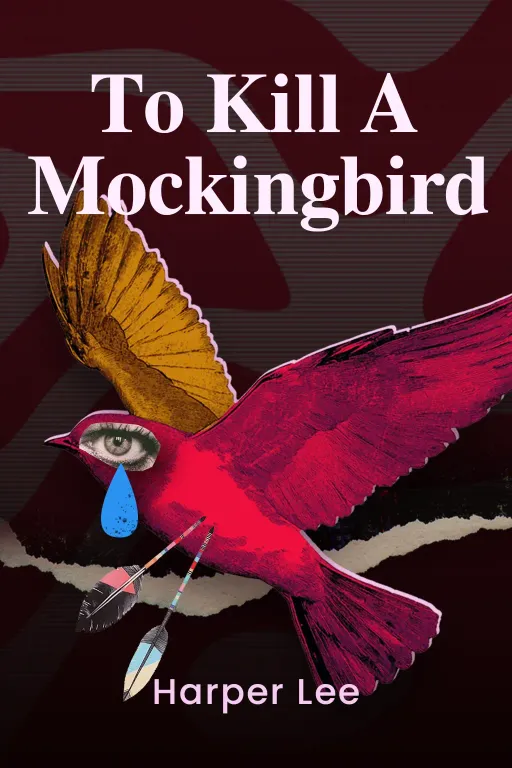
Nova: That is an incredibly powerful way to frame it, Solo. The pathogens of prejudice. It really is like a disease that compromises the immune system of the community. And the tragedy is that the victims of this disease are often the most vulnerable. The title of the book, To Kill a Mockingbird, comes from Atticus's advice to his children when they get air rifles. He tells them they can shoot all the bluejays they want, but it is a sin to kill a mockingbird because mockingbirds don't do one thing but make music for us to enjoy. They don't eat up people's gardens, they don't nest in corncribs, they only sing their hearts out. Tom Robinson is clearly one of these mockingbirds. He was only trying to help Mayella Ewell, who was incredibly lonely and isolated, and yet the system destroyed him for it.
Solo Marvin Kasongo: Exactly, Nova. Tom's tragedy is that his pure, uncomplicated empathy was weaponized against him. He testified that he felt sorry for Mayella, and in the highly racialized hierarchy of Maycomb, for a black man to feel sorry for a white woman was considered an unpardonable transgression. It violated the social code. This is where we see the intersection of social sustainability and leadership. A healthy society must protect its mockingbirds, its vulnerable populations, and those who contribute to the common good without causing harm. When a system fails to do this, it is not sustainable. It leads to a profound loss of human capital and social cohesion. After the trial, when Tom is shot and killed while trying to escape from prison, the local newspaper editor, Mr. Underwood, writes an editorial comparing Tom's death to the senseless slaughter of songbirds by hunters and children. He is diagnosing the moral failure of the town. He is saying that under the law, Tom might have been convicted, but in the court of human conscience, he was murdered by a systemic bias that was blind to the truth.
Nova: It is just devastating. And yet, in the midst of this darkness, we see these incredible glimmers of hope and leadership. Atticus Finch stands as this towering figure of moral integrity, but he is not the only one. We also have Miss Maudie, who points out that even though Atticus lost the trial, the jury stayed out for hours deliberating. In Maycomb, that was a massive step forward. Usually, a trial like that would be decided in minutes. So, the system is slowly, painfully changing. Solo, how do leaders navigate this slow pace of systemic change without losing hope or succumbing to cynicism?
Solo Marvin Kasongo: That is the ultimate leadership challenge, Nova. It is about managing the tension between the urgency of justice and the reality of human behavior. Atticus doesn't expect to change Maycomb overnight. He knows he is licked before he begins, to use his own definition of courage, but he sees it through anyway. He understands that every small action, every hour the jury spends deliberating, is a micro-step toward systemic health. In leadership, we have to play the long game. We have to build networks of growth, foster open dialogue, and remain committed to ethical principles even when the immediate outcomes are disappointing. It is about planting seeds for a harvest we might not live to see.
Nova: That is beautiful, Solo. Planting seeds for a harvest we might not live to see. That is the very essence of sustainable leadership. Let's transition now to our final segment, where we synthesize these profound insights and look at how we can apply them to our own lives.
Synthesis & Takeaways
SECTION
Nova: We have covered some incredible ground today, Solo. We have looked at courage as an internal battle of self-mastery, and we have diagnosed prejudice as a systemic disease that compromises our social institutions. As we wrap up this conversation, what is the primary diagnostic tool or leadership practice from To Kill a Mockingbird that our listeners can immediately implement in their own spheres of influence?
Solo Marvin Kasongo: I think the most powerful tool in the entire book is Atticus's famous advice to Scout: You never really understand a person until you consider things from his point of view, until you climb into his skin and walk around in it. In medicine, we call this clinical empathy. It is not just about feeling sorry for a patient; it is about accurately understanding their internal state, their history, and their barriers to health so we can provide the best possible care. In leadership and business strategy, it is the same. We have to step out of our own cognitive frameworks and truly understand the perspectives of our team members, our stakeholders, and even our opponents. If we want to build a more just, sustainable, and prosperous world, we have to start by walking in other people's shoes. It is the ultimate diagnostic tool for human connection.
Nova: I couldn't agree more, Solo. It is about moving from judgment to curiosity. Instead of asking, "Why is this person being so difficult?" we should ask, "What is it like to walk in their shoes right now?" And that brings us to the very end of the novel, where Scout finally escorts Boo Radley, their mysterious, reclusive neighbor who saved their lives, back to his home. She stands on the Radley porch, looking out at her neighborhood from his perspective, and she finally understands his entire life. She realizes that he was always there, watching over them, protecting them like a silent guardian. The mockingbird was never a stranger; he was a neighbor all along.
Solo Marvin Kasongo: That is a perfect full-circle moment, Nova. Scout's growth throughout the novel is a journey from childhood superstition to mature, empathetic leadership. She starts by being terrified of Boo Radley, making up wild stories about him, and ends by holding his hand and seeing the world through his eyes. That is the transition we all need to make. We have to move past our fears and our biases, and actively choose to see the humanity in the people we don't understand.
Nova: What a powerful note to end on. Solo, thank you so much for sharing your incredible analytical insights and your deep passion for leadership with us today. This has been an absolutely unforgettable conversation.
Solo Marvin Kasongo: Thank you, Nova. It has been an honor.
Nova: And to our listeners, we leave you with this question to ponder as you go about your week: Whose shoes do you need to step into today to diagnose a misunderstanding and build a bridge of connection? Until next time, keep listening, keep learning, and remember, it is always a beautiful day to make our world a little more empathetic. We will see you in the next episode!