Navigating Complex Interpersonal Systems
Golden Hook & Introduction
SECTION
Nova: Most people approach their closest relationships like they are trying to win a zero-sum game, which is the precise reason why intimacy so often feels like a battlefield.
Atlas: That is a brutal way to start, but I suspect you are right. We treat our partners or family members like opponents we need to outmaneuver instead of teammates we need to understand.
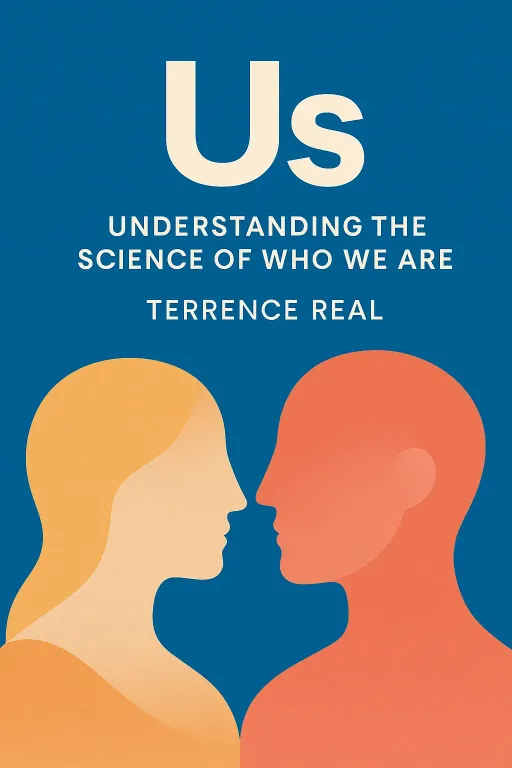
Nova: Exactly. And the cost of that approach is everything—connection, growth, and peace of mind. Today, we are looking at how to dismantle that defensive stance. We are diving into two essential texts: Us by Terrence Real and Toxic Parents by Susan Forward.
Atlas: These are heavy hitters. Terrence Real has been a pioneer in family therapy for decades, known for his work in shifting people from individualistic thinking to relational thinking. And Susan Forward is legendary for her clinical, no-nonsense approach to identifying the patterns that keep us stuck in old, painful dynamics.
Nova: Both authors provide a map for how to stop operating from a place of defense and start operating from a place of connection. We are going to break down how to stop being the victim of your own history and start being the architect of your own relationships.
The Survival Self vs. The Relational Self
SECTION
Atlas: Let’s start with Terrence Real’s concept of the relational self. I have heard him talk about the survival self versus the relational self. On the surface, that sounds like a bit of psychological jargon. What is the practical difference for someone who is just trying to get through a tense conversation with their partner?
Nova: Think of the survival self as your internal alarm system. It is the part of you that activates when you feel threatened, unheard, or judged. When you are in your survival self, you are focused on protection, often at the expense of connection. You might shut down, lash out, or try to control the narrative. The relational self, on the other hand, is the part of you that is capable of empathy, vulnerability, and collaborative problem-solving. It is the version of you that realizes you are on the same team.
Atlas: That makes sense, but here is the rub. When I am in the middle of a conflict, my survival self feels like it is the only thing keeping me safe. It feels like the most logical place to be. If I switch to the relational self, I feel exposed. I feel like I am lowering my shield while the other person is still holding a sword. How do you actually make that switch without feeling like you are losing the argument?
Nova: You are pointing to the core tension. The shift requires a fundamental reframe of what winning means. In your survival self, winning means proving the other person wrong or protecting your ego from discomfort. In your relational self, winning means preserving the connection. Real argues that we often sacrifice the relationship to win the argument. The breakthrough happens when you realize that being right is often the loneliest place to be.
Atlas: That is a tough pill to swallow. I am thinking about our listeners who are high performers—the architects and strategists. They are used to being right. They are used to having the data to support their position. If they walk into a relationship conflict and decide that being right is a liability, what do they replace it with?
Nova: They replace it with curiosity. The relational self asks, what is going on here that I am not seeing? Instead of looking at their partner’s behavior as an attack, they look at it as a symptom. They ask themselves, what pain or fear is driving this behavior? This is a system-level shift. You are moving from reacting to the content of the argument to understanding the structure of the interaction.
Atlas: I love that shift. It turns a conflict into a data-gathering exercise. It stops being personal and starts being analytical. But let’s talk about the difficulty of this. Even when I know I should be curious, my physiology takes over. My heart rate goes up, my blood pressure spikes. How does someone bridge that gap between the intellectual understanding of the relational self and the visceral reality of a heated moment?
Nova: You have to build a pause into your system. Real talks about the importance of regulation. You cannot access your relational self if your nervous system is hijacked. If you are in fight or flight, you are biologically incapable of empathy. The first step is acknowledging that you are triggered. You have to be able to say, I am currently in my survival self, and I need a moment to regulate before we continue this conversation.
Atlas: That is remarkably simple but incredibly hard to execute. It requires a level of self-awareness that most people don’t practice. It is about catching the trigger before it becomes a reaction.
Nova: Exactly. It is about self-regulation as a leadership skill, applied to your personal life. When you can identify that your survival self is taking the wheel, you regain the ability to choose your response. That is where your power lies.
Breaking Free from Toxic Dynamics
SECTION
Atlas: That brings us perfectly to the other side of the coin. We have talked about the relational self, but what if you are dealing with someone—like a parent—who is fundamentally committed to their own survival self? This is where Susan Forward’s work in Toxic Parents becomes so relevant. She isn’t talking about a bad day; she is talking about structural, long-term patterns of manipulation.
Nova: Forward’s work is essential because it provides a framework for reality testing. When you grow up in a system where manipulation is the norm, it becomes your baseline. You don't realize that the rules of engagement are skewed until you are an adult and you find yourself repeating those same patterns in your own life. Her clinical approach helps you see the mechanism of the dysfunction.
Atlas: I have seen this in so many people. They carry the blueprint of their childhood relationships into their professional and personal lives. They might be high-functioning, successful individuals, but they are still playing by the rules of a game they didn't write. Forward talks about the guilt that keeps people trapped. How do you break that cycle without blowing up the entire system?
Nova: The key is differentiation. You have to separate your identity from the system you were raised in. Forward outlines techniques to break free from self-sabotage, and it starts with acknowledging that your parents—or whoever the toxic influence is—are human beings with their own limitations. It is not about casting blame; it is about reclaiming your autonomy.
Atlas: That is a subtle but vital distinction. It is not about changing them. It is about changing how you engage with them. I imagine that for a lot of people, this feels like betrayal. You are taught that you owe your parents your allegiance, even if that allegiance comes at the cost of your own mental health.
Nova: That is the guilt trap. You feel like you are being ungrateful or harsh. But Forward makes it clear that you can be compassionate toward their limitations while still setting firm boundaries for your own life. You are not responsible for their happiness; you are responsible for your own integrity.
Atlas: How does that look in practice? Let’s say you have a parent who uses guilt as a primary communication tool. Every conversation involves a subtle jab or a reminder of everything they sacrificed for you. How do you apply a system-thinking approach to that?
Nova: You treat it like a data point. When the guilt trigger happens, you don't take the bait. You don't defend yourself, and you don't attack back. You observe the pattern. You say to yourself, oh, this is the guilt-trip loop again. And then you respond with a neutral, boundary-setting statement. You change the input, which forces the system to change the output.
Atlas: I am thinking about the "Pragmatic Catalyst" profile. They want to know the ROI. If I start setting these boundaries, the system is going to resist. The other person is going to push back harder because they are used to the old dynamic. What should listeners expect during that transition phase?
Nova: Resistance is a sign that you are doing it right. If the system didn't resist, it would mean you hadn't actually changed the dynamic. When you stop playing your part in the old dance, the other person will try to pull you back in. They might get angry, they might play the victim, or they might try to guilt you. Your job is to stay consistent. You are not trying to win the argument; you are trying to maintain the new boundary.
Atlas: That is a powerful reframing. You are not failing if they get upset; you are succeeding in establishing a new equilibrium. It’s like refactoring code. You are changing the underlying logic of the relationship. It might break a few things in the short term, but the long-term stability is much higher.
Systems Thinking & Personal Growth
SECTION
Nova: That is the perfect analogy. Relationships are dynamic systems. They are not static objects. If you change your input, the entire system has to recalibrate. That is why both Real and Forward are so valuable. Real gives you the tools to build a healthy system, and Forward gives you the tools to exit a toxic one.
Atlas: I think the real challenge for our listeners is the "Visionary Architect" aspect. They want to build a future, and these relationship patterns are essentially legacy code that is slowing down their progress. If you are trying to innovate in your career or your life, you cannot be bogged down by emotional loops that were installed twenty years ago.
Nova: Precisely. You cannot build a skyscraper on a cracked foundation. If your internal system is still running on survival mode, you are wasting an enormous amount of energy on defense. Imagine what you could accomplish if that energy was redirected into your creative work or your vision for the future.
Atlas: That is the growth perspective. It is not about fixing your parents or changing your partner; it is about liberating your own capacity. It is about becoming the person who can operate from a place of connection, regardless of what the other person is doing.
Nova: And that is the ultimate freedom. When you are no longer reactive, you become the primary driver of your life. You are no longer a passenger in the systems that were created for you.
Atlas: This brings us back to that deep question we started with. Are you operating from your survival self, or your relational self? It is a question that requires a daily check-in. It is not a one-time fix.
Nova: It is a practice. Every day, you have the opportunity to choose. You can choose the defense, or you can choose the connection. You can choose the old pattern, or you can choose the new boundary.
Synthesis & Takeaways
SECTION
Atlas: I think the most compelling takeaway here is that you have more control than you think. We often feel like victims of our relationships, but if we view them as systems, we can see the leverage points. We can see where we can make small, consistent changes that lead to massive shifts in the dynamic.
Nova: That is the beauty of it. You don't need the other person to change in order for you to change. You can shift the entire system by simply changing your position within it. That is the essence of the relational self. It is an act of courage to step out of the survival mode and into the vulnerability of connection.
Atlas: I want to leave our listeners with this: the next time you feel that spike of defensiveness, that urge to win, or that pull of old guilt, pause. Acknowledge the system you are in. And then, choose the path that leads to growth rather than the one that leads to protection.
Nova: That is the work of a lifetime, but it is also the work of this moment. Thank you for joining us as we navigated these complex systems. Remember, you are the architect of your own peace.
Atlas: And don't forget, the most successful people are the ones who have mastered the art of connection. If you are struggling with a specific relationship, take one small step today. Set one boundary. Ask one curious question. See what happens to the system.
Nova: We are rooting for you. This is Aibrary. Congratulations on your growth!