The Ultimate Pitch: Unlocking the Human Psyche with Nietzsche and Breuer
Golden Hook & Introduction
SECTION
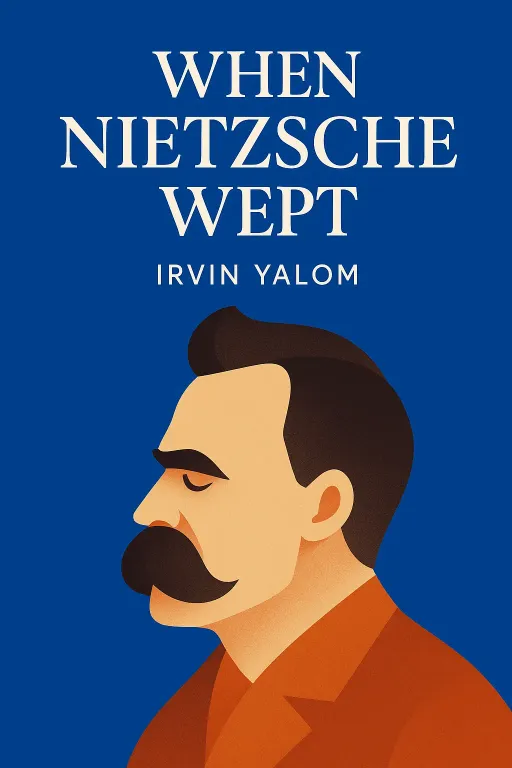
Atlas: Picture this. Vienna, 1882. A brilliant, fiercely proud philosopher is on the absolute brink of suicide, tormented by migraines and a broken heart. He refuses all help. Now, how do you save a man who doesn't want to be saved? You don't prescribe medicine. You pitch him a deal. You ask him to save instead. Today, we are tearing open Irvin Yalom's classic to dissect the ultimate masterclass in psychological persuasion and the birth of the "talking cure." We're tackling this from two massive angles. First, we'll look at how Dr. Josef Breuer and Friedrich Nietzsche accidentally invented modern therapy through a high-stakes game of intellectual chess. Then, we'll dive into Nietzsche's radical challenge to live authentically and "become who you are." I'm Atlas, and joining me is Flavia353, a sharp analytical thinker looking at how these deep psychological currents shape how we connect, communicate, and grow today. Flavia, welcome.
Flavia353: Thanks, Atlas. I am incredibly excited to be here. When you look at this book, it's easy to see it just as historical fiction, but as someone constantly looking at how people tick, how we build trust, and what drives our deepest decisions, this story is a goldmine. It’s all about the hidden barriers we build around ourselves and the sheer strategy it takes to break through them.
Atlas: Absolutely. No small talk, let's get straight to the meat of it. The setup here is legendary. Lou Salomé, this incredibly captivating, independent young woman, walks into Dr. Breuer's life with a desperate plea: save Nietzsche's life, but do it without him ever knowing you're treating his despair. Talk about a marketing nightmare, right? You have to sell a product to a customer who actively despises the category.
Flavia353: Exactly! It's the ultimate blind product test, but with life-or-death stakes. Nietzsche is a man who views any offer of help as a power play, an attempt to make him weak. So Breuer can't just show up as the savior doctor. He has to completely flip the script. He has to position himself as the one in need. That is pure strategic positioning.
Deep Dive into Core Topic 1
SECTION
Atlas: Let's dissect that first core topic: the breakthrough of the "talking cure" and the strategy of mutual vulnerability. To understand why this was so difficult, we have to look at the case of Bertha Pappenheim, famously known in psychological history as Anna O. Breuer had treated her for hysteria using what she called "chimney sweeping"—basically, letting her talk through her symptoms in a light trance until she traced them back to their traumatic origins. It worked, but it ended in absolute disaster. Breuer got emotionally entangled, Bertha claimed she was pregnant with his child, and Breuer fled the case in shame. He was terrified of ever using this "talking cure" again.
Flavia353: It’s fascinating because Breuer’s fear is so relatable. He had this powerful tool, but because of the lack of boundaries, it blew up his personal life. So when Lou Salomé asks him to use it on Nietzsche, Breuer is fighting his own massive internal resistance. He’s on vacation in Venice just trying to escape the ghost of Bertha. But Lou is incredibly persuasive. She knows Breuer’s brother-in-law, she knows about the Bertha case, and she appeals to his intellectual vanity. She tells him, "The future of German philosophy hangs in the balance."
Atlas: She laid down the gauntlet! And Breuer, despite his hesitation, is intrigued. He meets Nietzsche, and the clash of titans begins. Nietzsche is a physical wreck—blindness threatening, stomach in knots, popping massive doses of chloral for insomnia. Yet, when Breuer tries to probe his mind, Nietzsche shuts him down instantly. He says, "I have a why of living and can put up with any how." He basically tells Breuer, "Treat my body, leave my soul alone."
Flavia353: This is where the power dynamics get so interesting. Nietzsche has this brilliant concept of the "footbridge." He tells a story about two people approaching each other on a narrow bridge. If one person invites the other to cross, the other refuses because crossing would look like submission. In Nietzsche's mind, accepting help is a submission of power. So, how does Breuer get him to cross the bridge? He doesn't pull him. He walks to the middle and says, "I am drowning in my own despair. I need your philosophy to save me."
Atlas: Think about the genius of that move! Breuer admits his own misery. He confesses his obsession with Bertha, his fear of aging, his feeling that his successful life is a gilded cage. He says, "I will treat your migraines, but you must treat my soul." He reframes the entire relationship from doctor-patient to a professional exchange of equals.
Flavia353: It’s a brilliant pivot. By showing his own cards first, Breuer removes the threat of intellectual dominance. He creates a safe space for Nietzsche to step into the role of the teacher, which is exactly where Nietzsche feels powerful and secure. But what’s wild is that Breuer’s despair isn't fake. To make the pitch believable, he actually has to tell the truth. He has to expose his real vulnerabilities.
Atlas: Right! He couldn't just act. He had to actually bleed on the page. And Nietzsche, who is incredibly sensitive to dishonesty, detects the authenticity in Breuer's confession. They begin their sessions in Room 13 of the Lauzon Clinic. But the dynamic is highly unstable. Nietzsche is constantly analyzing Breuer’s problems, categorizing them in his notebook like a scientist dissecting a specimen. He wants to treat Breuer’s obsession with Bertha as a mere distraction from deeper existential truths.
Flavia353: Nietzsche’s analysis of Breuer's obsession is incredibly sharp. He tells Breuer that he isn't actually in love with Bertha; he is in love with itself. He says, "We are more in love with desire than with the desired." That blew my mind. From a behavioral perspective, it’s the ultimate truth about human motivation. We chase the anticipation, the magic, the escape from our mundane reality, rather than the actual person or object.
Atlas: Yes! Nietzsche calls Bertha a "messenger." He tells Breuer that his obsession is just a screen to hide his terror of aging, death, and insignificance. By focusing all his anxiety on this one young woman, Breuer doesn't have to face the cold, hard reality of his own mortality. It’s a brilliant psychological defense mechanism.
Flavia353: It really is. And Nietzsche doesn't let him off the hook. He tells him, "If you kill God, you must also leave the shelter of the temple." You can't claim to want intellectual freedom and truth, and then whine because you miss the cozy, comfortable illusions of the believer. You have to face the abyss.
Deep Dive into Core Topic 2
SECTION
Atlas: And that brings us perfectly to our second core topic: the philosophy of self-liberation and the terrifying concept of "dying at the right time." This is where the book shifts from a psychological thriller to a deep existential battle. Nietzsche introduces Breuer to his heaviest ideas, starting with the thought experiment of the Eternal Recurrence. Imagine a demon creeping into your loneliest hour and telling you that this life, with every pain, joy, and sigh, will have to be lived by you over and over again, in the exact same sequence, for eternity. How would you react? Would you fall to the ground and curse the demon, or would you celebrate it as the ultimate blessing?
Flavia353: That thought experiment is the ultimate stress test for a life. When I first read that, I had to stop and really think. If you are living a life of default choices, a life dictated by social decorum—which Breuer was, living in the high-society medical bourgeoisie of Vienna—the idea of repeating that forever is a literal nightmare. It forces you to ask: Am I actively choosing my life, or is my life living me?
Atlas: "Is my life living me?" That is the exact question that breaks Breuer. He realizes he has done everything "right." He married the wealthy Mathilde, built a massive practice, won scientific acclaim, but he did it all because it was expected of him. He feels like a prisoner of his own success. He is terrified of death because he feels he hasn't actually lived his own life.
Flavia353: And Nietzsche’s response to this is so radical. He tells Breuer, "Die at the right time!" Which doesn't mean commit suicide. It means consummate your life first. Live fully, choose your destiny, so that when death comes, there is nothing left to burn. He says, "Many die too late, and some die too early. But the doctrine of dying at the right time is: die at the right time!"
Atlas: But look at how Breuer tests this. He undergoes this incredible, high-stakes hypnotic experiment with Freud. He decides to actually "choose" his freedom. Under hypnosis, he releases his research pigeons—which is this beautiful, heartbreaking metaphor for letting go of his scientific ambitions. He says goodbye to his family, packs his bags, and leaves Vienna. He goes to Switzerland to see Bertha at the sanatorium, thinking this is his ultimate act of liberation.
Flavia353: This is the turning point of the entire narrative. He gets to the sanatorium, looks through the window, and what does he see? He sees Bertha strolling in the garden with her new doctor, repeating the exact same flirtatious, helpless routine she used on him. She even calls the new doctor "little father," the exact same pet name she had for Breuer.
Atlas: Talk about a brutal reality check! The illusion is completely shattered. Breuer realizes he wasn't her savior, and she wasn't his unique muse. He was just a replaceable part in her psychological drama. And then he goes to see his former nurse, Eva, thinking she will run away with him, and she basically tells him he’s delusional and that she has moved on with her life.
Flavia353: It’s a devastating realization of self-deception. Breuer thought his pursuit of Bertha was this noble, romantic quest for freedom, but it was actually just a desperate, selfish flight from his own fear of aging. He realizes that his "freedom" is empty. He is cold, lonely, and completely disconnected. He wakes up from the hypnosis gasping for air, calling out for Mathilde.
Atlas: He chose the wrong enemy! He thought his wife and his responsibilities were his prison, but the real enemy was time, aging, and his own refusal to accept his choices. Once he realizes this, he can finally go home. He doesn't return to Mathilde out of defeat or duty; he returns because he actively her. He embraces his fate..
Flavia353: That is the true meaning of self-liberation. It’s not about running away to a fantasy life; it’s about having the courage to choose the life you are already living. But the story doesn't end there. The breakthrough has to go both ways. Nietzsche has been acting as the detached, invulnerable guide this whole time, but Breuer’s transformation forces Nietzsche to face his own deep, dark secrets.
Atlas: The tables turn! Breuer confesses the truth. He admits that the whole "exchange" was a setup orchestrated by Lou Salomé. Nietzsche is absolutely shattered. His worst fear has come true: he has been manipulated, treated as a patient, and pitied. The betrayal cuts straight to his core. He packs his bags, ready to flee in a fit of rage and despair.
Flavia353: This is the most intense moment of the book. Nietzsche is at his absolute limit. But instead of letting him run, Breuer holds his ground. He doesn't apologize for caring. He tells Nietzsche, "Yes, it started as a trick, but the friendship we built, the tears we shared, that was real." He challenges Nietzsche to accept that he is human, that he needs connection, and that being cared for is not a weakness.
Atlas: And Nietzsche breaks down. The great philosopher of the Will to Power, the man who claimed to be made of stone, actually weeps. He confesses his agonizing loneliness, his obsession with Lou Salomé, and how he has been unable to dislodge her from his mind. It is a massive, cathartic release. By finally allowing himself to be vulnerable, to be a friend, Nietzsche experiences the very "talking cure" he was trying to teach Breuer.
Flavia353: It’s incredibly beautiful. They both find their own version of recovery. Breuer finds peace in his chosen life, and Nietzsche finds the strength to face his solitude, not as a defensive shield, but as a conscious choice for his work. They part as true equals, having saved each other.
Synthesis & Takeaways
SECTION
Atlas: What a journey. Let's synthesize this. We've looked at the birth of the talking cure through mutual vulnerability, and we've explored the terrifying but liberating challenge of —loving your fate and choosing your life. Flavia, when you look at this entire narrative, what is the ultimate takeaway for someone looking to stay competitive and impactful in today's world?
Flavia353: For me, it all comes down to the power of authentic connection and the danger of self-deception. In a world where we are constantly trying to project this perfect, invulnerable image—whether it's personal branding, marketing, or professional networking—we build these massive intellectual fortresses. But real influence, real trust, only happens when we are willing to step onto the "footbridge" and show our real, authentic selves. You can't persuade someone if you aren't willing to be moved yourself.
Atlas: Spot on. Do not let your life live you. Command yourself, or be commanded by others. Here is our challenge to you, the listener: Take a hard look at your current path. If a demon told you that you had to live this exact day over and over again for eternity, would you welcome it? If not, what is one default choice you are going to change today to start actively choosing your destiny?
Flavia353: Live in such a way that you love the idea of living it again. Thank you, Atlas. This was an incredible conversation.
Atlas: Thank you, Flavia. Now go out there, break down those barriers, and become who you are. Until next time.