

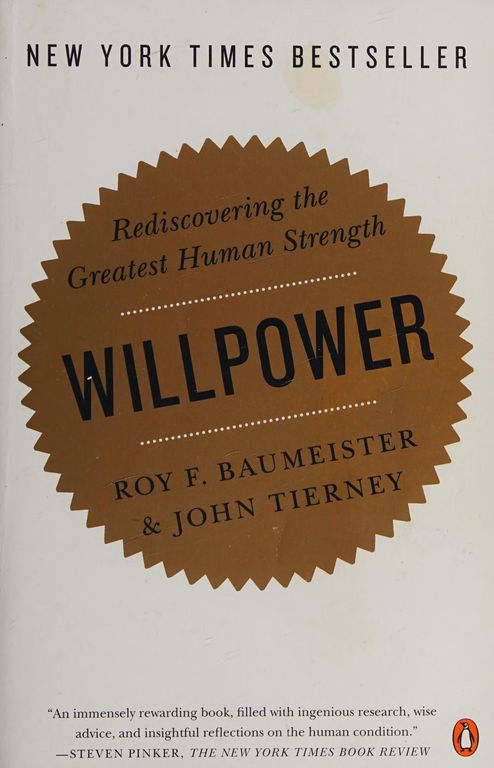
Willpower
Rediscovering the Greatest Human Strength
Introduction
Nova: Picture this: you walk into a lab at Case Western Reserve University. On a table, there are two bowls. One is filled with freshly baked chocolate chip cookies, still warm, the aroma filling the room. The other bowl holds raw radishes. You're told you can eat from only one bowl. Welcome to the experiment that launched a revolution in how we understand self-control.
Nova: : Wait, so researchers were actually torturing people with cookie aromas? That's both cruel and kind of brilliant. But what does a radish versus cookie choice have to do with willpower?
Nova: Everything, actually. That experiment, conducted by Roy Baumeister and his team, revealed something startling. The students who had to resist the cookies and eat only radishes gave up on a subsequent puzzle task in about eight minutes. The lucky ones who got to eat the cookies? They persevered for nearly nineteen minutes. The radish group had depleted their willpower just by resisting temptation.
Nova: : So willpower is like a battery that runs down? That explains why after a long day of being disciplined at work, I demolish a bag of chips at 10 p. m.
Nova: Exactly. And that's the central metaphor of the book Willpower: Rediscovering the Greatest Human Strength, written by Roy Baumeister, one of the world's most cited psychologists, and New York Times science writer John Tierney. They argue that willpower isn't a virtue you're born with or without. It's a biological resource, like a muscle, that can be strengthened, depleted, and managed.
Nova: : A muscle you can train? Now you have my attention. Let's dig into this.
Ego Depletion and the Glucose Connection
The Muscle of the Mind
Nova: Let's start with the book's foundational idea: ego depletion. Baumeister discovered that willpower draws from a single, limited reservoir. Whether you're resisting cookies, suppressing emotions, making tough decisions, or forcing yourself to focus on a boring task, you're drawing from the same well.
Nova: : So it's not that I have separate tanks for resisting junk food, controlling my temper, and finishing my expense reports. It's all one tank?
Nova: One tank. And here's where it gets fascinating. Baumeister found that the physical fuel for that tank is glucose. In study after study, when people's blood glucose dropped after acts of self-control, their willpower suffered. But give them a glass of lemonade with real sugar, and their self-control bounced right back. Diet lemonade with artificial sweetener? No effect.
Nova: : Hold on. Are you telling me that willpower literally runs on sugar? That sounds like something a candy company would fund.
Nova: I had the same skepticism, and Baumeister addresses this. He's not saying you should guzzle soda all day. The point is that the brain's executive functions are extraordinarily energy-hungry. The prefrontal cortex, which handles self-control, consumes a disproportionate amount of glucose. When glucose is low, the brain starts cutting back on self-control first because it's metabolically expensive.
Nova: : So the brain is like a budget manager during a recession. It keeps the lights on but cancels the self-control department's funding.
Nova: That's a perfect analogy. And this explains why diets often fail. When you're restricting calories, your glucose levels drop, which weakens the very willpower you need to stick to the diet. It's a cruel biological trap. Baumeister recommends eating foods with a low glycemic index that provide steady glucose, like nuts, vegetables, and whole grains, rather than the sugar spikes and crashes from processed foods.
Nova: : That reframes everything. It's not moral weakness. It's biology. But you mentioned willpower is like a muscle. Can you actually strengthen it?
Nova: Yes, and this is one of the most hopeful findings in the book. Baumeister's research showed that practicing small acts of self-control, like improving your posture for two weeks or using your non-dominant hand for daily tasks, actually increased overall willpower. It's like doing bicep curls for your self-control. The key is consistency, not intensity. Small, repeated exercises build the muscle over time.
Why Judges Grant More Parole in the Morning
Decision Fatigue and the Power of Automation
Nova: Here's a statistic from the book that stopped me cold. Researchers analyzed over a thousand parole decisions made by Israeli judges. They found that prisoners who appeared early in the morning received parole about 65 percent of the time. Those who appeared late in the day? Nearly zero percent.
Nova: : Wait, so justice literally depends on what time the judge had lunch?
Nova: Essentially, yes. As the day wore on, the judges experienced decision fatigue. Making ruling after ruling depleted their willpower, and the easiest, safest decision became simply saying no. After a meal break, when glucose was restored, the grant rate jumped back up to around 65 percent.
Nova: : That's terrifying and also incredibly validating. I've always felt like my best decisions happen before noon. Now I know why.
Nova: Baumeister and Tierney argue that this is why highly successful people often seem to have boring, routinized lives. Barack Obama famously wore only gray or blue suits. Mark Zuckerberg wears the same gray t-shirt every day. Steve Jobs had his black turtleneck. They weren't making fashion statements. They were eliminating decisions.
Nova: : They were preserving their willpower budget for things that actually mattered.
Nova: Exactly. Every decision, no matter how trivial, draws from the same reservoir. What to wear, what to eat for breakfast, which route to take to work. These micro-decisions add up. By automating the small stuff, you free up willpower for the big stuff. The book calls this the key to effective self-control: not heroic resistance in the moment, but smart structuring of your environment so you don't have to resist.
Nova: : So the secret to willpower isn't more willpower. It's needing less of it.
Nova: That's the paradox at the heart of the book. The people with the best self-control aren't constantly exercising it. They've set up their lives so they rarely need to. They've made the desired behavior the default behavior.
The Odysseus Strategy for Modern Life
Precommitment and Bright Lines
Nova: One of my favorite concepts from the book is precommitment. Baumeister uses the myth of Odysseus. He knew he wouldn't be able to resist the Sirens' song, so he had his crew tie him to the mast before they came within earshot. He made the right decision in advance, when his willpower was intact, knowing his future self would be weak.
Nova: : So instead of trusting myself to resist the siren song of Netflix at midnight, I should tie myself to the mast somehow.
Nova: Exactly. The book describes modern versions of this. There's a website called StickK where you put money on the line. If you fail to meet your goal, the money goes to a charity you hate, or even to an anti-charity, an organization you despise. The threat of funding something you loathe is a powerful precommitment.
Nova: : That's diabolical. I love it. What about bright lines? That term keeps coming up.
Nova: A bright line is a clear, unambiguous rule that leaves no room for negotiation. Don't drink alcohol is a bright line. Drink moderately is not, because what counts as moderate? Your depleted brain at 11 p. m. will always find a way to rationalize just one more. The book cites research showing that people who set absolute rules do far better than those who set flexible limits.
Nova: : That explains why moderate drinkers often struggle more than teetotalers. The teetotaler never has to negotiate with themselves.
Nova: Precisely. And this connects to another key finding: never try to break two habits at once. Because willpower is a single resource, tackling smoking and dieting simultaneously, for instance, almost guarantees failure on both fronts. The book recommends focusing on one change at a time, establishing it as a habit that no longer requires willpower, and only then moving to the next.
Nova: : So the New Year's resolution approach of transforming your entire life on January 1st is basically designed to fail.
Nova: It's a recipe for ego depletion on an epic scale. Baumeister would say: pick one thing. Make it a bright line. Precommit. Track it. And only after it's automatic, move on.
Why Unfinished Tasks Haunt Your Willpower
The Zeigarnik Effect and the Power of a Plan
Nova: Let me tell you about a waitress in 1920s Vienna. A psychologist named Bluma Zeigarnik noticed something remarkable. This waitress could perfectly remember complex, unpaid orders for multiple tables. But the moment the bill was paid? The details vanished from her memory completely.
Nova: : So unfinished business sticks in the brain like a splinter.
Nova: Exactly. The Zeigarnik effect is the mind's tendency to keep unfinished tasks in active memory, creating a low-level hum of anxiety that drains willpower. Your brain keeps nudging you: don't forget about that email, don't forget about that phone call, don't forget about that project. This constant background noise depletes your self-control reserves.
Nova: : That explains why I feel mentally exhausted even when I haven't done anything. My brain is running a thousand open tabs.
Nova: And here's the solution Baumeister offers, based on research by Peter Gollwitzer. You don't actually need to finish the task to quiet the Zeigarnik effect. You just need a specific plan. Gollwitzer found that making a detailed implementation intention, a plan that specifies exactly when, where, and how you'll do something, is enough to offload the task from your mind.
Nova: : So instead of I need to exercise more, it's I will go for a 30-minute run at 7 a. m. on Monday, Wednesday, and Friday, starting from my front door.
Nova: That's it. The specificity is what does the work. Your brain treats the plan as a placeholder for the action. The mental nagging stops because the task has been filed properly. The book reports that people who use implementation intentions are dramatically more likely to follow through, sometimes doubling or tripling their success rates.
Nova: : That's such a simple intervention. Why doesn't everyone do this?
Nova: Because it feels too simple. People want willpower to be about heroic effort and dramatic transformation. But Baumeister's research consistently shows that the most effective strategies are boring, systematic, and unglamorous. Plan ahead. Track your behavior. Set bright lines. Don't rely on willpower in the moment. Structure your environment so the right choice is the easy choice.
What Gets Measured Gets Managed
Self-Monitoring and the Scale That Changed Everything
Nova: There's a story in the book about the Quantified Self movement that I find fascinating. Baumeister and Tierney describe how simply tracking a behavior changes it. When people weigh themselves daily, they lose more weight. When they track their spending, they save more money. When they log their study hours, their grades improve.
Nova: : So the act of measurement itself is an intervention. But why?
Nova: Because self-awareness is the foundation of self-control. Much of our bad behavior happens on autopilot. We don't notice we've eaten half a bag of chips until our hand hits the bottom of the bag. Tracking breaks the autopilot. It forces you to confront the gap between your intentions and your actions.
Nova: : That gap is painful. I think that's why people avoid tracking. They don't want to see the evidence.
Nova: That's exactly right, and it's why tracking works. The discomfort of seeing the data motivates change. Baumeister cites research on one of the simplest and most effective self-control tools ever invented: the bathroom scale. People who weigh themselves every day maintain weight loss far better than those who avoid the scale. The feedback loop is immediate and impossible to ignore.
Nova: : But doesn't tracking itself require willpower? That seems like a catch-22.
Nova: It does, which is why the book recommends making tracking as effortless as possible. Use apps. Automate it. The less friction between you and the data, the better. And here's a counterintuitive finding: tracking works even when you're not actively trying to change. The mere act of paying attention shifts behavior.
Nova: : So if I just start writing down everything I eat, without even setting a calorie goal, I'll probably eat better?
Nova: Research says yes. The awareness alone is enough to trigger better choices. It's like turning on the lights in a room where you've been stumbling around in the dark. You don't need someone to tell you to stop tripping over things. You just need to see.
Parenting, Aging, and the Marshmallow Test Revisited
Willpower Across a Lifetime
Nova: Let's talk about one of the most famous studies in psychology: the marshmallow test. Walter Mischel put preschoolers in a room with a marshmallow and told them if they could wait fifteen minutes without eating it, they'd get two marshmallows. The kids who waited longer went on to have higher SAT scores, better social skills, and even lower BMIs decades later.
Nova: : So self-control at age four predicts your entire life trajectory? That's kind of depressing if you were a one-marshmallow kid.
Nova: But here's what Baumeister emphasizes: the marshmallow test isn't destiny. The kids who succeeded weren't just born with more willpower. They used strategies. They covered their eyes, sang songs, turned away from the marshmallow. They instinctively knew how to manage their attention. And those strategies can be taught.
Nova: : So parents can actually train their kids in willpower?
Nova: Yes, and the book offers specific guidance. The most important thing parents can do is provide consistent, predictable structure. When rules are enforced reliably, children internalize them. They develop what Baumeister calls an internal monitoring system. But inconsistent parenting, where rules change depending on the parent's mood, teaches children that self-control doesn't matter because outcomes are arbitrary.
Nova: : That's a heavy responsibility. What about at the other end of life? Does willpower decline with age?
Nova: Surprisingly, no. Baumeister's research found that older adults actually have better self-control than younger adults on average. They're better at regulating emotions, sticking to routines, and resisting temptation. The book suggests this may be because they've had decades of practice, and because they've learned to structure their lives to minimize willpower demands.
Nova: : So there's hope. Willpower can improve across a lifetime if you work the right strategies.
Nova: That's the most important message of the book. Willpower isn't a fixed trait. It's a skill, a resource, and a set of strategies that anyone can learn. The people who seem to have iron self-control aren't morally superior. They've just gotten better at managing their one precious reservoir of willpower.
Conclusion
Nova: So let's bring this together. Roy Baumeister and John Tierney's Willpower gives us a science-based framework for understanding self-control. First, willpower is a single, limited resource fueled by glucose. It depletes with use and restores with rest and proper nutrition.
Nova: : Second, willpower is like a muscle. You can strengthen it through small, consistent exercises, but you can also overtax it by trying to do too much at once.
Nova: Third, the most effective self-control strategy isn't heroic resistance in the moment. It's structuring your life so you don't need to resist. Precommitment, bright lines, implementation intentions, and automation are your best tools.
Nova: : Fourth, self-monitoring is powerful. Simply tracking your behavior changes it, because awareness is the foundation of control.
Nova: And finally, willpower can improve across a lifetime. It's not a fixed trait. The strategies that work can be learned, practiced, and mastered by anyone.
Nova: : The big takeaway for me is that beating yourself up for weak willpower is not only unkind, it's unscientific. Willpower isn't about character. It's about biology and strategy.
Nova: Exactly. The question isn't how can I have more willpower? It's how can I need less of it? How can I set up my environment, my routines, and my commitments so that the right choice is the default choice? That's the real secret Baumeister spent decades uncovering.
Nova: : So tonight, instead of relying on willpower to resist late-night snacking, maybe I'll just not buy the snacks in the first place.
Nova: Now you're thinking like a willpower scientist. Precommitment in action. This is Aibrary. Congratulations on your growth!