

Relationship & Family
The Body Keeps the Score
Bessel van der Kolk
"The Body Keeps the Score" is a landmark work that revolutionized the understanding of trauma treatment. Written by Dr. Bessel van der Kolk, one of the world’s leading experts on traumatic stress, the book challenges the traditional view that trauma is merely a "mental" problem best treated by talk therapy or medication alone. Van der Kolk presents decades of research to prove his central thesis: trauma literally reshapes both the body and the brain. It alters the brain's wiring—specifically areas dedicated to pleasure, engagement, control, and trust—leaving survivors stuck in a state of hypervigilance. The "rational brain" often cannot talk the "emotional brain" out of its panic because the body itself is holding onto the visceral memory of the event. Crucially, the book offers a hopeful roadmap for recovery. Van der Kolk argues that to heal, we must "re-own" our bodies. He explores innovative treatments that activate the brain's natural neuroplasticity, including neurofeedback, meditation, theater, and yoga. By moving beyond the "talking cure" to therapies that integrate the body, this book provides a compassionate, scientifically rigorous guide to reclaiming one's life.
The Extended Mind
Annie Murphy Paul
"The Extended Mind" is a transformative guide to cognition that shatters the age-old assumption that thinking happens only within the confines of our skulls. Science writer Annie Murphy Paul draws on cutting-edge research in neuroscience and psychology to argue that the brain is not an isolated computer, but a biological organ evolved to think with the world around it. Paul introduces the concept of "thinking outside the brain" through three key pillars: embodied cognition (thinking with our bodies, sensations, and gestures), situated cognition (thinking with the spaces and environments we inhabit), and distributed cognition (thinking through our relationships and social networks). The book critiques our modern obsession with "brainbound" productivity—forcing ourselves to sit still and stare at screens—and offers a liberating alternative. By intentionally managing our physical movements, workspaces, and social interactions, Paul shows how we can offload mental processing to the world around us. The Extended Mind provides a practical framework for anyone looking to harness these external resources to become smarter, more creative, and more resilient.
Scarcity Brain
Michael Easter
In a world of overwhelming abundance, why do we constantly crave more, leading to detrimental behaviors like overeating, overbuying, and addiction? Michael Easter, a science journalist, embarks on a global journey to uncover the ancient human behavioral system—the 'scarcity brain'—that once ensured survival but now traps us in a 'scarcity loop.' Through compelling research and real-world examples, from the psychology of slot machines in Las Vegas to drug enforcement in Iraq, this book reveals the three-part mechanism driving our insatiable desires and offers profound insights into how to break free from the cycle of overconsumption to find true satisfaction and unlock our full potential.
Thinking, Fast and Slow
Daniel Kahneman
"Thinking, Fast and Slow" is the intellectual tour de force by Daniel Kahneman, a psychologist who won the Nobel Prize in Economics for his work on decision-making. The book summarizes decades of research to present a unified theory of how the human mind works, challenging the classical economic view that humans are rational actors. Kahneman divides our mental life into two distinct modes: System 1 is fast, intuitive, and emotional; it operates automatically and with little effort (like recognizing a face). System 2 is slower, more deliberative, and logical; it requires conscious effort (like solving a math problem). The central drama of the book is the interaction between these two systems. Kahneman reveals that while System 1 is efficient, it is prone to systematic errors known as cognitive biases—such as the anchoring effect, overconfidence, and loss aversion. System 2 is supposed to monitor these, but it is often lazy and defers to System 1. Rich with examples and puzzles, Thinking, Fast and Slow fundamentally changes how we perceive our own judgments, offering profound insights into corporate strategies, public policy, and our own happiness.
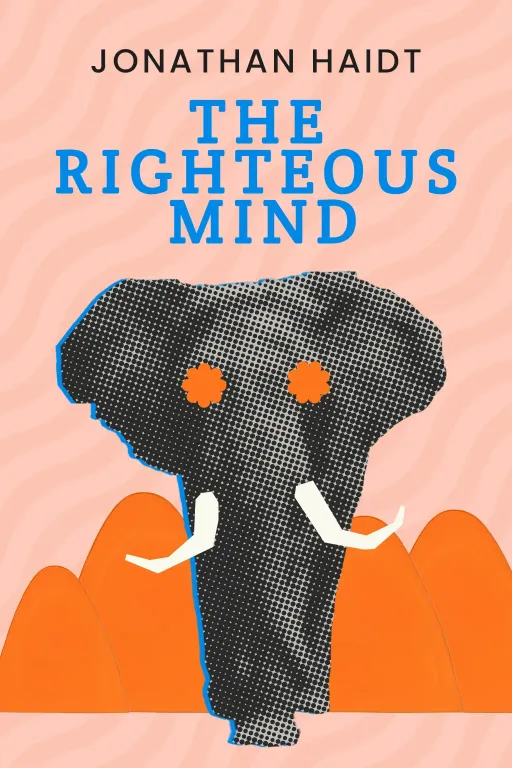
The Righteous Mind
Jonathan Haidt
An exploration of the human mind's moral foundations and how they shape our political and religious beliefs. It delves into why we are so divided and how understanding our moral psychology can help bridge these divides.
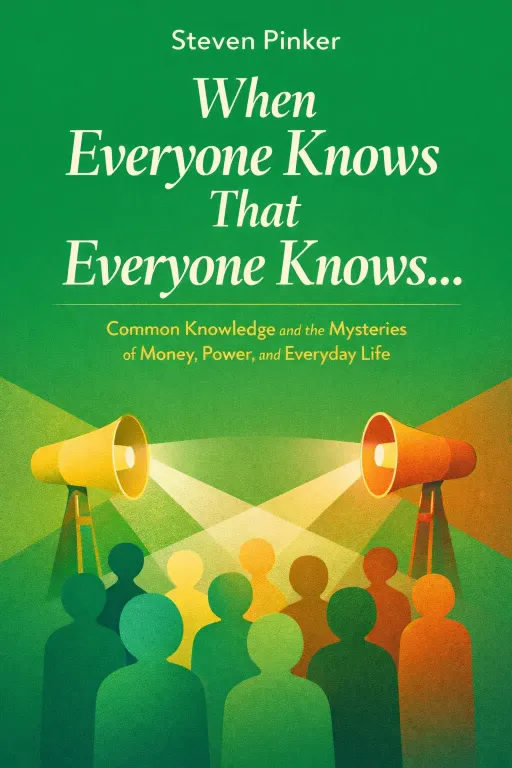
When Everyone Knows and Everyone Knows…
Steven Pinker
"When Everyone Knows and Everyone Knows…" delves into the fascinating concept of common knowledge and its profound impact on human behavior and social dynamics. Drawing from cognitive science, social psychology, game theory, and linguistics, the book explores how shared knowledge shapes everything from our personal relationships to societal structures and even digital phenomena. It examines the paradoxical implications of common knowledge, challenging common sense and revealing the intricate layers of thought involved in coordination and communication. Readers will discover how common knowledge influences a wide range of social interactions, including cooperation, conflict, and emotional expression. Through coordination games, real-world examples, and analyses of social relationships, the book illuminates the subtle mechanisms by which we navigate complex social landscapes. It explores how conspicuous emotional expressions, indirect speech, and strategic communication contribute to the establishment and manipulation of common knowledge, offering insights into the hidden dynamics that govern our interactions. Ultimately, "When Everyone Knows and Everyone Knows…" provides a compelling framework for understanding the underlying forces that shape human behavior and social order. By exploring the cognitive processes and social signals involved in creating and maintaining common knowledge, the book offers readers a new perspective on the complexities of human interaction and the power of shared understanding.
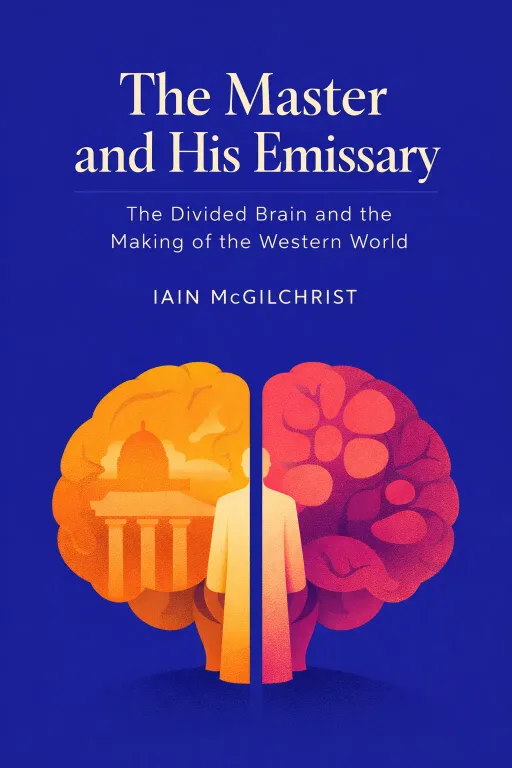
The Master and His Emissary
Iain McGilchrist
Why is man apparently intent on destroying the world we inhabit? And what can we do about it? Drawing on literature, painting, philosophy, music and history, Dr McGilchrist challenges the widespread myth that the 'left-brain' is analytically superior, 'the right-brain' intuitive and emotional, and reveals that each hemisphere has its own distinct world view. The left hemisphere, analytical and narrow, is designed for manipulation of the world; the right, broader and integrative, for understanding it. Yet over the past several centuries, the balance between them has been upset, resulting in a society dominated by the left hemisphere's utilitarian outlook. In "The Master and His Emissary", Iain McGilchrist argues that the left hemisphere, the 'emissary', has usurped the right hemisphere, the 'master', and that this imbalance has profound consequences for Western culture. The left hemisphere is detail-oriented, prefers mechanisms to living things, and is inclined to self-interest, while the right hemisphere has greater breadth, flexibility, and generosity. This division helps explain the origins of music and language, and casts new light on the history of philosophy, as well as on some mental illnesses. This pioneering account sets out to understand the structure of the human brain – the place where mind meets matter. Until recently, the left hemisphere of our brain has been seen as the ‘rational’ side, the superior partner to the right. But is this distinction true? Drawing on a vast body of experimental research, McGilchrist argues while our left brain makes for a wonderful servant, it is a very poor master. As he shows, it is the right side which is the more reliable and insightful. Without it, our world would be mechanistic – stripped of depth, colour and value.
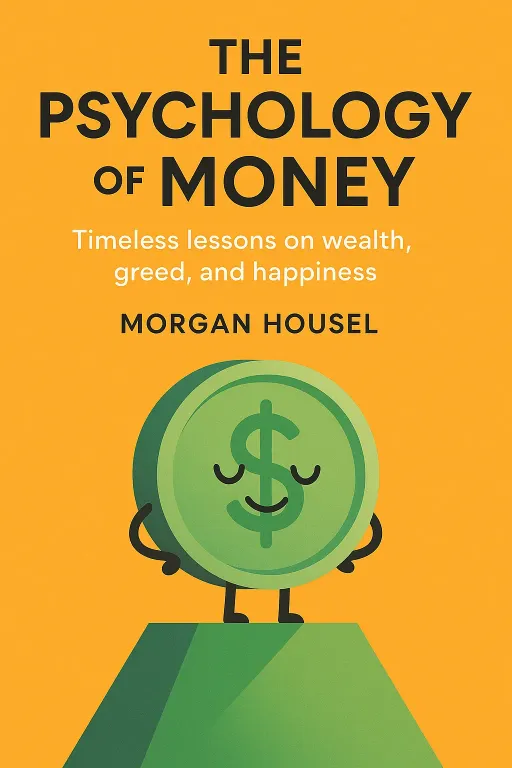
The Psychology of Money
Morgan Housel
"The Psychology of Money" is a collection of nineteen short stories exploring the strange ways people think about money. Written by Morgan Housel, a partner at The Collaborative Fund, the book departs from the standard investment advice that treats finance as a math-based field. Housel argues that financial success is not a hard science. It is a soft skill, where how you behave is more important than what you know. The central premise is that we do not make financial decisions on a spreadsheet. We make them at the dinner table, where personal history, unique worldviews, ego, pride, marketing, and odd incentives are scrambled together. Housel illustrates that two people can see the exact same world yet draw completely different conclusions based on when and where they were born. A key theme in the book is the distinction between getting rich and staying rich. Getting rich requires taking risks, being optimistic, and putting yourself out there. Staying rich requires the exact opposite. It requires fear that what you have made can be taken away from you. It requires frugality and an acceptance that at least some of your success is attributable to luck rather than skill. Housel ultimately posits that the highest dividend money pays is not luxury goods, but control over your time.