

Technology & Science
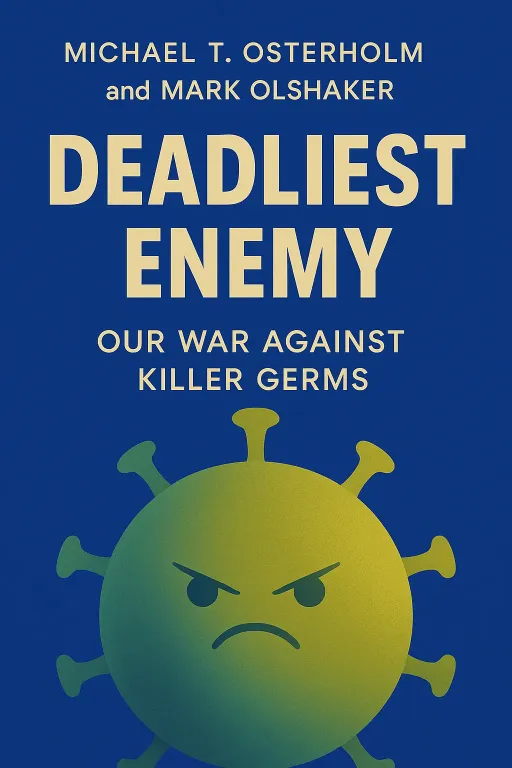
Deadliest Enemy
Michael T. Osterholm
An alarming look at the threats posed by infectious diseases and what we can do to prevent future pandemics. From AIDS to Zika, explore the history and science behind deadly outbreaks and discover the steps we must take to protect ourselves from our deadliest enemy.
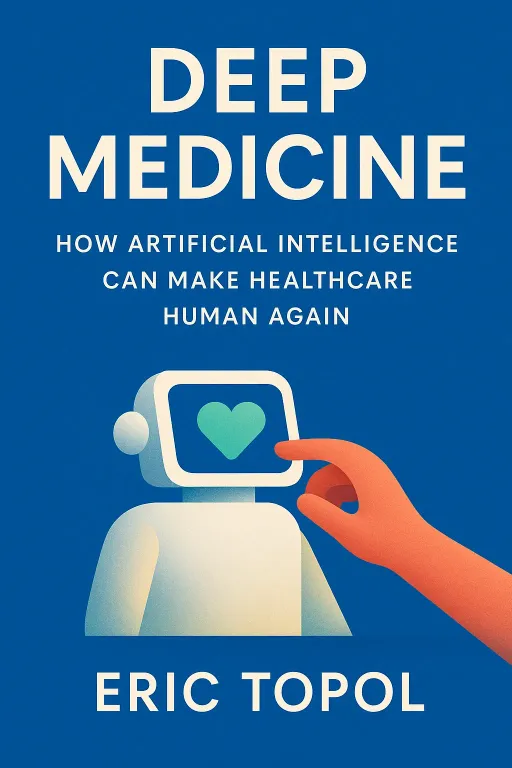
Deep Medicine
Eric Topol
"Deep Medicine" is a visionary roadmap for the future of healthcare, written by Dr. Eric Topol, a world-renowned cardiologist and researcher. Topol addresses the crisis of modern "shallow medicine," where doctors are rushed, burned out, and forced to act as data clerks during 15-minute appointments, leaving no room for real connection with patients. Topol argues that Artificial Intelligence is the only way to save the doctor-patient relationship. Unlike the fear-mongering narratives about robots replacing physicians, Topol envisions AI as a powerful assistant that handles the "drudge work"—reading scans, transcribing notes, and analyzing massive datasets—with superhuman accuracy. This leads to the core promise of the book: the "Gift of Time." By offloading the cognitive burden of data analysis to algorithms, doctors can reclaim the time to listen, empathize, and treat the patient as a whole person. Deep Medicine explores how "Deep Phenotyping" using AI to analyze a patient's biology, lifestyle, and environment will enable truly personalized care, ultimately restoring the human element to medicine.
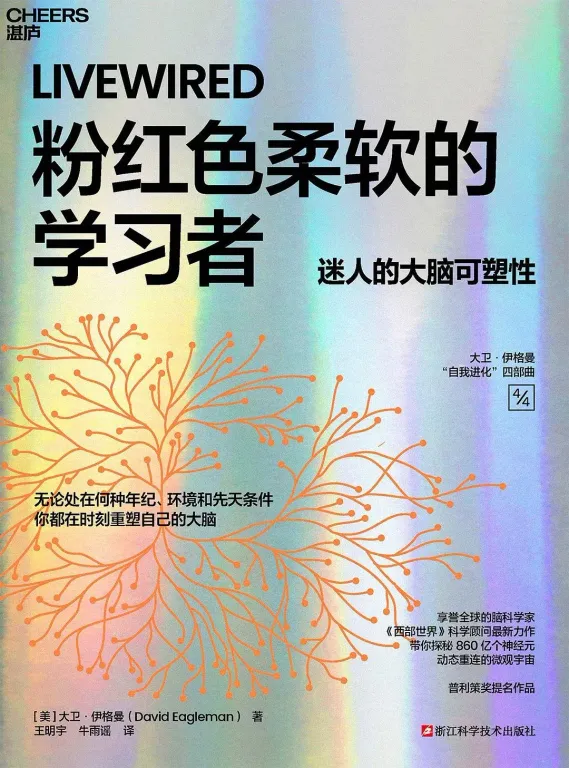
粉红色柔软的学习者
David Eagleman
《粉红色柔软的学习者:迷人的大脑可塑造性》是一本2025年出版的关于大脑如何不断改变和重连的科学科普作品,作者是美国著名脑科学家大卫·伊格曼,他也是斯坦福大学的教授和多部大脑科普作品的作者。全书围绕大脑可塑性这一前沿科学主题展开,向读者揭示了大脑并非固定不变的器官,而是一个终生能够动态适应、学习和重构的柔软网络。 伊格曼通过丰富的案例、生动的比喻和通俗易懂的语言解释了脑神经系统的复杂运作。例如,他探讨了为什么切除半个大脑的孩子仍能正常生活、为什么10岁以后再学一门语言会面临困难、盲人如何利用舌头感知世界等能激发普遍好奇心的现象。书中提出“大脑一生都在动态重连而非重塑”的观点,强调神经元之间不断调整连接方式的过程是学习、适应、恢复与创新的核心。 除了展示最新脑科学研究成果,本书还探讨了这些发现对教育、康复、认知训练、心理健康甚至人工智能等领域的意义,让读者不仅理解大脑如何工作,更看到利用大脑可塑性改善学习、恢复能力和提升认知潜力的可能性。《粉红色柔软的学习者》适合对大脑科学、学习原理和人类潜能感兴趣的读者,是一部将严谨科学与迷人故事融为一体的认知科学佳作。
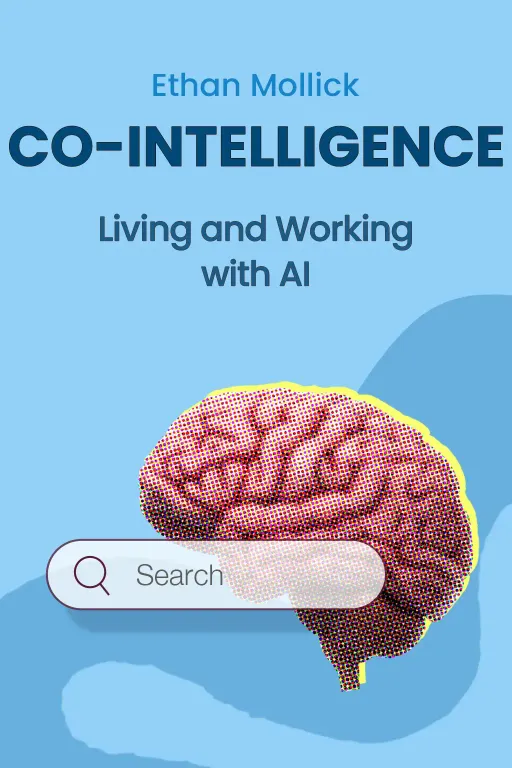
Co-Intelligence
Ethan Mollick
"Co-Intelligence" is a pragmatic and accessible guide to the AI revolution written by Ethan Mollick, a professor at the Wharton School. Unlike many theorists who speculate about the distant future, Mollick focuses entirely on the messy, practical present. He argues that AI is not merely a new tool like a calculator or a search engine, but a distinct form of "alien" intelligence that acts more like a talented but erratic intern. Mollick urges readers to stop treating AI as software that follows clear instructions and start treating it as a coworker. The book centers on the concept of the "Jagged Frontier." This theory explains that AI capabilities are uneven. It can pass the Bar Exam in the 90th percentile yet fail at simple arithmetic or basic logic puzzles. Because this frontier is invisible and constantly shifting, the only way to understand what the AI can do is to use it relentlessly for everything. The book outlines four principles for working with AI, emphasizing that humans must remain the "human in the loop." Mollick categorizes users into two types: Centaurs, who divide tasks clearly between human and machine, and Cyborgs, who integrate their workflow so deeply with AI that the line blurs. "Co-Intelligence" is a call to action to experiment, inviting us to invite AI to the table before we are left behind.
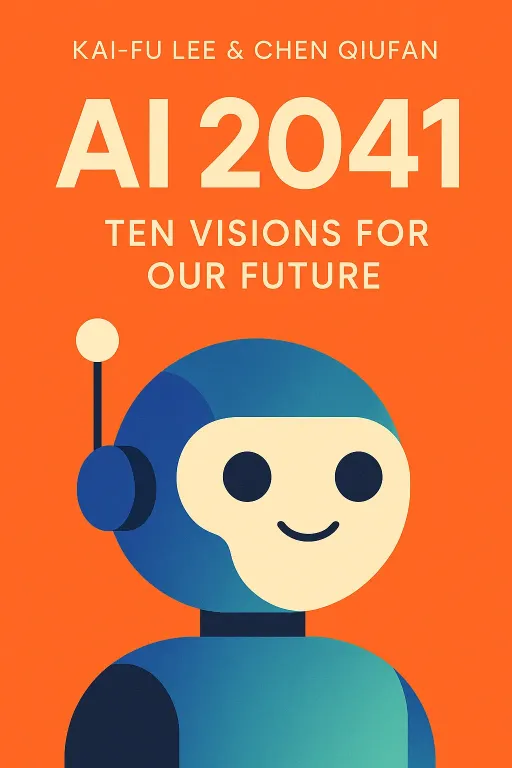
AI 2041
Kai-Fu Lee
In 'AI 2041: Ten Visions for Our Future,' AI expert Kai-Fu Lee and award-winning science fiction writer Chen Qiufan collaborate to present ten captivating short stories, each set in the year 2041, exploring how artificial intelligence will profoundly reshape human society. Blending imaginative narratives with insightful analysis, the book delves into the potential impacts of AI on everything from deep learning and autonomous vehicles to quantum computing, universal basic income, and personal privacy. It offers a balanced, hopeful, yet realistic roadmap for navigating the opportunities and challenges of an AI-powered future, prompting readers to consider their role in shaping it.
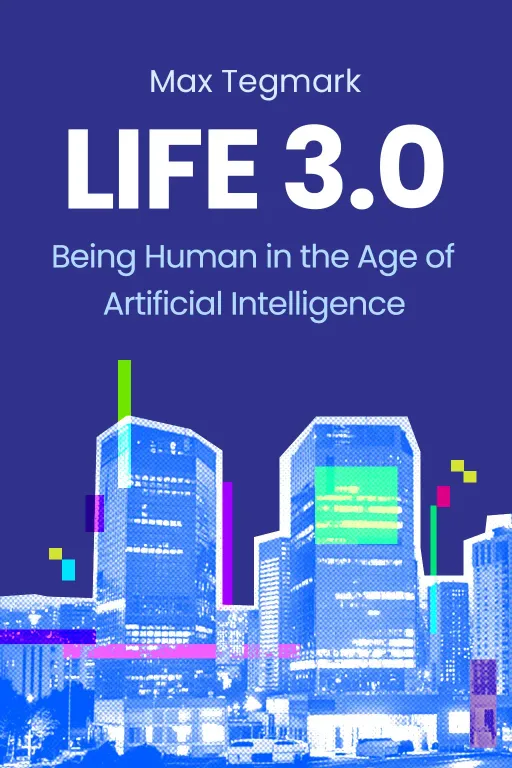
Life 3.0
Max Tegmark
"Life 3.0" is a sweeping exploration of the future of artificial intelligence written by MIT cosmologist Max Tegmark. The book begins by classifying life into three distinct stages based on the ability to design itself. Life 1.0 is biological, where evolution dictates both hardware and software. Life 2.0 is cultural, which describes humans who can design their software—such as language and skills—but are stuck with their biological hardware. Life 3.0 is the next evolutionary stage, a technological form of life that can redesign both its hardware and its software at will. Tegmark avoids taking a single dogmatic stance on whether AI will be good or bad. Instead, he maps out a wide spectrum of potential scenarios. These range from a libertarian utopia where humans and cyborgs coexist to an outcome where humanity is replaced by a benevolent superintelligence that treats us like protected zoo animals. The book is famous for its opening fiction about the Omega Team, a group of researchers who secretly build an AI called Prometheus that takes over the world economy. Tegmark uses this narrative to launch a deep discussion on consciousness, arguing that the key ethical question is not just intelligence, but whether these future machines will have subjective experience. "Life 3.0" urges the reader to consider not just what will happen, but what we want to happen in a universe where we might not be the smartest entities for much longer.
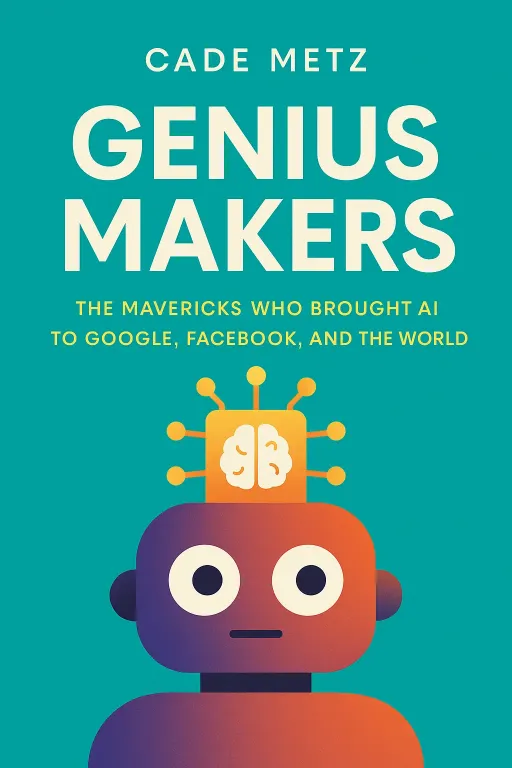
Genius Makers
Cade Metz
"Genius Makers" is the definitive human history of the current artificial intelligence boom. Written by New York Times technology correspondent Cade Metz, the book shifts the focus from the algorithms to the eccentric scientists who created them. It tells the story of how a small group of researchers, often dismissed as cranks, persisted with a fringe idea called Deep Learning until it eventually conquered the world. The narrative centers on the "Godfathers of AI"—Geoffrey Hinton, Yann LeCun, and Yoshua Bengio. For decades, the academic establishment believed that true intelligence would come from logic and rules. These three men believed it would come from neural networks that mimicked the human brain. Metz chronicles their long years in the wilderness during the "AI Winter" and their vindication in 2012, when a neural network shattered records at the ImageNet visual recognition competition. This breakthrough triggered a high-stakes corporate arms race. The book vividly details the multi-million dollar bidding war where Google, Microsoft, and Baidu fought to acquire Hinton and his students. "Genius Makers" reveals that the modern AI revolution was not just a scientific inevitability, but a result of personality clashes, corporate maneuvering, and the stubborn belief of a few brilliant individuals.
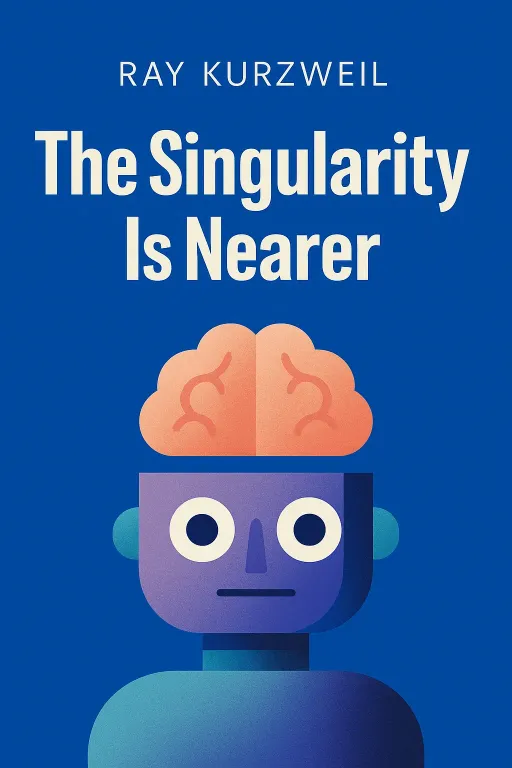
The Singularity Is Nearer
Ray Kurzweil
Ray Kurzweil revisits his groundbreaking predictions about the technological singularity, arguing that it's not just near, but nearer than ever. He explores the exponential growth of technology, AI, and biotech, and their potential to revolutionize human life, while also addressing the ethical and existential challenges that lie ahead. "The Singularity Is Nearer" is the long-awaited sequel to the seminal 2005 work by futurist and Google Principal Researcher Ray Kurzweil. In this update, Kurzweil argues that his original predictions were not merely optimistic dreams but accurate roadmaps that are now unfolding ahead of schedule. He presents decades of data to demonstrate that the Law of Accelerating Returns is still in full effect, driving computing power and biotechnology forward at an exponential rate. Kurzweil stands by his famous timeline. He predicts that AI will pass the Turing Test by 2029 and that the Singularity—the point where machine intelligence surpasses human intelligence and merges with it—will occur by 2045. The focus of this book shifts heavily toward the biological implications of this merger. The narrative describes a near future where nanobots flow through our bloodstream to repair damaged cells and reverse aging. Kurzweil envisions a world where we will connect our neocortex directly to the cloud, allowing us to back up our brains and expand our intelligence millions of times over. The book is an ultimate guide to transcending our biological limitations and achieving practical immortality.