

Technology & Science
Scale
Geoffrey West
"Scale" is a groundbreaking work of complexity science written by theoretical physicist Geoffrey West. The book sets out to uncover the hidden mathematical laws that govern the lifecycle of everything from plants and animals to cities and corporations. West argues that despite their complexity, these diverse systems follow simple, predictable patterns determined by their size. The foundation of the book is Kleiber’s Law, which observes that as organisms get larger, they become more efficient. An elephant is 10,000 times heavier than a mouse but consumes only 1,000 times more energy. This is sub-linear scaling, a pattern of diminishing returns that eventually limits growth and dictates that all biological life must die. However, West discovers that cities break this rule. Cities exhibit super-linear scaling. When a city doubles in size, it does not just double its infrastructure; it produces an exponential increase in wealth, innovation, and crime. This 15% bonus per capita makes cities engines of infinite growth. The downside is that this growth demands an ever-accelerating pace of life. "Scale" warns that to sustain this trajectory, humanity must innovate at faster and faster intervals to avoid a total systemic collapse.
Information
Cesar Hidalgo
Explore the universe through the lens of information, from the smallest atom to the largest economies. This book delves into the growth of information, its battle against entropy, and the mechanisms that drive complexity in our world. Discover how information, knowledge, and knowhow intertwine to shape our physical, biological, social, and economic realities.

Exhalation
Ted Chiang
"Exhalation" is a collection of science fiction and fantasy short stories by Ted Chiang that delves into thought-provoking explorations of time, causality, free will, and the nature of existence. Through intricate narratives and philosophical inquiries, the book invites readers to contemplate the profound implications of technological advancements and the human condition. Readers will encounter a fabric merchant traveling through time in "The Merchant and the Alchemist's Gate," a mechanical anatomist dissecting his own being in "Exhalation," and the societal impact of devices that predict choices in "What's Expected of Us." "The Lifecycle of Software Objects" explores the complex relationships between humans and intelligent digital life forms, while "Dacey's Patent Automatic Nanny" examines the consequences of machine-mediated childcare. Finally, "The Truth of Fact, the Truth of Feeling" questions the nature of memory and truth in an age of perfect digital recall, drawing parallels with oral cultures to highlight how technology shapes human identity and understanding of the past.
On the Origin of Species
Charles Darwin
Explore Charles Darwin's groundbreaking theories on evolution and natural selection in 'On the Origin of Species.' This seminal work challenges conventional wisdom and presents a compelling argument for the interconnectedness of life, forever changing our understanding of the natural world.
Seven Brief Lessons on Physics
Carlo Rovelli
A concise and accessible introduction to modern physics, exploring the most fascinating aspects of the universe, from Einstein's theory of relativity to quantum mechanics, the cosmos, elementary particles, and the nature of space and time.
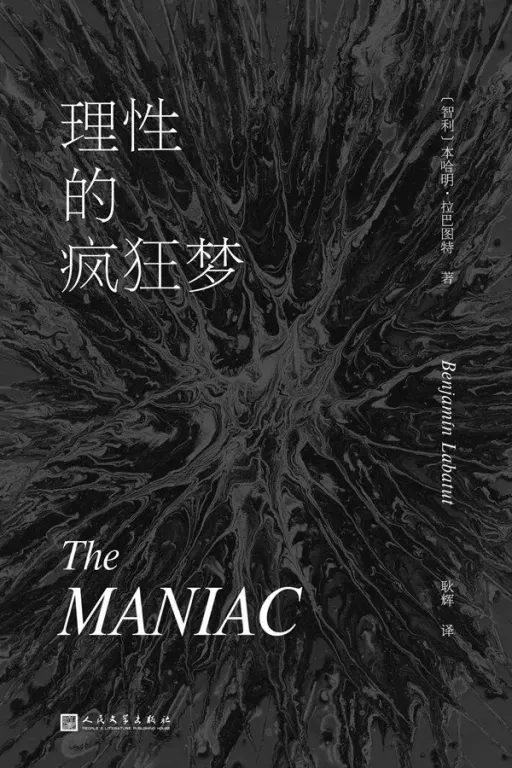
理性的疯狂梦
Benjamín Labatut
《理性的疯狂梦》是一部独特而跨界的文学作品,它模糊了历史、小说和哲学反思之间的界限,讲述了20世纪科技与理性力量的张力与矛盾。作者本哈明·拉巴图特以精湛的叙述技巧,通过多重人物视角再现了几位关键科学人物的生命轨迹及其对世界的深远影响,探讨了理性、疯狂、科学进步与人类未来之间复杂的关系。这部作品既是历史叙述,也是哲学思考,更像一部充满象征与隐喻的“科学人性寓言”。 小说分为三部分,横跨多个时代与科技节点:从1933年在纳粹统治下的一桩悲剧性事件,到1957年数学家与博弈论先驱冯·诺依曼的一生,再到21世纪人工智能时代的标志性事件——围棋高手李世石与AlphaGo的对决。通过这些真实与虚构交织的片段,拉巴图特描绘了科学理性如何带来巨大力量的同时,也带来伦理困境、心理危机与不可预见的后果。 作者借用冯·诺依曼等人物的故事,展示了理性思维在推动技术革命、参与原子弹制造和人工智能起源中的作用及其险峻后果;同时他也关注科学背后的人性、悖论与疯狂,提醒读者反思技术进步的意义以及理性本身可能导致的危机。整部作品充满哲学味道与文学张力,既呈现了科学史中的关键人物和事件,又让人在技术浪潮下重新思考人类的未来与责任。
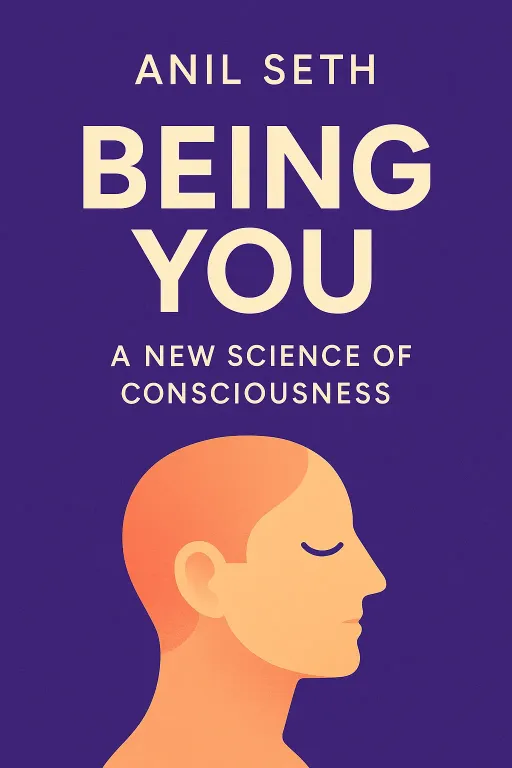
Being You
Anil Seth
"Being You" is a radical new theory of consciousness proposed by Anil Seth, one of the world's leading neuroscientists. Seth challenges the intuitive belief that our brains work like video cameras, passively recording the world around us. Instead, he argues that the brain is a "prediction machine" and that our entire reality is a "controlled hallucination." Seth posits that we do not perceive the world as it is, but as our brain expects it to be. Our sensory organs merely provide error correction for the brain's internal best guesses. When these hallucinations agree with reality, we call it perception; when they don't, we call it hallucination. Central to his theory is the concept of the "Beast Machine." Seth argues that consciousness is not software running on a computer-like brain, but a biological phenomenon deeply rooted in the body's drive to stay alive. Our experiences of "self"—and emotions—are fundamentally linked to interoception (sensing the internal state of the body). Being You offers a biological basis for human experience, suggesting that we are conscious not in spite of our animal nature, but precisely because of it.
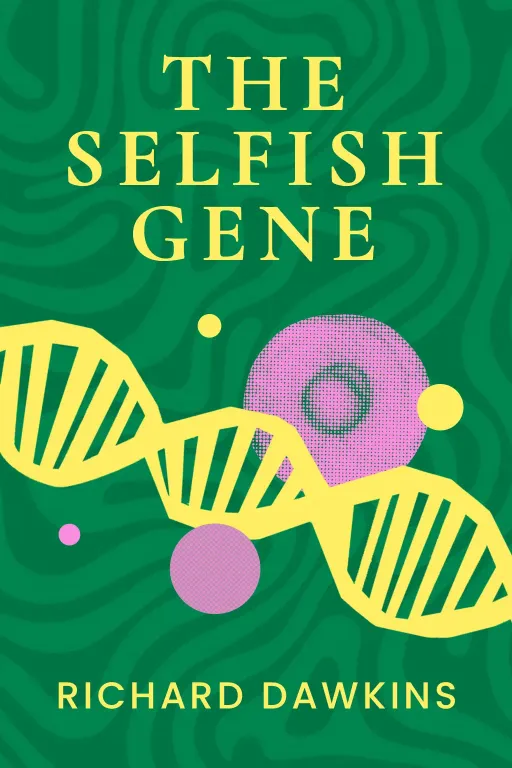
The Selfish Gene
Richard Dawkins
"The Selfish Gene" is a landmark work of science writing that permanently altered our view of evolution. Written by ethologist Richard Dawkins, it asserts that the fundamental unit of natural selection is not the species or the individual, but the gene itself. Dawkins argues that living organisms, including humans, are essentially clumsy "survival machines" built by gene colonies to ensure their own propagation. From this perspective, behaviors that seem altruistic are actually successful strategies for gene survival. For instance, an individual might sacrifice itself to save relatives who carry copies of the same genetic code, ensuring the survival of the genes even if the specific "vehicle" perishes. The book is also famous for introducing the concept of the "meme" to explain human culture. Dawkins proposes that ideas, tunes, and catchphrases replicate and evolve in a pool of human minds much like genes do in the biological pool. Lucid and powerful, The Selfish Gene remains a pivotal text for understanding why life behaves the way it does.