

Technology & Science
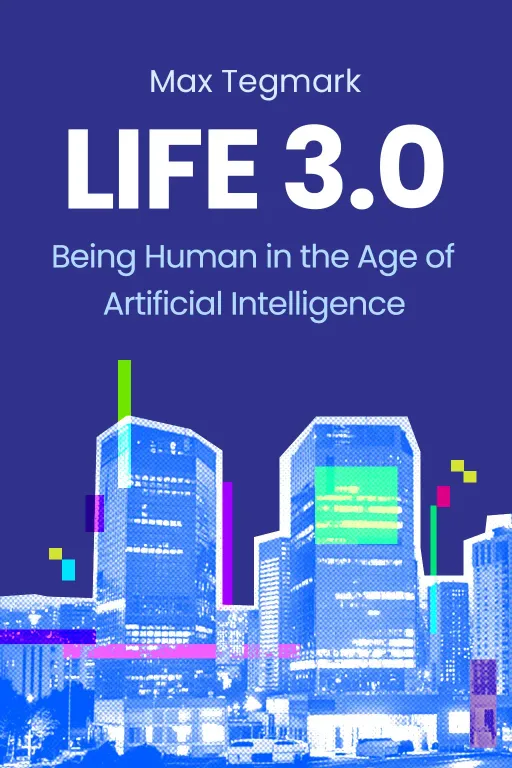
Life 3.0
Max Tegmark
"Life 3.0" is a sweeping exploration of the future of artificial intelligence written by MIT cosmologist Max Tegmark. The book begins by classifying life into three distinct stages based on the ability to design itself. Life 1.0 is biological, where evolution dictates both hardware and software. Life 2.0 is cultural, which describes humans who can design their software—such as language and skills—but are stuck with their biological hardware. Life 3.0 is the next evolutionary stage, a technological form of life that can redesign both its hardware and its software at will. Tegmark avoids taking a single dogmatic stance on whether AI will be good or bad. Instead, he maps out a wide spectrum of potential scenarios. These range from a libertarian utopia where humans and cyborgs coexist to an outcome where humanity is replaced by a benevolent superintelligence that treats us like protected zoo animals. The book is famous for its opening fiction about the Omega Team, a group of researchers who secretly build an AI called Prometheus that takes over the world economy. Tegmark uses this narrative to launch a deep discussion on consciousness, arguing that the key ethical question is not just intelligence, but whether these future machines will have subjective experience. "Life 3.0" urges the reader to consider not just what will happen, but what we want to happen in a universe where we might not be the smartest entities for much longer.
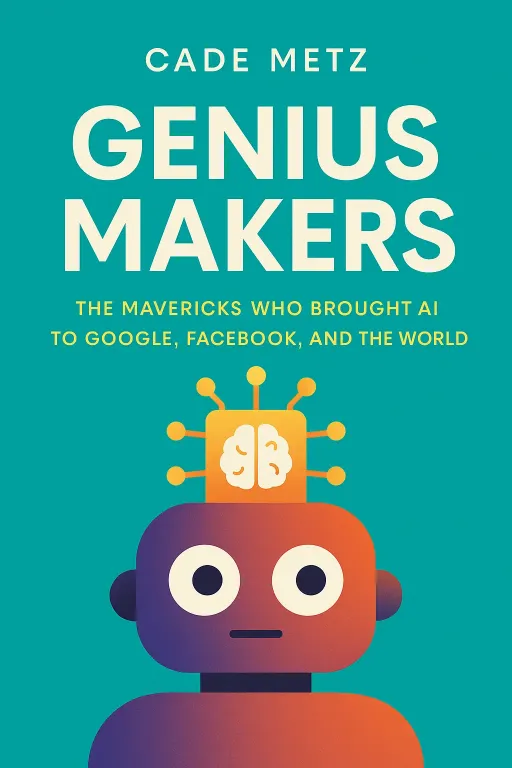
Genius Makers
Cade Metz
"Genius Makers" is the definitive human history of the current artificial intelligence boom. Written by New York Times technology correspondent Cade Metz, the book shifts the focus from the algorithms to the eccentric scientists who created them. It tells the story of how a small group of researchers, often dismissed as cranks, persisted with a fringe idea called Deep Learning until it eventually conquered the world. The narrative centers on the "Godfathers of AI"—Geoffrey Hinton, Yann LeCun, and Yoshua Bengio. For decades, the academic establishment believed that true intelligence would come from logic and rules. These three men believed it would come from neural networks that mimicked the human brain. Metz chronicles their long years in the wilderness during the "AI Winter" and their vindication in 2012, when a neural network shattered records at the ImageNet visual recognition competition. This breakthrough triggered a high-stakes corporate arms race. The book vividly details the multi-million dollar bidding war where Google, Microsoft, and Baidu fought to acquire Hinton and his students. "Genius Makers" reveals that the modern AI revolution was not just a scientific inevitability, but a result of personality clashes, corporate maneuvering, and the stubborn belief of a few brilliant individuals.
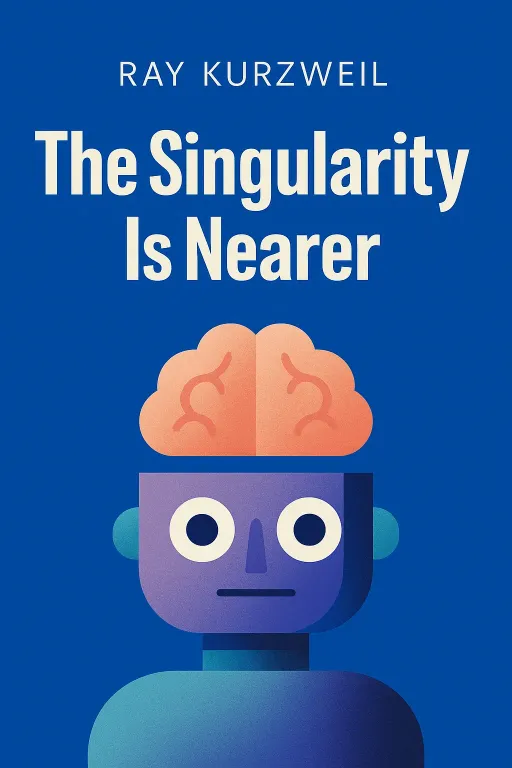
The Singularity Is Nearer
Ray Kurzweil
Ray Kurzweil revisits his groundbreaking predictions about the technological singularity, arguing that it's not just near, but nearer than ever. He explores the exponential growth of technology, AI, and biotech, and their potential to revolutionize human life, while also addressing the ethical and existential challenges that lie ahead. "The Singularity Is Nearer" is the long-awaited sequel to the seminal 2005 work by futurist and Google Principal Researcher Ray Kurzweil. In this update, Kurzweil argues that his original predictions were not merely optimistic dreams but accurate roadmaps that are now unfolding ahead of schedule. He presents decades of data to demonstrate that the Law of Accelerating Returns is still in full effect, driving computing power and biotechnology forward at an exponential rate. Kurzweil stands by his famous timeline. He predicts that AI will pass the Turing Test by 2029 and that the Singularity—the point where machine intelligence surpasses human intelligence and merges with it—will occur by 2045. The focus of this book shifts heavily toward the biological implications of this merger. The narrative describes a near future where nanobots flow through our bloodstream to repair damaged cells and reverse aging. Kurzweil envisions a world where we will connect our neocortex directly to the cloud, allowing us to back up our brains and expand our intelligence millions of times over. The book is an ultimate guide to transcending our biological limitations and achieving practical immortality.
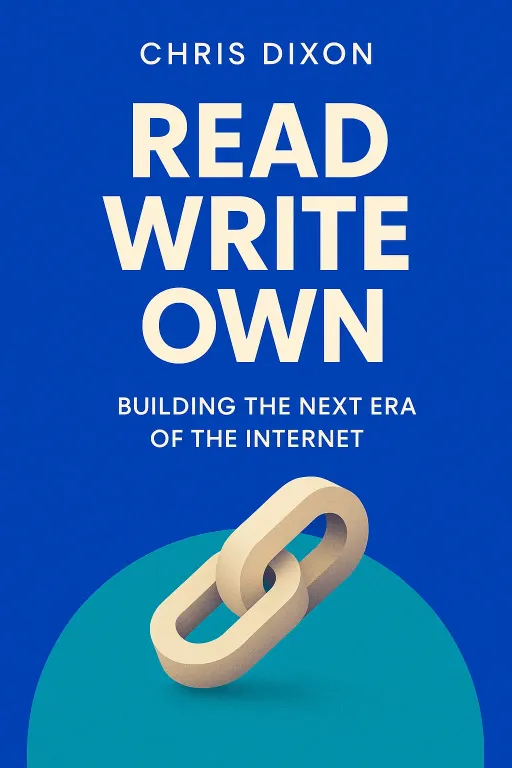
Read Write Own
Chris Dixon
"Read Write Own" is a defining playbook for the future of the internet written by Chris Dixon, a general partner at the venture capital firm Andreessen Horowitz. Dixon frames the history of the web in three distinct eras to argue that we are on the cusp of a necessary revolution. The first era was Web1, the "read-only" internet which was democratic but static. The second and current era is Web2, the "read-write" internet. While this era allowed billions of people to create content, it centralized power and profit in the hands of a few corporate giants like Facebook and Google. Dixon argues that these "corporate networks" have now become extractive, stifling innovation and taking massive cuts of the revenue generated by creators. The solution is Web3, the "read-write-own" internet. Dixon explains how blockchains enable a new digital logic where users and developers can actually own a piece of the networks they build. He carefully distinguishes between the "Casino" culture of crypto speculation and the "Computer" culture of decentralized innovation. The book is a persuasive argument that blockchains are not just about finance but are the only way to restore the open, democratic spirit of the early internet while allowing creators to capture the value they produce.
The Fourth Industrial Revolution
Klaus Schwab
Explore the transformative power of the Fourth Industrial Revolution. Discover how emerging technologies are reshaping our world, impacting economies, societies, and individuals alike. This book provides a framework for understanding the core issues and highlights possible responses to harness this revolution for the common good.
The Age of Surveillance Capitalism
Shoshana Zuboff
A groundbreaking exploration of the unprecedented power of surveillance capitalism and the quest for a human future. It unveils how tech companies are using our personal data to predict and manipulate our behavior, posing a profound threat to individual autonomy and democratic values.